Where and How To Catch September Bass at Lake Jackson, with GPS Coordinates

September Jackson Bass

with Keith Dawkins

September can be the most frustrating time of year for bass fishermen.  The water is as hot as it gets and the oxygen content is at its lowest level of the year. The days are still hot and uncomfortable and the bass are sluggish. But some lakes, like Jackson, offer you a chance to catch fish and forget the problems.

Jackson is an old Georgia Power lake at the headwaters of the Ocmulgee River.  It is lined by docks and rocks are plentiful. There are good points that run out to deep water and humps that hold bass.  Shad are the primary forage this time of year and you can find the shad and catch bass.

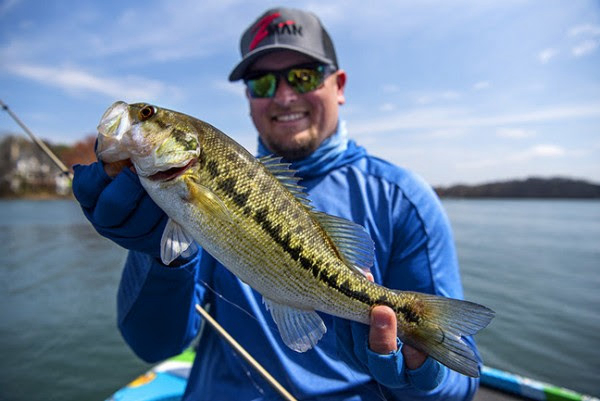
In the 1970s and 1980s Jackson was known for big largemouth.  Then spots were illegally stocked in the lake by misguided fishermen and they have taken over the lake. Rather than catching a seven pound largemouth now you are going to catch seven one pound spots.

Spots are fun to catch and taste good, so enjoy catching them and eat them.  You can’t hurt the population of bass in the lake by keeping every one you catch. In fact, fisheries biologists say keeping all of them, even those under 12 inches long, may help a little. They have no size limit anywhere in Georgia except Lake Lanier.

Keith Dawkins grew up fishing Jackson.  His parents still have a house there and he spends several days a month on the lake.  For years he fished the Berrys tournaments and bigger trails like the Bulldog BFL but his job now keeps him from fishing tournaments.

 “Early in September bass are out on main lake structure, feeding on shad,” Keith said.  As the month progresses they push up the points and toward the coves. By the end of the month, depending on the shad, they may be way back in them.

A wide variety of baits will catch fish.  Keith always has a Flash Mob Jr. with small swimbaits on the arms and a Fish Head Spin on the middle one.  He also likes a buzz bait, popper and X-Rap five inch bait with props on both ends for top water fishing and a Fluke or Senko rigged weightless for fishing over structure and cover.

For faster fishing a 300 Bandit with white and chartreuse is good as is a #7 Shadrap in black and silver.  When he slows down and probes the bottom he will have a Carolina rigged Trick worm and a Spotsticker jig head with a Trick worm on it.

If you are seeing fish on your depthfinder but can’t get them to hit, get right on top of them and use a drop shot worm. Drop it down to them and jiggle it slowly.  If they are right on the bottom let your lead stay on the bottom but raise it up to the depth the fish are holding if they are suspended.

Keith showed me the following ten places in mid-August.  Small spots were on them during the day. The afternoon before we went he caught some quality spots and largemouth right at dark, an indication the bigger fish were probably feeding at night. Those bigger fish will be feeding on these places during the day in September.

1.  N 33 20.606 – W 83 51.667 – The big point where the river turns downstream across from the mouth of Tussahaw Creek is a good place to start early in the morning or to fish late in the day.  It is a big flat where wood washes in and hangs up and there are a couple of small pockets on it and small points run off it.

Start on the upstream end where the biggest cove on the point starts.  There are rocks on it and it drops fairly fast.  As you fish downstream the bottom flattens out and there is a lot of wood to fish.  Stay way out on the flat in seven to eight feet of water since it is so shallow and cover all the wood with a buzz bait.

Fish all the way around the point where it turns to the left going downstream.  Also try a crankbait around this wood in case the fish don’t want a topwater bait. A weightless Fluke or Senko is also good around the wood.

2.  N 33 20.313 – W 83 51.404 – Go down the river and there is a marked hump way off the left bank. There are two danger markers on it and it tops out about six feet deep at full pool, dropping off to 40 feet deep. Keith warns that boat wakes move the markers and they may not be right on top of it, so idle up toward them slowly.  The hump has rocks, stumps and brush piles on it the bass use for cover, and they will also hold in the saddle between the hump and the bank.

Start with your boat in deeper water and fish all the way around it, casting topwater and crankbaits to the top of the hump and working them back. Also try the Flash Mob Jr. here, fishing it the same way.  Watch your depthfinder as you go around it for fish holding deeper.

Try a Carolina rig and a jig head worm on this hump, too.  Keith likes to drag both baits along slowly, letting the lead stir up the bottom to attract attention.  Keith usually uses a Trick worm on both, preferring watermelon seed or pumpkin seed colors, but if the bass want a smaller bait he will go to a Finesse worm. He will often dip the tails of both size worms in chartreuse JJs Magic for added attraction.

We caught some small spots here on a drop shot when Keith saw fish near the bottom.  If you see them off the sides of the hump try that. Also, especially during the day, you can sit on top of the hump and cast a Carolina rig or jig head worm to the deeper water, working your bait up the drop.

3.  N 33 19.317 – W 83 50.574 – On the right side of the dam going toward it the Georgia Power park and ramp are on a big point right beside the dam.  There are two DNR docks in the pocket formed by the dam and point and there are “Boats Keep Out” buoys in front of them.  There is a public fishing pier on this side of the point.

A lot of wood washes in and sticks in this pocket, and the DNR and residents sometimes pull floating wood to it, so there is a lot of cover to fish. The bottom is also rocky and drops off into deep water.  In the morning or late afternoon start in the pocket, fishing the wood. Try topwater and a weightless bait like a Fluke or Senko around it, too.

When the sun is high sit way out even with the big park point but toward the dam side, and line up with the two tallest towers on the power station on the bank.  A ridge runs out parallel to the park point and flattens out on the end, and bass hold on it.  Fish it with your bottom baits and run a crankbait and the A-Rig over it

4. N 33 19.584 – W 83 50.563 – Go back upstream to the big point on the left where the river turns back to the left.  Downstream of this point, straight out from a cream colored boat house with a metal dock in front of it, a hump rises up to about 14 feet deep. Line up the end of the point with the park side of the dam and idle along this line. You will be in about the middle of the mouth of the creek coming out on the park side.

Keith caught his biggest spot from Jackson on this hump.  Sit out in deep water and drag your bottom bumping baits on it. Try a drop shot, too. Also run a crankbait across it for suspended fish.  Keith does not always bump the bottom with a crankbait but fishes it like a fleeing shad in the water column. He may go to a deeper running bait like the DD22 if the fish won’t come up for a more shallow running bait.

5.  N 33 20.028 – W 83 50.753 – Going upstream on the right bank, on the upstream point of the third big cove upstream of Goat Island, you will see a house and dock with bright silver roofs on the point.  There is a seawall around the point and big rocks are on it. As the bank goes upstream there are huge boulders where it turns into a bluff bank.

Stay way off the bank, the rocks come out a long way, and cast a crankbait or A-Rig to them.  Then try your jig head worm and Carolina rig around them.  Fish all the way around the point.  Way off the point a hump comes up and the saddle leading out to it can be good.

Watch for schooling fish here and other similar places.  There were several schools of small keeper spots chasing shad all around this point when we fished and Keith got one on his XRap.  They will school even better in September and you can chase schooling fish most of the day.

6.  N 33 20.145 – W 83 50.852 – Going up stream along the bluff bank a narrow point comes out at the upper end of it.  There is riprap around the point and a narrow pocket upstream of it.  The point runs way out and Keith says bass hold out on the point early in the month and feed on shad. Later in the month they will push shad up into the bay on the downstream side and into the narrow pocket upstream of it.

Fish the point with your Carolina rig, A-Rig and jig head worm.  Stay way out with your boat in at least 15 feet of water to fish the point early in the month. Later fish the cover in the bay and pocket on both sides with Senko or Fluke but try you’re A-Rig in the pockets, too.  Keith likes the light Flash Mob, Jr and does not put heavy jig heads on it so he can fish it shallower without hanging up.

7. N 33 20.840 – W 83 51.985 – Go to the mouth of Tussahaw Creek to the right side going in. A ridge comes up way off this bank and tops out about 14 feet deep. You will see a light brown roof dock in front of a white cabin on the right bank and the ridge starts about even with it and runs into the creek.

Fish up the ridge into the creek until you are even with a dark brown dock.  Try you’re a-Rig and crankbait over the top of it, keeping your boat on the river side in deeper water.  Then fish it with bottom bumping baits probing for the rocks and stumps on it.  Watch here, too, for fish on the bottom and try a drop shot for them.

8. N 33 21 094 – W 83 52.213 – Go on up Tussahaw to upstream side of the first small cove. There is a tall tree stump carved into a bear standing behind a dock on the bank. Start at the dock in front of the bear and fish upstream.  Fish hold on this point and the next one upstream, too, and feed early in the month then push shad into the coves on both sides of the points later.

Fish will often hold on docks so Keith works them carefully. He will fish every dock post with a jig head worm, hitting the post and letting the bait drop straight down it.  He says spots often nose up to the post and if the bait does not fall straight down beside it they won’to hit.  Keith says he will often spend a half hour carefully fishing every post on a dock. A Senko or Fluke will also catch dock bass.

Fish the points and banks going into the pockets with A-Rig and crankbait.   When fishing the crankbait Keith says he likes to crank it a few feet then pause it. Strikes will often come just as he starts the bait moving again. Try different lengths of pause before moving it again.

9. N 33 22.180 – W 83 51.728 – Go up the Alcovy to the mouth of the South River. As you go into the mouth of it, on your right, the second point is narrow and has an old boat ramp on it.  This point comes way out and has a lot of rocks on it and holds a lot of bass. Keith caught several spots here on his crankbait.

Run your crankbait and A-Rig across the point.  If there is any current coming out of the river, which often happens after a rain, Keith says it is important to stay on the downstream side of the point and cast upstream, working your baits with the current.

Also fish a Trick worm or Senko on top of the point early. It is very shallow a good way off the bank.  Then work your bottom baits on the point, all the way out to the end of it in at least 15 feet deep.  You will get hung up in the rocks but that is where the bass live.

10.  N 33 23.028 – W 83 50.590 – Run up the Alcovy River under the powerlines.  Upstream of them a ridge runs parallel to the river channel way off the left bank upstream of the first creek on that side.  Watch on the right bank for a white deck on the bank just off the water with lattice work under it. It is very white.

If you stop in the middle of the lake even with that deck and idle toward the far bank, at a very slight angle upstream, you will cross the ridge. The ridge is on the far side of the river channel and it tops out about 14 feet deep and has stumps and rocks in some spots on it.

Keith likes to keep his boat on the side of the ridge away from the river channel and fish it. He says bass tend to hold on that side and stripers hold on the river side.  Cast you’re a-Rig and crankbait over the top of it and work your Carolina rig and jig head down that side from the top to about 20 feet deep. Also watch for fish under the boat to use your drop shot.

Since the rocks and stumps are in patches, feel for them and concentrate on that area.  The end of the ridge is where Keith catches most of his fish.

Give Keith’s places a try and see the kind of structure and cover he likes this month. There are many similar places you can find and fish on Jackson.

Manners when the B.A.S.S. Classic Comes to Town

Classic Takeoff

Let’s Mind Our Manners when the B.A.S.S. Classic Comes to Town
By Frank Sargeant High-dollar bass tournaments like the Bassmaster Classic, scheduled for Lake Guntersville March 6-8, are a great potential learning experience for local anglers as they get the opportunity to follow the top pro’s around on the lake and see how and where they fish and what tackle and boat they use.

And most of the pro’s actually enjoy the gallery of rooting fans—after all, the more popular they are, the more sponsor money they make.But a large gallery can also affect the outcome of the event. Big names like Kevin Van Dam (who won’t be at this Classic because he moved to the MLF circuit) sometimes have 20 or more boats roaring after them down the lake and gliding up behind them as they drop the trolling motor to fish. While lots of fans are a plus at a football or basketball game, on the water at a bass tournament, not so much. Bass don’t take kindly to the sound of outboard motors, or even of a dozen whirring trolling motors in their neighborhood. Some anglers believe they’re even put off by the “ping” of fish finders.

So while the well-meaning fans are cheering for their favorite, they may actually be reducing his chances of success. This is particularly true when an angler gets on an extended stretch of “hot” shoreline, where bass may be scattered over a hundred yards or so of terrain that the angler may want to work multiple times. As the gallery slides in behind him as he works down the structure, they turn off the bite that might have been active on repeat passes.

The best way to follow the anglers is from a distance, and carry binoculars so that you can see the lures they’re using and how they’re fishing them. This gives everybody a bit of breathing room, and hopefully won’t affect the outcome of the event. There are also some anglers who can’t wait until the tournament is over to try the new holes that the smart pro’s reveal to them. As soon as the pro angler pulls off, they pull on and start casting.

This makes things a lot more difficult in that spot on the next day when the angler returns to the spot again during the three day event. To be sure, the lake is a public asset and all of us have a completely equal right to fish anywhere in it at any time. Paying a tournament entry fee does not give any special rights. On the other hand, when you consider that the pro anglers are fishing an event where one successful cast could change the course of their lives, it seems only common courtesy to maybe save their spots to the GPS for future use but leave them alone for those few days of the competition.

In any case, for those who want to follow their heroes, the daily launches are at Civitan Park just off S.R. 69 on the Brown’s Creek arm of the lake at 7 a.m. B.A.S.S. welcomes spectators with free coffee, and a number of top boat manufacturers are on-site offering test drives of their latest bass boats. (You can’t launch at Civitan during the event, though—choose one of the other ramps around the lake.)

For those who can’t get out on the lake, the weigh-ins are at BJCC in Birmingham, with arena doors opening at 3:15 p.m. daily for the weigh-ins. The Classic Outdoors Expo, also at BJCC, opens at noon on Friday, 10 a.m. on Saturday and Sunday. 

See more here: https://m.bassmaster.com/news/attend-2020-academy-sports-outdoors-bassmaster-classic-presented-huk 

Predicting Muddy Water At West Point

Muddy water makes bass fishing tough.  Bass tend to get very tight to cover and not move much. It is like us in a heavy fog, we like to stay in familiar places and not run around and get lost!

My Garmin Panoptix has confirmed this. In clear water I see bass holding near but not down in brush and just over rocks and stumps. In muddy water they are down in the brush and right against rocks and stumps.   

Bass still have to eat, though. They can be caught, especially if the water has been muddy for a couple of days and they have gotten used to it and have gotten hungry.  

  A bright lure that sends out sounds in the water is usually best. I will be fishing a bright chartreuse spinnerbait with chartreuse blades and skirt. A rattling chartreuse crankbait will also be used as will a black and blue Chatterbait, the bait I caught the three-pounder on at Neely Henry in the mud. Even my jig and pig, a black and blue one with bright blue trailer, will have rattles in it.  And I will fish all of then slowly and tight to cover.   

I home something works for me at West Point!

It did, somewhat. I caught three keeper spots on my chartreuse crankbait, three on the jig and ig and one on a dark Trick worm on a shaky head. My best five weighed 10.18 and gave me third out of 28 fishermen!

Aqua-Vu Underwater Cameras

Look underwater

See What You’re Looking at With Aqua-Vu Underwater Cameras
Three ways underwater study will help you find and catch more fish.

Crosslake, MN – For most anglers, watching the fish is something that happens only in the mind’s eye. You picture what your lure looks like, and how it moves underwater. You visualize what the weedbed or brushpile looks like and you wonder what types of fish might be inhabiting it. You imagine what it looks like when a bass first sees your lure and moves in for the strike.But unless you’re scuba diving or looking through the lens of an underwater camera, you don’t really know what’s happening below the surface.

For anglers truly interested in learning about fish behavior from an underwater perspective, an Aqua-Vu camera provides rare and incredible opportunities to observe, marvel and ultimately, catch more fish. No matter if you’re an ice angler, lure troller or a shallow water bass angler, an underwater camera can revolutionize your subsurface understanding.

Pole-Cam Perspectives Bass and crappie anglers have joined the ranks of underwater scholars, probing into and examining hard-to-reach areas beneath boat docks, inside brushpiles and under matted vegetation with a camera. Reaching out to inaccessible areas with his Aqua-Vu HD10i camera connected to a telescopic push pole, Major League Fishing pro Ott DeFoe likes to peek below boat docks. A special XD Pole Cam Adaptor makes connecting to any telescopic pole an easy five-second process.

“The pole-cam set up lets me look for big bass living in remote locations and under hard-to-reach shallow cover, like docks, without spooking them,” notes DeFoe, a longtime advocate of underwater study.“The Aqua-Vu also allows me to find concentrations of bass during pre-tournament scouting, without having to catch them before competition begins. That’s a huge asset in a tournament, and it works in clear as well as stained water, when all you need to see is the presence of fish a few feet from the lens.”

Visual Ice Fishing Mike Hehner, photographer, angler and producer for Minnesota based Lindner Media Productions has been a longtime fan of real-time underwater viewing with an Aqua-Vu camera. “I’ve spent the last few ice fishing seasons watching how bass and other fish behave in their natural habitat,” says Hehner. “What you learn is that every individual fish exhibits unique behavioral responses to lures or livebait.

“While ice fishing, I like to train the lens of my micro Revolution 5.0 Pro camera on a live minnow. Hit the record button and just start capturing footage. I can watch the video on the screen, live, or view it on my computer later on.

“Most people would be amazed to see what’s really happening down there—even during those periods when you’re not getting strikes. I’ve seen huge schools of bass move past the bait without even stopping to sniff. Other fish stalk and examine the minnow for many minutes at a time. Some bass lightly mouth the bait or nudge it, as if to taste or test it for palatability. Other times, they’ll nip the splitshot but totally ignore the minnow. I’ve also seen days when bass absolutely crush an artificial rattlebait over and over but completely ignore the livebait.

Trolling Goes Interactive A great way to add spice to the otherwise mundane task of trolling lures around the lake, sight trolling allows anglers to watch fish react in real time, right on the Aqua-Vu display. “The XD Live-Strike system connects the camera to your fishing line, letting you watch fish react to and bite lures, live,” says Dr. Jason Halfen, owner of the Technological Angler.

“What makes sight trolling with an Aqua-Vu such an amazing experience is the ability to see fish strike right on the screen, as it happens. With other Go-Pro type cameras, you don’t get to see what unfolds on the water until you’re done fishing.”Halfen and other anglers who’ve tried sight-trolling have seen some remarkable fish behaviors unfold on the screen. “You can’t believe how many fish—trout, salmon or walleyes—might be following your lure at once,” he observes. “Or the fact that a single muskie might follow your lure for 5 minutes or more before biting. You learn that a rapid acceleration in lure speed or a sudden interruption in its forward momentum, perhaps by contacting structure with the lure, can prompt an immediate violent response from fish.”

“After watching the fish for the past few years,” adds Hehner, “I realize how many times underwater study has revealed fish in spots I wouldn’t have otherwise found them. It’s also helped me make key adjustments to my presentation—a different way to hook my bait, lure size or a new color—that resulted in more bites and more fish on the line.“You never get bored watching the underwater show. You see something different, something new and exciting, every time you go out there and drop the Aqua-Vu. You learn and you absolutely catch more fish.”

View Online Version About Aqua-Vu The Original Underwater Viewing System, Aqua-Vu® is manufactured by Outdoors Insight, Inc., and has led the underwater camera category in design, innovation and quality since 1997. The Central Minnesota based company builds other popular outdoors products, such as the iBall Trailer Hitch Camera (iballhitchcam.com). For more information on Aqua-Vu, visit www.aquavu.com.

Fishing Neely Henry with Peyton Nance

When it rains it pours – or snows!   

Last Thursday a week ago I left to go to Neely Henry on the Coosa River for my March Alabama Outdoor News article.  I had three choices of ways to go.  Unfortunately, I chose to go up to I-75 and around I-285 to I-20 so I could drop a couple of reels and a rod off for service at Tara Bait and Tackle, what used to be Big Ernies.   

Typical luck for me, the owners had closed up and gone home due to the weather.    Going around I-285 at 70 mph I thought I had made a good decision.  Then, a mile from the I-20 exit I came to a full stop.  For the next hour I moved a few feet, stopped, then moved a few more.   

On I-20 a couple of miles from the Six Flags exit a sign said, “Left two lanes closed due to flooding.”  I thought the Chattahoochee River was flooding, but when I started down the hill toward the river, the reason the left two lanes were closed flooded was all the drains were stopped up with trash.  DOT workers were trying to get them open.   

The rest of the trip went fine, but as I crossed the Coosa River going into Gadsden it was running high and fast, with many logs floating in the ripping current. And it was very muddy.  That did not look good for fishing the next day.

I got checked into a room in Gadsden and went to Capeside Fish Market, a restaurant I found on my last trip there, for dinner.   I had some of the best fried scallops I have ever eaten, and that is saying a lot since I seek them out everywhere I go.  

  I met Peyton Nance, an Auburn University bass team member and reserve defensive tackle on the football team.  We managed to get the boat in and to the dock in the ripping current.  The water level had dropped four feet overnight. Peyton explained they were trying to get it down to hold all the flooding water coming downstream.   

We looked at and tried to fish ten spots that are good in March, but the current made river places impossible to fish and back-outs very muddy. I did manage to land a three-pound largemouth on a Chatterbait, my only bite. Peyton lost a five-pound spot right beside the boat when it pulled off his crankbait.   

We had a hard time loading the boat in the current, then I took a nap before going back to Capeside for more fried scallops!   

Sunday morning, I got up in Gadsden to rain.  As I got loaded up to come home and get my boat ready for the Flint River tournament at Lanier on Sunday, I got a text asking if we could postpone the tournament a week because of dangerous roads.  I had no idea there was a problem.   

I responded, as tournament director, that rules said tournaments could be canceled due to dangerous conditions, but they would not be rescheduled.  That rule was put into place years go when, all too often, a group in the club would try to postpone a tournament a week hoping for conditions they thought would be better for them.   

I sent the president of the club a text asking his vote. It is up to the three officers.  I stopped for breakfast at I-20 and Highway 431 and the temperature was 44 degrees.  Forty miles later, as I crossed into Georgia, my thermometer read 40 degrees. And signs over the interstate warned of icy roads ahead.   

I was able to pick up WSB radio and get the information that roads were icy around Gainesville. Then the president responded that the roads up that way were bad, so we canceled.   

I had no problems getting home and Tara Bait and Tackle was open, so I left my rod and reels to be fixed, got home and started contacting club members to alert them the tournament had been canceled.  Of course, Sunday turned out to be a nice day, but I’m not sure of the road conditions before daylight around the lake. It was probably a good decision not to take a chance.   

Coming home over the Chattahoochee River, it was flooded and orange, as were all the creeks, so West Point today is expected to be a mud hole for the Potato Creek tournament!   

Sunday Peyton and his dad fish a big Rat-L-Trap tournament at Lake Guntersville with about 250 boats entered. They won with five bass weighing 22 pounds and had a kicker weighing seven pounds, so fish were biting somewhere!

The Salty Ned Rig

Red on Ned

The Salty Ned Rig, with Captain C.A. Richardson
Captain C.A. Richardson believes the ‘Salty Ned’ shines during the toughest conditions.

Ladson, SC  “We call it the ‘Salty Ned,’” quips exceptional inshore guide, Captain C.A. Richardson. “A lot of days, it’s even better than livebait.”

In recent years, as Richardson and other intelligent inshore anglers recognized the parallels between freshwater bass tactics and those for redfish, seatrout and other saltwater species, a fresh approach began to emerge.

“We followed the evolution of freshwater finesse techniques and the rise of the Ned Rig for smallmouth and largemouth bass,” says Richardson, the brains behind Flats Class TV and University. “It made perfect sense that similar methods and baits could excel in saltwater for a lot of reasons.”

While cold-fronts, heavy fishing pressure and other adverse factors often make bass tough to catch, these same dynamics can have a multiplier impact on saltwater species. “From the first day we experimented with a Ned Rig under cold, bluebird skies our results spoke volumes. Three little baits—a 2-3/4-inch Finesse TRD™, TRD TicklerZ™ or TRD CrawZ™— on a 1/10-ounce Finesse ShroomZ™ jighead are all you really need to continue catching fish when conditions turn tough. With water temps in the high 50s and low 60s, we start fishing a Salty Ned around December 1 in Florida and catch fish with it all the way through the first half of March.”

Richardson, who today focuses much of his redfish, trout and snook efforts on the fertile though popular waters between Tampa to Fort Myers, believes a Salty Ned easily outfishes previous-era finesse baits like a 3-inch stingray grub or a small bucktail jig. On some days even a live, juicy shrimp or strip of cutbait can’t equal the appeal of a soft, buoyant ElaZtech® bait on a small jighead.

“Even for a novice or someone accustomed to using shrimp on a jighead, it’s an easy-to-fish bait that also eliminates pinfish and other nuisance biters. Admittedly, you’ll often catch smaller reds, trout and flounder, but you certainly won’t lack action.“The buoyant nature of ElaZtech and the mushroom-shaped jighead make the bait pivot and float tail-up off the bottom when you stop your retrieve,” says Richardson. “These baits are the perfect match for so many of the small creatures eaten by inshore predators—marine worms, shrimp and other invertebrates as well as sea horses. The upright posture of a TRD on a jighead shows fish a lively morsel that moves with the slightest underwater current—even when you’re not moving your rod at all.”

A Z-Man Ned rig remains affixed to Captain Greg Peralta’s inshore rods at least eighty-percent of the time, all year long.Like its freshwater counterpart, fishing the saltwater Ned Rig is all about keeping the bait close to the bottom, letting its buoyancy and soft, active composition do the heavy lifting. “We might fish the Ned a little more aggressively in saltwater,” notes Richardson. “The best presentation I’ve found is to let the bait sink to bottom and then shake the rodtip to make it quiver. Give the jig a 6- to 12-inch pull, pause and then reel slack and repeat. You’re making the back of the bait quiver; when you stop, the bait pivots and goes tail-up.

With a bait like the TRD TicklerZ or TRD CrawZ, you’ve also got little appendages that undulate subtly in the current. The bait never really stops working for you.”Even while fishing high-pressure zones like Tampa Bay, Richardson says the Salty Ned remains a non-threatening presentation to which fish react positively. “What’s also cool is you can sight fish for really spooky reds up on clear shallow flats because the bait touches down with such a small, compact signature.” To fish the Salty Ned on featureless flats, in depressions on flats and bends in creeks with deep holes, Richardson rigs one of the aforementioned Z-Man TRD baits on a 1/10-ounce Finesse ShroomZ jighead. He spools with 6-pound test braid and a 50-inch leader of 15-pound Seaguar fluorocarbon. Wielding a medium-light to light action 7-foot spinning rod, he can cast a light jig close to 30 yards.

For fishing around heavy cover or docks, Richardson switches to abrasion resistant monofilament line and a Pro ShroomZ™ Weedless jighead.The TRD TicklerZ quivers subtly, even at rest.

Summer Catches “Although we primarily finesse-rig in the winter, I’d argue with my guide buddies that even in the warmer months, when spooky, pressured fish won’t hit a faster-moving reaction bait, I can still get bit with a Salty Ned,” Richardson offers.It’s a notion shared by Charleston, South Carolina based Captain Greg Peralta, a now-retired guide who still fishes almost every day of the season. “Several years ago, we started fishing a Finesse TRD with a 1/5- or 1/6-ounce NedlockZ™ jighead and found it to be a super productive coldwater and post-coldfront bait. But when it got warm, we kept fishing the Ned Rig to see when they’d stop biting it. They never did.”

These days, Peralta says he fishes the Salty Ned about eighty-percent of the time. Particularly when the water gets warm, Peralta prefers a slightly more aggressive retrieve to entice a reaction. Keeping his rodtip low, Peralta gives the bait a hard snap, followed by a pause. He describes the cadence as similar to working a jerkbait.Z-Man Trick ShotZ on a NedlockZ HD jighead.

“Snap and give slack,” he explains. “The lure will pitch or roll left or right, showing fish alternating flashes of dark and light. Color becomes a critical factor because flash is a key indicator of something alive—dark on top, light on the bottom. It’s why I choose colors like The Deal in clear water. As clarity fades, I go brighter with patterns like Hot Snakes—still has that dark-to-light transition, but with a louder chartreuse belly.

”Peralta notes that the length of the pause between snaps depends on conditions. “Colder water, coldfronts and when the barometer is switching from low to high, I go with a longer pause. Because fish typically strike after the snap, when the bait is descending, I like using high-vis 8-pound braid. You don’t always feel the bite on the rodtip; you’re watching your line for a pop or a sudden acceleration.

“I can’t say the TRD looks like anything they eat. The action you give it just instinctively makes fish react to and bite it. But it’s so versatile, durable and buoyant you can fish it almost anywhere. I can even throw it on top of an oyster bed or other gnarly areas in a foot of water. The bait’s buoyancy largely keeps it out of trouble. But it also works for fish hunkered down in 15-foot holes. Catches all three of species—redfish, trout and flounder— with regularity; what we call a Lowcountry Slam.”Texas angler Chris Bush fooled a rare 30-inch seatrout with a Finesse TRD on a NedlockZ jighead.

The Speckled Truth Even while redfish and snook garner much of the spotlight, select anglers like Chris Bush place the highest esteem on seatrout of trophy proportions. This past September, Bush, who authors a blog called the Speckled Truth, caught a monster 30-inch trout from Upper Laguna Madre, Texas. Stuck in the fish’s jaw was the bait Bush describes as possessing “magic appeal.”

A PB&J or The Deal-pattern TRD rigged on a 1/10-ounce NedlockZ, says Bush, has proven itself when the water’s warm and seatrout aren’t responding to traditional presentations. “A Ned Rig has been really effective when other baits aren’t—when there’s so many baitfish in the water that trout aren’t looking for huge meals, but for selective opportunities. Same deal under heavy fishing pressure. The fish are just chilling, feeding opportunistically for short windows. That’s when it’s so effective to put a little TRD down there and sort of invade their personal space.

“I give the bait one or two hard twitches and let it fall back to bottom. I try to maintain contact with it at all times, because these big, sluggish trout don’t thump the bait aggressively. Rather, they sort of sit on it, and all you feel is a sudden weight on the line, almost like you’re hung on the bottom.Bush adds that the smallest 3.5-inch Trick ShotZ™ rigged on the same jighead, at times, yields equally productive results as the TRD. “Fished on light tackle in the most grueling situations, these little bitty baits just seem to have a magic appeal for really big trout.”

About Z-Man Fishing Products: A dynamic Charleston, South Carolina based company, Z-Man Fishing Products has melded leading edge fishing tackle with technology for nearly three decades. Z-Man has long been among the industry’s largest suppliers of silicone skirt material used in jigs, spinnerbaits and other lures. Creator of the Original ChatterBait®, Z-Man is also the renowned innovators of 10X Tough ElaZtech softbaits, fast becoming the most coveted baits in fresh- and saltwater. Z-Man is one of the fastest-growing lure brands worldwide. 

About ElaZtech®: Z-Man’s proprietary ElaZtech material is remarkably soft, pliable, and 10X tougher than traditional soft plastics. ElaZtech resists nicks, cuts, and tears better than other softbaits and boasts one of the highest fish-per-bait ratings in the industry, resulting in anglers not having to waste time searching for a new bait when the fish are biting. This unique material is naturally buoyant, creating a more visible, lifelike, and attractive target to gamefish. Unlike most other soft plastic baits, ElaZtech contains no PVC, plastisol or phthalates, and is non-toxic.

West Point Lake Striper and Hybrid Fishing

A little over a week ago I went to West Point to learn how guide Andy Binegar catches stripers and hybrids during the spring. The information will be in the March Georgia Outdoor News magazine. 

We trolled all day in very muddy water and caught a few of both species on a cold, rainy day.

The fish were still stacked up in the mouths of big creeks on the main lake. Maple Creek and Wedhadkee Creek both had clouds of baitfish and bigger fish around them out in 30 plus feet of water.  With the muddy water, the fish would not chase our trolled baits.

Captain Mack Farr, Andy’s mentor, joined us. He has been a guide for stripers on Lake Lanier for many years.  In the post trip discussion, we agreed we probably would have had better luck sitting right on top of the fish and dangling live bait in their faces, giving them time to eat it.

We tried the Chattahoochee River out from the pumping stations, too. Andy says he checks that area often and when he starts seeing fish on his electronics and catches some.  That tells him the fish have started their “false” spawning run up the river. Once he finds them there, he follows them up the river to catch big stripers.

Andy contacted me Monday and said the water was clearing in the river and Maple Creek and the fish were biting much better. Then all the rain Thursday muddied it up again!!

On Facebook some folks are posting picture of big crappie they are catching at West Point and other lakes. They are biting good for people trolling jigs and live bait 15 to 20 feet deep out over creek and river channels.  This is a good time to fill your freezer.

Florida Sawfish

Sawfish

Florida Sawfish–Help to Keep Them Healthy
By Jasmin Graham, FFWCC

When I started graduate school at Florida State University, I had never seen a sawfish in the wild but I was excited to be part of the recovery of a species I had been so awestruck by in aquariums.

The smalltooth sawfish, the only sawfish found in Florida, has been protected in Florida since 1992 and became federally listed under the U.S. Endangered Species Act in 2003. Little was known about the species when it became listed but since that time, scientists have learned a lot about its biology and ecology.

As sawfish recovery efforts continue, we expect there to be more sawfish sightings, especially in Florida. This includes anglers who may accidentally catch one on hook-and-line while fishing for other species.

Sawfish encounters Sawfish can be encountered when participating in a number of activities including boating, diving and fishing. Further, the species may be encountered by waterfront homeowners and beach goers in the southern half of the state where juvenile sawfish rely on shallow, nearshore environments as nursery habitats. 

When fishing, targeting sawfish is prohibited under the ESA, though incidental captures do occur while fishing for other species. Knowing how to properly handle a hooked sawfish is imperative as sawfish can be potentially hazardous to you. One of the first things that stood out to me while conducting permitted research was the speed at which a sawfish can swing its rostrum (commonly referred to as the saw).

For creatures that glide along the bottom so slowly and gracefully, they sure can make quick movements when they want to. It’s best to keep a safe distance between you and the saw. If you happen to catch a sawfish while fishing, do not pull it out of the water and do not try to handle it. Refrain from using ropes or restraining the animal in any way, and never remove the saw. It is important that you untangle it if necessary and release the sawfish as quickly as possible by cutting the line as close to the hook as you can.

Proper release techniques ensure a high post-release survival of sawfish. Scientific studies show us that following these guidelines will limit the amount of stress a sawfish experiences as a result of capture. Note that a recent change in shark fishing rules requires use of circle hooks, which results in better hook sets, minimizes gut hooking, and also maximizes post-release survival. In addition to capture on hook-and-line, sawfish can easily become entangled in lost fishing gear or nets.

If you observe an injured or entangled sawfish, be sure to report it immediately but do not approach the sawfish.

Seeing a sawfish up close can be an exciting experience but you must remember that it is an endangered species with strict protections.If you are diving and see a sawfish, observe at a distance. Do not approach or harass them. This is illegal and this guidance is for your safety as well as theirs.An important component of any sawfish encounter is sharing that information with scientists. Your encounter reports help managers track the population status of this species.

If you encounter a sawfish while diving, fishing or boating, please report the encounter. Take a quick photo if possible (with the sawfish still in the water and from a safe distance), estimate its length including the saw and note the location of the encounter. The more details you can give scientists, the better we can understand how sawfish are using Florida waters and the better we can understand the recovery of the population.

Submit reports at SawfishRecovery.org, email sawfish@MyFWC.com or phone at 1-844-4SAWFISH.

Sawfish background Sawfishes, of which there are five species in the world, are named for their long, toothed “saw” or rostrum, which they use for hunting prey and defense. In the U.S., the smalltooth sawfish was once found regularly from North Carolina to Texas but its range is now mostly limited to Florida waters.

In general, sawfish populations declined for a variety of reasons. The primary reason for decline is that they were frequently caught accidentally in commercial fisheries that used gill nets and trawls. Additional contributing factors include recreational fisheries and habitat loss. As industrialization and urbanization changed coastlines, the mangroves that most sawfishes used as nursery habitat also became less accessible. For a species that grows slowly and has a low reproductive rate, the combination of these threats proved to be too much.

Engaging in sawfish recovery During my thesis research, which focuses on tracking the movements of large juvenile and adult smalltooth sawfish, each tagging encounter is a surreal experience.The first sawfish I saw was an adult, and what struck me the most was just how big it was. I also remember being enamored by its mouth. Like all other rays, its mouth is on the underside of its body. The mouth looks like a shy smile and I found it almost humorous how different the top of the sawfish was compared to the bottom. After seeing my first baby sawfish, the contrast seemed even greater. It’s hard to believe upon seeing a 2 to 3 foot sawfish that it could one day be 16 feet long! No matter the size, anyone who has encountered a sawfish will tell you it’s an experience like no other.

The hope is that one day the sawfish population will be thriving once again, and more people will be able to experience safe and memorable encounters with these incredible animals. Hopefully, we can coexist with sawfish in a sustainable and positive way in the future.For more information on sawfish, including FWC’s sawfish research visit:
MyFWC.com/research, click on “Saltwater” then “Sawfish.

”For more information on smalltooth sawfish and their recovery watch:
YouTube.com/watch?v=NSRWUjVU3e8&t=3s

Democrats Want To Control Me and Take My Guns

 Sitting at my desk listening to democrats running for president explain how they are going to control everything I do, I can see into my gun cabinet.  In it are eight long gun and a couple of pistols. 

The guns range from the Remington .22 semiautomatic rifle I got for my eighth birthday to the Colt AR 15 semiautomatic rifle with a 30 round magazine attached that I treated myself to a few years ago. 

Its funny when I think most gun banners don’t bat an eye at my .22 although it holds 16 rounds of ammo in its magazine and is the same caliber as the despised AR 15. Bullets for the .22 come with the warning on the box “Warning, range one mile.” And both shoot each time I pull the trigger, with the same semiautomatic actions.

Also in the cabinet is the 12 gauge pump Winchester daddy passed on to me from his daddy. When I was a kid cleaning it, I found his first hunting license from 1938 when he was 16.  It was rolled up in the hole under the butt plate on the stock. 

Next to it is the similar “goose gun” my father-in-law gave me, another pump 12 gauge.

My Marlin lever action 30-30 is there, the gun that killed my first deer in 1968, a 16th birthday present from my parents. Daddy’s two bird guns are there, a short barrel 12-gauge Winchester for quail and a longer barreled Remington for dove. He gave both to me when he quit hunting. Both are the dreaded “semiautomatic” action.

All the guns my relatives gave me have one thing in common.  If the liberals “universal background check” was law back then, I would have had to undergo a background check before they could give the guns to me. Can an eight-year-old pass one?  How about a 16-year-old?  And how much would it have cost and how long would it have taken?  Would I still be waiting on those presents?

 If you give your child a gun, should you have to run a background check on them first?

A few years ago Ben Moore took the Griffin Gun Club Board of Directors to Callaway Gardens to shoot Sporting Clays. I took one of daddy’s guns, the wrong one for shooting Clays.  Ben let me borrow and shoot his backup over and under 12-gauge skeet gun.

Under proposed “Universal Background Check” laws, that would have made Ben and me felons.

The variety of pistols, from the semiautomatic .40 Glock with the 15 round magazine sitting within easy reach on my desk to the variety of other manufacturers .40 semiautomatic pistols still in their cases, would be banned. As would my AR 15 and AK 47. Both those guns have killed nothing but targets over the years I have had them.

Oddly enough, the most “powerful” gun I have, my bolt action 7 mm mag, would be ok at first.  That is until the gun grabbers started calling it a high-powered long-range sniper rifle and banned it.

I have had guns and shot them since I was five years old and daddy or Harold’s daddy, Mr. Bill, would take us out in the field to shoot a single shot .22. I got a BB gun as a reward after having my tonsil out at six years old.

My guns have never harmed anyone.  A couple of my pistols have scared people twice when driving on the interstate and some fool started harassing me for some reason. Both times they would run by me, pull over in front of me and slam on brakes. I was running with cruise control and there was little traffic, so I could go around them.

Both stopped when, on the fourth pass, I had my semiautomatic pistol lying on the dash in plain view and reached toward it.  I never even had to touch it.

Some folks ask why I am so terrified I need a gun handy.  I’m not, just as keeping fire extinguisher in my boat, all vehicles and house does not mean I am terrified of fires. I am just prepared.

By the way, if democrats get their laws passed and find someone to come confiscate my guns, they were all destroyed in the earthquake yesterday.

Alabama’s Coastal Hatchery


Young Pompano

Alabama’s Coastal Hatchery Restocks Gulf Coast Waters
The Alabama Marine Resources Division (AMRD) maintains the Claude Peteet Mariculture Center (CPMC) located in Gulf Shores, Alabama.  CPMC was created in 1970 when 40 acres of land were donated to the State by Ms. Mildred Casey.  An additional 5 acres was purchased by the State which provided access to the Intracoastal Waterway and a brackish water source needed to fill ponds. 

By 1973, thirty-five (35) 0.2-acre ponds and a small pump station located on the intracoastal waterway were installed on the property.  A small hatchery building used for broodstock holding and egg fertilization and hatching was completed in 1975.   From 1970 through the early 1980s the infrastructure and operational costs of CPMC were primarily funded with federal grants related to the culture and stocking of Gulf of Mexico strain striped bass (Morone saxatilis)in Alabama waters.

During the mid-1980s through the mid-2000s, a variety of species were cultured at CPMC including spotted seatrout (Cynoscion nebulosus)red drum(Sciaenops ocellatus), Eastern oysters (Crassostrea virginica) and red snapper (Lutjanus campechanus).  During this period the ponds were lined with high density polyethylene to prevent seepage and greenhouse structures with tanks and recirculating water systems were completed.  Beginning in the mid-2000s, shrimp and Florida pompano (Trachinotus carolinus) were the primary species cultured at CPMC.  A saltwater supply line which begins at the Gulf State Park Pier was installed in 2004 but the intake was destroyed by hurricane Ivan.  The intake was not replaced until 2009. 

In July 2013, a new 23,000 square foot hatchery building was completed replacing the old hatchery building.  The new building provides a significant upgrade in fish production capacity.  It contains areas for broodfish spawning, algae production, live food production, egg incubation, larval rearing, and juvenile holding.  The hatchery also includes a greenhouse complex containing several re-circulating tank systems.

Currently, three species of fish popular among Alabama saltwater anglers are cultured at CPMC including red drum (Sciaenops ocellatus), Florida pompano (Trachinotus carolinus), and southern flounder (Paralichthys lethostigma).  Southern flounder broodstock were collected in 2018; however, due to a protracted acclimation period documented by other southern flounder researchers spawning is not anticipated by CPMC staff until early 2020. 

Although most fish reared at CPMC are primarily for stock enhancement purposes, some fish may be tagged prior to release to assist with determining growth rates and movement patterns.  AMRD is also planning to modify the infrastructure to allow for the culture of the Eastern oyster by Spring 2020.  Oyster spat produced in the hatchery will be used to repopulate natural oyster reef areas in Mobile Bay and Mississippi Sound which have degraded in the last decade due to various natural and man-made causes.

Fish Culture Method:Juvenile Florida Pompano Raised at CPMCBroodstock (parent fish) are collected from local waters and relocated to maturation tanks within the hatchery.  Collected fish undergo temperature and photoperiod manipulation within the maturation tanks to mimic natural conditions and stimulate spawning activity.  Broodstock will spawn on their own within the maturation tanks or be removed from the tanks and strip spawned, the technique of manually removing eggs and milt (sperm) which are combined to initiate fertilization.  Fertilized eggs collected from egg collectors built into each broodstock tank or from mixing containers used during strip spawning are counted using a volumetric method and distributed among hatching jars/tanks.   

Eggs hatch within a 36-48-hour period and larval fish are counted by sampling a portion of the water column.  From this point, larvae will either be stocked into ponds or remain in within the hatchery. Tank Culture:Conditions affecting growth and survival are maintained much more easily in a tank system; however, labor and operational costs needed to maintain fish in an indoor culture system are greater than a pond system.  Larval fish are maintained in a temperature-controlled re-circulating system using full strength seawater (salinity greater than 30 ppt).  Twenty-four hour care is provided for larval fish in a tank culture system soon after the eggs hatch.  Once eggs hatch, the hatchlings are considered yolk-sac larvae.  At this point, they have no mouths or eyes, but will develop them over the next 36-48 hours.  

Once fish develop their eyes, they need to eat immediately.  From here, the fish need to be moved from hatching containers to the larval rearing systems for further grow out.Larval fish cultured at CPMC require live foods for the first 14-16 days after hatching.  The fish require a certain size of food particle that can be captured and ingested.  Two types of zooplankton are used to feed the young larval fish.  Rotifers are used as a first food for the first 8-10 days after hatching.  Brine shrimp (Artemia spp.) is used as a second live food.  As fish continue to grow, they require larger sized prey items, thus the need to change food sources.  Larvae are weened onto brine shrimp Artemia spp. starting around 8 days after hatching.  At the same time, larval fish are also introduced to a formulated feed.  Fish will be completely weened to an artificial diet by approximately day 16 after hatching.

CPMC Tank Culture Facilities For red drum and Florida pompano, the culture period is approximately 35-45 days to grow to a 1-2-inch fingerling.  Southern flounder require approximately 60-75 days to grow to a 1-2-inch fingerling.  At 1-2-inches the fish are of ideal size for harvesting and transporting to the release site.  Once fish reach the appropriate size and after a sample of each group of fish pass inspection for common diseases, they are released in coastal Alabama waters.Pond Culture:For extensive systems, ponds are utilized, and less care is required.  Prior to a spawning event, ponds are filled with brackish water, then fertilized with both organic and inorganic fertilizers to establish a phytoplankton bloom. 

This phytoplankton bloom is the food source for the zooplankton in the water.  As the phytoplankton blooms, the zooplankton populations will increase and “bloom” as well.  These zooplankton are the food source for newly hatched fish. Once fish develop and eye, they are transferred to the ponds for further grow out.  During the transfer process, fish are acclimated to pond temperature and salinity.   Fish will grow on the natural foods in the ponds for approximately 20 days.  After that time, a crumbled, pelleted feed will be provided for the rest of the culture period.  The culture period lasts approximately 45-60 days after which fish will be 1-2 inches in length.  Once fish are of size and after a sample of each group of fish pass inspection for common diseases, they are harvested from the ponds and released in Alabama waters.

In recent years, the operations and maintenance of CPMC has been funded through the Fish and Wildlife’s Sport Fish Restoration Program, the National Fish and Wildlife Foundation and your fishing license purchases.