The difference between men and boys is the price of their toys.
In 1974 I bought my first bass boat. It was a brand new 16-foot Arrowglass with a 70 hp Evinrude outboard on one end and a Motor Guide 12 volt trolling motor at the other. It also had one Lowrance depthfinder, a flasher. The trailer for it had two 12 inch tires and the boat would run about 35 mph at full throttle.
I looked at all the bass boats at the Atlanta Boat Show that January and liked the Arrowglass the best by far. It had raised casting decks front and back, a rod locker that would hold five rods and a livewell that kinda worked, if you poured water into it all day. It was one of the most modern bass boats on the market and when I joined the Spalding County Sportsman Club that March I had the boat with the second-highest horsepower in the whole club.
That boat had a 12 gallon built in gas tank and you had to pour oil into the gas and mix it before running the motor. There were padded seats with arms on pedestals on the front and back decks, and two comfortable riding seats were on either side. I added a kill switch, a simple pull cord that turned off the motor if the driver left the seat.
Eight bass boats and 42 years later, I am thinking about buying another boat. I currently fish out of a 2004 20 foot long Skeeter with a 225 horsepower Yamaha outboard motor on one end and a 24-volt Motor Guide trolling motor on the other. It has a Lowrance HDS 10 on the console and a HDS 8 upfront. Both show details on color screens that look almost like a photo of what is under the boat, and the built in GPS shows me details of a lake and how to navigate. It sits on a dual axel trailer with four car size tires.
I have had this boat running 74 mph but never run it that fast unless I have to. It has two built in gas tanks that hold 25 gallons of gas each, and a two gallon oil tank. The oil and gas are automatically mixed as you run the boat. Two thirty gallon live wells have pump to fill from the lake and other pumps to recirculate the water to keep bas healthy and lively. Two rod lockers will hold 16 rods – each. It, like all bass boats now, has a built in kill switch and you can not crank the motor if it is not attached.
I paid $3500 for the Arrowglass outfit. Thirty years later the Skeeter was $30,800 – without the electronics. Those two Lowrance units on the Skeeter alone cost more than the Arrowglass outfit! I just priced a used 2016 Skeeter that a pro fisherman is selling – for $52,900. List price on that outfit the way it is rigged would be around $76,000!
Do I catch more bass with a more expensive boat? NO. I can go a lot faster between fishing holes, or when running from a thunderstorm, and the ride is much better in rough water. And I can see what is under the boat in detail and never have to worry about getting lost on a lake. And I fish in much more comfort. But I definitely do not catch more bass.
The new boat I am looking at is a 20 foot Skeeter with a 250 horse power motor. It has a four stroke motor, just like in cars, eleminating the need to mix oil with gas. It has four depthfinder/gps combination units that sell for about $3000 each! You can see everything under the water and one of the features shows you a 360 degree view of everything around the boat.
Most folks think it is crazy to spend that much on a fishing boat, and I agree. But I spend at least 24 hours a month in my boat and having more comfort at my age is definitely important. Some buy expensive cars. Nice boats make me happy and it is what I worked and saved for all my life.
NEW 2022 GEORGIA FISHING REGULATIONS AVAILABLE: GO FISH GEORGIA!
SOCIAL CIRCLE, Ga. (January 5, 2022) – Start planning your fishing adventures for the new year and be sure to review the updated 2022 Georgia Sport Fishing Regulations Guide, says the Georgia Department of Natural Resources’ Wildlife Resources Division (WRD).
“Whether you are brand new to fishing or an experienced angler, you can always find something of interest in the Sport Fishing Regulations Guide,” said Scott Robinson, Chief of the WRD Fisheries Management Section. “This publication is developed with the help of fisheries biologists and staff to ensure it has the most current and accurate information on regulations and new opportunities and anglers can access it in multiple ways, including online, from our Outdoors GA app or in the printed copy.”
Anglers should note there was delayed production of a printed copy of the 2022 Georgia Sport Fishing Regulations guide due to paper accessibility and manufacturing issues. It is anticipated the print version will be available by the end of January. The guide can now be found online at http://www.eregulations.com/georgia/fishing/, or through the Outdoors GA app (free app for iPhone or Android users). If you need a printed copy sooner, a pdf of the publication will be available online (you can choose to print the full book or only the information you need).
The 2022 Georgia Sport Fishing Regulations Guide provides information such as a color fish identification chart for both freshwater and saltwater fish, license purchasing information, contact information for Wildlife Resources Division and Coastal Resources Division fisheries management offices and DNR Law Enforcement offices, trout stream listings, public fishing area information, state record fish listings, fishing regulations for Georgia and so much more.
What’s New for 2022? Check out this quick bullet list below and get all the details in the new guidebook:
• Minnow trap use is now legal in freshwaters.
• Waters Creek trout regulations have changed.
· Largemouth bass regulations have changed on two Public Fishing Areas.
Fall is in the air. For the first time in months I was happy to fish in the sun in the Sportsman Club tournament a week ago last Sunday. It got hot later, but at daylight it was a bit cool on the water fishing in the shade.
A sure sign its fall is the preparation for the annual three club tournament at Lake Martin. We look forward to this tournament we hold the second weekend of October each year. We usually catch a lot of bass, mostly pound size spots, but it is a lot of fun getting lots of bites.
Last year 24 of the 29 fishermen had limits both days, two more had a limit one day and four keepers on the other day, and no one weighed in less than five keepers. And many of those fish were caught on topwater baits including the 3.74-pound spot I caught on Saturday. That one gave me a thrill!
Members of the Spalding County Sportsman Club also get ready for our Club Classic, held the first weekend in October. To qualify to fish it, members must fish at least eight of the 12 tournaments during the year or finish in the top eight in the club for the year.
Some of the entry fees from monthly club tournaments are reserved for payout at the Classic. The top five get a check as well as the big fish winner. There is a good bit of money paid out, much more than in regular tournaments.
The Potato Creek Bassmasters also has a Club Classic with similar rules and pay-out. It is held the last weekend in March. It is much anticipated, too, and adds to the special spring feelings.
Last week I smelled burning leaves for the first time this year. I love that smell. Often when fishing on a very cold day a whiff of burning leaves can seem to warm you up a little.
It takes me back to raking pecan leaves in the yard, piling them in the ditch and burning them. My favorite part was going back out there when there were just embers left, usually a cool late afternoon, and scratching around for missed pecans.
They usually seemed to be roasted just right. I think since they settled to the bottom of the pile against the ground, most of the heat went up and did not burn them.
We roasted pecans in the oven most of the year, too. Daddy also ordered 50-pound bags of peanuts every year and the bag was always available to get a pan out and put in the oven. Most nights the family sat around the den watching TV after dinner eating roasted nuts or a bowl of ice cream before bed.
Now the whine of leaf blowers replaces the rhythmic scraping of a rake and disturbs the peace. Blowers may be a lot faster, but I hate fishing on a nice peaceful morning only to hear someone crank up a leaf blower and make a lot of noise for hours on end. On a lake with lots of houses it is a constant sound all day.
I heard a DJ on the radio today say there was a sure sign fall is here. The dollar stores are putting out Valentine stuff. Seriously, Christmas stuff is already showing up in some area stores a month before Halloween. Seems a big early to me.
Are we in too big a hurry nowadays? We can’t wait to a holiday in a couple of months to the point of missing the excitement of the ones coming up. And it seems the same for hunters and fishermen. Bass boats scream around the lake, trying to find that perfect spot. Hunters can’t sit still in deer stands, they have to ride their four wheelers in the woods scaring the deer for everyone else.
My favorite season is a toss up between spring and fall. I love the warming weather in spring, the new growth of plants and animals and the fantastic fishing. Planting gardens is always a great anticipation of coming delicious vegetables.
But fall starts hunting seasons and great fishing again. And the bounty of the garden is ending but still producing delicious fresh meals, with digging potatoes one of my favorites. And fall crops of broccoli, cabbage and other cool weather veggies are another anticipation.
One of the best things about fall, the opposite of spring, is the disappearance of bugs. Cooler nights seem to lessen them and the first frost makes most mosquitos, ticks, flies and other irritating bugs disappear.
Many people travel to the mountains to see the colorful leaves each year. I much prefer seeing them from a deer stand. Mountain and valley vistas are nice but sitting in a tree on a ridge over a creek valley is even better to me, since the anticipation of seeing a deer is there.
Deer camp the first week of November is something we look forward to every year, too. Every club has different camps, but all involve fires, good food, great companionship and an escape from the reality of modern life. It takes most of us back to simpler times when the world was not quite so crazy.
Roughing it at deer camp can also make me appreciate the conveniences of modern life. Going four or five days without a hot shower is not something I enjoy, but fortunately, my camp is close enough to drive home every other day for a shower.
Cooking on an open fire is fun – a couple of times. But having to do it every day makes me appreciate the ease of cooking a variety of things an open fire just can not produce. Biscuits, pies and cakes are some of the things you really need an oven to cook!
Wild salmon are struggling to get their groove back. Along North America’s Pacific coast, salmon populations—already hit by overfishing—have been forced to dodge the Blob and hungry seals. For years, Canada has tried to help bolster the salmon population by releasing hatchery-raised juvenile fish, or smolts, into the wild.
Scientists know these hatchery smolts don’t do well in the wild—the fish tend to die younger than their wild brethren and reproduce less, but it’s unclear why.
In a recent study, however, researchers think they’ve hit upon a possible explanation. In two British Columbia streams, researchers caught coho salmon smolts that were making their way out to sea for the first time. Some of the fish had been born in hatcheries, while others were wild. Comparing the genetics of the hatchery- and wild-born smolts, the scientists found a huge difference between the two populations. But the changes weren’t so much in their genetics as in how their genes were regulated and expressed—their epigenetics.
Epigenetics is the physical and molecular processes that control how the instructions contained within DNA get expressed or turned into the proteins that affect day-to-day life. Often, epigenetics causes a gene to be expressed more or less frequently than it otherwise would. Everything from stress to chemicals to natural processes like puberty can cause epigenetic changes. Some of the changes are temporary or reversible, while others last forever.
Suppose, for instance, that rather than a jumble of folded proteins, your DNA is a cassette tape of Phil Collins’s 1985 smash album No Jacket Required. When you were born, your DNA was a factory-made tape—you had the same physical spool of tape, more or less, as 13 million other fans.
But say a section of your tape was kinked or twisted after unspooling in the stereo of your Trans Am, garbling the classic riffs of “Sussudio.” Meanwhile, your brother can rock out to “Sussudio” just fine, but he accidentally erased the sultry chorus of “Inside Out” while making a mixtape for his girlfriend. Much like these changes will affect which of Collins’s epic rhythms you and your brother respectively blast, epigenetics can permanently or semipermanently affect how genes get expressed.
In the case of the salmon, Louis Bernatchez, a population biologist at Laval University who worked on the new research, found that while hatchery- and wild-born coho smolts have similar genetic profiles—which makes sense since the two are closely related—some parts of their DNA have wildly different epigenetics. But more than this, Bernatchez found that all the hatchery-raised fish had similar epigenetic changes, even for fish reared at different hatcheries.
Just as two different cassettes chewed up in the same spot of “One More Night” suggest an issue with the tape deck, Bernatchez suspected there’s something about hatchery life that triggers epigenetic changes. He points to two features as possible suspects: atypical food and overcrowding.
“Some of those genes are important in appetite, important in osmoregulation,” Bernatchez says. He stresses that these epigenetic effects don’t necessarily explain hatchery fish’s shortcomings as adults. In part, that’s because it’s still not completely clear which traits they affect, or how long the changes last. But it does open new avenues to explore.Hatchery-born coho salmon smolts have epigenetic changes as a result of hatchery living, which may affect them for life. Photo by Stock Connection Blue/Alamy Stock Photo
In Washington State, hatchery-spawned steelhead also do poorly in the wild. But Penny Swanson, division director of the Northwest Fisheries Science Center, says that while epigenetics may play a part, there are other factors that could account for hatchery fish’s struggles.
For example, fish that do well in hatcheries often have voracious appetites and grow quickly, she says. This serves them well in captivity, but not in the wild, where searching for food and enduring hunger are more important. But it’s not clear if hatchery conditions lead to a form of artificial selection, where the quickest gobblers survive, or if the food, temperature, or relatively sedentary lifestyle are modifying the fish’s genes through epigenetic effects.
Swanson thinks Bernatchez’s research lays important groundwork for untangling the different factors, but there’s still a lot to study, such as epigenetics in fish at different ages. This is tricky to do with wild populations, she says, in comparison to the captive or domestic animals on which most epigenetics research is done, because the natural genetic variation is much wider and less understood.
Mackenzie Gavery, a post-doctorate researcher working with Swanson, agrees that it’s a leap to suggest the epigenetic changes seen in smolts are affecting their success as adults. There’s a big gap in time between when smolts head out to sea and when they return to breed as adults, she says. Gavery also notes that many epigenetic changes are natural, transient, and even reversible. Like straightening a twisted cassette ribbon by rewinding it with a pencil, epigenetic changes in the smolts may be gone by the time they return to spawn.
Bernatchez hopes that further study will untangle how persistent the epigenetic changes are, as well as make it clearer how they’re manifesting in the fish. But it’s a new field, and the researchers still have a long long way to go.
Spending as much time outdoors as I have is bound to present some unusual encounters. Nature has many wonders and they always fascinated me. While growing up and most of my life I have had many books to identify plants and animals in the wild. Now I have apps on my phone to do it.
On a church group camping trip when I was about eight years old, two events stand out in my mind. We camped at an old mill pond and could not wait for the weekend of fishing, swimming, cooking on fires and trying to stay awake all night.
The first afternoon I went off by myself, fishing along the small branch below the dam. I noticed something in the shallows and when I got close, I got nervous, I had never seen anything like it. It looked like a big, thick 16-inch-long mottled brow slimy looking lizard with a red frill around its neck. For a minute I was afraid it was a baby “Godzilla,” growing like the one I had seen in the original movie grow from a leg that was blown off the adult.
Being a kid, I killed it with a stick and took it back to camp. Nobody had ever seen anything like it. When I got home I looked it up and found that it was an “Eastern Hellbender” salamander, the biggest salamander in the US. North Georgia is the extreme southern end of its range so to find on in middle Georgia was very unusual.
Ironically enough, in the early 1970s my favorite lure was a Hellbender, an early crankbait. Linda caught an eight-pound bass at Clarks Hill trolling one in 1971. The lure looked nothing like the real thing, though.
Back at the camp on the mill pond, someone killed a big fat water snake. That night around the fire I got out my trusty pocketknife and split it open. It has 17 eggs in it, mama was developing more water snakes. Someone threw it on the fire against the advice of the adults with us and we all learned how terrible burning snake smells.
Freshwater mussels always interested me. Their shells litter the banks in most of our lakes. Birds and otters will eat them. I have found piles of them under boat docks on a float where an otter went to dinner regularly.
I love all kinds of seafood including oysters, clams and mussels, so I just had to try a freshwater mussel. I found a live one at Clarks Hill that was as big as my fist, so I took it up to the kitchens and steamed it in the oven.
I might as well have scooped up a handful of the mud it was in and put it in my mouth. That’s what it tasted like!
I have never been shy about trying different kinds of food and have always said “I will eat anything that doesn’t eat me first.” That has produced some interesting experiences traveling with Linda all over the world.
While on a nature hike in the Amazon Rain Forest in Brazil with a survival training Captain in the Brazil Army, he showed us many typed of food provided by nature.
He showed us how to tease a tarantula spider out of its hole, saying they tasted good roasted and the fire burned oft the hairs that would tickle your mouth. He then cut a vine up high then cut the bottom, grabbing it quickly. It was full of water, several of us had a swallow of the pure water in the jungle before it all ran out.
He also cut a palm branch with a small nut looking growth on it and said it was a palm nut, similar to a coconut. He told us the meat of the nut was good food but inside was often a source of protein, a palm nut grub. When he split the nut, sure enough there was a grub inside. It reminded me of the grub worms we dig up here.
He asked if anyone would eat it. After a few seconds of quiet, I said I would. When I put in in my mouth and bit down, it popped. It did taste like coconut!
About half of us on that cruise ship flew back to Miami from Manus, Brazil on a chartered 777. When Linda and I were bordered first and put in the two first class front seats, others looked at us and asked how we got those seats.
High lakes trout fishing is one of Washington’s premier recreational pastimes. Geology pressed its thumb into some of the state’s most gorgeous places when it laid in the alpine lakes. Trails into remote mountain potholes wander across flowered meadows and pass through shady forests of cedar, fir and hemlock. At trail’s end, trout grow plump on mayflies, midges and other minute delectables.
Western Washington has about 1,600 lakes that are considered “high” lakes, above 2,500 feet elevation. East of the Cascades, nearly 950 lakes lie above 3,500 feet, which qualifies them as high lakes. A small percentage of our high lakes have self-sustaining trout populations, while others are stocked periodically with a variety of trout species. Still others are purposely left barren.
Some lakes are stocked every two or three years, while others may be stocked only once in a decade, dictated by average fishing pressure and lake productivity. These rotating stocking schedules cause a lake’s trout abundance and size to vary from year to year. Finding the season’s hot spots is part of the fun: topographical maps, good hiking equipment and a willingness to get out and explore are as important to high lakes angling success as the right terminal tackle.
The “Leave No Trace” Ethic
Special alpine etiquette is mandatory for these mountain adventures. With approximately 100,000 anglers and a million hikers roaming Washington’s high country each season, care must be taken to minimize human impact. Alpine meadows and shorelines are often extremely delicate. Ill-planned camps or focused foot traffic on fragile near-shore vegetation can easily leave near-permanent scars. Wilderness resource users must educate themselves on the simple, but essential, principles of no-trace camping and hiking. The U.S. Forest and National Park Services offer several excellent brochures on this subject; pick one up at your local USFS Ranger Station or Park Service district office.
Alpine fish populations are often equally fragile. Thoughtful anglers practice catch-and-release fishing (see “Tips for Successful Catch-and-Release Fishing”), keeping just one or two for the pan and releasing the rest for others to enjoy. Often, it’s a long way back to the car on a warm summer day and the fish may spoil on the way out. What would have been a delicious meal in camp or a larger fighting fish for another angler is no better than garden fertilizer by the time you get home.
Although fish entrails are biodegradable, a respectful alpine angler will never discard them in lake shallows where they can be seen by others. Pack out viscera in a zip-lock bag, or dispose of them in water at least 25′ deep. Never bury or try to burn fish parts near the lake; the remains may attract sharp-nosed bears. Burial at least 100 yards away from the lake, trail or camps is an acceptable alternative.
Please remember the following tips for responsible use of our back-country:
Take the time to learn both fishing and land-use regulations for the area you plan to visit.
Pack out everything you pack in; if possible, take out any litter from less-thoughtful hikers or anglers.
Maintain water quality by keeping human waste and waste water away from lakes and streams. If possible, camp at least 200 feet from the nearest lake or stream.
Where campfires are legal and safe, use an established fire ring and only dead and downed wood.
Pack out the offal from any fish kept, or dispose of it in a manner that will not attract wildlife or harm the aesthetics of the area.
Be mindful of damaging fragile vegetation, both along the shoreline and in campsites.
The Fish and Fishery
Most fish stocked in our high lakes are rainbow, cutthroat or eastern brook trout. (“Brookies” are not a true trout, but actually belong to the char genus.) Other trout or char that can be found in some lakes include brown trout, mackinaw or lake trout (another char) and bull trout/Dolly Varden (also char). A few lakes have been stocked with golden trout, Kamloops-strain rainbows, Montana black-spot (a cutthroat sub-species) and Atlantic salmon.
The primary rainbow stock used is Mt. Whitney, of California origin. Cutthroat plants include several varieties: coastal (mostly on the west side of the Cascades), westslope (stock from Twin Lakes near Leavenworth), and Tokul Creek (from the hatchery of the same name near Snoqualmie, and originally from Lake Whatcom).
The Department of Fish and Wildlife continues a long tradition of fish stocking that began around the turn of the century when miners, loggers, woodsmen and the U.S. Forest Service transported fish to lakes in buckets and large milk cans by horse or mule. Stocking became more systematic in the late 1920’s when county governments began managing game fish and wildlife, and has continued essentially without interruption since the Department of Game was created in 1933 (since changed to Department of Wildlife in 1985, and to Department of Fish and Wildlife in 1994).
The stocking program has come a long way from the milk can days. The department now uses airplanes and helicopters to stock up to 20,000 fry at a time in the large, more heavily-used lakes. It’s not all high tech, however. A large percentage of all fry stocked are carried to the lakes on foot, and hand-stocked by groups such as the Seattle-based Trail Blazers or various Backcountry Horsemen of Washington chapters. Considerable effort is spent on accuracy and precision in maintaining the “put-grow-and-take” recreational fishery in order to ensure that these more sensitive aquatic ecosystems are not overtaxed.
Not all high lakes are maintained with fish populations. Many are left fishless to avoid impacts on the aquatic communities found in naturally fishless lakes or tarns. Many of these lakes contain invertebrate and amphibian populations that serve as genetic reservoirs throughout Washington’s subalpine and alpine ecosystems. Fish do not eliminate these species, but they can alter numbers. Thus many lakes are preserved as sites for scientific and educational purposes.
Although there is natural reproduction in some high lakes, most do not have the right conditions for a self-sustaining population. Besides correct timing of sexual maturity, most trout species need inlet or outlet streams that flow over gravel, year-round. This is an advantage for managing a quality high lakes fishery, as fish densities can be controlled by limited stocking numbers and frequencies, resulting in maximum growth to the lake’s potential.
Eastern brook trout and some strains of cutthroat and rainbow are more adaptable and prolific in their spawning habits, sometimes using springs or upwellings. A number of northern and western Cascade lakes have excessive, stunted populations of brookies or westslope cutthroat. Some of these lakes have management regulations that provide for more liberal harvest; others are stocked with predator species to bring these populations under control.
Since attractive, fishable populations can be maintained in most high lakes by stocking small fry infrequently, and at light densities, the high lake recreational fishery is one of the most cost-effective fisheries managed by WDFW.
Regulations allow fishing year-around in nearly all high lakes. (Note: As a general rule, lakes are considered “high” when over 2,500 feet in Western Washington or 3,500 feet in Eastern Washington.) Although some high lakes are ice-free in May, most clear in late June and July. These same lakes begin to freeze anytime from early October on, depending on elevation, exposure and weather.
Equipment
Fishing vies for attention with Sloan Peak in the Monte Cristo area of Snohomish County.
For the most part, fishing high lakes can be done effectively using the same techniques that are productive in low lakes. One major difference between lowland and high lakes is water clarity. The gin-clear water of high lakes requires light leader tippets (usually 4 pound test or less) and a stalking approach as the fish can see out of the lakes extremely well.
Fly fishing can be very effective in the high lakes under many weather conditions. Back-casting room is often a problem, though, unless you go to the effort to bring in a small raft or float tube. Typical fly rods and reels that you would use in low lakes or streams will work, with the main concern being rod length when broken down while hiking. Medium-weight lines (5-7 wt.) will handle most conditions for casting and presentation, while long leaders (12’+) work better than short ones. Leader tippets should be as small as possible, while maintaining 2-3 pounds breaking strength. Where fly-casting is impractical, tossing flies with a light spinning outfit and casting bubble can be equally productive.
Standard spinning rods and reels can be used very effectively to fish with spinners and spoons or with bait. Light or ultra-light weight tackle is recommended. A vest or small tackle box containing a dozen or more spoons and spinners of different sizes and color patterns will usually be sufficient. For bait fishing you should obtain egg hooks in sizes 10-12, bobbers or bubbles for weight and flotation, and slip-sinkers plus split shot.
Backpacking rods that break down to short lengths to fit within a typical pack are available at most sporting goods or hiking equipment stores. Some backpacking rods will double as spinning or fly rods fairly well. Very little rod effectiveness is sacrificed for spinning or bait-casting, but most combination rods are only moderately good (at best) for fly fishing. Trolling flies can be easily done with these outfits, or casting the fly-and-bubble combination mentioned above.
Trolling requires a raft, float tube or similar device. Medium-priced inflatable vinyl rafts are available at many sporting goods outlets. A one-person raft may weigh about 5-7 pounds and have moderate durability (two to four years). More expensive rafts are available, providing greater durability, carrying capacity and less weight. Be sure to wear additional flotation (a PFD) while in a raft or other water craft, as a puncture in mid-lake creates a sinking feeling and a substantial risk of hypothermia and drowning. This is especially serious as mountain lakes are very cold. Don’t count on swimming far in water that’s typically less than 50 degrees.
Other potentially valuable gear includes: needle-nose pliers, hemostat or other gripping device for removing hooks; line clippers; knife; point-and-shoot camera; sunscreen; insect repellant; first-aid kit; and all standard hiking safety gear. (See the section below titled “Safety.”)
Techniques
Fishing from shore can be very productive. Most fish feed in the shallower water close to shore where insect activity, both terrestrial and aquatic, is highest.
Bait-fishing can be effective, using worms, eggs, artificial paste baits, or combinations. Bait can be dangled downward from a floating bobber or can float upward from a slip-sinker, both of which provide weight to cast the bait outward from shore.
Bait-fishing should only be done when you plan to keep the fish you catch, since the fish tend to swallow the bait and hook, making injury-free release much harder. This is why fish caught while using bait count as part of your daily limit, whether or not you keep them. Also check to make sure bait is legal where you’re planning to fish; some lakes have selective fishery regulations or other quality rules designed to improve survival and growth of fish.
Lures, mainly spinners or spoons, can be very effective trolled or cast, especially for cutthroat. Treble hooks can be easily replaced with single hooks and remain effective at catching fish. Releasing a fish from a single-hook spoon or spinner is relatively straightforward and easy, while it can get awkward from a treble-hook. To make release even easier and increase liklihood of survival of the fish, pinch or file down the barb or barbs.
Fly-fishing can be nearly as effective as bait-fishing. Use dry fly patterns when fish are surface feeding, and nymph, leech or other subsurface patterns when little feeding activity is apparent. Effective dry patterns include black gnat, mosquito, Adams, blue dun, black ant, and deer-hair caddis. Wet patterns of choice include wooly worms, chironomids (TDC’s), hare’s ears, and carey specials.
Timing
Spectacular scenery at Snow Lake in King County
The most effective times to fish are generally early in the morning or late in the afternoon. Midday can be slow, especially in sunny weather. Exceptions are usually related to weather and insect activity. During midday periods, when fish aren’t rising, the more effective approach is to use bait or lures near the lake bottom, 50-150 feet from shore.
Insect hatches can produce visible feeding activity at any time. If there is a single type of insect hatching, trout may be very selective and hard to catch with general fly patterns and lures. At other times, trout may be slurping a variety of insects from the surface film. A general pattern fished dead slow or cast to rises may be effective.
Weather has a significant influence on fish and insect activity. If you are heading into your favorite high lake for fishing, it’s late summer, the lakes have been ice-free for several weeks, but it’s been warm for several days and then cools off (10-20 degrees) just before the weekend, get set for some slow fishing. Insect activity usually rises and falls with temperature, and trout feeding activity seems to do the same. Another bad time is when it has been very warm for several days and the trout have gorged themselves on insects and aren’t interested in another bite, however pretty your lure. If your trip coincides with the second or third day of a warming trend, you are likely to have good fishing opportunity at some of the time on your trip. But if the weather turns foul, the fishing usually does likewise.
Safety
The keys to a safe and enjoyable high country fishing adventure are preparedness and a healthy respect for nature. Keep the following in mind when planning your trip:
Solitude is great, but the buddy system is much safer, especially off-trail. Always tell someone where you’re going and when you intend to return.
Mountain lakes are too cold to do much swimming in. Check frequently for leaks in rafts. Use an inflatable sleeping pad as insulation under you and as a backup flotation device. Wear a personal floatation device; some PFD designs, such as slim “horse collar” types and inflatable suspenders, are relatively unobtrusive.
Even for day trips, carry raingear, warm clothes, survival blanket, compass, map, extra food, backpacking stove and flashlight, especially when off-trail.
Never walk on a “frozen” lake. The freezing pattern is erratic, so a lake may have some supporting ice below the surface snow/slush in one spot, but be unsupported in another. For this reason, high lakes are generally unsuitable for ice fishing, particularly in Western Washington.
Suggested Lakes
The high lakes listed below are recommended for hiker/anglers who are interested in experiencing trout fishing in the Cascade mountains and foothills. This list is intended as a general guide only. It is by no means complete–nor guaranteed.
Lakes were selected using the combined experience of members of the Washington Hi-Lakers and Trail Blazer clubs and WDFW professional biological staff. These lakes are on maintained trail systems or have road access, and are considered able to withstand the increased fishing pressure that might result from their listing here. They generally have self-sustaining populations of trout, or are regularly stocked by the WDFW. After the county-by-county listing of hike-in lakes is a list of “drive-to” lakes.
These chunky rainbows are typical of what can be produced with proper high lake fishery management.
Several methods are provided to help locate listed lakes. First, an approximate location based on geographic features or trailheads is given. Next are a page number and map coordinates for locating that lake in the Washington Atlas and Gazeteer (DeLorme Mapping Company). Following that, specific township (N) and range (E or W) data are provided, followed by elevation (in feet above mean sea level), both taken from Lakes of Washington, Volumes I and II (Wolcott, 1973). The latest USGS quadrangle maps for the area you intend to visit are usually the most specific and up-to-date source of trail information. U.S. Forest Service district maps are valuable aids for finding lakes and trails that fall within national forests. Specific county maps, such as those produced by the Metsker and Pittmon map companies, are also helpful.
Lastly, species information is provided. Fish species listed are the latest assessments by the review team (see above), but may not be exact or all-inclusive. Fish species and stocking schedules change occasionally because of various biological reasons.
Material in this document was originally published in SignPost for Northwest Trails, April 1986. It was edited and reprinted by the Department of Wildlife from 1987-1994. This version is adapted from a revision by Gerry Erickson of the Washington State Hi-Lakers, Bob Pfeifer and Susan Ewing of the Washington Department of Fish and Wildlife.
If rainy days and Mondays always get you down like they do “The Carpenters,” last weekend and the first of this week was definitely a low time. Some folks let rain stop their outdoor activities, which means fewer people on the lakes while I am fishing!
I am not crazy about camping in the rain, even though I have a nice slide-in pickup camper now. But it is small and not really comfortable for sitting around inside. I carry a screen room with me to sit in outside and it is good until it really pours.
Grilling is a challenge in the rain but it’s possible, especially if you are fast and have a covered grill. The key is keeping your charcoal dry in the bag and keep the rain off it until you light it.
There are lots of little tricks to make camping in the rain better. From something as simple as keeping some rice in your saltshaker so it won’t clog to having a good rainsuit make a big difference.
Rainsuits come in a wide variety of costs and quality, from those that keep you nice and dry to those that are about as effective as a screen door.
Years ago, when they first came out, I got a set of “Frog Togs,” a new brand of rainsuit. I loved it – for about a year.
It was lightweight and kept me completely dry. Then on a trip to Clarks Hill I put it on, got in the boat in the rain and every bit of my clothing was soaked within minutes.
I figured the set was old so I got a new set, and got soaked the first time I wore it. That’s when I went and bought an expensive set of Columbia light-weight rain gear. I have a set of heavy Cabellas Guide Wear that is great in the winter but too hot to wear unless it’s cold.
A couple months ago I was at Eufaula to do an article and realized I left my rainsuit at home. Since rain was predicted, I went to Walmart to get something. The only thing they had that seemed reasonable was a set of Frog Togs, so I bought them.
I didn’t need them until last Saturday at Wedowee. I put the pants on before we took off since the boat was wet. When it started raining an hour or so later, I put the jacket on.
Almost as soon as I sat down I felt rain leaking around the crotch seams on the Frog Togs. Within an hour or so of light rain, there was not a dry thread anywhere on my body.
I will get a used laundry bag for a rainsuit before I ever buy Frog Togs again.
The Sport Fish Restoration program helps preserve fishing opportunities for the future.
I grew up fishing in Florida’s coastal waters. My dad would often take me on his pre-fishing shopping trips to stock up on tackle and fishing equipment. There was such a huge variety to choose from, I always wondered how he knew just what to purchase. The day before our fishing adventure we would gas up the boat and make final preparations. I was too excited to fall asleep on those nights, and in the morning I readied myself before the sun came up for what was sure to be a memorable day. I became hooked on the sport.
Today, I engage my children in the same perpetual cycle of strolling through tackle shops, fueling-up the boat, fishing, cleaning, rinsing and repeating. While this cycle helps re-energize my soul and introduces my children to the water, it is also part of an even bigger cycle known as the Sport Fish Restoration Program. By purchasing fishing gear, motorboat fuel and a fishing license, I’m participating in a cycle of success that not only leaves me feeling good, but provides fishing opportunities to all who enjoy and appreciate the sport.
Each time you purchase fishing gear, motorboat fuel or a fishing license, you help support SFR.
A quick history lesson on this important program – back in 1950, Congress enacted the Federal Aid in Sport Fish Restoration Act (also known as the Dingell-Johnson Act) to collect a 10-percent fee on the purchase of fishing rods, reels, creels, lures, flies and artificial baits for projects to improve recreational fishing opportunities. In 1984, funds from the sale of motorboat fuels and additional fishing equipment, as well as import duties on boats and fishing tackle, were included as part of the Wallop-Breaux amendment. These revenues are transferred to the U.S. Fish and Wildlife Service, which then distributes funds to the states for recreational sport fishing enhancement projects.
The Florida Fish and Wildlife Conservation Commission (FWC) receives about $13 million annually from SFR, of which $3 to $4 million supports saltwater sport fish projects and 15 percent funds the creation and maintenance of boating-access points. Over the years, SFR has provided nearly $500 million to the states for thousands of individual projects. All because you bought tackle, fueled-up your boat and purchased a fishing license.
Projects supported by SFR in Florida include:
Each state’s share of SFR funding is based 60 percent on its number of paid licensed anglers and 40 percent on its land and water area. To fund SFR projects, 75 percent of the total cost is provided by SFR and the remaining 25 percent comes from state funds, which are derived through recreational fishing license fees.
Marine and freshwater fisheries research.
Stock enhancement.
Angler and boater outreach.
Aquatic resource education.
Artificial reefs.
Boating-access improvements.
Using SFR funding, the FWC Division of Marine Fisheries Management, Outreach and Education subsection travels throughout Florida to offer a variety of engaging programs for recreational anglers and participates in numerous public events. Through their efforts, the public has opportunities to learn more about some of Florida’s most important marine fisheries resources. Just a few of these activities include Women’s Fishing Clinics, Kids’ Fishing Clinics, displays at fishing expos and boat shows, presentations to fishing clubs, and Saltwater Angler Recognition Programs. Staff also disseminates a variety of SFR-funded publications including a “Boating and Angling Guide” series for coastal areas, saltwater fish identification posters, “Fishing Lines: An Angler’s Guide to Florida’s Marine Resources,” “Fishing Florida” youth activity books, saltwater habitat brochures, catch-and-release brochures, “Sea Stats” for saltwater species, and brochures explaining the importance of SFR.
So next time you go fishing, buy tackle, fuel-up your boat, or purchase your fishing license, remember that you contributed to this important program with far-reaching impacts. When you see the SFR logo at a boat launch, know that you made it happen. Fishing for the future – that’s something to be excited about! To learn more about Florida’s Sport Fish Restoration Program, visit MyFWC.com/Fishing and click on “Sport Fish Restoration” or visit the USFWS page.
I got a deer this year on the second day of archery season!
Unfortunately, it was with my Chevy Express van on the way to fish Lake Oconee. It was the second one I have hit with my 2008 van, but just the third one I have ever hit.
In 1971, the first fall Linda and I were married, we left Clarks Hill Sunday night headed back to Athens after spending the weekend with my parents at the lake. For some reason I was driving daddy’s truck, I seem to remember we needed to haul something back to our mobile home.
On a back road near Washington, Ga, with nothing, not even a farm house within a few miles, a deer was standing on the left side of the road. I slowed to look at it, seeing deer was still not an everyday, or every night, thing. Suddenly the doe ran right in front of the truck. I hit it and it went under the bumper and I felt the tires bump over her.
I stopped and turned the headlights on the deer flopping about 20 feet from the road. I went over to her; the truck had broken her back and she was trying to crawl off using her front legs.
Since I had no gun but did not want her to suffer, I got the tire iron out of the truck and hit her in the head to kill her.
Wanting to do the right thing, I stopped in Washington, Georgia when I saw a police car sitting by the road to report what happened. The cop did not seem friendly and started questioning me about leaving the scene of an accident!
At the time I had shoulder length hair and if I remember correctly, was wearing “hippy” clothes, a tie died tee shirt and paisley pants. After some discussion the cop told me to go on my way.
The next time I drove that road during daylight I saw there was a fence running along the left side where she was standing, but nothing on the right. I guess she chose to run across the road rather than jump the fence. Not a good choice.
The second deer was just four or five years ago, with my van while pulling my boat to West Point. A deer standing on the right shoulder suddenly jumped right in front of me. I had slowed a lot and when it hit the right corner of the bumper, it knocked her back off the road.
I stopped in Woodbury where there was enough light to see and found no damage, just some hair on the bumper. Guess the glancing blow was not too bad.
Sunday I left home at 3:45 AM and saw several deer between here and Monticello. About halfway between Monticello and Eatonton two yearlings were standing on the right side of the road. I slowed as soon as I saw them, knowing little ones will often run to mama on the other side of the road.
Before I slowed enough, I was still going about 45, a deer came out of nowhere on my left. I never got a good look at it, it was just something suddenly there and a big wham and bump. I slowed and kept a watch on my temperature and oil gauges, fearing damage.
When I got to Eatonton where I had some light, I got out and pulled off both running light assemblies that were just hanging by the light wires. The had been bumping in the wind a lot. Since there seemed to be no bad damage and nothing was leaking, I drove on to the ramp.
Linda has not been so lucky. A couple of years ago a deer ran out on Sixth Street Extension and hit her Avalon on the right side. She was going very slowly, but it still did $4000.00 in damage! The next year in the same place a deer ran out and she hit it with her left front bumper corner. It came up, hitting the corner of the windshield and shattering it, damaged the roof and then part of the trunk.
The insurance company totaled out her car there was so much damage!
Be careful out there, get a deer with a bow not a vehicle!
30 DAYS STRAIGHT FISHING ON THE ICE WITH NICK LINDNER AND NORTHLAND
from The Fishing Wire
BEMIDJI, Minn. – Doubt if any hardwater enthusiasts are sympathetic that Nick Lindner “has to” ice fish for 30 days straight. Torture? Not so much. Fortunately, Nick is documenting the month-long pursuit on video. And now at the halfway point, Nick offers a highlight reel of several of his top tips to improve your fishing this winter. (I once fished 424 days in a row!)
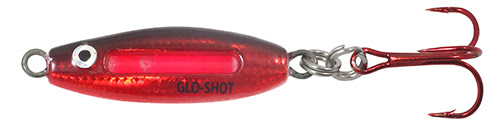
In this video, Nick talks about how a simple glow-stick color change on his Glo-Shot Fired-Belly Spoon triggered the walleyes. He also demonstrates key custom rigging for catching more low-light crappies. You’ll appreciate how Nick breaks down deadsticking to the deep details. And lastly, Nick gives up his number one combination for jumbo perch.
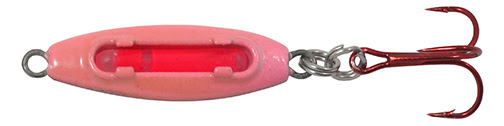
The Glo-Shot® Fire-Belly Spoon relies on its proven exposed light-stick that beams impressively for up to 8 hours. Available in red, green and chartreuse, the replaceable and interchangeable light-sticks give you the flexibility of color choice depending on light levels and water clarity. From a scientific position, florescent green light travels the furthest underwater, making it a great choice for summoning fish from distances. In exceptionally clear water, however, it might be too bright, making chartreuse, and even more so red, better choices. Overall, red is a universal producer, and proves to be the most intense at short range. Red has a storied history of producing beneath the ice.
The body of the Glo-Shot Fire-Belly Spoon is forged from lead-free Z-alloy (Zinc), which cuts through the water column at break wind speed, quickly getting to hot marks on your flasher. Z-alloy yields weight without bulk, too, producing speed minus the intimidating sizes of most heavy spoons.
The Glo-Shot Fire-Belly Spoon is offered in 14 fish-catching colors inside and outside of the UV color spectrum. Speaking of UV, the specialty pigment refracts more natural light than traditional paint. The result is a lure that maintains its color deeper, in lower light, and in stained water.
The spectrum of 14 color patterns include the same colors tested year-in and year-out in the most popular waters throughout the U.S. and Canada, making the Glo-Shot Fire-Belly Spoon an instant classic. Add the fact that anglers can purchase individual glo-sticks to mix and match colors, and you have an endlessly customizable bait to address any situation on the water.
With an MSRP of $7.99, the Glo-Shot Fire-Belly Spoon comes ready to fish with one bait, three glow-sticks and changing tool per card. Select from 14 colors and 4 sizes 1/8 (#10 hook), 3/16 (#8 hook), ¼ (#8 hook), 3/8 (#6 hook) to accommodate multiple depths and species including walleyes, pike, crappies, bass and trout.
Cookie Consent
We use cookies to improve your experience on our site. By using our site, you consent to cookies.
ID used to identify users for 24 hours after last activity
24 hours
_gat
Used to monitor number of Google Analytics server requests when using Google Tag Manager
1 minute
__utma
ID used to identify users and sessions
2 years after last activity
__utmt
Used to monitor number of Google Analytics server requests
10 minutes
__utmb
Used to distinguish new sessions and visits. This cookie is set when the GA.js javascript library is loaded and there is no existing __utmb cookie. The cookie is updated every time data is sent to the Google Analytics server.
30 minutes after last activity
__utmc
Used only with old Urchin versions of Google Analytics and not with GA.js. Was used to distinguish between new sessions and visits at the end of a session.
End of session (browser)
__utmz
Contains information about the traffic source or campaign that directed user to the website. The cookie is set when the GA.js javascript is loaded and updated when data is sent to the Google Anaytics server
6 months after last activity
__utmv
Contains custom information set by the web developer via the _setCustomVar method in Google Analytics. This cookie is updated every time new data is sent to the Google Analytics server.
2 years after last activity
__utmx
Used to determine whether a user is included in an A / B or Multivariate test.
18 months
_ga
ID used to identify users
2 years
_gali
Used by Google Analytics to determine which links on a page are being clicked
30 seconds
_ga_
ID used to identify users
2 years
_gac_
Contains information related to marketing campaigns of the user. These are shared with Google AdWords / Google Ads when the Google Ads and Google Analytics accounts are linked together.