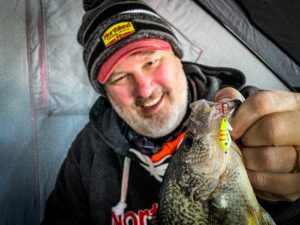
How To Catch FALL’S MOONLIT WALLEYES

nice fall nighttime walleye

Fall’s Moonlit Walleyes
from The Fishing Wire
The cooling waters of October draw large numbers of walleye into the shallows to feast on bountiful baitfish in advance of winter’s arrival. One of the most enjoyable and productive ways to target these toothy predators is by trolling shallow-running crankbaits under the light of the moon. These tips will help you put more moonlit walleye in the boat this season.

Pick your spots. Day in and day out, my favorite fall walleye trolling runs have some sort of weedy cover nearby. Lush summer weedbeds die back in the fall, making it easy for marauding walleye to slide into the weeds and pick off perch, shiners, and other baitfish trying to hide there. Focus on weed edges; frequently, the outside, deep weed edge is the most productive, but often, the inside edge can be even better as fishing pressure tends to be focused elsewhere. As long as there are some green weeds present, walleyes will be there too. As the water cools dramatically later in the fall, decaying weedbeds become less important than rocky shorelines and points.

Pick your baits. I choose trolling lures based on water temperature. Early in the fall – when water temps are in the 60s – high-action lures with a relatively compact profile are the most important tools in my toolbox. With perch serving as the primary shallow forage for walleyes wherever they swim, the LIVETARGET Yellow Perch Jerkbait is a great option for the start of trolling season. Choose the Metallic/Gloss finish for bright, moonlight nights and the Natural/Matte pattern for nights when clouds obscure the moon. If your lake has a significant panfish forage base – a common situation on many stocked walleye lakes – the shallow-diving LIVETARGET Sunfish Crankbait also deserves some time in the water. Later in the fall, include longer, suspending lures in your trolling spread. The shallow-diving LIVETARGET Rainbow Smelt Jerkbait has a provocative wobbling action that is perfect for cold water conditions and includes a deep-knocking rattle for extra attraction on moonless nights.

Create a complete tackle system. Night trolling for fall walleyes is a high-precision enterprise that demands dedicated trolling tackle and rigging. Begin with a 7’6” to 8’6” casting rod with Medium power and Moderate or Moderate Fast action. Graphite construction will ensure that you can read the lure’s action – and quickly detect weeds, mussel shells, or pine needles that foul hooks – with a quick glance at the rod tip. Add a medium-capacity line counter trolling reel filled with 20-pound-test TUF-LINE DOMIN8 braid. This ultra-thin diameter, eight-carrier braided line minimizes water resistance and allows lures to dive deeper on less line. Sensitive DOMIN8 braid also transmits lure action perfectly to the rod tip to make lure monitoring quick and easy. Add a Mustad Duo-Lock Snap, and your trolling tackle configuration is complete.

Watch your speed. Quiet propulsion in shallow water, either from a smooth EFI kicker motor or a powerful bow-mount electric trolling motor, is the key to moonlit walleye success. Since the water is cool – and getting colder by the day – it’s important to pull baits at a speed that correlates with the water’s temperature. Early in the fall, you can get away with trolling those Shad Raps at speeds close to 2 mph. However, trolling speeds should fall into the 1.6 to 1.8 mph range as soon as the water cools into the low 60s. Late in the season, when most anglers have winterized their boats and headed for their deer stands, productive trolling speeds are typically 1.4 mph or even less.

Fall is prime time for walleyes. Plug in those navigation lights, strap on your lifejacket and grab a thermos of hot coffee, because it’s time to chase walleyes under the light of the October moon!

About
Mustad has led the global hook market since 1877. Mustad’s mission is to create a comprehensive multi-brand company that leads the fishing tackle industry while focusing on innovation, employee and customer satisfaction, and sustainability. With the addition of TUF-Line and LIVETARGET, Mustad continues to solidify its position as a complete sports fishing brand family.

Where and How To Catch July Bass at Lake Mitchell Including GPS Coordinates

with Ed Reeves

     July can be a tough time for bass fishing in Alabama but Mitchell Lake offers a variety of cover and structure where bass will feed this month.  The spots and largemouth there feed well during the summer and you can catch them in a variety of ways.

     Mitchell is a 5850 acre Alabama Power lake on the Coosa River between Lay and Jordan Lakes.  It has 147 miles of shoreline and there was a lot of wood and rock cover left in the lake when it was dammed in 1922. The lake is very fertile and has a good population of bass and the baitfish they feed on.

     In the Alabama Bass Angler Information Team report Mitchell ranks seventh in the state in numbers of bass caught per angler day, a good indication of the numbers of bass in the lake.  There were not a lot of tournaments reported on the lake but in those reported the average bass weighed 1.67 pounds.

     Ed Reeves grew up in Wetumpka and still lives there.  He has fished Mitchell all his life, starting as a kid with his father and now fishing tournaments on it.  Following his family tradition of law enforcement he works for Montgomery as a police officer in the K-9 unit. 

     About five years ago a friend invited Ed to partner with him on the Fishers of Men Central Alabama trail and he was soon hooked on tournament fishing.  He bought a Skeeter bass boat in 2004 and now fishes with the Prattville Bass Anglers club as well as some other local tournaments. He is also fishing the BASS Weekend Series this year.

     A few years ago Ed started pouring his own jigs and now sells them through his W-3 Tackle Company.  He fishes both shaky head jigs and a jig and pig a lot so pouring his own was a good way to save money and an interesting hobby.  So many people in his club wanted to buy his jigs he started his business.  His Tip-Up shaky head and his Finesse skirted jig are favorites that he uses a lot.

      “By late June almost all the bass have come out of the spawning areas and are setting up on their summer holes,” Ed told me.  You can pattern them and catch them consistently on places where they live all year except for the spawn.  Some of these spots are subtle and it takes a lot of time on the lake to find them.

     “Spots on the lake especially like main lake rocks and wood on steep banks,” Ed said.  They like a place they can move up and down in the water column quickly and feed.  Rocks are a favorite but they will also hold on wood cover.   Largemouth can be found in the same cover at times but they tend to like more wood and grass, and Ed says he usually catches four or five spots to every largemouth in the places he fishes.

     Ed also likes to fish docks, especially on sunny bright days when the fish seek shade.  There are not a lot of docks on the lake but they are in clusters and Ed will often get on a line of docks and fish them all.  Brush around them helps and most docks are on posts but the shade is the main thing Ed fishes.

     Ed usually has four rods rigged and ready. All his rods are Walt Higgins Custom Rods, one of his sponsors, and he likes Pflueger bait casting reels for all his baits.

     He will have a three-sixteenths ounce Tip-Up head rigged with a dark plastic worm on 15 pound test Big Game line on one and one of his Finesse jigs, a three sixteenths ounce skirted jig with a crawfish trailer on another. Two more rods will be rigged with a spinnerbait and a crankbait on them. Most of the time in the summer he throws one of the two jigs.

     A few weeks ago Ed showed me the following ten spots where he catches summer bass.  We had about ten keepers that day, including two spots about 2.5 pounds each and a largemouth about the same size. We lost several good fish that threw the bait, too.  And the fish were just setting up on these spots.

     1. N 32 54.670 – W 86 29.747 – Head upstream to where the lake widens and there are several big islands, not far downstream from the Lay Lake Dam.  The first island you come to is Bo Lee Island and it is an excellent place to start first thing in the morning and any time there is current.

     As you approach the downstream end of the island you will see the end of a log sticking out of the water a long way off the bank to your right.  The right side of the island has grass on it.  Ed likes to go to the upper end of the island and fish back down this side with the current. He will throw a topwater popper like a Pop-R some but his main baits is the spinnerbait.

     Current is important on many of these spots but this hole is dependent on it.  If the current is not running Ed usually does not fish it.  Stay well off the bank and throw right to the edge of the grass with a topwater bait or spinnerbait. Fish either one back quickly since the bass will be in a feeding mood in the current.

     Ed chooses a Strike King Premiere white three-eights ounce spinnerbait with two silver blades for this spot. The bass will be holding near the grass and wood cover and feeding on shad as the current moves them down the bank and this combination spinnerbait imitates them.

     2. N 32 53.803 – W 86 29.172 – Going downstream from the island watch for a high rocky bank on your left with a small creek entering just downstream of it.  Just inside the creek mouth there is a big pine standing above all the bushes on the bank to your left and on the right side you can see where bank fishermen have camped. 

     Ed calls this “Cottonmouth Cove” because of the two huge snakes he has seen here.  He hates snakes but still fishes here because it holds fish, and we both had keeper spots here when we fished.  Start on the main lake point on either side and fish all around the mouth of the pocket, working a jig from very shallow to about 15 feet deep.  Bounce the jig down the rocks and jiggle it at each stop.

     Ed does not go way back into the creek but concentrates on the mouth of it this time of year.  The fish will have moved out to the deeper water and be holding here by now.  This spot is good without a current but current will make it and all others even better.

     3. N 32 52.594 – W 86 28.999 – Heading downstream the river will start to bend to the left and you will see a line of docks starting on your right. Just upstream of the first dock is a small creek and the upstream point of it is an excellent place to catch a spot, according to Ed.  There is a small grass bed on it and it runs out a short distance across the mouth of the pocket.

     Start by fishing the point, working a jig head worm or jig and pig along the sloping bottom. Fish it from the edge of the grass out to 20 feet deep or so.  Hop and shake either bait as you fish them along the bottom.

     Back in the pocket there is a good blowdown to fish. You are more likely to catch largemouth back in pockets around wood cover like this.  It is worth your time here to fish on around the downstream side under the overhanging trees to the dock. This bank is rocky and drops fast. Fish it with either bait to the dock.

     4. N 32 52.031 – W 86 28.123 –  The line of docks starting at the pocket in hole #3 runs all the way to the mouth of Walnut Creek and is one of Ed’s favorite dock areas to fish.  He usually waits until the sun is bright to drive the fish under the docks then works the line of docks, fishing every one. 

     Ed usually starts at the Walnut Creek end at the first dock upstream. It is blue and white striped and he will fish it and the others until he runs out of docks at the small creek in #3.  Fish the outside of the docks first, probing for brush, then move in and cast under them.  Don’t move in too close until you fish around the dock or you will spook bass holding in the brush in front of them.

     If you see shad around the docks or see fish swirling try the spinnerbait or a shad colored Bandit crankbait.  Work them along the sides of the dock and across the front of them. Bass holding in the shade will run out to hit a bait moving along the dock.

     If there is no activity Ed will start with his jig head worm and fish it, then try the jig and pig.  He says he catches more fish on the jig head worm but the jig and pig produces bigger bass and not as many little ones, although the bigger ones will hit the jig head too.  Ed caught our biggest bass of the day off one of these docks on a Tip-Up head and worm.

     5. N 32 51.346 – W 86 26.639 – Downstream on your left there are several islands in the mouth of Hatchet Creek.  Ed starts on the downstream point of the first one, near the small clump of dirt with one tree in it that is surrounded by grass, off the downstream end.  He will fish upstream across the small gap between the island and the bank all the way up to the mouth of the next pocket where a fish attractor sign is on a tree.

     This bank all along here is the outside bend of the river and drops off fast. There are rocks and blowdowns to fish as well as smaller dips and juts in the bank.  Bass hold all along it and we caught several here and lost a couple, too.  You can spend a lot of time here if you fish slowly and carefully.

     The upstream end of the island at the gap has some good rocks on it and bass often hold on them and in the gap. As soon as you cross the gap you will start fishing some blowdowns, some that run way off the bank. Fish them slowly to get your bait down to the outer ends in deep water.  Both kinds of jigs work well here.

     6. N 32 50.855 – W 86 26.722 – Across the mouth of Hatchett Creek the downstream point has two logs laying on it at a steep angle. They show how fast the bottom drops. You will be sitting three boat lengths off the bank and be in 50 feet of water where the channel swings in right by the bank.

     Start at the two logs and work into the creek, fishing everything along it until you get to the next point with a brush top on it.  Fish this bluff bank by casting either jig right to the bank and moving it very slowly so it falls along the rocks.  Bass will suspend along the drop and you have to get your bait in front of them for them to hit.

     If there is current moving across this bank Ed will get in close and cast a crankbait, paralleling the bank with it. Bass will move up shallow enough to hit the crankbait when current is moving baitfish along this drop.  You will often find a big school of bass feeding here.

     7. N 32 50.268 – W 86 27.116 – Downstream on your left is Airplane Slough.  There is a big house with a brown roof on the upstream side and a gazebo near the water.  On your right as you go in a small cut will run off downstream. Start at the inside point of the cut and fish the steep bank with your jigs, working back into the creek to the next point where the creek opens up.

     Work a jig under the overhanging brush down the steep rocky bank. There are also a couple of trees in the water along here to fish. 

     When you get to the next point you will be across from a dock in front of a house that has a brick lower level.  Jump across and fish this and the next three docks. There is a little brush in front of some of the boat houses but try to get your bait back under the dock into the shade.  Fish both jigs on these docks to the dock with the three fish on it.  We took a couple of keepers off them when we fished.

     8. N 32 49.076 – W 86 27.350 –  Head down the river and you will pass Finger Slough on your left and the mouth of Cargile Creek on your right. You will see a big red roof house with cream colored walls running down to the water and a power line crosses the river.  Just downstream of the power line on your left watch for a big rock on the bank.  About 75 yards downstream of this big rock there is some exposed rock showing at the edge of the water.

     Start fishing at the exposed rock and work downstream past a very small dip in the bank to an overhanging tree. Ed says he has no idea why this spot holds fish but it does.   The bank has rocks under the water so try to bounce your jigs along the fast dropping bottom for fish holding in them.

     9. N 32 48.811 – W 86 26.304 –  Going down the river it makes a sharp turn to the left then back to the right at the dam.  Just before the river turns back to the right you will see an old wooden pier or some kind of wood structure running parallel to the bank out in the water on a point on your left.  Just past it is Big “Y” Slough. Go into it and start fishing on the right bank at the little pocket across from the point.

     Fish all along this steep bank working into the slough until the bottom flattens out.  You will be back in the slough and see the split forming the “Y” where the bottom of the bank you are fishing flattens out. Bass move out of the slough and hold along this steep bank in the summer.  Fish it with both your jigs.

     10. N 32 48.631 – W 86 26.419 – Downstream of Little “Y” Slough is a small pocket that has a little point on the upstream side.  Start at the pocket and fish upstream toward the downstream point at Litte “Y” Slough, getting in close and fishing a crankbait parallel to the bank. Fish to the point of the slough.

     Ed says you will catch a bunch of small fish here at all times but the bigger ones turn on when there is current. You might catch a dozen throwbacks without current then catch a limit of good keepers as soon as the current starts moving.  Call to find out the generating schedule and plan on fishing this spot when they start pulling water.  You are only a few hundred yards from the dam.

     Give this small lake a try to enjoy some good bass fishing for largemouth and spots right now.  Hit Ed’s spots then look for similar subtle structure and cover all over the lake.  Fish when the current is moving if possible but you can catch fish off most of these spots and others you will find even if it is still. 

Generating Schedule for Mitchell – 1-800-LAKES 11

NICHOLS LURES ACQUIRES DIRTY JIGS TACKLE

Nichols Lures Acquires Dirty Jigs Tackle

Nichols Lures, a recognized brand name in high-quality, American-made fishing tackle, announced today its acquisition of Wisconsin-based Dirty Jigs Tackle. Both brands will be manufactured under one roof in Thomasville, Georgia.

“We have built a reputation at Nichols Lures for creating tournament-grade tackle delivered on time,” says Brooks Woodward, President of Nichols Lures. “We are excited to extend our commitment to excellence with the Dirty Jigs brand and product line. Curt Demerath, the founder of Dirty Jigs, built an incredible company around a superior product, and our entire team stands ready to continue that legacy.”

When asked of the transition, Curt replied, “Now is the time to hand the reins to someone else who sees that same vision and has the same passion for the sport and the product. I can’t think of anyone that I have more respect and faith in to do that than Brooks Woodward of Nichols Lures and I know there will be many new and better things to come from Dirty Jigs with him at the helm.”

Production of the Dirty Jigs line will be nothing new for the Nichols Lures team, as they have been assisting Dirty Jigs with OEM production since late 2021. “It is essential that we maintain only the highest standards for Dirty Jigs products,” remarks Brooks. “Keeping production under our control in Thomasville, Georgia, ensures that the tackle fishermen love will continue to be made properly, and it provides numerous jobs in our community.”

Dirty Jigs was founded in 2004 by Curt Demerath of Shiocton, WI. “Almost 20 years ago after building jigs for myself and a handful of friends I got the crazy idea to start selling them.  It all started with one simple rule, build the jig to do the job the best I was able. That meant using the best hooks, making detailed colored skirts, and offering the right head shapes with the proper weedguard.  As time went on many new colors and styles were created.  As the industry and market changed, some things stayed and some things went away but not that original rule.   I’ve never been afraid to design a new skirt pattern or skirt material color, or try a new jig design,” says Curt.

“Nichols Lures exists not just to make the perfect fishing lure, but more importantly, to make an impact on our community. Our vision is to employ and support as many people in Thomasville, GA, and our surrounding area as possible. The acquisition of Dirty Jigs will ensure that we have plenty of work in the pipeline to keep our entire crew busy!”

ABOUT NICHOLS LURES

No matter what you want in your tackle box, Nichols Lures can take care of you. Spinnerbaits, Jigs, Flutter Spoons, and multitudes of terminal tackle are all part of our extensive line-up of products. Founded in 1989, Dave Nichols began by creating jigs and spinnerbaits out of his garage in East Texas. From there, the company grew, adding new and innovative products at every turn. In 2012, Dave and his wife, Lynn, sold the company to Brooks Woodward, the current owner and operator. Each morning, Brooks wakes up, goes into work, sits down at his desk, and begins hand-crafting each lure that comes his way. We still value high-quality, hand-made, American products, and plan on continuing a 30 year old legacy the right way, with hard work and determination.

Where and How To Catch June Bass at Neely Henry with GPS Coordinates

with Karen Rae Elkins

    There is something special about Coosa River lakes in June.  The bass, both spots and largemouth, are stacking up in predictable places and feeding.  Neely Henry is one of the best on the chain for a trip this month.

    The Alabama DNR calls Neely Henry “one of the best-kept fishing secrets in Alabama.” Running 77 miles from its dam to the Weiss Dam, it covers 11,235 acres that vary from a river run on its upper end to shallow flats and creeks on the lower end.

    Built in the late 1950s, many of the creeks and ditches are silted in and the shallows are full of grass. It can be a dangerous lake to run since there are few markers and many creeks have stump fields and shallows that will eat lower units.  Be very careful when running this lake.

    Largemouth are in the lake in good numbers in the 15 to 18 inch range according to the Alabama DNR. The DNR also calls the spot population “exceptional” for large fish and the numbers of spots in the 14 to 20 inch range is one of the best in the state.

    Karen Rae Elkins was born in Huntsville but moved closer to Neely Henry Lake when ten years old.  She grew up fishing and loves it. The farm she lived on had five ponds and she would fish for anything that would bite, but one day she got her fathers’ bass fishing equipment, caught some bass and was hooked herself.

    Her father owned The Fishing Hole bait and tackle store in Anniston so she was exposed to a lot of fishing talk. When her father retired he asked her to fish tournaments with him and they competed on the Guys and Dolls and Cartersville Couples Trails, as well as in many local tournaments.

    When the Women’s Bass Tour was started Karen saw how many lakes in her area were on the schedule so she signed up.  She really likes the camaraderie and fun from this trail and says it has made her a better fisherman.  

    This spring Karen agreed to run the Team Trails tournament trail on the Coosa River and is also starting a Youth Tournament Trail in this organization. She fishes the tournaments as well as running them.

    Karen’s best five fish limit came a few years ago on Neely Henry when she brought in 18.18 pounds. And she won a tournament on April 4 this year with five weighing 14.4 there. She likes fishing and likes competition so tournaments are a good fit for her.

    Sponsors mean Karen is able to fish more than she would be able to without them and her sponsors include: Mojo Weights, Reel Grip, Bo’s Jigs, Team Trail Tournaments and JJs Magic.  She also supports the Magic Foundation and Second Chance, to organizations that are very important to her.

    “The bass are feeding in the grass in June and are fun to catch,” Karen told me.  The spawn is over and the bass are hungry.  She likes to start out shallow in the mornings catching these bass, then moves to points, humps and ledges later in they day when water is moving.  And a third good pattern is fishing docks.

    For fishing the grass Karen likes the Mojo rig and says it gives her a slight edge over the more common Texas or Carolina rigs most fishermen use. The Mojo rig gives the bait a little different look.  It is a thin cylindrical weight with a rubber band you insert so you can “peg” it on your line.

    “Start with your weight six inches from the        bait then move it closer if you aren’t getting bites” Karen said. A variety of plastics will work in June and she tries different ones until the fish tell her what she wants.  A Sweet Beaver is always a good choice but she also catches bass on Zoom Finesse Worms and Brush Hogs and Strike King Lizards.

    A few basic colors work well on Neely Henry. Watermelon Red, Junebug and Green Pumpkin are all standard colors.  And Karen always dips her baits in JJ’s Magic, saying that attracts the bass and makes them hold the bait longer.  She will often dip the tails in either red or chartreuse but if she does not want this flicker of color she uses the clear to add scent.

    Around docks Karen flips a Bo’s Jig and really likes the color named for her. The “Karen’s Jig” color has green pumpkin, black and root beer strands in it.  She tips it with a Sweet Beaver or a Zoom Chunk and works the jig under the docks, around all pilings and in any brush around the docks. This works well when the sun is bright.

    If current is moving bass will stack up on points, humps and ledges to feed. Karen likes a crankbait that runs seven to ten feet deep for fishing those areas and her favorites include Lucky Craft CB Square and Jackall Muscle baits.

    Karen showed me around Neely Henry a few weeks ago and the bass were just starting to move onto their June holes.  We put in down the lake and fished early, then took out and went up to Gadsden and fished the river some.  The lake is varied and the patterns can differ.

    The following spots all hold bass this month:

    1.  N 33 53.547 – W 86 06.603 – Back in Canoe Creek just downstream of Canoe Creek Marina you will see some brush tops out in the middle. This brush is on a hump where the channel swings across the creek and grass grows on it in June, too. It is a good place to find bass, especially if there is any current moving down the creek.

    Going up the creek watch for a nice house on your right with a gray dock with a “For Sale” sign on it. Stay on that side of the creek since the shallow hump is out in the middle. When you get near the gray dock look to your left and you should see the brush on the hump. If you get to the marina you have gone too far.

    Karen will start on the channel side and fish all around the hump, pitching her Mojo rigged Sweet Beaver of Brush Hog into holes in the grass and moving it through the thinner areas of grass.  For some reason Junebug with a chartreuse tail seems to work especially well here.

    Drag your bait through the grass and work it slowly and carefully. Be ready to set the hook when you feel any weight or your line moves at all. If there is current try to throw your bait so you work it with the current in a natural movement.

    2. N 33 51.375 – W 86 03.217 – Running down the main river from Canoe Creek you will see the opening to Greens Creek on your left.  Off the upstream point are two small islands.  Idle in to the point but do not go between the islands. There are lots of snags here. 

    When you get to the point you will see an older dock to the left of two cement boat ramps that are side by side. Start at that dock and work around the point, fishing around to the inside of the point.  Fish the grass here with a Mojo rig, work a crankbait over the shallows and pitch a jig and pig to the docks.

    The jig and pig is especially effective if the water is clear and the sun is bright, driving the bass to the shade.  Fish all the cover carefully. Karen says she has caught several five-pound-plus bass on this point.

    3. N 33 50.619 – W 86 04.472 – Beaver Creek is a good big-bass creek and Karen has several types of cover and structure she fishes in it.  As you go into the mouth you will see Greenport Marina on your right.  There is a seawall in front of the store and storage area then a long point runs upstream. There are picnic tables on the point. Off the end of this point is a hump or island, depending on the water level. When we were there it was slightly under water.

    Start near the store and fish the seawall toward the point.  Fish the Mojo rig and crankbaits along here. This is the only place Karen will rig an Old Monster worm on her Mojo rig. The extra big worm attracts quality bites on this spot.  Work from right on the seawall out to several feet deep. There are patches of grass to fish and some other cover.

    When you get out near the end of the point fish the hump and around it into the cove behind it.  Work the whole area carefully but Karen says the best area is the seawall at the store, so pay extra attention to any cover here.

    4.  N 33 50.175 – W 86 05.807 – You can run into Beaver Creek on plane until you see the silo ahead on your right. Stay to the left side going in.  When the silo comes into view it is a good idea to slow down and idle the rest of the way due to stumps and shallows. 

    When you get back about even with the silo on your right you will see a grass point on your left.  There are cattails, rocks, grass and stumps starting at this point working upstream and the channel swings on this side making it even better.  Shallow grass near deeper water is usually better, but keep in mind deeper water here might mean seven feet deep.

    Fish along the left bank working your Mojo rig through the grass.  Try to hit any stumps you can see and also probe for hidden stumps with your weight.  Fish on up this bank and there will be a grass island on your right and some big rocks on your left. There is a spring in the rocks that keeps the water cooler and moving some here.  Fish around the rocks and the island, too. This is one of Karen’s best tournament holes.

    5.  N 33 50.054 – W 86 06.448 – Idle on back into the creek until it narrows down. The bottom back here is sandy and there is lots of grass and stumps to fish. And overhanging trees in some areas provide shade. Work all the cover in the water, including the fence rows running off the bank, with a Mojo Rig and a crankbait. 

    Fish slowly and carefully. Some big bass hold up back here in June.  When you catch one bass work the area hitting every bit of cover, there is often more than one in a spot.  You should go as far back as you can get your boat if you are catching fish.

    Karen says two or three kinds of cover together makes for a hot spot to catch a bass. Look for wood in the grass, combining two kinds of cover.  If there are also rocks or a drop it makes it even better. Fish any combinations of cover carefully.

    6.  N 33 44.973 – W 86 03.559 – Run downstream and watch for a big round point on your right. On the upstream side is a boat ramp and there is a dock on the downstream side. The house has a “For Sale” sign. 

    This point has deep water just off it where the old channel swings by but it comes up quickly with a shallow ledge on the downstream side.   Current coming down the river hits this point and moves across it, creating an eddy on the downstream side.     Fish a deep diving crankbait here, casting up near the bank and working it across the shallow water, making it dig bottom, and then over the drop into deeper water. Fish with the current, moving water makes the fish bite much better here and other spots. Fish all around this point, covering both the upstream and downstream sides.

    7.  N 33 48.742 – W 86 04.032 – At the mouth of Shoal Creek the downstream point is good and all three kinds of cover you want to fish is one it. Current hits this point, too, and there is deep water just off shallow water. There is a wood house with a tin roof and three dormers on it.  AS you go into the cove on the upstream side there is a gray boathouse with turquoise doors on it.

    Start at the dock and flip a jig to it, especially if it is sunny.  Work a crankbait all around the point and the upstream cove. Then fish a Mojo rig in the grass.  Work each as you come to them to cover the area completely.

    Current hitting this area makes it better but wind blowing in helps, too. Wind will create a chop on the water, breaking up the light and making it more likely a bass will hit an artificial bait, and it also moves water, creating a current. Wind is your friend as long as it is not too strong to control your boat.

    8.  N 33 48.634 – W 86 03.764 – Across the river is a big bluff rock wall and a small rock island off it.  The bluff wall is on the upstream side of the opening to a big cove and the water is very deep off it.  Three was an old trotline hanging on the rocks with some dried fish on it the day we fished. It looked like some kind of voodoo charm!  This is a great spotted bass hole and Karen works all around it.

    This is a good spot to rig a Finesse worm on your Mojo Rig and throw it right on the bank.  Move it slowly and let if fall down the face of the rocks. Don’t move it much or it will fall too far, dropping past fish too quickly.

    There is a stump row on the downstream side of this point, too, another combination of types of cover. Fish them with the Mojo Rig but also flip a jig and pig right against the rocks and work it out, trying to hit stump.

    9.  N 33 48.891 – W 86 05.325 – Run back into Shoal Creek and watch on your left for a yellow house with a brown roof and a boathouse with two doors in front of it.  All the way across the creek is a big flat and hump with stumps on it. On the bank on that side you will see a mobile home on the bank. Idle straight toward the mobile home and watch your depthfinder.

    You will be in about 10 feet of water on the flat then it will come up to about five feet deep. You will still be a long way off the bank, in front and upstream of a red door dock in front of the trailer.  There is a stump rod on this shallow hump and a small ditch runs out near it.

    Karen will work back and forth along this drop fishing crankbaits and a Mojo Rig. She will work it a long time because she says you never know when bass will move up on this spot and feed. And it constantly replenishes itself from the deeper water nearby.

    10. N 34 00.816 – W 85 57.072 – It is a long run upstream of the bridges in Gadsden so it is a good idea to trailer up here if you can. Going upstream from Gadsden watch for a rock bluff wall on your left just as you see the trailers at Tillison Bend Park. You will be upstream and the same side of the mouth of a fairly big creek that has a blowdown across it.

    Start at the beginning of the rock wall and fish it all the way past the first three docks, a very long way upstream. Karen says it takes a long time to work this spot correctly and you can spend most of a day on it. It is worth it, this is where she caught the 18 pound limit in a June tournament.

    Karen keeps her boat in close to the wall in about 11 to 12 feet of water and makes three casts before moving up the wall. On cast will be in toward the wall as a slight angle with the Mojo Rig. She then makes a long cast to the wall ahead of the boat and works it back at an angle to the boat The third cast will be straight ahead of the boat and is worked back to the boat.

    Fishing like this covers all the water from the face of the wall out to 12 feet deep or so. To do it right can take hours working along here. When she gets to the docks Karen fishes a jig and pig around them.  Current always makes this spot better. Karen says she does not even fish it if the water is not moving.

    11. N 34 01.170 – W 85 58.766 – Run back downstream and you will see a golf course on your left and more holes across the river on your right.  You are close enough to see the sharp bend back to your left going to the bridges and the water station in the bend.

    Watch for a creek opening on your right that goes back to the golf course. You will see some big PVC pipe going into the water and some smaller pipe running out above the water and dropping down on the river side. As you idle into the creek there is another set of pipes and they are for the pump house you see on the bank that waters the golf course.

    When you get back a ways from the river the creek splits and straight ahead it will go around and under a wooden golf cart bridge.  Go back to the bridge area and fish all the grass and stumps in the back of this creek. Karen will pitch a jig to wood cover in the grass and also run a shallow diving crankbait over the grass that is under the water.

    Another trick Karen uses in this and similar spots is to Mojo Rig a big lizard like the Zoom Magmum or the Strike King 3X lizard. These big baits draw strikes from big bass. Work them through the grass back in this creek in June.

    12. N 33 59.205 – W 85 59.855 – Run downstream past the bridges and watch for a big three story yellow house with white roof and trim on your right. The house sits on the beginning of the upstream point of Big Willis Creek on that side and looks like it is in a park.

    Across the river from the house is a small ditch that is not real noticeable as you run by. You will see the bank flatten out and go back a little. This old ditch has filled in but it creates a shelf in front of it that holds good fish.

    Keep your boat out from the bank and cast a crankbait to the bank. Dig the bottom coming out the shelf to the edge of the drop. This is a good spot that does not get a lot of pressure since it is not real noticeable.

    13. N 33 58.493 – W 85 59.664 – Run down the river past the old closed park on your left and watch for a small creek opening on that side. There are to white PVC poles on either side of the opening and a pasture or field on the downstream side of it. The poles mark two big stumps.

    Karen fishes the mouth of this creek and works the stumps with her baits. She fishes on down the bank a hundred feet or so, fishing the grass and wood cover. Bass often stack up here and current helps.

    Also work into the small creek. There are stumps, fence rows and grass beds to fish in it.

    14.  N 33 57.190 – W 85 57.768 – Run down the river until you see a long narrow island well off the left bank. This small island sits in front of a river ledge with trees on it that separates the river from a big slough behind it.  There are houses and docks in the slough and a bunch of wood duck nests, especially on the downstream end around the docks there.

    There is a small opening on the upstream end of this slough and Karen often starts there in the morning, fishing into the shallows, working grass and stumps. When you get to the other end where it opens back up there are two PVC poles, one with green paint on one side, that mark the channel going it.

    Karen will fish the edges of this cut and the area around it, probing for stumps and trash. She will also work up the river side of the ledge, it drops off pretty quickly and is hard clay. Bass hold all along it.

    These 14 spots offer a wide variety of kinds of places to fish, with some on the main lake and more up the river. There are many more similar spots. Check these out to see Karen’s patterns then explore to find more, just be careful.


HOW TO SCORE ON FALL WALLEYE

How To Score On Fall Walleye

by Bob Jensen

from The Fishing Wire

Air temperatures were in the mid-40’s last night where I live. They’ll get into the 70’s today, and, for the next few weeks, we’ll see those ranges daily. Birds and butterflies are starting to move south, and across walleye country, anglers who like to catch walleyes are starting to get excited. If you live in an area where walleyes live, here’s how you can get in on that action!

Autumn is big walleye time. If a trophy walleye is your goal, select a body of water that has a history of being home to the big ones and fish it hard, now. Some lakes are big fish lakes, others are eater fish lakes. For many of us, the opportunity to catch truly big walleyes is better now than it was just a few years ago. Usually, the biggest walleyes come from lakes that are home to cisco, smelt, and other oily baitfish.

In the fall, bigger baits usually catch the biggest fish. There is a theory that big fish are more likely to eat one big meal than several smaller meals. Hunting down several smaller meals requires more energy, and using that energy keeps the weight down on the fish.

Some folks like to troll crankbaits in the fall, and trolling cranks at night can be especially productive on big fish. Those baitfish we talked about earlier are fall-spawners. They suspend over deep water during the day and move to shallow sand/pebble spots at night. When they’re shallow, it’s easier for the walleyes to catch and eat them. A Lucky Shad style crankbait that enters a walleye neighborhood has a very good chance of getting eaten.

Mike Frisch makes his living chasing walleyes and other species of fish. In the fall many walleye anglers will tie a jig to their line and leave it there all day. Jigs are traditionally a good way to catch walleyes during any season, but they’re particularly good in the fall. Mike will go against tradition and tie on a bottom-bouncer. Behind that he’ll add a 3-to-4-foot snell made of 10-pound test line. Depending on water depth he’ll use a bouncer up to 4 ounces, with 2-to-3-ounce bouncers being what’s on his line most of the time. He goes with the heavy weights because he wants to move quickly. When he catches a fish or sees a group on the sonar he might slow down, but often the faster presentation is what it takes to get the fish to bite. To go against tradition even more, a nightcrawler will be on his hook. It’s often thought that minnows will be most productive in the fall, and at times they are, but there are plenty of times when the crawler will out-produce a minnow. Traditions are good, but don’t let a tradition get in the way of success at catching more fish.

But no matter how good crankbaits or bottom-bouncer rigs can be in the fall, there are times, especially if you’re looking for numbers of fish, that a jig simply cannot be beat. In the past several years, more walleye catchers are going to plastic on the jig. Something like a Rage Swimmer or Rage Grub on a ¼- or 3/8-ounce jig has become the go-to rig for some of the most successful walleye catchers.

If you like to catch big walleyes or lots of walleyes, now and until the water gets hard is the time to do so. As the weather gets cooler, the walleyes get hungrier. If you’re on the water doing what we just talked about, your chances of getting bit will be very good.

– Bob Jensen of fishingthemidwest.com.

A NEW FINESSE BASS JIG

A new finesse jig based on what works on highly pressured Japanese waters

A New Finesse Bass Jig

Cypress, CA – Known for their extraordinary bass-catching abilities, there’s just something special about rubber-skirted jigs. Pitched, flipped, dragged, or hopped, they simply catch fish—no bones about it. Largemouth and smallmouth bass all eat forage that rubber-skirted jigs resemble—like young-of-the-year bluegills, and, of course, crawfish in all stages of development.

Enter the Ever Green IR Finesse Jig, a rubber-skirted jig unlike any other on bait shop shelves. A new take on the rubber-skirted finesse jig design—like a lot of cutting-edge baits and techniques—the IR Finesse Jig finds its origin on pressured, Japanese waters where anglers are constantly having to find the next big thing.

So, Ever Green is proud to introduce a radical new take in rubber-skirted finesse bass jig design. The lure is sure to please the most discerning anglers looking for that perfect cross between a football-head, round head, grass jig, and sim jig to ply bluegill and crawfish inhabited waters.

The new IR Finesse Jig is fraught with stealthy and consequential features. For one, the head is perfectly rounded to drop straight, deflect of structure, and crawl linearly on bare bottoms like gravel and sand. The head’s line-tie is at a 45-degree angle, which accommodates direct line to your rod tip for better feels and control. The intended line-tie angle also assists successful hooksets. Its custom long-shank hook is bloody sharp and unbending. The IR Finesse Jig also features a significant wire bait-keeper to fortify plastic trailers, while a single and double rattle holder on the base of the head allows for an audible addendum for mimicking crawdad “clicks”. Lastly, you’ll appreciate the weed-guard, which extends beyond the hook point, beating back snags, yet keeps the hook gap open for bass inhales and the subsequent hookset.

The IR Finesse Jig is available in three sizes – 5/16-, 3/8- and ½-ounce – and ten uber-bassy colors, to include: DARK GREEN PUMPKIN, BROWN PURPLE, GREEN PUMPKIN CRAW, BLACK BLUE TIP, SAPPHIRE CRAW, DK GRN PUMPKIN BRN CRAW, CLASSIC BROWN, CLEARWATER CRAW, ALABAMA CRAW, and HITE’S HOT CRAW.

Again, designed in Japan to service bass anglers used to difficult, discerning bass on waters like famed Lake Biwa, the Ever Green IR Finesse Jig was painstakingly designed and tested to catch fish when other methods fail.

Its design is simple—yet effective. Satoshi Ito, Ever Green Product Manager, comments, “Since Ever Green started designing and building baits, our first concern has been to create lures that look and act realistically. With the IR Finesse Jig, you’ve got a great option for largemouth, smallmouth, and spotted bass that looks and behaves like juvenile baitfish or crawdads skittering along the bottom. It can be fished like a football jig—and dragged on bottom without snags—but also excels as a flipping jig when you want a slightly smaller profile for neutral to negative fish. It also comes through the grass and junk easily for fishing all conditions. All around, it’s just a great bass jig.”

You’ll immediately appreciate the IR Finesse Jig, a bass jig unlike any other. There are numbers of other realistic-looking bass jigs on the market, but none are capable of summoning so many bites.

The bait also casts, flips, and pitches like a bullet. DAIWA recommends throwing it on baitcasting gear with Daiwa J-Braid and a green and brown J-Fluoro Samura Hidden Concept fluorocarbon leader or straight fluorocarbon to feel the slightest movement of the bait and anticipate bone-crushing strikes.

FEATURES

  • Crossover rubber-skirted finesse design with a compact, round head
  • Ten initial crawfish/panfish colors in the bait family
  • Strong, unbending custom, long-shank design hook
  • Wire bait keeper that keeps plastic trailers buttoned and prevents sliding off
  • Single or double rattle holder
  • Plastic brush weed guard that extends beyond the hook point but keeps hook gap open
  • Three sizes: 5/16-, 3/8- and ½- ounce

About Daiwa Corporation

Daiwa’s first spinning reel rolled off the assembly line in 1955. Since then, the company has grown into one of the largest and most influential tackle companies in the world today. To handle sales and distribution in the United States, Daiwa Corporation first opened its doors on September 26, 1966, operating from a small facility in Culver City, California. Today, based in Cypress, California, Daiwa Corporation sells tackle throughout the United States, Canada, Central and South America. From the very beginning, Daiwa’s emphasis has been upon innovation and quality. The result is a long list of product features, design and materials that have become standards for the fishing tackle industry. Daiwa’s long-standing record of innovation has left a visible mark on the majority of tackle manufactured today and continues to advance the sport of fishing.

Where and How To Catch May Bass at Lake Jordan with GPS Coordinates

with Damon Abernethy

     Catching spotted bass weighing three or more pounds is a thrill anytime.  When they hit in the dark it is even more exciting.  Jordan Lake just might be the best lake in Alabama to catch a big spotted bass at night right now and it is accessible to most fishermen in the state.  Plan a May trip to Jordan for some fast action.

     Jordan is a 6800 acre Alabama Power lake on the Coosa River 25 miles north of Montgomery.  It backs up to the Mitchell Lake dam and connects to Lake Bouldin with a short canal.  Jordan was built in 1928 and Bouldin added in 1967.  Bouldin is a good largemouth lake but the big spots live in Jordan and are the target of most bass fishermen.

      Since Jordan is very fertile there are excellent populations of baitfish in the lake.  Much of the shoreline of the lower lake is lined with cabins and docks but the river up toward the Mitchell Dam is more natural shoreline.  The banks of all the lake are very rocky with steep drops in most areas. 

     A good bit of natural wood cover from blowdowns and stumps has been increased by numerous brush piles and dock posts.   Almost all of the shoreline looks “fishy” and you can catch spots all over the lake, but the bigger spots tend to feed in specific kinds of structure and cover this time of year.

     Damon Abernethy loved fishing so much while growing up in northern Alabama he decided to become a fisheries biologists.  He went to Auburn and got a Masters in fisheries biology. After a few years working in South Carolina he moved back to Alabama and now works in the Montgomery office of the Alabama Department of Conservation and Natural Resources as the Fisheries Development Coordinator.

     One of Damon’s jobs is to compile the Alabama Bass Angler Information Team (BAIT) data so he keeps up with bass fishermen and tournament results on a daily basis. He is in charge of state public boat ramps and the past year has kept him very busy trying to keep them open with the low water levels.  Damon also coordinates the reservoir sampling program so he knows about the populations of fish in Alabama lakes.

     Damon has fished all his life and bass fishing it his passion.   Jordan is close to his house and he really likes it this time of year.  Damon helped me set up the lakes for these articles and, when asked which his favorite lake was, did not hesitate in saying Jordan at night in May.

As a member of the Prattville Bass Club Damon fishes many state lakes in their tournaments.  He also fishes the central Alabama Fishers of Men tournament trail and enters some of the pot tournaments on Jordan, especially this time of year. On most of his days off he will be on Jordan studying it and looking for new spots to catch spots.

 Jordan had produced several spots weighing over five pounds for Damon in the past few years. His best is a 5.5 pounder and his best five-fish limit of spots from Jordan weighed 23 pounds.  He has a seven-pound largemouth but does not target them on Jordan. The fishing for big spots is just too good.

“In late April most of the spots have spawned and are moving to deeper water,” Damon said.  They follow predictable patterns of movement and feed heavily from late April through May.  Although you can catch spots all day this time of year, night fishing is by far the best way to catch the grown ones.

Damon looks for steep banks near spawning areas that drop fast into deeper water. Wood cover helps as do rocks.  The bass are holding on these steep banks and feed all night long but Damon usually fishes from about an hour before dark until midnight or 1:00 AM. He says the fish will hit later than that, especially later in the year, but he just gets too sleepy to keep fishing.

You need only two rods rigged and ready to fish at night, according to Damon. One will be rigged with a three-quarters ounce black spinnerbait with a big #6 Colorado blade and a dark colored Zoom Swimmin’ Chunk.  The other rod will be rigged with a half-ounce spinnerbait and chunk in the same colors. That is all you need.

Both of Damon’s Calcutta reels will be loaded with 20 pound test monofilament or fluorocarbon line.  You can get away with the heavy line at night and need it for the big fish around cover.  Damon does not use braid because he says it causes too much trouble at night. If you get a backlash you can not see it to pick it out.

Damon showed me the following ten spots he likes at night. We fished in early April and the night bite had not started. Most of the spots were on the bed. Damon said it was his worst day ever on Jordan but we still had ten keeper spots with two better than three pounds each, even fishing in the daylight.

1. N 32 38.237 – W 86 15.926 – The last big creek on the left heading toward the dam is Sofkahatchee Creek and YMCA Camp Chandler is in it.  Damon said most folks call this “Swayback Creek” because of the swayback bridge up the creek a ways. 

Run in past the marked shoals and two small islands to the first small creek to your left.  The upstream point of this creek runs way out across the mouth of the smaller creek. The point has a metal seawall or bulkheads around it and there is an open metal roof dock on the inside of this point.  A concrete walkway goes up the hill from the point.

The main creek channel runs in on the outside of this point and hits it well up from the point.   The point runs out between the big creek and the smaller one and drops off good on both sides. There are rocks on the point and along the bank upstream of the point itself.  The smaller creek is a good spawning areas.

This is an excellent example of the type place Damon likes to fish at night.  He will keep his boat in about 18 feet of water and throw up onto the top of the underwater point, slow rolling his spinnerbait back to the boat.  Work out 100 to 150 feet until the point ends.  Then fish on up the bank where it drops off, too, fishing it the same way.

Damon says to hit places like this several times each night.   You may fish it at dark and not get bit then come back two hours later and catch a 20 pound limit.  Spots move up onto the points to feed and a school will feed together, with a lot of fish active at the same time. Don’t give up on a place after a few casts.

2. N 32 37.405 – W 86 16.521 – Run across the lake to the cove just upstream of the canal.  As you go in you will see a lone tree growing on an underwater hump out from an island just off the bank. The island has a big tree and a smaller tree on it and there is a walkway going to it from the shore.  The island has a metal seawall around it and the point just inside the cove past it has concrete poured around it, with some areas broken up into slabs.

Start on the point of the island and work around it then into the cove. Fish the next main point with the concrete around it. Stay out deep and fish your spinnerbait right on the bottom all the way back to the boat. Damon says cast to the bank since the spots will often be very shallow at night but keep your bait in contact with the bottom out to about 15 feet deep.

Damon got a nice 2 pound spot here on a Fish Stalker jig head with a centipede worm on it here when we fished. That is one of his favorite baits when fishing during daylight but he would not be using it at night. If fishing during the day you can catch spots on most of these holes but they tend to be smaller and you need to use jig head worms and other baits.

  3. N 32 38.479 – W 86 17.552 – Back across the lake and upstream you will see a cream colored house with a bright red roof on your right going upstream.  The point upstream of it has a green house on it and it is the downstream point of a big cove.  This is another place the big spots stack up as they move out of the cove after spawning.

Start where the rock riprap on the point starts and work around the point and into the cove. There is a big flat on the inside of the cove out from an island that sits just off the bank. Damon will fish the outside of the main point all the way to the outside of the island at night, keeping his boat in deep water and casting up toward the shallows, but he says the outside of the main lake point is the best area.

4. N 32 39.763 – W 86 18.697 – Run upstream to the second point on the right past the mouth of Weoka Creek.  There is a rock and wood house on this flat point and it has a streetlight, bench and two deer on it.  The point goes way out and Damon says this is an excellent example of a main lake point where the bass hold after spawning.

Stay way out until you learn how the point drops off and cast your spinnerbait up onto the point, working it back to deeper water. Damon says he likes to tick the bottom fairly often to know he is right on the bottom when slow rolling his bait back.  He wants to feel the thump of the big blade as it turns and the bump of the bottom to know where his bait is. 

Depending on how fast the bottom drops, Damon will go with either the three-quarter ounce or half-ounce bait.  The bigger bait keeps in contact with a fast dropping bottom better but will get hung more. If the bottom has a flatter slope or lots of wood cover the lighter bait will not get hung up as much.  You can fish the heavier bait a little faster.

5. N 32 39.915 – W 86 19.649 – Across and up the lake a little is a cove with the remains of an old marina and restaurant in it.  The point is flat where it has been graded off and is covered with brush. It has a steel sea wall around it and there was a chair sitting on it when we fished. Near the chair is a monument sign that is made for reading while standing in front of it and another sign you can read from the water saying “Hungry Horace Restaurant” nearby.

Start on the outside of the point keeping your boat in about 18 feet of water and slow roll your spinnerbait from the bulkhead out to deep water. Work into the cove on the back side of the point. Damon says this is a good night time spot but he has not caught many fish here during the day.

     6. N 32 40.277 – W 86 19.854 – Just upstream on the left you will see a rock and wood house with a pretty green yard around it. Damon says this homeowner keeps his yard in pretty shape all year long.  There is a wood seawall with a walkway built on it going around the point.  Just upstream of the seawall the bank is very deep and drops fast.  A lot of brush has been cut on the bank and fallen into the water, giving a lot of cover here.

     Damon will stay about 25 feet off the bank and the water will be 20 feet deep. He makes short casts to the shallows and works his bait back. He usually wants his bait to hit within a foot or so of the bank.  When fishing close to the shore where there is a lot of wood he will sometimes turn on a light to help make casts that don’t get hung up.  He uses the black light type fluorescent light but only when he needs to see where to cast.  Normally he likes to let his eyes adjust to the dark and he can see well enough without any kind of light.

     Fish up this steep bank to the next pocket and work the docks and brush in the pocket, too.  It is a small cove with several docks in it and another secondary point that is worth a few casts before leaving.

     7. N 32 41.222 – W 86 20.156 –   Upstream on the right you will see a green roofed dock on a steep bank at the mouth of a small creek. There is a small wooden dock with white caps on the posts and a block seawall here.  Big rocks are on the bank here, too.

     Start fishing in front of the first dock and work around the point, slow rolling your spinnerbait down the bottom. The bank and bottom is very steep between the docks and this is a good spot to find bass holding.  Work the point carefully before leaving.

     Current helps here and on all other spots on the lower lake.  You are more likely to find current here since the lake has narrowed down a lot.  Current can come from the generation of power at the Jordan dam or from upstream from the release of water at the Mitchell dam.  There should always be a little current since there is always one generator on-line at the Jordan dam, according to Damon. Stronger current will make the bass bite better.

     8. N 32 45.389 – W 86 22.764 – The last three holes are really river holes and bass are hard to catch unless there is a good current. These spots do offer good places to try later in the month. Damon says river bass stay shallower later since the water is cooler and current makes them move up and feed.

     Run upstream until you see an airplane on a dock on your right. You will run a long way and not see any docks or houses then this one will be on your right.  It is on the upstream side of the mouth of Pinchoule Creek.  Damon says he has never seen the airplane move but if it is gone the heavy dock with wooden ramp is plainly made for an airplane. Also, on the point there is a wide concrete ramp with a divider in the middle, probably for the plane, and a smaller boat ramp.

      Start just upstream of the airplane and dock and work up.  This bank is rocky and drops fairly fast but you will be sitting in about 14 feet of water 30 feet off the bank. Fish upstream to the next point, a long way upstream.  Cast close to the bank and work your bait out some but Damon says most bites will come near the bank here so be ready for a hit as soon as your bait lands in the water.

9. N 32 47.520 – W 86 25.645 – Head upstream past the underwater pipeline crossing and the river makes a sharp bend to the right. When you come to this bend you can see the Mitchell dam, the bridge and the above water pipeline crossing.  There are some docks on the right and the current makes an eddy here since it is the inside of the bend.

Bass hold in the brush and rocky bottom off the first two docks. Start out about even with the first dock with a mercury vapor light on it near the gravel on the bank and fish upstream to the next dock with a mercury vapor light. The water will not be real deep here but it is deep enough to hold good fish feeding in the current.

10. N 32 48.177 – W 86 26.389 – On the right side of the dam facing it you will see two signs.  There are some big rock walls here running down into the water. Start fishing just downstream of the second sign and fish down to the rock point outcropping. There is a rock shelf that runs out under the water here and bass often hold on the drop and move onto the shelf to feed.

Damon says there is usually not much current here at night but the bass still feed well in this area.  If there is some current it might be better to start on the downstream end of the bank and work upstream. Make fairly long casts and work your spinnerbait across the rock shelf and over the drop.

Rig up a couple of rods and head to Jordan at night for some fantastic fishing.  Fish Damon’s spots then find similar places all your own. You don’t have to do much experimenting with baits this time of year, just fish your spinnerbait on the right places to catch some of Jordan’s magnum spots.

SPEED RESTRICTIONS THREATEN MARINE INDUSTRY

Environmental Extremists Get Law That Will Add SPEED RESTRICTIONS THAT THREATEN MARINE INDUSTRY

0

Speed Restrictions Threaten Marine Industry

from The Fishing Wire

New Gretna, New Jersey- A rushed proposed rule to implement 10-knot speed restrictions for boats 35 feet and larger from Massachusetts to Florida could devastate the entire marine industry and cripple America’s outdoor economy.

The National Marine Fisheries Service, an agency within the National Oceanic and Atmospheric Administration (NOAA), is proposing amendments to the North Atlantic Right Whale Vessel Strike Reduction Rule to reduce the likelihood of vessel strikes. The federal rule would broaden the current 10-knot speed limit to include boats 35 feet and larger (down from 65 feet); expand the zones from discrete calving areas to virtually the entire East Coast as far out as 100 nautical miles; and extend the go-slow mandate for up to seven months a year.

“The proposed rule, as written, would be the most consequential maritime regulation that we have ever seen imposed on the recreational boating and fishing sector,” says John DePersenaire, Director of Government Affairs and Sustainability for Viking Yachts. “It will affect not only boat owners but marinas, tackle shops, charter boat operators – basically all maritime-related businesses on the Atlantic Coast.”

Adds Viking President and CEO Pat Healey: “This would be a devastating regulatory mandate. Right whale vessel strikes have just not been an issue for our industry. This is a classic example of government overreach.”

The proposed rule was published without any engagement with the recreational boating and fishing community. “We had heard talk of a proposal but were never directly contacted in any way,” says DePersenaire. “This is important because the proposed rule imposes excessive and unnecessary negative impacts on our community as a direct response of NOAA single-handedly putting forward regulations without public input. Moreover, the proposed mandate would force thousands of recreational boats to operate at a speed that compromises their maneuverability and overall safety at sea.”

NOAA Fisheries is proposing to modify the boundaries and timing of current vessel speed restrictions (Seasonal Management Areas) along the U.S. East Coast and create proposed Seasonal Speed Zones to reduce the risk of lethal collisions with endangered North Atlantic right whales. Most vessels 35 feet or longer would be required to transit at 10 knots or less within active proposed Seasonal Speed Zones.

The proposal was published on Aug. 1, 2022. Viking immediately requested a 30-day extension to the public comment period. “Viking Yachts is completely sensitive to the status and outlook of the North Atlantic right whale population,” Healey wrote to NOAA. “The health of the ocean and all its life is of paramount importance to our company and boat owners. However, we believe the magnitude of the proposed rule warrants careful consideration to ensure that a practical, enforceable and realistic plan is put forward to address the right whale population.”

A letter from a broad coalition of recreational fishing and boating organizations was also presented to NOAA, who has since extended the public comment period to October 31. “Now that we have the extension, we really need to turn up the volume and make sure our voices are heard,” said Healey. “Everyone needs to rally – yacht clubs, marinas, fishing clubs, charter boat associations. This is a huge deal that not many people know about.”

How to Help

To see a map showing the existing and proposed speed zones, click here.

The primary way to voice your concerns about the amendments to the North Atlantic Right Whale Vessel Strike Reduction Rule is via the Federal eRulemaking Portal. Click here to comment. You can also provide comments through various boating and fishing groups, such as the National Marine Manufacturers Association’s Boating United group: click here, and through the International Game Fish Association: click here.

All comments will be read and considered, according to NOAA’s Office of Protected Species, which advises participants to supply specific information about how the rule would impact their boating and fishing activities or business. You can also make suggestions for changes to the rule. The purpose in crafting these amendments is to ensure that the North Atlantic right whales are protected and do not go into extinction while placing as little burden on the mariner as possible, according to NOAA.

Given the limited amount of time for the public to weigh in on these rule changes, “it’s critical that you immediately contact your member of Congress and ask that they demand NOAA to put the proposed rule on pause,” says DePersenaire. “The additional time can be used to develop measures that seek balance between the needs of the right whale and our industry. Congress also needs to know that the rule has far-reaching implications beyond our sport. It will disrupt shipping and ports and exacerbate supply-chain issues and inflation.”

The Facts

The facts do not support the sweeping changes being proposed by NOAA. Since 1998 – 24 years – there have been 24 known right whale vessel strikes across 10 states. Of those, eight were attributed to boats from 35 to 65 feet.

“In our 58-year history, with more than 5,000 boats delivered, we have never had a report of our boats having an encounter with a right whale,” says Healey “And we would know because it would cause significant damage that would be repairable only by us.”

“The bottom line is this is far too consequential of an issue for it to be developed and implemented unilaterally with no meaningful input from our industry or the public,” adds DePersenaire. “Many of these impacts could have been eliminated or significantly reduced – while still reducing risks of vessel strikes – by working with fishermen and boaters.”

For an in-depth analysis and more information about the issue, please click here for an American Sportfishing Association (ASA) podcast featuring an interview on the subject with DePersenaire.

About the Viking Yacht Company

Founded by brothers Bill and Bob Healey in 1964 on the banks of the Bass River in New Gretna, New Jersey, Viking has become the leading semi-custom production builder of sportfishing yachts and center consoles in the world, with more than 5,000 boats delivered. The Viking fleet consists of yachts from 38 to 90 feet, and the company in 2019 launched a lineup of premium high-performance center consoles – the Valhalla Boatworks V Series. Princess Yachts America, the U.S. distributor of the British-built yachts, is also part of the Viking portfolio. A vertically integrated company where 90 percent of every boat is built in-house, Viking operates several subsidiaries, including Atlantic Marine Electronics, Palm Beach Towers and the Viking Yacht Service Center. Viking, driven by the mantra “to build a better boat every day,” looks forward to continuing to serve the Viking and Valhalla family with industry-leading products, dealers and customer service.

COOK YOUR CATCH: YELLOW PERCH TACOS

Cook Your Catch: Yellow Perch Tacos

Cooking your catch is ok as is catch and release. Nothing wrong with some catch and hot grease!

If you’re a fan of the Friday night fish fry, it’s very likely you’re familiar with yellow perch. This freshwater favorite might just be the ultimate fish for frying. That’s because its small fillets are tender and delicate, with a mild, sweet and delicious flavor profile.

For this installment of Cook Your Catch, Taylor Wright, of “The Canadian Tradition” television series, shows how to make yellow perch tacos. A dish that is at once simple and exquisite.

Ingredients:

  • Two whole lake perch (or four prepared fillets)
  • 2 eggs
  • 2 tablespoons cream
  • 1/2 cup breadcrumbs
  • 1/2 cup panko breadcrumbs
  • 1 cup all-purpose flour
  • 2 cups vegetable oil
  • 1 cup shredded lettuce

Preparing the Fillets:

For this recipe, you can either purchase fresh, pre-cut yellow perch fillets or you can head out on the water yourself and catch your dinner.

In the video below, Wright shows his process for filleting perch. You can also check out this Dockline blog on How to Fillet Fish with a Fixed-Blade Knife. The same steps work for yellow perch.

Once you have all your fillets, be sure to rinse them in cold water.

Next, combine the breadcrumbs with the panko in a bowl and set aside. Crack a fresh egg in a second bowl, add the cream and whisk together to combine. Then place the flour in a third bowl.

It’s now time to dress the fillets and get them ready to fry. Dip each fillet, one at a time, into the flour, covering both sides of the fish. Then, do the same with the egg wash, making sure to coat the fillet thoroughly. Finally, transfer the fillet into the bowl with the breadcrumbs and cover thoroughly. Do this for all your fish, and then set aside on a clean plate.

Before you make the simple sauce, pour two cups of vegetable oil into a pan on your stovetop, and set the burner to medium heat.

Making the Sauce:

In a small bowl, combine a cup of mayonnaise with some of your favorite hot sauce. Be mindful of the fact that not everyone has the same tolerance for heat. Extra hot sauce can be placed on the table for anyone wishing to dial up the spice level.

Frying the Fish and Serving Dinner:

With your sauce prepared, check to see if your oil is hot enough to fry your fish. The easiest way to do this is to use a kitchen thermometer. The ideal temperature for frying fish is between 350 and 365 degrees. If you don’t have a kitchen thermometer, place a wooden spoon into the oil. If you see bubbles forming around the spoon that float to the surface, then your oil has reached the appropriate temperature for frying.

Fry each of the fillets for a couple of minutes on each side. They should be golden brown in color. Carefully lay each of your perch fillets into the pan to prevent the hot oil from splashing. After you’ve cooked all the fillets thoroughly on both sides, lay them on some paper towels to remove any excess oil.

Then, place roughly one to one and a half fillets on top of the tortilla. You can use either corn or flour tortillas or a combination of both. Spoon some sauce on top of each tortilla and add a little chopped lettuce for color and crunch. Fold it up and dig in!  Just be careful – fish right out of the frying pan can be pretty darn hot.

And there you have it – yellow perch tacos. Simple. Easy. Delicious. Enjoy!

Video showing how to do it!

GO BIG FOR BIG FALL BASS

To catch a larger than ordinary bass, you’ll increase your chances of doing so if you use a larger than ordinary bait.

Go Big for Big Fall Bass

by Bob Jensen

from The Fishing Wire

Autumn has arrived in the Midwest. In a couple of weeks in some places—right now in other places—the lakeshores and roadsides will be alive with color. Lots of outdoor enthusiasts will have departed the lakes for tree stands in search of deer or fields looking for pheasants, ducks, or geese. I like that. Outdoor activities are good, and the fall is maybe the best time of the year for outdoor activities. I hung my shotgun up a few years ago and now focus on catching fish. There’s a reason for that; the big ones are hungry. Now is when your chance for a trophy fall bass is best, and big baits are what it takes to catch big fish.

I got a phone call from my friend Mike Frisch last night. He had been on the water all day with Cole Floyd. Cole is a professional bass fisherman from Ohio. He was in Minnesota fishing a tournament, and when the tournament was over, Cole did what many anglers do: he hung around and fished some more. He was extremely impressed with the bass fishing in Minnesota and wanted more of it before he started the long drive back to Ohio. Here’s how Cole and Mike got in on some outstanding bass action for larger-than-average Midwest largemouth bass in the fall.

The days are getting shorter, and the water temperatures are going down. This signals to the fish that it’s time to put some fat on. Mother Nature is ringing the dinner bell and the fish are responding. Our two anglers know that when larger-than-average fish are the target in the fall, larger-than-average baits usually produce better. Largemouth, smallmouth, walleye, northern pike, muskies, even panfish; if you’re after the big ones, go with bigger baits.

Also, the baitfish that were spawned in the spring are at a larger size now, and some baitfish that are fall spawners are more accessible to the predator fish now. The larger predator fish are more interested in eating the size baitfish that are more abundant.

Mike knows the lakes around his home area very well, and he knows that in the fall, the weedline is a good place to start. On many days that’s also where they’ll end. If the day is overcast, or if there’s a little wind, the bass will be shallower. They’re also often shallower early and late in the day.

The guys were on the water mostly from mid-morning through late afternoon. They spent a good amount of time on the deep weedline. They looked for turns or points in the weedline, and they also looked for heavier clumps of weeds. Those are the spots that concentrated the fish.

They started the day with Hack Attack Flipping Jigs tipped with bulky Rage Bugs. This is where things got interesting and a bit out of the ordinary for Mike. Cole suggested going with a ¾-ounce jig although to Mike, the water depth suggested the ½-ounce size would be more appropriate. Cole indicated that the larger jig would enable them to fish faster, and because the heavier jig fell faster, there would be more reaction strikes from the bass. They had particularly good success with the heavier jig.

After working down the weedline with the jigs, our duo picked up their Texas-rigged rods and went back over the same area. They had Rage Cut-R Worms in the 7-inch length attached. This is a more subtle presentation than the jig. The fish that didn’t want the jig were more likely to hit this rig. Again, they went with heavier weights, and again, they had exceptionally good success. They caught several large bass. Whether we’re talking jig/plastic or just plastic, watermelon or green pumpkin are good colors to start with almost anywhere that bass live.

Autumn is an exciting time to be on the water. If you want to catch a larger than ordinary bass, you’ll increase your chances of doing so if you use a larger than ordinary bait.

– Bob Jensen of fishingthemidwest.com