Fishing Chickamauga Lake

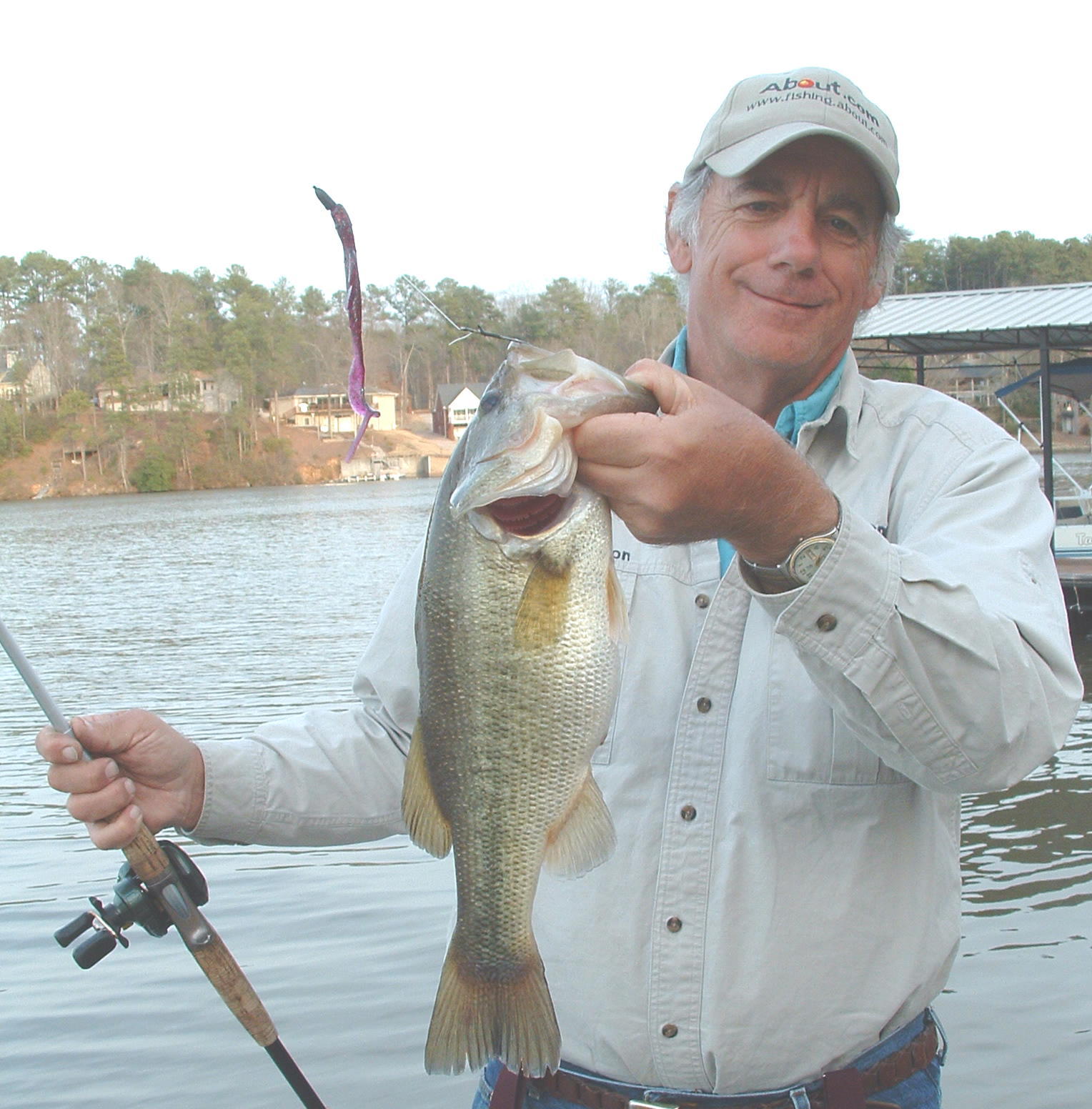
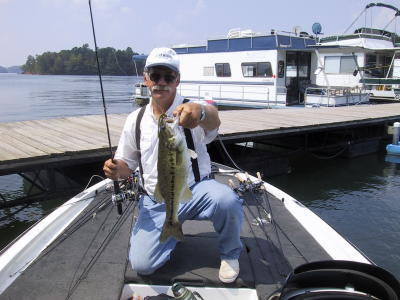
Bass from Lake Chickamauga

Bass from Lake Chickamauga

I had a good day fishing Lake Chickamauga near Chattanooga Tennessee with Jeremy York but it was frustrating. He had been catching lots of big bass on the Picasso Bait Ball Rig he designed but they are pretty much off that pattern. He did get one nice 4.5 pound bass on it.

All day we watched big bass in the shallows starting their beds but they were skittish and would not bite.  They would not stay on the bed, kept moving off.

The lake should be wide open for bedding bass fishing in the next few days.

Enjoyed Fishing Lake Wedowee


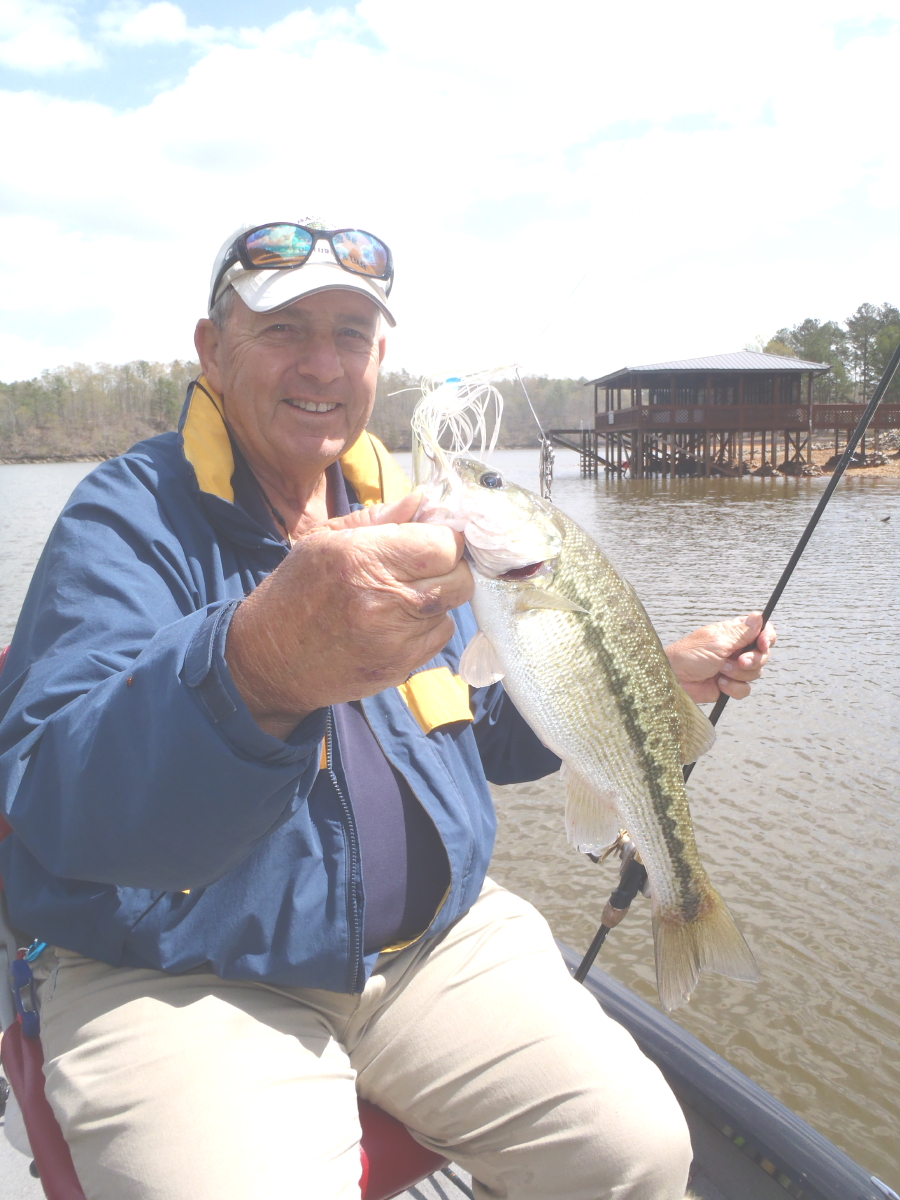
Gary caught this spotted bass on a spinnerbait.

Gary caught this spotted bass on a spinnerbait.

I really enjoyed spending time with Gary Mercer yesterday at Lake Wedowee.  Gary was in a bass club with me years ago – more than we want to remember. Now he fishes Wedowee every week and has a place there. We didn’t get to fish much due to limited time but he showed me ten spots to catch bass in May and proved he knows the lake well.

It was a beautiful day but I was still surprised at the number of bass fishermen on the lake.  Wedowee is normally not real crowded due to its location and somewhat limited access. We talked to two fishermen that were catching spots on a hump on Carolina rigged lizards.  Gary got a good keeper spot on a spinnerbait after we saw some swirls in a pocket full of shad.

Supposed to head to Chickamauga in Tennessee tomorrow. It has been red hot, with a five fish, 44 pound limit weighed in about a month ago. I am going with Jeremy York, owner of Anglers Warehouse here in Georgia. He had a five fish limit weighing 30.25 pounds a few weeks ago in a BFL tournament there – and came in third! Should be a great trip.

Fishing Lake Wedowee

Went to Lake Wedowee in Alabama today and fished with Gary Mercer for an Alabama Outdoor News article. Beautiful lake, full of spots and largemouth.  Took 28 pounds to win a tournament last weekend.  The article will map ten spots for May fishing – It would be a great trip next month!

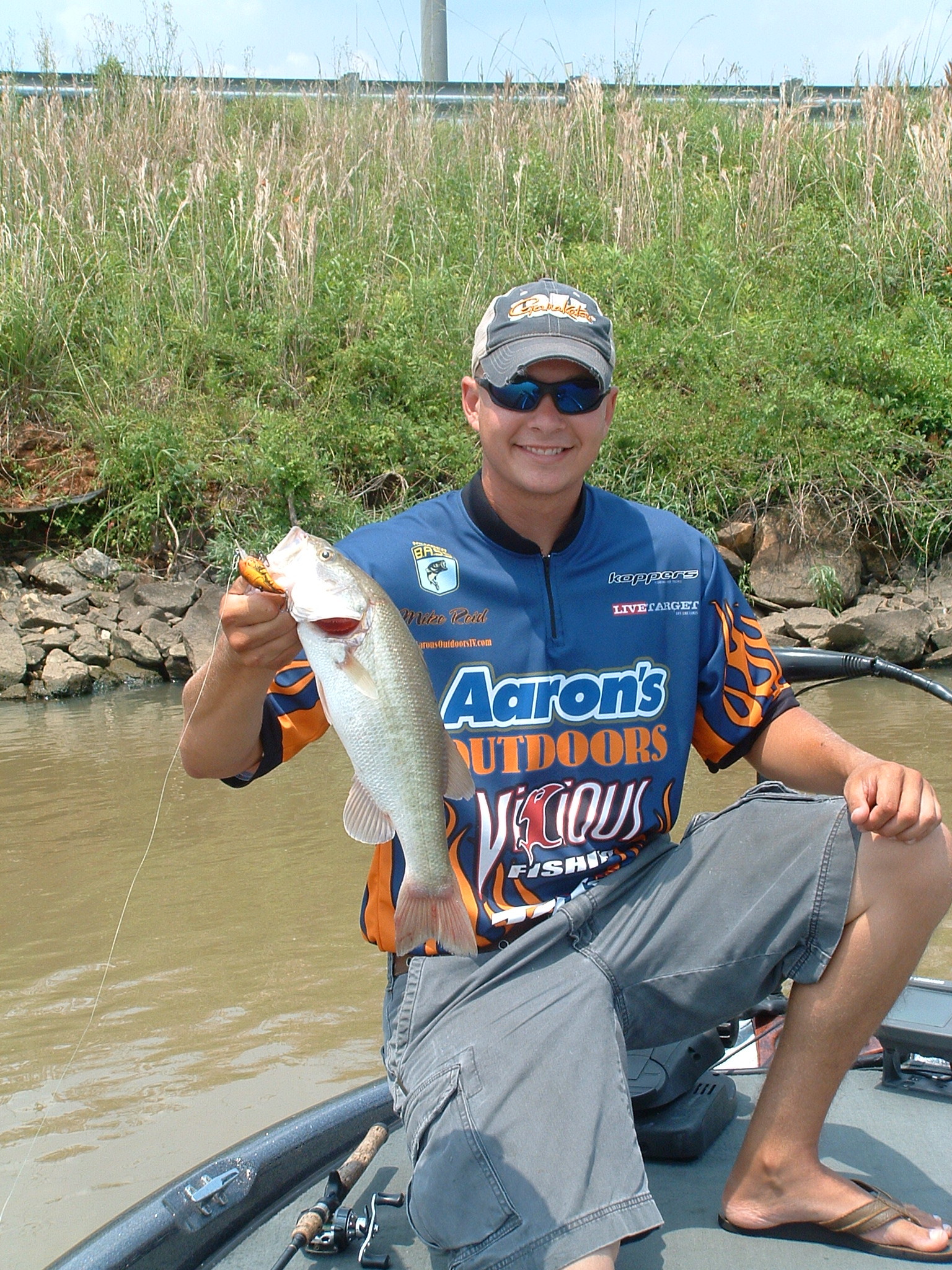
I saw this bass holding under a dock and caught it on a Trick

I saw this bass holding under a dock and caught it on a Trick

On A Roll Fishing – Downhill Roll!

I can catch a bass!

I can catch a bass!

My fishing seems to get worse and worse. Fished a club tournament at West Point Lake today, caught one largemouth and four spotted bass total weight 4.26 pounds. As bad as that was I came in 5th out of 19 fishermen.

I tried shallow pockets first – until noon – thinking they would be there. Water was 58 degrees. Finally caught one keeper largemouth in a ditch back in the pocket in about six feet of water at 10:30 AM.  Partner finally caught a keeper at 1:00, with just two hours left to fish. Then on the last bank we had time to fish I got three spots and he got one on Carolina rigs in rocks about six feet deep.

First place was five at just under 11 pounds, including a skinny six pounder. Second was just over 10 pounds for five and they were caught shallow after lunch – after I moved out to the points. Very frustrating!

But it was a beautiful, sunny, warm day.

Til next time, gone fishing.

Do You Remember the First Fish You Caught?

First Fish Certificate Great Idea In West Virginia

Was your first fish this big?

Was your first fish this big?

BY Jim Shepherd

A first fish is a big deal. I don’t really remember the first fish I landed, but I do remember the first fish I “really” caught on my own. “On my own” meaning I rigged the hook, line, sinker and bobber, baited the hook and sealed the deal with a small bream that had already stolen two other crickets before he got so full he slowed up enough for me to catch him.

In those days, catch-and-release was not as popular as batter-and-fry, but I couldn’t bear to fry my first fish. I turned him loose and remember being so proud of myself I could hardly stand it – until my Dad asked me what I was doing putting back a fish.

Fortunately, he wasn’t really angry, we had more than enough bream for dinner that night, but it was my first full fishing experience. Cleaning the catch, fortunately, didn’t come for several years afterwards. Today, catch and release is popular with me because cleaning fish isn’t. Besides, my wife says I’ve caught the same fish so often that I should give them Velcro lips to save wear and tear on all parties.

About 140 words ago, I was going to give an attaboy to the States of West Virginia and Maryland their respective Divisions of Wildlife and Natural Resources. Last week, I got a release that told me that “Wild, Wonderful West Virginia” understood the importance of keeping generation -next involved in the outdoors.

To help, they’ve created a “First Fish” Certificate

The certificate, according to Frank Jezioro, Director of West Virginia DNR, is to “recognize that special catchy by young anglers”.

It’s a very cool little document – and you can fill it out online. In it, Jezioro says, you can include “the angler’s name, species of fish, and date and place of catch” – a very cool commemorative of a momentous occasion.

You can fill the certificate out online, then print it out on your color printer – also a very cool way to operate. No postal waste or time delays . Just fill out the form, hit print, and your little angler will have an award commensurate with that important first fish.

In Maryland, the programs nearly the same, except young anglers need to go to either a Maryland Sport Fishing Tournament Citation Center or use an online form. If you have a digital photo, it can be uploaded to their My 1st Fish Citation.

We support The Angler’s Legacy, and have already done our parts this year by introducing several people to fishing. Like the Angler’s Pledge, we think the First Fish Certificate – in any state -is a great idea.

You can check out West Virginia’s First Fish Certificate online at:

www.wvdnr.gov/Fishing/First_Fish.shtm ]www.wvdnr.gov/Fishing/First_Fish.shtm

and you can check out Maryland’s form at:

www.dnr.state.md.us/fisheries/recreational/ tournament/firstfishform.html]www.dnr.state.md.us/fisheries/recreational/ tournament/firstfishform.html

Good on you both.

I Love Spring Fishing

Spring has sprung here in middle Georgia -my part of the world.  I love spring bass and crappie fishing, as most fishermen do.  Fish are shallow and feeding and you can catch a lot of fish.  Although I fish year round, spring and fall are my favorites.

Do you like spring fishing? Why? Share your thoughts and tips in the comment section

How to Catch Late Ice Season Panfish

Late Ice Panfish

Its cold but the fish  will bite

Its cold but the fish will bite

by Bob Jensen

In some states throughout the Midwest, the ice-fishing season for walleyes and northern pike is coming to a close, or has, in fact, already closed.  If you live in one of those areas, now is not the time to hang up the ice-rods and put the shelter and auger in storage.  There are still some very good opportunities for ice-fishing action.  Some of the best perch, crappie, and bluegill ice action is still to come.

Here’s how you can get in on it.

Perch can be in different places in different bodies of water, but most of my perch catching late in the season has been in deep water, sometimes down to thirty feet.

In other lakes they’ll be shallower, but when they’re shallow, that’s usually because there is no deep water in that lake.

Crappies can be kind of strange.  In some lakes they’ll hang close to the bottom just like a walleye, in other lakes they’ll suspend.  In my past few ice-fishing trips we’ve taken crappies that looked just like walleyes on the sonar because they were hugging the bottom, and we’ve taken crappies that were six feet off the bottom in twelve feet of water.

Not relating to panfish but still kind of on the topic of fish location, on an ice-fishing trip for walleyes two years ago on Lake of the Woods, the walleyes were running twelve feet down over twenty five feet of water.  They were biters, but you had to bring the bait up to where they were.

Back on the topic of panfish location under late ice; Expect to find bluegills along weedbeds or around brush piles.  They might be over the tops of the weeds or suspended along the deep edge of the weeds, but if you find good cabbage weeds, you’re probably close to some ‘gills.

These panfish can be very active, but you still need to present the bait correctly.  For ‘gills, go with two pound test Berkley Trilene 100% Fluorocarbon.  It’s invisible underwater, and sometimes that’s what it takes to put finicky bluegills on the ice.  Go with a 1/64th ounce Fire-Fly jig for gills.  Lots of anglers like black, as they feel it best copies the tiny bugs that are in the water.

Crappies and perch both like Forage Minnow spoons tipped with a piece of minnow or a couple of Berkley Gulp! Maggots.  A lot of colors will work, but Super-Glo Perch is a real winner day-in and day-out.

For perch, drop the spoon to the bottom, let it rest a second or two, then give it a couple of good snaps.  That attracts the perch.  Let it sit still for a few seconds, then snap it again.  Keep a close eye on your sonar to see how the fish are reacting to the snapping-resting action.

A more subtle action is usually best for crappies.  Put the spoon just a bit above the crappies, then quiver it. If they want it, they’ll eat it.

Keep a close eye on the ice conditions, but if it’s safe, get out there for some late season panfish action.  I’ve always found that late ice panfish are a great way to start the new open water season.

— Bob Jensen

La Paz and Las Arenas Sea of Cortez Fishing Report

yellowtailLa Paz and Las Arenas Fishing Report – Fishing in the Sea of Cortez

WINDS LAY DOWN AND BEST YELLOWTAIL BITE OF SEASON GOES OFF!

La Paz/ Las Arenas Fishing Report for Week of March 24-31, 2013

The winds started laying down early in the week and got better from there.  By the time mid-week hit, the best yellowtail bite of the season kicked in with as many fish lost as being caught and anglers canceling boats because they caught “too many fish!”   Got lots of great photos this week and all the details!

Check it out: La Paz and Las Arenas Fishing Report

Ice Fishing Safety Tips

Nice walleye caught ice fishing

Nice walleye caught ice fishing

Ice Fishing Safety Tips
By Jim Shepherd

Ten Tips For Ice Fishing STAY SAFE — FOLLOW THESE ICE FISHING SAFETY TIPS

Ice fishing is popular and a lot of fun in Vermont. Each winter thousands of anglers venture out onto frozen lakes to fish through the ice. And, each winter there are ice-related accidents often caused by poor judgement or poor decisions based on inadequate information.

Here are some safety tips every person venturing out onto frozen lakes should observe:

Leave information about your plans with someone — where you intend to fish and when you expect to return.

Wear a personal floatation device and don’t fish alone.

Ice varies in thickness and condition. Always carry an ice spud or chisel to check ice as you proceed.

Be extremely cautious crossing ice near river mouths, points of land, bridges, islands, and over reefs and springs. Current causes ice to be thinner over these areas.

Avoid going onto the ice if it has melted away from the shore. This indicates melting is underway, and ice can shift position as wind direction changes.

Waves from open water can quickly break up large areas of ice. If you can see open water in the lake and the wind picks up, get off!

Carry a set of hand spikes to help you work your way out onto the surface of the ice if you go through. Holding one in each hand, you can alternately punch them into the ice and pull yourself up and out. You can make these at home, using large nails, or you can purchase them at stores that sell fishing supplies.

Carry a safety line that can be thrown to someone who has gone through the ice.

Leave your car or truck on shore. Every year several motor vehicles go through the ice on Vermont lakes, and people have drowned as a result.

Heated fishing shanties must have good ventilation to prevent deadly carbon monoxide poisoning. Open a window or the door part way to allow in fresh air.

Winter Structures To Target for Bass

Three Structures To Target for Bass This Winter

This bass was caught in the winter at Lake Guntersville

This bass was caught in the winter at Lake Guntersville

By Scott Suggs

If we’re going to be honest about it, fishing in the winter isn’t always the most pleasant activity. It can be cold, windy and sometimes getting the fish to cooperate can be frustrating. But just because the calendar has been flipped to December doesn’t mean that you should park the boat and resign yourself to hanging lights and watching football.

Catching fish in the winter requires some knowledge about the body of water that you are fishing and a decided amount of patience. Slowing down your presentations will go a long way towards ensuring you get more than a runny nose for your time on the lake. So before you head out for your next day of fishing, try focusing on these three types of structure.

Bluffs]
A lot of tournaments are won year round on rock bluffs. Big smallmouth and largemouth both like to hang on these bluff ledges during this time of year. But enticing strikes from finicky bass in winter can be a challenge. Fish each spot slowly and don’t limit yourself to just one lure or technique. In clear water, natural colored worms can be very effective for a smallmouth bite. A Berkley PowerBait Hand Pour Finesse Worm fished on a dropshot rig that is worked slowly on the ledges works extremely well.

But don’t forget that crayfish also inhabit these rock bluffs and a big jig tipped with a PowerBait Chigger Craw will also work. Just keep the retrieve slow. Lipless crankbaits like a Frenzy Rattl’r fished parallel to the bluffs is also can entice strikes, but be careful that your retrieve isn’t too fast. Also remember that shad and other baitfish swim these bluffs during winter so a Berkley Gulp! Jerk Shad Texas rigged with a wide-gap hook and swimmed through the desired depth can result in a lot of hook ups.

Main-lake points

Main-lake points hold bass pretty much year round. But during winter, when the lake is low, they really start to bunch up on these structures. Find a point that is just out of the swift, main lake current and there is likely to be a bunch of bass feeding on baitfish and crayfish. If there is deep water nearby, that deeper water is likely to hold bass, too.

These out-of-the current spots can hold huge schools of bass, bunched up, usually in one very small spot. This means either dragging bottom-bumping lures, or fan casting, Carolina-rigged lures like a PowerBait Power Lizard or a Gulp! Turtleback Worm and looking for that instinct strike. Wood cover along these spots always harbor the bigger largemouth’s in the area. Try laydowns, washed in debris, stumps and brush piles and go after them with a jig and trailer.

Humps
Smallmouth bass and a surprisingly good number of largemouths, can both be found around islands, submerged humps, sand bars and ridges, located throughout lakes. Because of low water levels in winter, many are now visible; others can be found by paying attention to your electronics. Smallmouth relate to the edge of the swift current, waiting for an easy meal. Largemouth tend to hug the bottom and hang out in the cover (stumps, ledges).

Fishing these areas can be tough when the weather is extremely cold, but slowly down and finesse are of the utmost importance whenever fishing these areas. Dropshotting small, straight-tailed finesse worms like the PowerBait Hand Pour Finesse Worm or Carolina rigging small, finesse lures, such as worms, lizards, grubs, jerkbaits and crayfish imitations, will entice more strikes in very cold water than baits with a larger profile. Lighter line also works better in these situations, so make sure your spinning reel is in good working order.

Don’t let a little cold keep you off the lake this winter. There’s a lot less boat traffic this time of year and still a lot of fish to be caught. Just make sure to slow down your presentation and downsize your line and focus your attention on these three wintertime hotspots and pretty soon everyone will want to go with you.