Would You Want To Go Fishing Every Day Of the Year?

I grew up in Dearing, Georgia, a wide spot on Highway 78 in McDuffie County, Georgia between Thomson and Augusta. Our claim to fame was a caution light at the crossroads at Iron Hill Road. My house was on a small farm a quarter of a mile from that caution light.

Town consisted of six small stores that included a gas station, a tiny grocery store and four stores where you could buy anything you needed, from gas and kerosene to frozen food and bullets. They were true country stores and many shopped in them for clothes, fishing supplies, canned food and cigarettes. Hoop cheese was one of my favorites and you could get any size slab you wanted.

The proprietors of two of those stores also drove school buses. They would run their routes in the morning then open the store. When time to run their afternoon route their wives kept the stores open while they were gone. I rode Mr. John Harry’s bus from kindergarten through my senior year in high school.

One year Mr. John Harry and Mr. Joe Frank made a pact they were going fishing ever single day the next year. And they did. They would fish every weekend but also kept a rod and reel on their bus and often stop at a farm pond or creek crossing on the way home in the morning or afternoon for a little fishing.

This New Year’s Resolution sounded like a perfect one for me and one I wanted to make each year since then. When I retired in 2001 I tried but never was able to fish ever day. Something always messed me up, like surgery on my thumb or a trip on a cruise ship, where there is water, water everywhere but no way to fish!

For several years my efforts ranged from missing seven to 25 days. That is not bad out of 365 days in a year, but not perfect. Then in 2009, I fished some every single day of the year! I finally did it.

My rules were fairly simple. I don’t have to catch a fish every day, but I have to fish somewhere that I could catch a fish. So no fishing in the bathtub or in a rain filled ditch. And there is no time limit. Some days I stand on one foot in my bass boat for ten hours casting for bass, others days I sat in a folding chair on my dock for ten minutes catching bluegill on pellet fish food.

Some days tried my determination to fish every day. On a week long trip to St. Louis to attend an outdoor writers meeting, I stayed at a hotel. There was a small creek with a pond on it on the hotel property but I was told no fishing was allowed. I let everyone know how stupid it was to have an outdoor writers meeting at a place that didn’t allow fishing, but their rule made me explore the Bush Wildlife Area just outside town, a beautiful place open to the public that included over 20 ponds that I could fish. The Budweiser beer people made this place available to the public and is a fantastic resource for people in the area.

I found out the third day of the conference no one watched the pond for fishermen so I did wet a line there, too. I saw some small fish around the edges but didn’t catch anything.

Another tough day was when I had a doctor appointment in Mobile, Alabama and had to leave early in the morning for it. I drove out to my place at daylight and fished for a few minutes before leaving. I was determined not to let anything mess up my record that year.

I fished when it was so cold I had to dip my rod tip in the water to melt ice from the guides to days sweat dripped from my nose and ran into my eyes constantly. And I fished in Georgia, Alabama, South Carolina, Wisconsin and Missouri and caught largemouth, smallmouth and spotted bass as well as crappie, bluegill, green sunfish, shell cracker, bullheads, flathead catfish, hybrids, stripers, rock bass, gar, carp, bowfin, walleye, muskie and northern pike.

I kept logs on my old web site forum listing each day fishing and what I caught. It is a good way for me to keep up. It was been a fun year. I actually fished every day between November 2, 2008 and the end of the year. That was 424 days in a row. Maybe I will get tired of fishing some day, but not yet!

Gotta go fishing – Day 3 of 2010!

Can I Catch Fish At Night While Ice Fishing?

Scott Glorvigen’s “Happy Hours” for Ice Fishing Are At Night
from The Fishing Wire

Quick-trip tactics for after-work walleyes and crappies

When ice fans dream of upcoming escapades, many optimistically envision epic getaways spanning a weekend or more. Unfortunately, extended adventures can be tough to pull off, given the time constraints of daily life. Indeed, just carving out a full day on the ice can at times be a challenge.

Good news is, opportunities abound for enjoying quick trips offering great fishing for a variety of species. And some of the finest occur shortly after darkness falls.

“My favorites are early evening trips for walleyes or crappies,” says longtime guide, decorated tournament champion and avowed night owl Scott Glorvigen. “With a little planning, it’s easy to get away after work for a couple of hours and enjoy solid action, with a shot at trophy fish.”

Gearing Up

Pre-trip scouting and packing allows you to zip out to evening hotspots on a moment’s notice.

Scout for ice fishing

Scout for ice fishing


Organization is one of the keys to Glorvigen’s getaways. “Having everything you need ready and waiting makes it infinitely easier to hit the ice on short notice,” he says. “On the flip side, if it takes you three hours to wrangle gear, your window of opportunity will close before you ever leave home.”

To hasten your departure and boost on-ice efficiency, Glorvigen advises paring packing lists down to bare necessities. “Keep it simple,” he advises. “You’re not going to be running around, figuring it all out like you would during a day-long trip. Night bites are all about hitting high-percentage spots with one or two top techniques.”

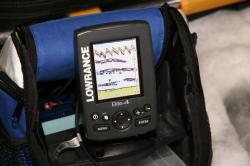
Typically, Glorvigen’s bug-out gear includes a small tackle bag stoked with a handful of key lures, components and tools; a minnow bucket for transporting either shiners for walleyes or small fatheads for crappies; two headlamps; an auger; and Lowrance sonar and GPS electronics.

A lantern is also critical equipment. “I’ve used gas and propane models for years, but last winter I started using Zippo’s battery-powered, LED Rugged Lantern and really like not having to worry about fuel or kicking the light over and burning down the house,” he says.

When chasing either walleyes or crappies, he packs just four rods. Two are rigged for jigging, and two are set up for bobbering or dead-sticking live bait. “For walleyes, I bring a pair of jigging spoon rods, which allow me to experiment with a few different spoon sizes and colors,” he explains. “Bobber rods are rigged identically. The second merely serves as backup in case the first gets hopelessly tangled or otherwise fouled up.”

Jigging rods are typically strung with 6-pound-test Northland Bionic Braid, with a foot-long, 6- to 8-pound monofilament leader, capped with a round-nosed snap. Bobber rods sport 6-pound mono mainline, a small swivel, and an 18-inch leader of similar material as the jigging setup. A size 4 single hook-either standard bronze or phosphorescent glow-and small split shot pinched six inches above it round out the rig.

“I like braid for spooning, because you get a better hooksets, especially with bigger fish,” he notes. “Mono works great for letting the walleyes run with live bait.”

Glorvigen favors 1/16- to 1/8-ounce Northland Buck-Shot Rattle Spoons, in phosphorescent shades of red and orange. “If it’s glow, it’s a go,” he quips. Spoons are tipped with a minnow head or tail. “Try them both to see what the fish want on a particular night,” he adds.

Crappies call for a bit lighter rods and line in the 2- to 4-pound class. Lures lean toward the horizontal orientation, and include favorites like the Northland Bro’s Mud Bug and Gill Getter. “I typically fish glow colors exclusively at night, including phosphorescent blue, red and white,” he says. Spikes and waxworms are top tippings. “You can fish glow plastics, but after dark I like the scent of live bait.” As with his walleye endeavors, two of Glorvigen’s four rods are rigged for live bait duties. Often, that entails deadsticking a small jig sweetened with a maggot.

Glorvigen houses his gear in a Frabill SideStep flip-over, which sports dual side entries perfect for two-person nighttime expeditions. “If one angler wants to head outside to check out a few different holes, he or she won’t have to flip up the entire shelter and stumble over gear on their way out.” He notes that a pair of Frabill light bars positioned strategically over the fore and aft sections of the shelter provide ample illumination for fish wrangling, knot tying and other nocturnal tasks.

Night Moves

Early evening is prime time for both walleyes and crappies.

Early evening is good for ice fishing

Early evening is good for ice fishing


For both species, active jigging attracts attention and triggers its fair share of strikes, while live bait seals the deal with curious ‘eyes that look but don’t bite.

Overall, jigging cadences are tailored to the mood of the fish, but Glorvigen generally avoids over-the-top antics that may work in daylight but fizzle after sunset. “Night-bite walleyes are focused on baitfish that are hunkered down for the evening, so they respond better to subtle jig strokes than aggressive lifts and snap-fall sequences,” he explains.

Instead, he relies on a series of twitch-twitch-twitch-pause maneuvers, letting the spoon’s rattles call fish in. “It’s almost like rattling antlers for whitetail deer,” he adds. “Rattle, pause. Rattle, pause. Waiting for a buck to move in.”

When set up over a school of crappies, steady jigging slightly above the fish often tempts hungry slabs to break ranks and rise to the occasion. “Keep jigging and slowly raise the bait,” Glorvigen says. “The higher you get the fish to move up in the water column, the more likely it is to bite.”

To further boost his odds of success, Glorvigen pinpoints potential hotspots by day, and plots their locations for easy return at night. “Do your homework ahead of time so you’re not hunting for fish after dark,” he says. “For walleyes, look for small shelves and stairsteps along breaklines fish follow from deep water up onto shallow feeding flats. High spots on humps can be good, too.

JIg just over the school of fish

JIg just over the school of fish

Steady jigging just above a pod of crappies tempts fish to rise for the kill.

Crappies typically roam deep basins, but often congregate along some type of structure, such as a steep wall at the edge of a deep hole. “Any kind of irregular break along that edge, like an inside turn or other collection point, can be particularly productive,” he notes. “Such areas gather and hold schools for longer periods of time, giving you more chances at fish from a stationary position. It’s like setting up in the corner of the corral, instead of along the fence line.”

Glorvigen notes that walleye action often peaks during the two-hour period surrounding sunset. “With crappies, the bite window is less intense but more spread out, and can continue later into the night,” he adds.

Along with offering a fine chance to ice numbers of eating-size ‘eyes and crappies, Glorvigen says early evening is a great time to connect with the walleye of your dreams. “Finding the right spot and hunkering down for a couple hours during prime time puts you in great position to hook a giant,” he says, providing yet another reason to enjoy happy hour on the ice as often as possible this winter.

Video link:
https://m.youtube.com/watch?feature=youtu.be&v=Q8OzRkkRbUI

Check out more of Scott’s night-bite tips.

What Is Your Best Outdoor Christmas Gift Ever?

What is the best Christmas gift you ever received? Mine all seem to deal with the outdoors, from fishing and hunting supplies to camping gear. Getting up on Christmas morning and discovering what Santa had left me was always thrilling. And there were always presents from my parents, too.

When I was 15 my parents gave me and my brother Mitchell 300 spinning reels and matching Abu Garcia rods. I used my outfit for many years, catching anything that swam in ponds and lakes around my house, including bream, catfish, bass and crappie. I still have that old Mitchell in my garage. Long past its usable days, I keep it to remind me of those great times.

There was always a variety of hooks, sinkers and corks in my stocking, and they were real corks, the kind you had to split with a knife so you could put it on your line. Fortunately I got a knife pretty much every Christmas, too. I used my pocket knifes for everything from splitting corks to cleaning squirrels, and we played games like mumbly peg with them, too.

After Crème came out with “rubber” worms I got a pack of every color they made. Red or black worms were your choices back then. And there was usually a Hula Popper, Snagless Sally or Creek Chub lure to cast for bass. I wore them all out.

I got a BB gun when I was six after having my tonsils taken out and every Christmas after that for several years I got several tubes of BBs under the tree. When I graduated to a .22 rifle and a .410 shotgun I always got a brick of .22 bullets and some shells.

Those ten boxes of 50 bullets in a carton meant many hours of shooting squirrels, birds and targets. But they didn’t last all year so I had to go up to Mr. John Harry’s store fairly often and buy them one box at a time, for 50 cents! And I got a couple of boxes of .410 shells to shoot rabbits and shoot at birds. I could always hit rabbits much better than doves and quail with that single shot gun.

Clothes were always under the tree but I didn’t pay much attention to the school clothes. But my eyes lit up when I got a camo jacket, a set of Duckback briar proof pants and coat or boot sox. I knew I would be doing things I loved when wearing then, as opposed to when the school clothes were worn.

Things were more simple back then. There were lots of fun things from cap pistols and rolls of caps to boxes of sparklers. And fruit was included in the stockings. Bananas, apples and oranges as well as pecans were always there. Strangely enough, the oranges looked exactly like the naval oranges in the big bag we had brought back from our annul Christmas visit to my grandmother in Ocala, Florida. And the pecans looked just like the ones we had been picking up in the yard that fall.

Each year there was one big gift, too. One year I got a shooting range thing that had ducks that revolved on a pole and I shot at them with a gun and rubber stopper bullets. And I will never forget the bicycle I got one Christmas. It still makes my heart ache when I think about it.

Daddy was the Ag teacher at the local school. One afternoon just before the holidays I went out to the shop. There were two bicycles hanging there. Daddy had bought two old bikes, repaired them, sanded them and painted them. I knew immediately they were for me and my brother for Christmas.

When I got my bicycle I was disappointed it was not a new one and I was a little embarrassed about it. But I rode that bicycle everywhere, going squirrel hunting with my .22 on the handlebars or fishing with my tackle box in the basket and my rod and reel across the handlebars.

It was few year later, when I was a little older and wiser, that it hit me that daddy could not afford a new bicycle for me and my brother. So he found something he could afford and worked many hours to make them look brand new. I realized how much love and care went into those bicycles and I am ashamed of my self, even after over 50 years, of how I felt when I first got it.

Decorating the house was always fun, too. And we used home-made ornaments mostly, from stars made with left over foil to toothpicks stuck into sweet gum balls and painted. There was the annual trip to the old house site overgrown with what mama called Smilax, what I know now as green briar. It stayed green all winter and we outlined the door with it and put a red home-made bow on the door.

My job was to find the tree, so all fall when hunting rabbits and quail I watched for the perfect cedar growing in old abandoned fields. There were always hundreds of them and it took a lot of effort to find the perfect one. When I did we would go to it the week before CHristms in our old truck and cut it down. I still love the smell of cedar in the house this time of year.

I think Christmas has changed too much in my lifetime. I hope you will still share some of the old ways this year.

What Are Some Kayak Fishing Basics?

Kayaking Basics from Florida’s FWCC
from The Fishing Wire

Fishing from a kayak

Fishing from a kayak

Thinking of buying yourself a ‘yak for Christmas? Here are some of the points you might consider.

Last year my wife and I finally got a pair of kayaks. I’d had a chance to paddle a friend’s kayak once or twice before, but never had a kayak of my own to spend some serious time with. Even after a couple decades of small-craft boating, I was quite impressed with the portability and versatility of these craft. Here’s some of what I’ve learned in the past year.

Cost: If you’ve been thinking of taking the plunge with a kayak, there’s never been a better time. Kayaks have become very popular in recent years, meaning that more manufacturers are making them and prices for an entry-level kayak are even lower than they used to be. Standard kayak models start at a low of about $200 on sale, but you’ll want to spend more for a fishing kayak that comes complete with rod holders and other angling amenities-expect to pay from $250 on up on sale. You’ll also be buying a double-bladed kayak paddle, which will run you $50-100 or more. Most kayaks don’t include a padded seat, and you’ll probably want one; add another $50-75. Yes, the tab is adding up pretty quickly, but you’re still well under what the cheapest johnboat and trolling motor will cost you. Smaller accessories, such as a light anchor and-of course!-a life vest, you may own if you’re already a boater.

A kayak is a very personal purchase, and you should buy from a vendor that will allow an exchange if you don’t like the way the craft fits you or how it performs in the water. Otherwise, some kayak shops are near water and will let you try before you buy. Keep in mind that you’ll need a way to transport your kayak, if you can’t just throw your new purchase in the pickup and head for the lake. A good roof rack setup or trailer will cost you more than your kayak will, but a kayak is still one of the most economical boating options out there. (See Issue 45 at www.bit.ly/FFAngler for more information about roof racks.)

Sit-on-top versus sit-inside: There are two basic kayak types. A sit-on-top kayak is a sealed hollow shell with molded seating on top to accommodate the paddler. It’s easy to get in or out of, a major plus if you plan to kayak-and-wade. The kayaker sits above the waterline, which increases visibility and casting distance, but leaves the kayaker exposed to waves and splashing. Storage space is mostly open to the elements, but is easily accessible. However, there will probably also be one or two watertight hatches that allow dry storage inside the kayak shell. Note the size and location of the hatch openings, as these will limit what you’ll be able to fit inside and whether you’ll be able to reach them from the kayak seat. Water that splashes into the kayak drains out through scupper holes, which can be plugged to prevent water ingress, if you’ll be on calm water.

A sit-inside kayak is self-descriptive: the paddler sits inside a cutout in the open hull. Add an apron, and the paddler is pretty well protected below the waist from waves and water. The angler is sitting at the waterline, and the lower center of gravity may provide a more stable ride but slightly limited visibility and casting distance. The open hull provides plenty of fairly dry inside storage in front of and behind the kayaker. However, this internal storage is not as easily accessible, and entering and exiting the kayak is not nearly as easy. Generally, the sit-inside design is a good choice for river or ocean kayaking but will also serve in quieter ponds and lakes. However, many stillwater anglers prefer the in-and-out convenience offered by the sit-on-top design.

Fishing kayaks: The simplest thing that defines a “fishing kayak” is the presence of rod holders. A fishing kayak will also usually be wider than standard kayaks-around 30″ or so-and therefore more stable. It may have extra storage features, like molded in tackle trays or even a baitwell. Note that you can add after-market rod holders to most kayaks, but you’re better off starting with a fishing kayak, mainly for the added stability. A wider kayak won’t cut through the water as quickly as a standard model, but you’ll be able to cast, set the hook, and land frisky fish without feeling like you’re about to take a spill at any moment. I was really surprised at how stable my kayak is-definitely less tippy than most canoes I’ve used.

Length: Length is important. A longer kayak will travel faster and more efficiently (and have more storage space), but weigh more to load and carry-especially important if you’re cartopping or portaging. Twelve to thirteen feet is a popular range for saltwater anglers, and will provide a roomy and stable freshwater fishing platform too. However, if portability is important, look hard at kayaks ten feet or less in length. My ten-footer is a lightweight at exactly fifty pounds, but I’d still swear it’s half full of water when I hoist it back onto my roof racks at the end of a long paddling day. The weight is much easier to handle if you’re securing your craft to something below shoulder level, like a pickup bed or trailer. A kayak cart can also be a big help moving your boat from car to water (more on that later). Long story short, consider weight an important factor based on how you’re transporting your kayak.

Paddles: Kayak paddles are double bladed, unlike rowboat oars or canoe paddles. This makes the kayak an extremely efficient craft, because you propel it with both the forward and what otherwise would be the “back” stroke. Paddles come in specific shaft lengths, which you choose based on the width of your kayak and your height. The wider your kayak and the taller you are, the longer paddle shaft you will need. Kayak and paddle manufacturers provide tables for making your best choice. Paddle blades also vary. A long narrow blade works well for propelling a kayak nonstop over long distances, while a short broad blade works well for tight maneuvering along brushy shorelines and the stop-and-go travel a kayak angler will likely be making. In Florida’s lakes and ponds, most anglers should stick with a broad blade. As a side note, be aware that some fishing kayaks are equipped with various ingenious pedal-and-propellor systems that make propulsion a lot easier and leave your hands free for fishing. These are nice, but significantly more expensive, and are generally restricted to longer kayaks. Some kayaks can be outfitted with a trolling motor; note that you will have to register the kayak if you go this route, and will need room for a 12-volt battery.

Accessories: Your number one accessory is your life vest, or PFD (personal flotation device). I prefer an inflatable PFD for its coolness and light weight, although many kayakers will tell you that you’re going to tip over (and activate the CO2 cylinder) sooner or later. Your risk is less in stillwater ponds and lakes; however, I’m willing to live with that possibility, especially during the summer heat. Make sure you are also complying with all other boating safety requirements (MyFWC.com/boating/safety-education). Another “must have” accessory will be a dry storage bag for keeping your phone, electronic car keys, camera and other sensitive gear safe from the elements.

If you are going to have to carry your kayak any distance between your parking spot and the water, consider buying a wheeled kayak carrier. These handy little carts strap onto the bottom of your kayak, allowing you to roll your craft to the water. An advantage of these is that you can load all your equipment into the kayak as well and make a single quick trip, rather than going back and forth to your vehicle for paddle, anchor, rods, etc. or having to try to carry them all at once. Strapping the wheels in place near the kayak’s center of gravity will provide a balanced and effortless walk to the water’s edge. Some kayak manufacturers offer carts that will fit right into their kayaks’ scupper holes, eliminating the need for straps.

One of the (few) annoying things about fishing from a lightweight kayak is that it is easily pushed around by wind or waves, so you’ll want a lightweight folding anchor to help you stay put. An anchor works best in deeper water or when you’ll be staying put for a little while, such as when fishing bait. If you use the anchor a lot, you’ll want an anchor trolley that allows you to position the anchor line fore or aft, depending on wind or current and how you want to position your craft. For frequent moving and anchoring-which I’ve found to be the norm for lure fishing-a stakeout pole is much more convenient. This is simply a pole pushed into the lake bottom to anchor the kayak. The pole can be inserted through a scupper hole, or attached to the kayak with a short rope and snap clip. Many anglers prefer a stakeout pole over an anchor, because there’s less chance of tangling with a scrappy fish. You can buy a commercial stakeout pole, or make your own out of PVC pipe or any other sturdy pole such as an old golf club with the head removed. Use is obviously limited to fairly shallow water, depending on the length of the stakeout pole.

There’s a host of other accessories available: extra or specialized rod holders, rod and paddle tethers, depth finder and camera mounts, special kayak tackle holders, baitwells, and more. Kayakers (and kayak manufacturers) seem to be a particularly inventive lot! Customizing your kayak for your comfort and specific fishing needs can not only put more fish in the boat, but also be a satisfying end in itself.

Care and feeding: One of the great things about kayaks (especially if you’ve ever scrubbed down a large boat after a saltwater fishing trip) is that they require almost no maintenance. Just hose your kayak off after a muddy or saltwater fishing trip, stow it out of direct sunlight, and that’s about it! With minimal care, a kayak will last for years.

Fishing from a kayak: Okay-you already know how to fish. But fishing from a kayak is different, even from fishing in a small canoe or johnboat. While fishing kayaks are usually very stable, you must keep your balance in mind at all times-when leaning over to unhook a snagged lure, setting the hook or netting a fish. While fishing kayaks are roomier than their standard-sized brethren, space is still at a premium. Many of your kayak customizations, if you make any, will probably involve gear storage. I don’t like much in my way while kayak fishing, and keep minimal gear (like hooks, plastic worms, and pliers) in a small tackle box or tackle bag in front of me. The rest of my tackle, plus raingear, sunblock, etc. are in a larger waterproof duffle bag stowed behind my seat. I don’t need to move to release a fish, tie on a new hook, or change out my worm. If I need something more, I can reach back to grab the duffel bag, or hop out in shallow water to grab it. Water or sports drinks-a must for the Florida kayaker-go under the bungee straps in the front or rear of my kayak, depending on the rest of my loadout and available space. My kayak actually has a cup holder right in front of the seat, and a sports drink goes there right away when I launch.

I’ll work a shoreline or deeper water the way I normally would from any small boat. However, since I’m sitting low my casting distance and visibility are more limited, so I sometimes have to work closer. Thankfully, a stealthy kayak is ideal for this. I can often paddle along just casting as I go, but sometimes wind or wave action requires me to anchor my stakeout pole at every stop. A stakeout pole or anchor also help when you hook a bigger fish. You’ll be able to land most fish with ease, but I’ve had hard-fighting fish as small as four pounds take me for a brisk “sleigh ride”. This can actually be fun in open water, but if you’re casting anywhere near docks or submerged brush you’ll want to anchor yourself if you hope to have any control when “the big one” hits. And when he does, a kayak will put you closer to the action than anything else except wading.

The kayak advantage: Besides simply being fun and exciting to fish from, kayaks have one more major advantage: portability. Anywhere you can stand, you can launch. Since getting my kayak, I’ve been amazed at the world of new fishing opportunities that have opened up for me. Some of these new opportunities have turned up at my “old” fishing holes, where I can now launch a boat off a 60-degree canal bank, or where a sliver of public shoreline lets me get into an otherwise-inaccessible lake. I recently fished a narrow canal that would have been too brushy even for a canoe. There’s something eminently satisfying about catching a big fish that you know was out of reach of anyone else-except a fellow kayaker.

For more information: Numerous books specifically on kayak fishing are now available. Online, general information about getting started in kayaking can be found at smart-start-kayaking.com. Numerous videos on everything from getting in and out of your kayak without tipping over to paddling and fishing from it can be found by searching at YouTube.com.

Fishing Line I Use and Like

I use the following lines when fishing. Sometimes Bass Pro is cheaper, sometimes Amazon is – check both!

Berkley Trilene XL Smooth Casting Line - Filler Spools

Sunline Reaction FC Fluorocarbon Fishing Line - 200 Yards

Sunline Reaction FC Fluorocarbon Fishing Line – 200 Yards

100% Fluorocarbon developed specifically for reaction lures10% More stretch than FC Sniper Utilizes an FC material formulated for easy handling and reel performanceDouble resin processing for a slicker surface Dyed stealth gray colorHigh specific gravity allows crankbaits to reach max. depthsSunlines Reaction FC Fluorocarbon Fishing Line is designed specifically for reaction baits, such as spinnerbaits, crankbaits, rattle baits, and vibrating jigs. Made from a softer, high-strength fluorocarbon material, Reaction FC Fluorocarbon line is very flexible and stress free. Therefore, it handles better on a reel and casts farther than traditional fluorocarbon lines. Formulated to have more stretch than other Sunline fluorocarbons, Reaction FC is double-resin processed for outstanding slickness that delivers improved castability. Its stealth gray color increases its invisibility in water of any color. A high specific gravity allows crankbaits to reach maximum depths.


Sunline Super FC Sniper Fluorocarbon Line

Sunline Super FC Sniper Fluorocarbon Line

Proven reputation from whipping-up on big bass Thin, strong and highly sensitive Outstanding durability High specific gravity is ideal for fishing deep waters 200 yardsLow water absorption for minimal weakening underwaterSunline Super FC Sniper FC Fluorocarbon Line was born in Japan, but earned its reputation as an outstanding line by whipping-up on big bass stateside. Formulated with the stealthyness of a sniper, Super FC Sniper Fluorocarbon Line is nearly invisible and offers a high specific gravity which makes it ideal for picking off bass in deep water. Super FC Sniper Fluorocarbon Line offers outstanding durability, high strength to diameter ratio and low water absorption which minimizes line weakening underwater.


What Are Some Last Minute Fishing Christmas Gifts?

Last Minute Gifting Ideas for Fishing
from The Fishing Wire

Some great ideas for the fisherman, fisherwoman or fisher-kid on your gift list.

We’ve all been there. The final days of shopping before the Christmas mêlée have arrived, and here we sit with no gifts purchased. It is time to act. Is it possible that the angler in your life could live without a new rod or accessory, perhaps. Doesn’t your fishing buddy deserve something nice? After all the fish he’s boated and the stories he’s heard you tell over and over again, I think he has earned it, and that angler needs some new gear.

Here are a few selections to take the guesswork out of your next purchase.

Fishing Buddy Gift Idea

Spooling line can be an arduous task, but it doesn’t have to be. The new, compact design, the Berkley® Portable Line Spooling Station takes the pain out of spooling fishing reels. This is one of those gifts that can benefit you in the end. When your buddy gets really good at using the Portable Spooling Station slide over a few of your reels for a quick spool.

Holding up to a 300-yard spool, the spring-loaded spool arm provides spool tension for ease of use. The spinning reel spool attachment eliminates annoying line twist experienced while spooling using conventional methods.

Anglers can manually spool spinning reels or speed up the process using the integrated hex shaft with a drill. The compact design with hang tab makes storage easy for later use. MSRP for the Berkley Portable Line Spooling Station is $29.99.

Ladies Gift Idea

For those of us that have forgotten our female anglers this Christmas, rush out and grab one of the Shakespeare® Ladyfish combos. Purchasing one of these also benefits the American Breast Cancer Foundation (ABCF.) So really, you’ve purchased a great gift and donated a portion of your money to a great cause.

Each rod in the refreshed lineup features tapered, more comfortable grips with ladies’ smaller hands in mind. The expanded assortment also includes a variety of lengths and actions with EVA, Cork, and Hybrid-Tech Grips (HTG™). The Ladyfish lineup offers solutions for female anglers with varying skill levels and is available in a variety of price points starting at $19.99 to $39.99.

Youth Gift Idea

This is perhaps the most difficult purchase. Youth want to be indoors playing on a video game or rummaging through the mountain of toys in their closet. This Christmas ignite the outdoor adventure with one of the Shakespeare® Wild Series rods or combos.
The Shakespeare® Wild Series includes 16 specifically tailored combos for walleye, trout, panfish, salmon/steelhead, catfish and flyfishing.

Adding to the adventure-packed Wild Series’ lightweight, functional features, the reel has a durable aluminum spool and handle with soft-touch knob that performs under the most rigorous conditions.

Salmon/steelhead and catfish models offer a carbon-fiber drag system while other models have the reliable multi-disc drag system. Fly reels are prespooled with backing and weight-forward line.

If anglers aren’t in need of a combo, Shakespeare is offering 16 Wild Series rods that match what is offered with the combos. These one- and two-piece rods give anglers a wide range of sizes and actions. The Wild Series’ MSRP is $39.99 to $69.99.

Don’t get left behind this Christmas season. Give the gift of angling and the outdoors to those around you. It’s crunch time so get out there and finish the year strong.

I Love Bass Fishing But It Can Be Frustrating

I loved bass fishing from the time I caught my first one at about age 12. While catching bream with a cane pole, cork and earthworms below Usury’s Pond dam something pulled my cork under. Rather than the usual circling pull as I raised my pole, a small bass about 11 inches long jumped out of the water several times while I tried to land it.

That bass hooked me worse than I hooked it. After more than 50 years of trying to catch them, I still love to cast for them and sometimes hook one. When they jump and fight it is still a thrill. I get excited every time I set the hook.

One day not long ago while fishing with a partner in a tournament I hooked a bass. After I landed it my much younger partner said he could not believe I got so excited. After all, he knew I had caught thousands of bass in my life.

I told him the day I didn’t get excited about catching a bass was the day I would quit fishing. I don’t think the thrill will ever go away. It doesn’t matter if it is a tap on a plastic worm or jig, the surge of one hitting a crankbait, the jerk of one eating a spinner bait or the explosive splash of a topwater strike, I love it all.

Back when I started fishing in the 1950s no one thought about fishing in the fall and winter. It was a spring and summer sport. I didn’t find out how good fishing can be from October through February until I got my first bass boat in 1974. Some days you catch a lot of fish in the early fall but December, January and February are great months to land a big bass.

My first two eight pound bass were caught in January tournaments and my biggest every, a nine pound, seven ounce largemouth, hit the first weekend in February. And I have caught a lot of six to nine pound bass during this time of year. That is why I had high hopes of catching a six pound plus bass at Jackson last Sunday.

Last Sunday 27 members and guests of the Flint River Bass Club and the Spalding County Sportsman Club fish a combined tournament to end our year. We landed 59 keepers weighing about 73 pounds. There were five five-fish limits and 11 people didn’t bring a keeper to the scales after casting for eight hours.

Chuck Croft won it all with five weighing 9.50 pounds and his 3.52 pounder was big fish. Guest Tim Ledbetter had five at 8.47 for second, Sam Smith had five at 8.05 for third and Travis Weatherly had five at 6.21 for fourth.

I set my goals too low. Although I wanted to catch a six pounder since it would win both club’s cumulative big fish pots and be worth over $1400, I knew if I caught one 12 inch keeper I would win first place in the point standings in the Sportsman Club. I had already wrapped up first in the Flint River Club and I wanted to win both.

I started casting a DT 6 crankbait running rocky points and banks. It took almost two hours, but at 9:20 a 12.5 inch spot hit my crankbait and I landed it. That made me relax and fish much slower, not really working at it the rest of the day.

After landing the keeper I picked up a big jig and pig and started fishing it on deep rocks, thinking that was the best bet for a big fish. Within 20 minutes I landed a 14 inch spot on the jig so I knew the fish would hit it. But it didn’t work out.

For the next four hours I fished places where I had caught big bass this time of year in the past. I had one thump on the jig at about 11:00 but nothing was there when I set the hook. And at noon I had a fish pick up my jig on some rocks beside a dock and swim under it. When I set the hook it pulled drag for a second then just came off. Maybe that was the big one.

At 2:00 I picked up the DT 6 crankbait and caught a two pound bass on a rocky point. Maybe I should have been fishing crankbaits all day, but I didn’t get another bite on it for the next hour. At 3:00, with just 30 minutes left to fish I went to the rocky point where I had caught my second bass. I got two hits on a jig head worm but missed both of them.

I should have had a limit but ended up with three weighing a little over four pounds, not even as much as I had hoped my big one I dreamed of catching would weigh. But it was a pretty day even if a little cool and there is no where I would have rather been.

We landed 20 largemouth and 39 spots. The cold front Sunday after the rain on Saturday may have made it tougher to catch largemouth. Spots tend to hit better under tough conditions.

I kept the two spots I landed and fried them dusted with panko bread crumbs. They were delicious. Jackson is full of keeper spots, it would be a good place to go to catch some to eat. And Jackson is where I caught my first two eight pounders and the 9-7. I think I will go back tomorrow!

Are Atlantic Sturgeon Back In Cheaspeake Bay?

Atlantic sturgeon back in Cheaspeake Bay, or Did They Ever Leave?
from The Fishing Wire

Netted Sturgeon

Netted Sturgeon

By Karl Blankenship, Bay Journal: www.bayjournal.comMatt Bakazik (right) of Virginia Commonwealth University and Chuck Frederickson, a retired lower James Riverkeeper, work to free an Atlantic sturgeon from the gill net in the James River below Richmond where it was caught during a scientific sampling cruise on the James in 2013. (Leslie Middleton)

Face only a mother sturgeon could love

Face only a mother sturgeon could love

This Atlantic sturgeon was caught in Maryland’s Marshyhope Creek in late August 2014. (Dave Harp)
A couple of decades ago, a handful of scientists met to discuss the dismal state of the Atlantic sturgeon in the Chesapeake Bay. No researcher had seen a spawning sturgeon in years. Some doubted whether a remnant population of the Bay’s largest fish even remained.

Finally, the scientists began to debate what to do if someone actually caught a spawning female.

Some thought they should send her to a hatchery to preserve her unique Bay genetic makeup. Others thought they should tag and track her to see if she led to another sturgeon.

“We went back and forth about what we would do with the ‘last’ sturgeon,” recalled Dave Secor, a fisheries scientist with the University of Maryland Center for Environmental Science. “That discussion has changed.”

Thought nearly extinct in the Chesapeake just two decades ago, sturgeon are turning up in surprising numbers and in surprising places. They’re also doing surprising things, like spawning in the fall – unlike any other anadromous fish on the East Coast.

Much of what was common knowledge 20 years ago is being cast aside as discoveries come at an increasingly rapid pace. “What we would have said a year ago about sturgeon, we wouldn’t say today,” said Chris Hager, a biologist which Chesapeake Scientific, a consulting firm, who has studied the big fish for more than a decade.

A few years ago, most biologists would have said that only the James River had a reliable, if small, breeding population. Now, some think the James alone holds a population that could number in the thousands. Next door in the Pamunkey, scientists last year documented a spawning population.

This year, Maryland biologists caught eight ready-to-spawn fish in Marshyhope Creek on the Eastern Shore. “And if you go by what the fishermen are telling us, there’s a lot more of them out there,” said Chuck Stence, a fisheries biologist with the Maryland Department of Natural Resources.

Jumping sturgeon have been reported in the Mattaponi which, like the Pamunkey, is a York River tributary. In Maryland, jumping sturgeon were reported in the Nanticoke River, upstream of its confluence with the Marshyhope.

Biologists expect to expand their sturgeon searches into those rivers next year. And they tick off other rivers they consider candidates for hidden sturgeon populations: the Rappahannock, the Potomac, maybe even the Choptank and Chester.

“If they are up in the Pamunkey, they can be anywhere,” Hager said. “They are not going to be everywhere, but you are going to have to explore it, and I think that is going to continue to go on for quite some time.”

Sturgeon are generally considered a big river fish. Yet they seem to be spawning in narrow parts of the James, and small tributaries like the Pamunkey and Marshyhope that, as Secor said, “you could throw a stone across.”

Not only are those areas relatively small, they are also relatively well-monitored compared with other Bay tributaries. So it comes as a surprise that sturgeon adults, which routinely measure more than 5 feet in length and are known for their habit of jumping out of the water, could have been overlooked.

“The thing is, you’ve got to look and nobody was looking at sturgeon,” said Albert Spells, Virginia fisheries coordinator with the U.S. Fish and Wildlife Service who, in the 1990s, was one of the few who argued that breeding populations remained in the James. “We just were not putting enough effort into this animal.”

An Intriguing Fish

Sturgeon catch the imagination of scientists and the public alike. Sometimes called “the fish that swam with dinosaurs,” they are remnants of an ancient species and don’t look much like other fish. They have long, pointed snouts and instead of scales, are covered with armor-like bony shields, called scutes.

They are, by far, the largest and longest-lived species native to the Chesapeake. They reach maturity when they are 10 to 15 years old, and 5 feet or greater in length. They have been documented to live 60 years, and reach lengths of 14 feet and weights of 800 pounds.

Like other anadromous species, they spawn in coastal rivers, but spend most of their lives in the ocean. Colonial accounts are filled with stories about their abundance. Capt. John Smith wrote “no place affords more plenty of sturgeon,” and sturgeon meat was one of the Jamestown settlement’s first exports. But fishing pressure in the late 1800s and early 1900s, primarily for caviar, devastated the population.

The sturgeon’s slow reproductive rate, combined with other insults such as the destruction of spawning grounds (they were dynamited for shipping channels in the James) and water pollution (sturgeon are particularly sensitive to low-oxygen conditions) kept their numbers low.

In 2012, the National Marine Fisheries Service listed as endangered the Chesapeake Bay “distinct population segment.” At the time, it estimated that fewer than 300 sturgeon still used the James River for spawning. No other Bay tributaries were known to have sturgeon spawning, though the listing decision speculated that some spawning might take place in the York.

It now appears that one reason adult fish were overlooked is that biologists were looking at the wrong time.

As concerns grew that Atlantic sturgeon could be headed toward federal Endangered Species Act protection, there was an uptick in funding to look for fish, primarily in the James River. Initially, the biologists concentrated their search in the spring. They caught mostly juvenile fish.

Over time, they noticed that adults tended to turn up later, and farther upstream, than expected. In September 2011, Matt Balazik, a fisheries biologist with Virginia Commonwealth University, netted a female that had recently released eggs.

At the time, most fish biologists scoffed at the notion that sturgeon spawned in the fall. But since then, Balazik has netted hundreds of adult sturgeon on the James during the summer and fall, including females filled with eggs and males leaking sperm. That ended the debate. In recent years, evidence of fall sturgeon spawning has been seen in states farther to the south as well.

“A lot of people were looking at the wrong time,” Balazik said. “If we were looking just at the spring, we would say, ‘Oh my gosh, there’s nothing here.'”

Evidence for fall spawning isn’t new. Alexander Whitaker wrote of Virginia in 1613 that “The rivers abound with fish both small and great. The sea-fish come into our rivers in March and continue [to] the end of September,” and noting that the “multitudes of great sturgeons” came in last.

American Indians named August’s full moon the sturgeon moon because of the abundance of sturgeon in the rivers at that time. “It has been there the whole time that these fish spawn in the fall,” Balazik said.

In fact, Balazik and others believe that the James and other tributaries historically had – and in many cases still have – a distinct spring and fall spawning run. They suspect the spring run was historically larger, but that it took the brunt of intensive fishing. Fall spawners, by arriving later in the summer, might have missed fisheries targeting other anadromous fish.

“Historically, probably the spring run was the big one and the fall one was much smaller. But because of the overfishing, the spring run maybe hasn’t come back,” said Greg Garman, director of the Center for Environmental Studies at Virginia Commonwealth University. “Maybe things have flip-flopped and now the fall run is the much bigger contributor, at least in the James.”

But Why the Fall at All?

What’s uncertain is why sturgeon began spawning in the fall. East Coast anadromous species – such as striped bass, shad and river herring – typically spawn in the spring. They follow temperature cues up rivers, and masses of fish arrive on spawning grounds at the same time where, historically, vast numbers of males and females would mix together and release eggs and sperm into the water.

One advantage of spring spawning is that biological systems are coming back to life after the dormancy of winter. Fresh plankton blooms fed by spring runoff give larval fish plenty to eat so they can grow rapidly. Conversely, in late summer and fall, biological activity in river systems is starting to slow.

But perhaps, some suggest, larval fish produced in this region in late summer have less competition for plankton and therefore have just enough food, and time, to get big enough to survive the winter.

“My gut feeling is that if you could get offspring to a certain size so they could overwinter, then it is sort of a head-starting program for the spring when the rivers become much more productive,” said Eric Hilton, who has been working with sturgeon on the York and Pamunkey.

The discovery of new populations also raises other questions: such as whether sturgeon in various tributaries are closely related.

Once, it was presumed that fish in adjacent rivers were closely related and would behave similarly. For instance, it was assumed that fish in the York River system were closely related to those in the James – perhaps even James River fish that simply strayed next door.

Initial genetic work, though, hints that Pamunkey sturgeon are “completely distinct” from the James River fish, said Carter Watterson, a Navy senior marine fisheries biologist stationed in Norfolk.

The biologists have only been looking in the Pamunkey for two years, but there is evidence the Pamunkey sturgeon also behave slightly different from James River fish. Adults, for instance, seem to return a bit earlier in the summer, said Jason Kahn, a fisheries biologist with the National Marine Fisheries Service.

Equally perplexing is that while scientists have tagged about 50 sturgeon in the Pamunkey, none have ventured into the adjacent Mattaponi, even though the two rivers merge to form the York.

Meanwhile, the Virginia Institute of Marine Science this year logged about 40 reports of sturgeon jumping in the Mattaponi. If those fish aren’t from the Pamunkey, Watterson said, it raises the possibility that the York River system could have two distinct populations – one in the Pamunkey, and one in the Mattaponi.

That, along with a potential breeding population on the Marshyhope, suggests that Bay sturgeon have several unique, small populations. Because of their small numbers, those populations could be at high risk – and each may need protection.

“If we find out that each river where we find sturgeon has a separate spawning cue as part of its genetic architecture, then I think we are obliged to try to conserve these populations at that level,” Secor said.

Further, he said, if it turns out that separate spawning runs on the same river are genetically distinct, they may each need to be treated separately as well. This is similar, Secor said, to how Pacific salmon that have distinct spawning runs on the same river are managed.

And there is reason to think there are distinctions between spring and fall spawners. Biologists have caught fewer spring fish on the James, but those that have been caught seem to spend less time in the river and are bigger. The smallest male caught in the spring is larger than 95 percent of the males caught in the fall, Balazik said. Some also think spring fish spawn in different areas farther downstream, but no one is certain, as too few have been captured.

Separate spring and fall spawning stocks would mean adult fish are in the river longer, and therefore need to be protected from other activities for a longer portion of the year. “It would completely change what that recovery plan looks like,” Garman said.

More Fish? More Eyes? Or both?

Meanwhile, the biologists wonder if the sturgeon population is actually larger, or whether they are just getting better at finding the fish, or might it be as some believe, both.

“That is a hard question to answer,” Hilton said. “Probably a little bit of each. We are definitely getting better at finding where they’re at, and when they are there. But my suspicion is that they are now more prevalent.”

If there are more fish, there are several factors that might have contributed to a rebound.

Years ago, Secor and colleagues developed a habitat suitability model for juvenile sturgeon that showed several years in the late 1990s had exceptionally good conditions to promote growth and survival for young sturgeon. At the time, they didn’t know any sturgeon were left to take advantage of those conditions. But any sturgeon spawned in those years would now be reaching maturity.

“That’s what I think happened,” Secor said. “Things got good in the late 1990s and we are seeing those adults coming back in.”

The fish also could be benefitting from a coastwide ban on sturgeon catches implemented by Atlantic States Marine Fisheries Commission in 1998, and even earlier bans on their catch in the Bay.

They also may have been helped from pollution reductions at wastewater treatment plants forced by the Clean Water Act in the 1970s and ’80s, as suspected spawning areas in many Bay tributaries are just downstream of major urban areas that for decades discharged huge amounts of sewage with little treatment.

At the same time, more effort is going into looking for sturgeon. More biologists, who are gradually learning to look in the right places at the right times – and with better techniques – may also explain part of the uptick in sturgeon numbers. The National Marine Fisheries Service has sent more grant money to states and academic institutions to look for and study the biology of sturgeon.

One of the biggest research investors has been the U.S. Navy. It has numerous activities in the Bay that could be impacted if they interfere with endangered sturgeon. The Navy has paid to implant acoustic tags in sturgeon and has established a network of 75 receivers in the Lower Bay to track the sturgeons’ movements.

The Navy also helped fund the search for more sturgeon, including recent efforts in the York River system, which turned up the spawning fish in the Pamunkey.

With all they’ve learned, biologists are confident they’ll find fish in other rivers. But, “It is going to take some time, some effort, some studying and probably a whole lot of luck,” Kahn said.

Still Threatened

The sudden proliferation of sturgeon findings doesn’t mean the big fish are free of threats.

They still face the risk of being caught in bycatch in other fisheries, habitat destruction, water pollution and ship strikes because they seem to move in deep shipping channels. Just this spring, two females that had recently spawned were killed by a ship strike in the James River.

But the early life stages of sturgeon are the most vulnerable. Although biologists have ideas of where sturgeon spawn in various rivers, they have not confirmed exact locations. In fact, despite the recent success in catching adult spawners, no one has confirmed reproductive success by finding sturgeon eggs and larvae in a spawning area.

“That is the next big step,” Secor said. “If we want to restore Atlantic sturgeon and make effective recovery plans, those early life stages are the ones that determine whether populations recover or not. That is where the growth and mortality rates are going to be highest, so that is the bottleneck. But it is the hardest stage to sample.”

There are reasons for concern. On the Pamunkey, when Kahn and colleagues deploy nets looking for early-life stages of sturgeon, they often come up with nets full of blue catfish, an invasive predator whose population has rapidly grown.

Whether they are a problem is unknown. “But logically speaking, there is no reason that a large predatory fish would not feed on a small fish,” Kahn said.

Failure to identify spawning areas also has limited protection. Hager talks of how a house recently was built near a suspected spawning area on the Pamunkey. Trees were cut down and a bulkhead built, both likely to increase sedimentation on the clean, hard, cobble river bottom. Sturgeon eggs are sticky, and need to attach to clean cobble bottom. Even a thin layer of silt on the bottom can keep that from happening.

“I think the populations in some places are probably so small that they are very delicate and they could be wiped out with stupidity,” Hager said.

And, spawning seems to be taking place on smaller waterways than what was once thought, which are more vulnerable to a sudden spike in poor water quality, Secor noted.

Still, the outlook for sturgeon is considerably better than it was two decades ago, when biologists debated what to do if they caught the last one. “If I were to pick a designation for the Atlantic sturgeon, it would be hopeful.” Hager said.

Spells, who repeatedly challenged his colleagues to put more effort into looking for sturgeon during the “last fish” debate two decades ago, is pleased by the new discoveries. “One of my objectives back then was just to get people interested in sturgeon and start spending some time looking.”

But even he is surprised at how drastically the sturgeon story has changed. “I’d be lying if I said that I thought we would know as much as we do today. I’m just happy that people are starting to look.”

Karl Blankenship

Karl Blankenship

About Karl Blankenship
Karl Blankenship is editor of the Bay Journal and Executive Director of Chesapeake Media Service. He has served as editor of the Bay Journal since its inception in 1991. To read more of his articles, visit www.bayjournal.com.

2015 BassMasters Classic On Lake Hartwell

The 2015 Bassmasters Classic will be fished on Lake Hartwell on February 20 – 22 with the weigh-in at the Bon Secours Wellness Arena. There will be an Outdoor Show with lots of fishing gear and equipment on display and for sale at the Arena all three days.

I almost got to fish the Classic as a Federation representative way back in 1983 and this year I will attend with press credentials – nothing like fishing it but I will get to enjoy the excitement.

The 2014 Classic on Guntersville had some interesting information about how the pros approached it. Contenders have been planning on this tournament since it was announced and spent a lot of time practicing for it before the lake went off limits. Pros like Chris Lane, Aaron Martens, Alton Jones and others have high hopes and plans for the tournament. Many thought Skeet Reese had a good chance to win.

Last year’s competitors faced a variety of challenges, from ice storms on the trip to Guntersville to worries about spectator boat traffic. This year’s Classic will have its own challenges.

Cliff Pace, 2013 Classic winner, was injured in a hunting accident and was not be able to compete in 2014, but BASS deferred his automatic entry to next years Classic at Hartwell, where he finished second in the last Classic on that lake. He will be fishing at Hartwell this year.

Last year the Classic was won by Randy Howell fishing Livingston Lures. A lot of spectators were able to watch him the last day from the road since he was catching his fish on riprap. Who and what will win it this year?

Kevin VanDam had high hopes for winning last year. He didn’t win, and for the first time in many years he did not qualify for the 2015 Classic.

CastAway Rods BASS Elite Series Pro Staffers Todd Faircloth and Bill Lowen were confident heading into the 2014 Bassmaster Classic. And CastAway Rods Pro Russ Lane scores top 10 finishes at Toho, Okeechobee so he, too, was confident. Confidence is one of the most important qualities a pro can have.

A question many ask is how many bass will survive after being released. BASS has a good record on this.

BASS has a blog about the Classic that has more detailed information and will be updated often during the tournament.

Meet the 50 contenders
in the 2015 Classic.

What Are Three Important Ice Fishing Safety Tips?

Ice Fishing Safety: 3 Tips That Could Save Your Life

By Steve Pennaz
from The Fishing Wire

Catch fish through the ice

Catch fish through the ice

Photo by Bill Lindner
Ice anglers are pretty happy right now. Early cold temperatures have jump-started the period we call “early-ice,” and with it, some of the hottest bites of the entire ice fishing season.
And while I admit I’m one of those anxious anglers who can’t wait to tap panfish, walleyes and pike after a good deal of time in the deer stand, I have to remind myself that safety comes first; I am not bulletproof.

I’ll be honest, I’ve fallen through the ice, pushing hard to get on a good bite, and it’s a traumatic experience. The reality is anglers die every year across the Ice Belt because they didn’t abide by a simple ice safety checklist.

Pardon the pun, but there is no hard and fast rule when it comes to ice formation. Smaller bodies of water can freeze overnight, while larger lakes can take weeks to form fishable ice. And areas with current and springs may never develop ice safe enough for hardwater fishing. Looks can be deceiving. In fact, ice thickness can vary greatly throughout the same lake – and the entire winter.
A general rule of thumb for fishable ice thickness is 4 inches for fishing on foot, five inches for a snowmobile or ATV, and at least 8 inches for a car or light truck.

These days there’s more in my ice fishing arsenal than the requisite auger, rod combos, jig box and flasher. During early- and late ice a spud bar like Frabill’s various ice chisels allow me to test the ice as I’m fishing on foot.

Second, early ice can be dangerously slick, and falling is a hazard that’s often overlooked but can be easily prevented. Severe head trauma is no laughing matter. That said, I wear Frabill Ice Creepers, inexpensive and removable studded cleats that fit easily over various styles of winter boots.

Lastly, I never leave home without my Frabill ice picks, another indispensible (and inexpensive) piece of ice fishing gear. They are the one piece of ice fishing gear that may very well save your life!

Hats off to Frabill for designing special ice-pick holsters into all of their new I-Series jackets and bibs for rapid deployment. However, you can still sling them around your neck and stuff them into the front pockets of whatever you wear.

In the event that you do break through the ice, turn back the direction you came, bury the picks and pull while kicking your feet. Once on the ice, roll away from the hole and head to the nearest warm and dry location.

Follow the ice thickness guidelines for fishable ice and add these three must-haves to your ice fishing arsenal. Like grandpa used to say, “An ounce of prevention is worth a pound of cure.”
I admit, ice fishing is a whole lot more fun with the peace of mind that I’ve got safety on my side.

Good luck on the ice this winter!