Author Archives: ronniegarrison

JEFF GUSTAFSON FINDS $300,000 OF BASSMASTER CLASSIC GOLD WITH MEGA LIVE IMAGING

Jeff Gustafson Finds $300,000 of Bassmaster Classic Gold with MEGA Live Imaging

After a dominating event in 2021 which saw Humminbird and Minn Kota pro Jeff “Gussy” Gustafson secure his first Bassmaster Elite Series win, a return to the Tennessee River out of Knoxville, Tennessee was all the more rewarding for the Kenora, Ontario native. Through three days of intense competition and changing conditions, Gustafson saw light at the end of the tunnel on his Humminbird MEGA Live™ imaging and became the 2023 Academy Sports + Outdoors Bassmaster Classic champion.

“To come back to the place where I was able to win an Elite Series event fishing how I like, and do virtually the same thing during the Bassmaster Classic, it feels awesome,” said Gustafson. “I fished how I was comfortable and I just jive with this body of water.”

Gussy started the event off strong with a limit weighing 18-pounds, 8-ounces on day one, following that up with a day two bag weighing 17-pounds, 3-ounces, and his final day effort going 42-pounds, 7-ounces to become the second ever international Bassmaster Classic champion – the first ever champion from Canada.

To find his fish, Gussy scanned through the Tennessee river using a deadly combination of Humminbird LakeMaster® mapping with Humminbird MEGA Side and Down Imaging® to locate areas where schools of smallmouth bass were suspended over deeper water. Once located, he targeted individual groups the same way he did in 2021, and picked off each bass using MEGA Live to seal the deal.

“When I won the Elite event here a couple years ago, I relied heavily on MEGA 360 Imaging and Humminbird 2D Sonar,” added Gustafson. ”Adding MEGA Live this week, I could still pick out rocks and other hard bottom areas on 360, but I could be much more efficient with my bait presentation and quickly learn how the fish were behaving – getting them to bite in real time.”

Dating back to his victory in 2021 to today, Gussy has now led seven straight days of Bassmaster events on the Tennessee River. Locating and presenting his bait to suspended smallmouth bass on creek channels; similar to how he fishes back home in Canada. Gussy caught his tournament-winning weight by keeping his bait just above the fish – which he was able to do accurately and clearly with Humminbird MEGA Live Imaging. Once he had his fish hooked, he was able to use Spot-Lock® on his Minn Kota Ultrex™ to keep his boat positioned on high-percentage areas allowing him to stay on top of the schools of fish he was targeting.

“Those first couple days, it looked easier than it was to get those suspended fish to bite,” he added. “Between catching short fish and the fish not committing to the bait, it was tough to catch five bass a day. It got tougher and tougher each day, and you could see how the pressure affected them on the final day.”

Day three proved tough for the championship Sunday field of anglers as Gussy’s fish became pressured and the legal sized smallmouth bass were harder to come by. One keeper smallmouth bass early in the morning got his day started but it wasn’t until after the mid-way point when he finally landed his second keeper. He knew that with MEGA Live Imaging on his Humminbird APEX™ unit, simply catching five keeper smallmouth bass would give him a chance to take the title.

While the last day was not what Gussy would have wanted, the two fish he brought back to the scales were just enough to secure his dream coming true: winning the Bassmaster Classic.

“This is unbelievable. I truly cannot describe what this means to me and to the folks that have supported me on my journey to get here,” said Gustafson. “It was a hard way to win this event; but we won, and we’re bringing this trophy up to Canada for the first time ever and that’s super special to be able to say. I have a lot of respect for the anglers I compete against, the anglers that came before me and the meaning behind winning the first Ray Scott Bassmaster Classic Trophy is indescribable.”

“This weekend was truly incredible and it could not have happened to a better person. You won’t find a single person in the industry that doesn’t love Gussy, and we couldn’t have more pride in him being on our team,” said Field Promotions Manager, Tim Price. “His character is one we model our team after and this win is much deserved. We’re excited to celebrate Gussy and his family in this win, and look forward to seeing what the future holds for him and his career.”

To learn more about Humminbird, click here.

To learn more about Minn Kota, click here.

About Johnson Outdoors

JOHNSON OUTDOORS FISHING is comprised of the Humminbird®, Minn Kota® and Cannon® brands. Humminbird is a leading global innovator and manufacturer of marine electronics products including fish finders, multifunction displays, autopilots, ice flashers, and premium cartography products. Minn Kota is the world’s leading manufacturer of electric trolling motors, as well as a complete line of shallow water anchors, battery chargers and marine accessories. Cannon is the leader in controlled-depth fishing and includes a full line of downrigger products and accessories.

Visit Humminbird at www.humminbird.com

Visit Minn Kota at www.minnkotamotors.com

Visit Cannon at www.cannondownriggers.com

JOHNSON OUTDOORS is a leading global outdoor recreation company that inspires more people to experience the awe of the great outdoors with innovative, top-quality products. The company designs, manufactures and markets a portfolio of winning, consumer-preferred brands across four categories: Watercraft, Fishing, Diving and Camping.

Visit Johnson Outdoors at www.johnsonoutdoors.com

Blueback Herring Have Changed Spring Fishing At Clark Hill

And on other herring lakes like Lake Hartwell

Bass were feeding on herring or gizzard shad spawning on a rocky point last April when I won a club tournament. I caught every fish I weighed in except one by 8:30 each morning.  Several hit a spinnerbait, the others hit an underspin lure.

    For years at Clarks Hill after the spawn bass hung around back in coves and pockets feeding where they had bedded.  I remember daddy and two other men going around the back of a creek with Hula Popper and hooking big bass one morning.

    They would not let us kids back there with them, we were too noisy!  Four of us were in a bigger ski boat that we had pulled their jon boat to the creek from the boat ramp.  We were near the mouth of the cove, trying to paddle it and fish.

    I tried to make a long cast to a button bush in the water with my Devil’s Horse topwater plug but it went way off target. As I reeled it in as fast as I could turn the handle on my Mitchell 300 Spinning reel, a huge bass attacked the plug.

    Somehow we managed to land that seven pound largemouth. It was by far the biggest bass I had ever caught when I was 15 years old.  For days we talked about that bass being crazy chasing down that lure skipping across the top of the water. Everybody knew you fished slowly for bass!

    Now we know you can not reel a lure faster than a bass can chase it down, and often very fast moving lures will attract bites when nothing else will.  Buzzbaits were invented for that kind of fishing. I just wish I had been smart enough to figure that out back then and invent them!

    I caught many bass at Clarks Hill in the 1970s and early 1980s fishing back in coves and creeks in April. Then the blueback herring population exploded in the lake and changed everything.

    Bass love the herring.  They are big with an average size of about seven inches so they are a big meal to fill a bass fast. And they are very rich in oils and protein, perfect for bass recovering from the spawn.

    Herring are an open water fish, living on the main lake where it is deep.  When the herring spawn they go to shallow gravel and rock areas on the main lake and are easy for bass to catch and eat.

    It seems all the bass have learned that and almost[RG1]  all of them will head to open water as soon as they spawn in April to eat herring.  It has changed the way I fish on herring lakes like Clarks Hill. 


 [RG1]

Minn Kota Ultrex Trolling Motor Review

I bought a Minn Kota Ulterra self stow trolling motor a few years ago and hated it and all the problems I had with it. So I bought a Minn Kota Ultrex trolling motor that is manual stow and deploy. It is bad on my back but it has been reliable and I have had no problems with it until recently.

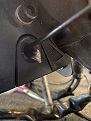
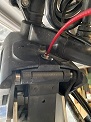
At an Oconee tournament, the steel pull cable broke when trying to deploy the motor. A grove had been worn in the cast aluminum block the cable passes through and had cut the cable

groove in my Minn Kota Ultrex that cut my pull cable

I replaced the cable but it stuck some in the groove and would get cut again so i contacted |Minn Kota. here is part of their response: Hello Ronnie,

this is normal wear from the stow/deploy cable. There is not a way to make this stronger and if it is getting bothersome to the operation of the feature, it can be changed out with part number 2992333 which can be ordered online.

So they know this is a problem, say it can’t be fixed and offered to sell me a replacement block that is the same as the one damaged.

I checked online and found this aftermarket part that seems to solve the problem for about $25. They were very prompt, i received the sleeve in two days!

It was fairly easy to install and i posted on the Minn Kota Owners web page to try to be helpful, several folk there said they had the same problem, but the keyboard warriors told me I did it wrong, even after I posted a link to the installation video on the designer manufacturer’s website showing I did it like they instructed.

Bottom line, I am disgusted with Minn Kota. They know about a problem with their $2500 plus motors that looks like it can be solved with a $25 aftermarket part, but they will not add this to their design. They probably could buy a stainless steel sleeve and put it on when the motor is built for much less than $20.

Boat, Motor and Trolling Motor Equipment I Use – T-H Marine G-Force Trolling Motor Replacement Handle and Cable

Here is the response i got from T-H Marine and my response.

Andrew Shelton (T-H Marine Supplies, LLC)Mar 8, 2023, 7:18 AM CSTCompared to the amount sold it’s not a big issue we see.  We can send you a new retainer and set screws, the G-Force Handle has a lifetime warranty.  When you get the new retainer and set screws what I recommend and what a lot of people do not do is when holding one set screw down on one side with the wrench tighten the other side all the way down until you hear/feel a snap then do the same with the other side.  This ensures the cable sets well in to the cable and will not pull out.

i would follow your advice if the set screw didn’t strip out with almost no pressure. I have installed these before with no problem until this one.

I like and use the following boat, motor, trolling motor and other related equipment

Steel Cable Trolling Motor Pull Cord

I used this cable in the past and was very satisfied with it, but the one I just ordered –  March, 2023 –  had a problem. I could not tighten the set screws. At first I thought the enclosed Allen wrenches were bad but my good Allen Wrenches slipped in the set screws – it seems the set screw itself is too soft to tighten enough to hold the handle on the cable.

I will update this again after working on it and trying it in a  tournament.  I WILL NOT be happy if I have to tie a knot in the cable on the handle end.

From the company when I bought my first one in 2015:


T-H Marine G-Force Trolling Motor Replacement Handle and Cable

Endorsed by B.A.S.S. Elite Pro Gerald “G-Man” Swindle – Rugged nylon jacketed stainless steel table. Large comfortable cushioned grip handle.  The G-Force Trolling Motor Replacement Handle and Cable from T-H Marine is a giant step forward in trolling motor replacement release and lift systems. Endorsed by B.A.S.S. Elite Pro Gerald Swindle, the G-Force Handle is a rugged, nylon jacketed stainless steel cable with a large comfortable cushioned grip handle. The last thing a tournament angler or any angler needs is a broken rope and handle. And as trolling motors become more powerful, complex and heavy, this is a real concern. The G-Force handle eliminates this potential problem. Fits most trolling motor models and makes. Comes with a hook-n-loop strap to secure to the motor shaft while underway.


Cooking Bluegill with Mark Zona

COOK YOUR CATCH: BLUEGILL WITH MARK ZONA

from The Fishing Wire

Cook Your Catch: Bluegill with Mark Zona

Who doesn’t love a good fish fry? And when the fish getting dropped in the fryer is bluegill, well, to say you’re in for a treat is an understatement. What bluegill lack in size, they more than make up for in flavor. The firm, white meat has a mild, delicious flavor that flakes up nicely when fried.

For this recipe from Mercury Dockline, Mercury Pro Team member Mark Zona, co-host of “Bassmaster” and host of “Zona’s Awesome Fishing Show,” shows how he fries up this delectable little fish. It’s a simple recipe that’s easy to commit to memory, and will make you a favorite among family and friends.

Ingredients:

  • 5 pounds bluegill fillets
  • 1 box Fryin’ Magic® Seasoned Coating Mix (16 ounces)
  • Cajun seasoning
  • 1 quart of vegetable or canola oil
  • 1 stick butter-flavored Crisco® shortening
  • ½ cup grated Parmesan cheese

Preparation:

Start by soaking your bluegill fillets in milk for a couple hours. According to Zona, this step will enhance the flavor. And seeing how you have a bit of time on your hands before the fish is ready to be coated and fried, you might think about what you’d like to serve with your bluegill. You can go with a store-bought coleslaw or perhaps you make a nice green salad. In this case, use the time to slice up some vegetables to accompany the greens. Peppers, carrots, radishes, tomatoes and any other veggies you like will work perfectly. Of course, if you prefer, you can always go with some good old-fashioned French fries!

Once you’ve allowed the time for your fillets to soak, add one package of Fryin’ Magic and some Cajun seasoning to the bottom of a batter shaker. Next, add the fish to the top, put the lid on, tip the container upside down and shake gently to thoroughly coat each piece of fish. Now Zona doesn’t specify just how much of the Cajun seasoning mix to add, but that’s probably because when it comes to spice, everyone’s tastes are a bit different. 1-2 teaspoons should do the trick.

If you don’t have a batter shaker, you can just as easily coat your fish in another container with a lid. Whichever method you use, just be sure to coat each piece of fish evenly.

Once you have all of your bluegill coated, it’s time to get frying. In this video, Zona is using a deep fryer, but if you don’t have a deep fryer, a deep frying pan will work just as well. Whichever vessel you use, heat the oil to 375 degrees. Once the oil has reached the target temperature, add one stick of butter-flavored Crisco, if you like. It gives the fish an even richer, complex flavor.

Little trick when frying your fish – do not overcrowd the fryer or frying pan. Doing so will bring the temperature of the oil down, and when that happens, the fish will absorb an excess amount of oil and become soggy.

Fry the fillets for approximately 3-4 minutes. When the fillets begin to float and are a nice golden-brown color, you know you’re just about done. At this point, Zona recommends cooking for another 20-25 seconds. Next, scoop out the fish, drain any excess oil and transfer the fish on top of a couple layers of clean, dry paper towels.

Before you plate your bluegill, sprinkle a little grated Parmesan cheese on top. The richness of the cheese works nicely to balance out the spiciness of the Cajun seasoning. Serve alongside your side dish of choice, and, voila, dinner is served … Zona style! Enjoy.

To learn more about Mark Zona or “Zona’s Awesome Fishing Show,” visit MarkZona.com. You can also follow him on InstagramFacebookTwitter and YouTube.

Fryin’ Magic is a registered trademark of Little Crow Milling Company, Inc. Crisco is a registered trademark of Procter & Gamble Company. All other trademarks belong to Brunswick Corporation.

How and Where To Catch December Bass at Upper Bear Creek with GPS Coordinates

December Bass at Upper Bear Creek

with Gary Don Fleming

    December and big spotted bass go together almost as good as December and Christmas.  It may be the best month to catch a grown spot.  Upper Beaver Creek is a sleeper lake in North West Alabama that often gets overlooked but is full of big spots feeding this month.

    Formed in 1978 by a dam where Bear and Little Bear Creeks come together south of Russellville, this 1850 acre lake has a good big bass to little bass ratio.  Based on the 1995 to 2005 Alabama Bass Anglers Information Trail reports on all Alabama lakes, upper Bear has ranked first five times and second three times for the fewest number of hours it takes to catch a bass weighing over five pounds.

    The two arms of the lake are locally called Phil Campbell and Quarter Creek arms, with the Phil Campbell arm running mostly north and south and the Quarter Creek arm running more east and west. Both arms have bends and turns with smaller creeks and coves off them. The shape of the lake means it is a good place for a trip when the wind is strong since you can find protected waters to fish.

Gary Don Fleming grew up near Russellville and hunted the fields and woods that are now under water at Upper Bear Creek so he has a good knowledge of the terrain of the lake.  He fishes many tournaments in the area, qualifying for the BFL Regional on the Bama Division this year, and also fishes many local tournaments on Upper Bear Creek

He guides on the Bear Creek chain and Tennessee River lakes in northwest Alabama and also guides hunting trips.  His time on the lake and the knowledge he has of it can help you catch fish at Upper Bear Creek this month.

    “I was told Upper Bear Creek has the highest number of quality bass in the area second only to Guntersville,” Gary Don told me.  That confirms his experiences on the lake, where winter tournaments often take 30 pounds to win.  The highest weight he has seen weighed in there is 36 pounds. There are a lot of five and six pound spots and largemouth in the lake, and he knows of a 15.2 pound largemouth weighed in during a tournament there a couple of years ago.

    “In December the bass are holding on main lake structure and moving in to feed,” Gary Don told me.  They feed heavily as the water gets cooler and you can catch them on a lot of different baits.    A key is the presences of baitfish. If shad are in the area bass are likely to be nearby.

    Gary Don will have several rods rigged with a variety of baits for December fishing at Upper Bear Creek.  A buzzbait might surprise you this time of year, but he says he catches a lot of good fish on it on top, especially early in the morning.

    A red Rat-L-Trap is a good fast moving bait that works well here as is a small Bandit crankbait. Both will take active fish chasing shad and allow you to fish fast and cover water. A suspending jerk bait is a third plug he will have tied on and it will take slightly less active fish. 

    When he wants to slow down Gary Don keeps a jig and pig rigged up as well as a jig head worm and a Carolina rigged Baby Brush Hog. Those baits can be fished slowly and kept in contact with the bottom, even when it drops fast.  If the bass don’t seem to want to chase a bait it is a good idea to slow down and offer them something right in their face.

    We fished Upper Bear Lake in early November and the water was much higher than normal for this time of year. It was a tough day, with bluebird skies after several rainy days. And there was a full moon.  The lake should be back to normal by now and fishing will be good.

    The following ten spots will all hold good bass this month and you can catch them using Gary Don’s methods.

    1.  n 34 16.416 – w 87 41.235 – The big island between the two arms of the lake right where they join just above the dam has a long shallow point with a roadbed on it crossing the mouth of the Quarter Creek arm.  There are pole danger markers running from the island across to the far bank and you should not try to run through here, especially if the water is down any.

    Bass hold from the point on the island all along the roadbed and drops on the downstream side of it and feed on top.  Gary Don will fish from the end of the island across the roadbed, keeping his boat on the dam side and casting across the shallow water.

    He often starts with a topwater bait like a buzzbait here, especially early in the morning. The day we fished he got a keeper largemouth on a topwater plug but says he has more confidence in the buzzbait in December.  Work it all the way across to the other bank and down that bank to the first point.  There are a lot of stumps on this bank.

    Also work the top of the point and roadbed with a Rat-L-Trap and a jig and pig.  Cast across the shallow top and work both baits back to the boat in deeper water.  When you get to the far bank probe for the stumps with your jig and pig.  Big fish often hold and feed around them.

    2.  N 34 16.412 – W 87 41.61 – Run to the dam and stay to the left, toward the water intake tower. Start at it and fish the riprap out to the point above the spillway. Be careful, this is an overflow spillway and there is nothing to stop you from going over the dam, and the current can be strong here.

    Gary Don says you could fish this area all day and catch fish.  If there is any current on the lake at all it will be on the point here.  Work your jerk bait and crankbait, casting to the rocks and fishing them out. When you get out to the point go across toward the far bank. There is a shallow ledge running across the mouth of the spillway going to the dam and big rocks on it hold bass, too.

    Go back over the same area with a jig and pig or jig head worm. Use a fairly light bait to get hung less often in the rocks.  Cast up shallow and work the bait back.  Between the point and the intake tower you will be in deep water but it is shallow out near the point.

    3.  N 34 16.177 – W 87 40.577 – Run up past the long point with the campground on it, keeping to the right and go up the Quarter Creek arm.  The first creek on your right, across from the campground, is not real long but the left side of it going in holds good fish in December.

    Start at the two big pines standing with one old dead pine leaning at a sharp angle on the bank.  There are stumps and rocks all along this bank so fish it with your buzzbait and then cover it with a jig and pig.  Gary Don likes a football head jig with a Zoom Creepy Crawler trailer on it and works it on the bottom here.

    Fish back until you stop feeling rocks and stumps. The back of this creek is silted in and bass usually do not hold far back in it in December.

    4.  N 34 16.806 – W 87 40.275 – Run up the creek above the power lines that cross and to the sharp horseshoe bend back to your right.  As you go into the bend ahead of you on the left bank going upstream are two small coves. Start on the upstream point of the second one and work up the creek.  This bottom here drops fast to very deep water and is rocky. You will be sitting in 25 feet of water a very short cast off the bank.

    This is a good area to slow down and bump a jig and pig or a jig head worm down the rocks. You have to fish slowly since it drops so fast. Gary Don likes a green pumpkin finesse worm on his jig head and a one-eight ounce head will get hung less than a heavier one.

    Fish up the bank until you quit feeling rocks, about 75 yards.  The bottom will change to sand and Gary Don will sometimes run this bank with a crankbait. Fish it fast to see if the bass are holding on the sand rather than the rocks.

    5.  N 34 17.808 – W 87 39.533 – Head on up the creek and you will pass several houses and docks on your the left bank. Across from this area is a rock cliff that area with danger markers around it. It is an old coal mine.  Further upstream you will see a point on your left and the tin roof of a house up on it in the trees.  Stop on the downstream point of the cove downstream of the point with that house.

    Fish a Carolina rig and a Trap across this point at all angles.  Fan cast and cover it from downstream then work around it casting toward the bank, continuing until you are casting across it from the upstream side.  Since there is little current here the bass may position anywhere on the point.

    There are several points in the area similar to this one and all will hold bass.  As you leave the point you will see exposed rock on your left and there was a waterfall coming off it when we were there. A brick house is on the next point.  The water in this area was very stained from the rains when we were there but should clear up quickly.

    6. N 34 17.180 – W 87 41.078 – Going up the Phil Campbell arm of the lake, go under the bridge near the dam and the main lake will swing around a point and go off to your right. A small creek enters on the left and runs up parallel to the main lake.

    Start out on the point between the creek and main run of the lake and work into the creek. Stay way off the bank and make long casts with a Carolina rigged finesse worm or jig and pig.  Gary Don says this is a good place to get a limit of fish or to fill out a limit since it is very consistent.

    There are brush piles along this bank that hold bass so slow down and work it when you hit one. Gary Don likes a football head jig with the Zoom Creepy Crawler trailer on it and will crawl it along the bottom probing for cover, fishing it much like a Carolina rig.

    You can continue fishing on into this creek, working the bank and small points along it. Don’t leave as long as you are catching fish.

    7.  N 34 8.164 – W 87 40.632 – Running up this arm of the lake you will go by a broomstraw field on your right.  When you get where you can see houses way ahead of you, with yards down to the water you will also see a rock ledge running into a cove on your right. Across and just downstream of this ledge you will see a double point on your left.

    Gary Don says this point comes out pretty good and drops off fast. There are stumps on it and you will see an old logging road enter on the downstream side of the downstream point. Fan cast both points with your jig and also try a jig head worm here. Cover all of both points.

    8.  N 34 18.470 – W 37 40.504 – Run on up to the point just downstream of the big brick house on with a nice yard running to the water. There will be a big shallow cove between the point you want to start on and the point the house is on. Both are on the left going upstream.

    Work all around this point, sitting out in deep water and casting across it at all angles.  There is a big brush pile on the downstream side of the point and more brush scattered around on it.  There are also rocks here.

    Fish a jig and pig or jig head worm on the point, probing for the brush and rocks.  Work slowly around the point. It drops off fast and if you fish too fast you will miss the brush. Also watch your depthfinder for brush way out off the point and fish it, too.

    Gary Don say this they call this the Five Points area and there are five points here you can fish. All of them are good at times and they have hard rock bottoms. He says this is the best area on the lake.  Try them all.

    9.  N 34 19.210 – W 87 40.154 – Head on upstream and you will see a high rock bluff on your left.  Stop on the upstream point of it and fish that point into the cove to the dock.   Fish all around the dock, too.  A jig or a Carolina rig is good on these points and there are stumps and rocks on it to hold bass.

    10. N 34 39.944 – W 87 39.217 – Just downstream of the next bridge and boat ramp is a creek on the left side called Gas Branch. A small island sits off the bank on the upstream side of it.  Fish all around the island then work up the bank all the way to the boat ramp on the next point. Gary Don says many tournaments are won in this area.

    Fish all your baits. Try crankbaits and jerk baits then work the area with a jig and pig, Carolina rig worm and jig head worm. Fish the swimming area as you go by.  If you catch fish continue to work the area, switching baits and giving them a choice.

    These ten spots all hold good bass this month and there are many others like them all over the lake. Check out these and learn how Gary Don fishes them, then try to find similar spots to fish where you can work the pattern.

    You can contact Gary Don for a guide trip at 256-627-2903 or email him at garydonfleming@gmail.com

What Is FISHING THE LATE ICE and Why Should I Know About It


FISHING THE LATE ICE

from The Fishing Wire

Fishing The Late Ice

The days are getting longer and warmer. Longer days and warmer temps at this time of year mean that some really good ice fishing is not far away. Here are some ideas for finishing the ice fishing season successfully.

Even through the ice and snow, fish seem to be able to sense a change in the seasons. Mother Nature tells the fish that it’s time to start thinking about spawning, so, under the cover of ice, they start to head in the direction of where they will spawn. They don’t just take off and go there, they take their time and leisurely head for their spawning areas. As they travel, they eat a little more than they have been. Walleyes, northern pike, perch, crappies, bluegills, pretty much all fish that live in the Midwest will be getting hungrier and easier to catch right now. You don’t want to completely abandon the offshore structures and deep weedlines that you’ve been fishing the past few weeks, but you need to remember that the fish will soon start to leave those spots. When the action starts to slow on those locations, you need to start moving to keep up with the fish. Pay attention to your sonar. If you’re seeing fewer fish marks than you have on recent trips, it’s time to think about heading to the areas that the fish are headed to.

There will still be an early-in-the-day and a late-in-the-day bite, but on a lot of bodies of water, the bite has the potential to be pretty good all day. Not on all lakes, but some lakes.

This time of year you need to keep moving until you find the fish. Try different depths, and different structures, just keep moving until you find fish activity. When you find them, sit on them until they move, then you move too. That’s the key to ice-fishing year-round, but perhaps more under late ice. Keep in mind that the fish are headed toward the areas where they’ll be spawning in a few weeks. You should be headed to those areas as well.

Remember that the fish have seen lots of baits by now. If you’ve got something on the end of your line that’s been working, keep using it until the fish tell you they want something else. Then go to a different color or a different size or impart a different action on the lure. If you’ve got a bait that hasn’t worked all year, give it a try. Maybe the fish will decide that it looks rather good to them now. There’s a new bait called a Jointed Pinhead Pro that the fish haven’t seen much of and should be very productive under this year’s late ice. Use the smallest size for bluegills, larger for perch and crappies, and even larger for walleyes.

The late-season ice fishing can be outstanding, but like most things, don’t try to get too much of a good thing. If you’re not sure about the ice being safe, don’t go out. If no one else is out there, you shouldn’t be either. Keep an eye on current conditions. If it starts to get warm during the day, you should head for shore. Venturing onto the ice when it’s not safe can be very exciting in a way that you don’t want to be excited. Be safe, move until you find the fish, and experiment with lures and how you present those lures, and the last few weeks of ice fishing could be memorable and exciting for you in a very good way.

– Bob Jensen of fishingthemidwest.com.

When Where and How To Catch November Bass at Lake Martin

November Bass at Martin
with BJ Barnett

November is a wonderful month for bass fishermen. The cool water has the bass active and feeding and the lakes are not crowded. It is a fun time to fish. Lake Martin, full of hungry spots and largemouth, is a great place to spend some time right now.

Lake Martin is a 39,180 acre lake with 700 miles of shoreline and is located on the Tallapoosa River near Alexander City. It is a deep, clear lake full of rocks, docks, humps, brush piles and spotted bass. There are also lots of largemouth in the lake. You can find just about any kind of fishing you prefer somewhere on the lake.

Dammed in 1926, Martin is an old lake and much of the natural cover has disappeared over time. Fish now relate to rocks, stumps, drops and man-made cover like docks and brush piles. It is also a very clear lake and bass can be spooky since they can see you far away.

B. J. Barnett grew up on Lake Martin. Until he was eight years old his family had a cabin on Blue Creek then they moved to a house across the road from Bay Pines Marina full time. At 11 years old he was putting his 16 foot Fisher boat with a 25 horsepower Johnson in at the marina with a 4-wheeler and fishing every chance he got.

After earning a fisheries biology degree at Auburn B. J. returned to the Alexander City area and worked with his father – and fished. He competed in local tournaments as well as the BFL, making the All American in 2005. He has a top ten finish in the Stren Series on Martin and fishes the BASS Weekend Series in the area.

Now B. J. owns Fish Tales Bait and Tackle in Alexander City. He is running a new tournament trail with Bay Pines Marina and also helps out with charity tournaments when he is not competing in them. He considers Martin his home lake and keeps up with what the bass are doing there.

“Bass will feed in shallow brush until the water cools below 60 degrees, usually around the first of November,” B.J. said. There is a lot of brush around docks in shallow pockets and the bass will be there, but as the water cools it also drops and both make the bass move to a more consistent pattern.

This year the water has been unusually high from the rains in late September. That may keep the bass shallow a little longer. But soon they will move to deeper banks and humps and hold on stumps, rocks and man-made brush piles. They will feed there, fattening up for the winter.

B.J. keeps his tackle fairly simple. He will always have a Sammy tied on and expects to catch bigger fish on it. In the past five years he has landed three spots weighing over six pounds each on the Sammy and one of them came last fall. It is especially effective on calm days when there isn’t much ripple on the water.

A spinnrebait is B.J.’s go to bait and he likes the Davis Pro Vibe X-Wire and he is also having good luck with the newer Hole Shot spinnerbaits. The Hole Shot has holes in its blades and it can be fished faster without breaking the surface. Both spinnerbaits have silver blades and white skirts and he likes a fairly big three/eights to one half ounce bait.

Spinnerbaits are best on windy days when there is a chop on the water. He makes long casts and works them fast over any cover in the area. Spinnerbaits will pull bass, especially spots, up out of deeper water to hit it. He fishes them on 12 pound fluorocarbon line.

A three sixteenths ounce Tightline Wood Thumper jig or a Davis jig rigged with a Paca Chunk in greens and browns is another good bait. Both jigs are compact and B. J. throws them around rocks and wood cover. Both are fished on PLine Fluorocarbon line. Bigger bass also like the jig and pig.

A Davis HBT Standup Jig head with a T-Mac or finesse worm also works well when the bass want at thinner bait. It is more subtle than the jig and pig and will get bites when other baits fail.

All these baits are available at Fish Tales and B.J. also pours his own line of jigs called Nervous jigs. They work well on Martin, too.

B.J. showed me the following ten spots in early October, right after the heavy rains. The lake was about a foot low and the fish were scattered. The lake is dropping pretty fast and by now they will be more concentrated and you should be able to catch them all month long on these holes.

1. N 32 50.522 – W 85 52.687 – Bay Pines Marina caters to fishermen and is a good place to put in for the spots B.J. likes to fish. If you put in there you can idle around the first point to your left as you come out of the cove the marina is in. You will be going into a big bay with a small island in the back near where it splits with a grave yard on it.

As you round the point watch for pink stucco and brick house on your left. Start just past it at the gray block boathouse. Stay way off the bank. There is a row of stumps in about 18 feet of water at full pool you want to fish over. The stumps will be more shallow as the lake is drawn down, and this is a good example of the kind of place the bass pull out to as the water cools and drops.

Blind cast with your Sammy if the water is smooth or your spinnerbait if some wind is blowing in on this bank. Work down the bank to the dock on concrete posts and look for brush. There is a lot of brush around this dock and it holds bass. Run your Sammy or spinnerbait over it then fish through it with a jig and pig and a jig head worm.

Fish on down past the dock to the little pocket and seawall coming out of it. There is scattered brush all along here you can hit if you probe for it, and spots especially like this area.

2. N 32 50.843 – W 85 52.268 – Toward the back of this big bay on your left before it splits you will see a danger marker way off the bank. It marks a rock ridge that runs way out off the bank from a small island near the bank. It is a very good feeding area for spots.

Keep your boat out in 15 to 16 feet of water and make long casts across the top of the ridge with a Sammy and a spinnerbait. Wind controls the bite; bass will hit the spinnerbait better if wind is blowing in on this spot. Wind always makes a place better, creating a ripple on top that makes it harder for the fish to get a good look at your bait and creating current that moves baitfish. Fish your bait with the wind, casting into it, on this spot and all others when there is some wind.

Work around the ridge, concentrating on working the wind. The downstream side is usually best. Also, watch for fish following your bait and not taking it. B.J. says sometimes you have to convince them to hit. Back off and make longer casts and also try other baits. If you see fish you know they are there, you just have to find the combination they want.

Also try a jig head worm here before you leave. Stay out in deep water and cast it up on top of the ridge. Work it around the rocks on this ridge, fishing from shallow to deep.

3. N 32 51.603 – W 85 50.830 – Run to the back of Madwind Creek to where it splits. Ahead of you will be two big houses with nice yards on a point and there is a small cove to the right of them. On the right side of the cove is a smaller house with a gray tin roof. In the middle of that small pocket, about even with the points on both sides, is a hump that rises to 12 feet deep at full pool. If the water is down five or six feet you can see it. The water drops off to 20 feet deep all around it and bass pull out on it as the water level and temperature drop.

Fish all around this hump with all your baits. There are logs and man-made brush piles on it so probe for them. When you find one work it hard from several angles with a jig and pig and a jig head worm. This spot holds largemouth and spots.

4. N 32 51.518 – W 85 50.901 – Across the creek on the left bank going in, about even with the point and hump, is a ridge running down the bank. There is a big sandy flat point between the bank and the ridge that drops off into the creek channel. The top of the ridge is just a few feet deep and you will see some brush sticking up out of the water from at least one of its brush piles. The channel drops to 20 feet deep.

The flat and point are in front of a gray house and there is a small pocket downstream of it. Keep your boat out in 20 feet of water and cast up into the shallows with your baits, working them back out over the drop. There is a good bit of brush and some rocks along this drop to fish.

5. N 32 50.019 – W 85 51.537 – Run out of Madwind Creek and stay near the left bank. Near the mouth of Manoy Creek is an island with a pirate flag flying from a tree. There is a sign on the tree warning “Ye Who Enter Beware” and some decorations like a fake cannon, skeleton and chest. This island is near a smaller island.

A ridge runs off the lake side of the island and is 17 feet deep on top well off the bank. There is 40 feet of water on either side of this ridge and it has stumps and brush on it that holds bass. Wind really helps here and a spinnerbait is your best bet when the wind is blowing in on it. Fish all round it from different angles, working the wind, with all your baits.

6. N 32 49.953 – W 85 51.014 – Go into Manoy Creek and it makes a hard left. The point is rocky and so is the bank for a good ways, then it turns to clay just past a small pocket. Out from this transition, well off the bank, is a hump with brush on it. It was an old state brush pile at one time but the marker is gone and fishermen have kept the brush fresh.

Say way off the bank and watch for a light color marking the top of the hump. You could barely see it the day B.J. and I fished but it should be more visible now. It tops out about four feet deep at full pool. The brush is on the deeper side, away from the bank.

Make long casts and work the hump and fish over the brush with Sammy and spinnerbait. Then probe for more brush with either of your jigs. The day we fished B.J. got a solid 2.5 pounds spot here on a spinnerbait and two bigger fish were following it.

7. N 32 50.270 – W 85 50.887 – If you follow the bank on straight ahead it runs into a small creek right where the main creek bank turns sharply to the right. Going back into this small creek there is a little pocket on the right bank. On the upstream side of it is a big tree in the water. Past the tree there are a lot of stumps, some of which you can see but many others underwater on the clay bottom.

Start at the small pocket and work into the creek. Fish faster-moving baits first then go back over the area with your bottom bouncing baits. Probe for the stumps and there is some brush here to hold bass, as well as the big blowdown and some smaller logs.

8. N 32 48.504 – W 85 52.061 – Come out of the mouth of Manoy Creek and head toward the mouth of Sandy Branch. Stay near the left bank. About half way between them, off the rocky point that runs out a little more than the others in this area, there is good hump. The point is in front of a pocket that runs back as a small angle almost parallel to the lake rather than straight back from it.

The hump is 13 feet deep on top at full pool and drops off to very deep water. It is big, about 50 yards wide, so you have to find the sweet spot on it. Look for where it drops fast from 12 to 20 feet deep on the lake side. This spot holds some big spots and B. J. says a four to five pounder is a good possibility here.

Slow down for the big fish and work your jig and pig down the drop. Sit on the lake side in deep water and cast up on top of the hump. Work your bait slowly down the drop, out to about 20 feet deep. Try different things. Drag your jig and pig on the bottom on one cast, then hop it on the next. Try to make the big spots that live here hit it.

9. N 32 48.031 – W 85 52.725 – Across the mouth of Sandy Branch off the upstream side of Pace Peninsula there is a small pocket with a danger marker on a pole out in the mouth of it. This big sandy hump doesn’t have much cover on it and it does not have a sharp drop, but if the wind is blowing in on it like it often does fish will be feeding here.

Fish from the left side of the marker facing it out to where it gets deeper then work the back side of it, too. This is a spot to fish fast and cover quickly. If the wind had fish feeding here you should catch them quickly. B. J. says you are wasting your time to fish this spot if there is no wind, but it can be real good with some wind.

10. N 32 48.048 – W 85 53.893 – Run across the lake and downstream to Wicker Point, the big rocky point straight across from Pleasure Point. There is a danger marker on some big rocks on the upstream side of the point near the end of it. A green cabin with a screen porch all around it and a block chimney sits on the bank behind the big rocks. There is a dock with pipe post near the danger marker, too.

Fish all around the big rocks you can see, and work the area for other rocks under the water. Fish around the dock for bass holding in the shade under it. This is a good place to catch spotted bass. B.J. says he will hit this point and the next five points going in toward New Hope ramp like this, hitting them all fast for active fish.

Give these spots a try. B.J. has found them by spending many hours on the water, but there are many more like them in the area that hold big bass. Try his tactics and baits and you will catch bass.

WHAT ARE SOME TIPS FOR KID-FRIENDLY WINTER FISHING

Tips for Kid-Friendly Winter Fishing

from The Fishing Wire

Looking for a way to beat the winter blues and teach a young person important life skills? Try ice fishing. It offers a great opportunity to learn about fish, lakes, and ice safety. It’s a lesson in patience (sometimes). If you’re successful, you’ll even get some clean, healthy meals out of it!

Keep them warm.

Bring layers and an extra change of clothes. Depending on the temperature, the area around your ice hole will tend to have a little water around it. If kids are kneeling on the ice or handling a lot of fish they’re potentially going to get wet.

Once you get cold, it’s hard to warm back up unless you have a shelter with a heater. If you plan to stay out for a longer day, a shack and heater might be a good investment for you. There are many types of shelters available at sporting goods stores or you can DIY. For an extra special treat, bring hot chocolate or warm soup in an insulated container and pull it out half way through the excursion.

Bring snacks.

Your body burns more calories in response to cold. The best time for your favorite snack is when there is a lull in the action.

Give them a job.

Keeping the holes clear of ice is an important job. It keeps your line from freezing to the side of the hole or getting clumped up with ice. It also lets your bobber move correctly when you have a bite. Especially if you have drilled a lot of holes, the scooper is a great way to keep kids busy and active. Just make sure they know to hold on tight so they’re not sending your scooper to the bottom of the lake.

Catch fish.

It’s the most exciting part. Get to know your local lakes and what fish species are available in each. Our friends over at Alaska Department of Fish and Game have a website to help you figure out what they’ve stocked and when here in Anchorage where there is heavy fishing pressure.

You’ll also want to get familiar with the behavior of fish. Are you looking for fish that are roving around mid-water column like a stocked Chinook or Coho Salmon? Or are you trying to outsmart the hardy Alaska Blackfish that prefers the bottom? Or the ambush specialist, the Northern Pike? Perhaps the burbot? Learn about fish behavior (what they eat, when they’re active) to improve your odds of catching.

For stocked salmon, baits that work well include cured eggs, popcorn shrimp, or a little piece of herring if you really want to impress them. Test out different depths by setting your bobber with a string bobber stop.

If you haven’t tried ice fishing before, one way to learn more about it is during organized kids fishing events. Our friends over at the Alaska Department of Fish and Game hosts a number of winter events in Anchorage and surrounding areas (usually in February) including one at Jewel Lake. Hundreds of holes are drilled and gear is available for youth and families that need it.

Cooking your catch

If you’ve caught some stocked Coho or Chinook (usually small like this), the easiest way to prepare them is taking off the head and then removing the guts by making a small incision from the anal fin to the area where the head is removed. Simply pull the guts out and use the back of your fingernail or small spoon to remove the kidney (the dark stuff along the spine that you can see once all the guts are removed).

In Alaska we are shared stewards of world renowned natural resources and our nation’s last true wild places. Our hope is that each generation has the opportunity to live with, live from, discover and enjoy the wildness of this awe-inspiring land and the people who love and depend on it. We honor, thank, and celebrate the whole community — individuals, Tribes, the State of Alaska, sister agencies, fish enthusiasts, scientists, and others — who have elevated our understanding and love, as people and professionals, of all the fish.

– Katrina Liebich, PUBLIC AFFAIRS SPECIALIST, U.S. Fish & Wildlife Service Alaska