Renew Your Fishing License

For years, Georgia fishing and hunting licenses expired on April 1 each year. Now, they expire on the day you bought them a year later if you buy an annual license. That confuses many folks and they forget to check and renew them on time, risking a fine.

April Fools Day always reminds me to check my license since I had to buy one by then for many years. I did this year, it expires in 2216. I got my lifetime Senior License a few years ago but forget that and check anyway. I just wish I could be fishing 197 years from now when it expires, and I would have to renew it.

I never minded paying for hunting and fishing licenses. The fees are used to improve those activities in a variety of ways, from hiring new game wardens to funding hatcheries that produce all our hybrids and most of our trout.

My only worry about the fees is that they will not be used as intended. As I understand the process, the license fees go into the general fund and then legislators have to approve it being spent at intended. It would be too easy for them to spend that money in other ways.

I would not be happy if they voted to use the money for something like highway improvement. Not only would that be double taxation, hunters and fishermen already pay the gas tax for that, it would go against the way the money was intended to be spent.

I feel the same way about outdoor recreation that has nothing to do with hunting and fishing. Funding a nature trail on public land is nice, but do not use money hunters and fishermen paid to improve their sports. Use money from a fee or pass for using the area if not hunting or fishing.

Hunters and fishermen fund our sports nationally, too. The Dingle-Johnson Act places a ten percent excise tax on all fishing equipment. You pay it when you buy hooks or reels, or anything else related. Hunters pay the Pitman-Robinson excise tax for the same reason.

Funds are collected by the federal government and most of it is sent back to the states as block grants. The amount each state gets is based on a formula that includes number of hunting and fishing licenses issued by that state. It also requires that the receiving state spend all their state hunting and fishing license fees on those activities.

States are required to spend this money on hunting and fishing, but all outdoorsmen benefit. Most state hunting areas are open to bird watchers, hikers and others that do not hunt but get to enjoy lands hunters and fishermen purchased and conserved.

Check you fishing and hunting license!

White Bass Time Across Arkansas

White Bass Time Across Arkansas
Randy Zellers Assistant Chief of Communications
Arkansas Game and Fish Commission
from the Fishing Wire

LITTLE ROCK — Each spring, anglers across The Natural State start getting the fever for some fishing action. Sure, die-hard anglers and veteran bass fishermen have been on the water fishing for big fish for the last month or so, and many crappie anglers never put the boat away in winter, but by and large, the best angling action of the year is just around the corner. If there’s a kickoff to “fishing season,” it’s the fast and furious angling action brought on by the annual migration of white bass from large lakes and rivers upstream to their spawning areas each spring.

“The white bass spawn is fishing’s equivalent of the opening day of dove season,” said Chris Racey, deputy director of the Arkansas Game and Fish Commission. “You’ll start hearing people ask, ‘Are the white bass running yet?’ beginning in late February and early March every year.”

White bass typically start concentrating near the mouths of streams feeding lakes and rivers each year as the surface water temperature begins to reach 50 degrees. When the water warms to the mid-50s, the fish will move upstream as far as they are able and spawn on sand or gravel surfaces with flowing water that will aerate their eggs.

“White bass don’t tend and fan a nest like crappie, bream or largemouth bass,” Racey, who was a fisheries biologist for the AGFC for many years, said. “Instead, their eggs settle to the bottom and stick to rocks and gravel where the current keeps them aerated until they hatch.”

The fish actually don’t bite much when they are actively spawning, but feed heavily just before and afterward.

“It’s more a matter of fish being concentrated in an area and being easier to locate that makes the white bass run such a big deal for many anglers,” Racey said. “And this is one of the few times of the year that these fish, which normally spend their time in deep water, will be available for bank anglers.”

Keeping things light is a must for walk-in angling, and Racey has narrowed down his arsenal to some specific lures for people to carry in their pack.

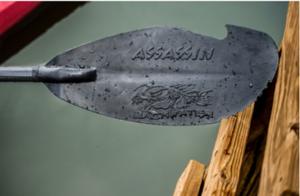
“I have three baits in my white bass tackle box,” Racey said. “My go-to is a white 2-inch curly shad Bass Assassin grub on a 1/16-oz. jighead. Then I’ll bring a ?- or ¼-oz. White spinner with a silver blade and a small, blue over orange belly Rapala suspending jerk bait. You can throw all of them on light spinning tackle.”

Here’s a list of some of the most popular places to try your hand at fishing for white bass this spring, according to the biologists who work and fish on these waters. There’s even one location in this list that has no limit on white bass, so anglers looking to have a family fish fry can load the boat.

Magical Millwood
Typically one of the first locations in the state to start receiving reports about the annual white bass run is Millwood Lake in Little River County. This southwestern Arkansas reservoir is known as one of the best places in the state to chase memorable-sized largemouth bass because of an intense Florida-strain largemouth stocking program that has been in place for decades and its shallow-water habitat that is the key to the strain’s success. The river that feeds this giant reservoir also is home to some incredible action during the white bass spawn if anglers know where to look. According to AGFC Regional Fisheries Biologist Supervisor Eric Brinkman, many anglers enjoy fishing the river section of the lake by boat for fiesty white bass.

“Little River anywhere upstream of Yarborough Landing on Millwood is a good place to fish,” Brinkman said.

According to the AGFC Weekly Fishing Report, Millwood Lake Guide Service points out McGuire Oxbow and the entrance to Cemetery Slough as likely staging areas, but when the fish move upstream of the U.S. Highway 71 bridge, the spawn is in full force.

Other areas on Brinkman’s short list for the white bass spawn include Star of the West Recreation Area and Self Creek on Lake Greeson in Pike County and the Saline River upstream of Dierks Lake in Sevier County, although a boat is required for Self Creek and Dierks.

Bust ‘em at Beaver Lake
In the far northwestern corner of the state, Beaver Lake offers one of the best white bass runs for Arkansans. It also has the distinction of being one of the few places in the state where you may find a trophy-class striper working its way up the same tributaries as the white bass. Fisheries Supervisor Jon Stein says this year has already gotten off to an excellent start, with many anglers reporting 100-fish days. And keeping those white bass is no issue because Beaver Lake and its tributaries have no daily limit for white bass. The prolific nature of the species and relatively light pressure on the resource have made limits on the fish unnecessary in this corner of the state.

“The fish move into the river arms to spawn,” Stein said. “The best locations are out of the Highway 45 Access, called Twin Bridges, on the White River and War Eagle Creek below War Eagle Mill. You don’t have to get too technical with it, either. A Mister Twister Sassy Shad on a jighead works just fine for me to catch whites on the run.”

Find the flow at Lake Conway
White bass also make a spawning run around Lake Conway, but the hot bite may be in different locations depending on water flow. AGFC Regional Fisheries Supervisor Tom Bly and Fisheries Biologist Matt Schroeder both agree that the upstream end of Gold Creek beyond Wilhelmena Cove, a popular crappie-fishing location, in the northwest portion of the lake has a good run of white bass. Another place where anglers can look for some action is below the dam where the lake flows into Palarm Creek.

“We will get reports of white bass and some stripers from the Arkansas River running up to as far as the Conway Dam, but there won’t be much action unless the gates of the dam are open to maintain water levels during rain events,” Bly said. But you can catch them on white or shad-colored curly tailed grubs on jigheads, smaller crankbaits or shad imitations on a fly rod.”

Bly notes the weir on Palarm Creek at Cadron Settlement Park on the Arkansas River sees a similar migration of white bass where the fish moving from the river are concentrated into a small area.

Greers Ferry a good bet
Another good white bass run occurs in the river arms on the northern section of Greers Ferry Lake in Heber Springs. The lake is known as the site of the former world-record walleye, and that species also is known to make spawning runs within the Devil’s Fork, Middle Fork and South Fork of the Little Red River. Chasing white bass on this lake usually means having a boat, but one of the most popular destinations can be found at the Johnson Hole Access of the South Fork arm north of Clinton. Boaters can access the area from the lake or can launch at this access, but the creek has many shallow areas between the main lake and where the whites run, making it a better prospect for small boats, kayaks and walk-in access. According to Bly, many anglers will catch their limits in this section of the river during the annual spawning run.

Maumelle mainstay
It seems like every year, one location sees more attention than the rest in the state from white bass anglers. Perhaps it is because of its close proximity to Little Rock, or perhaps it is because the white bass run here is just that good. Either way, the upstream end of Lake Maumelle is so popular with white bass anglers and creek fishermen that the AGFC and Central Arkansas Water worked together to enhance access at the west end of the lake. Sleepy Hollow Access was enhanced with a campground, two boat ramps for boats with motors 25 horsepower and less and a courtesy dock. A parking area also was constructed for a special walk-in only area called Bringle Creek Access. Both of these access points can be found with a few miles of where Arkansas Highway 10 crosses the lake’s upstream end. You’d be hard pressed to find either of the parking lots of these areas empty from March through May each year as anglers tote their favorite spinning rod and curly-tailed grubs to fool the fish as they feed along the shoals before spawning. The stream is part of Lake Maumelle, so no wading is allowed, but there is plenty of shoreline to walk and fish.

Lake Oconee March Club Tournament

Sunday, March 24, 11 members of the Spalding County Sportman Club fished our March tournament at Lake Oconee. After casting eight hours, from 7:30 AM until 3:30 PM, we brought 27 keeper bass to the scales weighing about 48 pounds. There was one five-fish limit and everyone caught at least one keeper.

I managed to scratch out a win with four weighing 7.54 pounds, Raymond English with the only limit was second with 7.34 pounds and Wayne Teal placed third with four at 7.19 pounds. Niles Murray, Raymond’s partner, came in fourth with two keepers for 5.71 pounds and had big fish with a nice 3.47 pounder.

It was a tough day. I had mixed hopes since the BFL there the day before had been won with five bass weighing 21 pounds 11 ounces so I knew the big fish would bite – for some. But it took only 10 pounds 11 ounces to get a check in 24th place. That is a low weight for a check for those guys, so I knew it would be tough for fishermen like me.

I started casting a spinnerbait and crankbait to a rocky point at the mouth of a big cove. Prespawn bass should be feeding on places like that. With the full moon last week, I thought they should be on that pattern, but the 57-degree water temperature discouraged me.

The area I fished was much clearer than I expected. I could not get a bite on moving baits, even though I tried off and on all day. But about 300 yards down the bank, in a small dip, I got my first keeper on a shaky head worm at 8:00.

After trying a variety of things, I went to a brush pile on a big, shallow point I found last year. After a few minutes I caught my second keeper at 10:00 on a Texas rig. Although I fished the brush and others around it for an hour, I didn’t get another bite.

Since the sun was high and the water should be warming, I went to some smaller spawning coves. I caught several 13-inch bass but no keepers. Going between two pockets I cast a shaky head in front of the boat, just to keep my worm wet. That cast resulted in my third keeper at 11:00.

After trying some more things, I went back to the brush. It is about 100 yards off the point and a danger marker is about 50 yards off the bank. I would position my boat about 100 feet from the marker to cast toward it, the brush was about half way to it.

Although I caught my biggest keeper that at 1:00, I could not fish it. Several skidoos and big boats illegally ran between me and the marker, right over the brush and well within the 100-foot law. Either the drivers were too stupid to know the law, were inconsiderate slobs, or both.

I went to a big, calm cove and fished shallow, hoping to find one more keeper. I caught several more short bass but never got my limit.

_______________________________________________________

Success During Late Ice

Increase Your Success During Late Ice
from The Fishing Wire

Late ice fishing is good


Photo courtesy of Aqua-Vu
Four Late-Winter Tips for Catching More Panfish

Seek, Drill and Stay Mobile for Late Ice Crappies. In smaller, shallower lakes, crappies are typically located and caught throughout much of the winter season over main-lake basins. In large, deep lakes, however, they tend to avoid the deepest areas and use flats, humps and basins ranging from 20 to 40 feet deep. But crappies are also notorious for suspending. Depending upon conditions, they can be found anywhere in the water column, creating an additional variable in the angling equation.

As the ice-fishing season nears its end, crappies transition from deep water wintering areas towards shallow bays, channels and river mouths in preparation for spawning. Depending on where and when you fish, concentrations of crappies will be present along a relatively straight line between these distinct areas.

During the late-ice period, take a stab at identifying some of these likely travel paths between wintering areas and spawning areas on the lake you plan to fish using the Fishidy app or map on your Sonar/GPS. Look for potential staging locations where cover, structure or current variations are present along those paths.
Once you’ve identified attractive areas, gas up the auger and get to work. Use your GPS to confirm your location on the ice, and pick a variety of sweet spots over the particular structure you plan to fish. A larger fishing party is beneficial because you can share the work of drilling holes and checking them for fish with sonar. Once you mark fish, take the time to drill more holes. It’ll save you time in the long run as you’ll waste less time fishing an unproductive hole when an entire school may be located just 10 or 15 feet away.

Once the crappies are located, hole hopping is the key to keeping busy catching them. Anglers willing to leave the comfort of their fish houses and use their electronics to fish from hole to hole are the ones who catch the most crappies. Keep moving if a hole doesn’t show a fish on your sonar. Keep drilling more holes if necessary until you get a sonar return. Then drop down, catch a fish or two and move on once the action slows.

Fish Fast for Late Ice Crappies. Crappies display a variety of moods, and their responsiveness to various presentations can change throughout the day – often rapidly. Late-ice crappie anglers should be prepared with a variety of offerings, from small tungsten jigs tipped with thin plastics to relatively large jigging spoons tipped with spikes, waxes or minnow parts. The key is being prepared and willing to show fish a variety of presentations and profiles to determine which one best matches their mood at that moment. Then it becomes a game of presenting the preferred bait to numbers of fish, which means moving on quickly from barren holes.

When a fish shows on sonar, try stopping the bait 4 to 5 feet above it and slowly working it down if necessary. You’ll often see the fish begin drifting up towards your bait immediately. If they do, slowly raise the bait while twitching it ever so slightly to make them chase it. Once you get them moving, they’ll usually charge it. If they refuse it, it’s time to try a different bait.

Fishing fast means fishing heavy. Getting down to a fish fast — hopefully before it leaves — is critical to maximizing opportunities. Tungsten jigs sink fast while retaining a delicate profile, and are the best choice when crappies show a preference for smaller offerings. Jigging spoons are great options anytime crappies are aggressive and eager to attack a larger profile. They easily punch through slushy holes and get back down to other fish quickly once one has been caught.

Turkey Baster Panfish?. One surefire strategy for determining the types of wintertime foods preferred by bluegills, perch and crappies is to take a living, breathing sample. Fly fishermen use a small stomach pump (resembles a miniature turkey baster) on stream trout in order to match the hatch. It works with panfish, too, and it’s completely harmless to fish, other than depriving them of recent eats.

Fill the pump with water with a quick squeeze, insert the tube into the fish’s mouth and a few inches down its pharynx, which leads directly to the stomach. Be gentle! Squirt the water into the stomach and release the pump, which vaccums up any recently ingested critters. Squirt said contents into your palm and have a looksee.

A fish’s recent meals reveal the anatomical details of each eaten bug, as well as plenty of the goo that represents zooplankton and other partially digested “whatnot.” You also learn potentially productive lure colors, and can quickly tie on something you know panfish will want to eat. Identifying specific prey items also suggests fruitful jigging cadences. Mayfly larva, for example, swim with undulating tail kicks that can be mimicked with various soft plastic baits.

The Strength of the Snell. While most ice anglers rely on one or two favorite knots, the truth is you can do a lot better than an improved clinch, Trilene or other customary line-to-jig connection. If you’ve never tried a snell knot, including versions such as the Marka knot or a Uni-Snell knot—you’re missing out on a ton of advantages for almost any jig presentation, particularly for panfish jigs and ultra-thin mono or fluorocarbon lines. Actually, the advantages of a well-tied snell overwhelm those of traditional knots.

One, a snell knot positions your jig at the ideal horizontal position—no need to reposition your knot, ever. Two, the knot is recessed and tied around the shank of the hook, so it rarely requires retying (you can often fish most of an 8-hour day with the same snell knot and jig.) Three, snell knots are almost bulletproof-strong. Finally, the knot itself acts as a form of soft plastics keeper, pinning the chosen bait tight to the jig collar. The plastic further protects the knot by sliding right over the top of it. Moreover, you can tie either version with traditional eyelet jigs, or Russian “through-head” jigs. Here’s a link to a few top ice jig knots (see #3, #6A and #6B).

About Fishidy:

Fishidy is a location-based fishing app and online community of over 1 million users that features interactive mapping technology, data-rich fishing maps, and social networking to help anglers identify the most productive water and head straight to the action. Users discover shared catches and local Fishing Hot Spots®, stay up-to-date with the latest fishing reports, and find detailed waterway information so that they are fully prepared for their next fishing trip. Learn more at fishidy.com.

Why Do You Camp?

I have always loved camping. From “camping out” in lawn chairs and sleeping bags in our back yard a few feet from the house to trips to Clarks Hill with the family setting up a big Army Surplus tent, I enjoyed my time outside.

When I started bass fishing, I camped in tents at lakes the night before a tournament. Then I bought a cargo van in 1977 and fixed it up with a bed and used it. Two more vans took me to the lake many times, each one converted a little better for my needs, until last March.

My old back finally convinced me I wanted to be able to stand up to get dressed, so I got a slide in pickup camper. It takes a little more work loading and setting up at the lake, but it is a lot more comfortable once that is done.

Last weekend I camped in it at Lakepoint
State Park on Lake Eufaula for five nights for the Potato Creek Bassmasters tournament there. When making reservations, I went to their web page to make sure there was no tornado damage. It hit the airport about five miles from the campground, destroying hangers and planes, but did not damage the park.

Modern “campers” amaze me. On the website comments about the campground proved people do not want to camp to enjoy the outdoors. I am not sure why they even go. They could stay home and do the same thing they do in the campground.

The oddest comment was about alligators. There are big signs in the campground warning “Alligators Present, Swim at Own Risk” and there are usually several in the water late in the afternoon.

One person complained in their comment that there were alligators at the campground but the park ranger did nothing about them. I’m not sure what they were supposed to do, the lake is full of them and they are wild animals, moving wherever they want in their natural environment.

Another person complained there were puddles in the campground after it rained. Duh. I guess those folks wanted a nice huge paved area like a Walmart parking lot, sloped so the water runs to drains. Get rid of all the trees and dirt so nothing natural, like a puddle, is possible.

Over the weekend the sites filled, many with families with children. I think this past week was spring break there. All the kids brought their toys, riding scooters, playing basketball and having faces buried in electronic gadgets. The same thing the probably do at home.

One of the first things many of the folks did was put out their TV satellite antennae and set up their big screen Tv. If you are going to sit inside and watch TV, why pay for a campsite? I like being away from TV and all the other day to day distractions at home. It is nice to hear no news for several days for me.

At their age I would have been fishing every minute I could. That is one thing I loved about camping at the lake, all that water so close by and I just knew it was full of fish.

I still love camping, sitting by the picnic table first thing in the morning drinking coffee, then going fishing. After coming in, grilling and sitting outside is a big part of it, enjoying the peace and quiet of the great outdoors. But sometimes that is destroyed by all the noise of camper air conditioners, TVs blaring, and other non-natural sounds.

Spring White Bass Runs

Decoding Spring White Bass Runs
from The Fishing Wire

FRANKFORT, Ky. – With all of the rain we received early this year, many anglers are wondering when the white bass run will begin this spring.

“We are about there, 60 degrees is the magic number for water temperature,” said Mike Hardin, assistant director of Fisheries for the Kentucky Department of Fish and Wildlife Resources. “The redbud blooms are as good an indicator as anything.”

Redbud trees began displaying buds in parts of central Kentucky over the past 10 days and will pop out across the South soon. “We haven’t missed anything yet and the run may arrive on time this year,” Hardin said. “Last year was spotty, starts and stops with the fish as confused as the anglers. We had up and down weather and water levels.”

Reports surfaced last week of a few white bass making a headwater run in the Salt River above Taylorsville Lake, but nighttime temperatures in the 20s this week blunted that movement a bit.

“This week, the night temperatures are increasing, so you won’t get those big cool downs as much now,” Hardin said. “It will be warmer compared to what it was.”

Lakes are dropping dramatically, allaying concerns expressed by anglers about the impact on the white bass runs from the record or near record water levels in some of our major reservoirs in February. Nolin River Lake is now just below summer pool, while Taylorsville Lake is still just above summer pool, but dropping rapidly.

“Knowing when to fish is always a mystery, especially for white bass,” Hardin said. “It’s temperature, light and flow with temperature being the main thing. All you need is that trigger. If you have everything right and you get that flow, it is time to go. If you have the correct water temperature, but no flow, you still should go. You can’t catch them at home.”

Hardin explained white bass runs can occur anywhere from 54 to 68 degrees. Water temperatures in major reservoirs now hover just below 50 degrees. The sunny days and huge warm up expected over the coming weekend and into next week should push water temperatures into the 50s.

“It can happen over the course of one day,” Hardin said. “Someone is going to discover they are running soon.”

The headwaters of Taylorsville Lake and up into the Salt River make one of the best bank fishing spots for white bass in central Kentucky. The best access is via a parking lot on Palmer Road.

It is a matter of walking, casting and then walking a bit more until you find fish. A 1/16-ounce in-line spinner in combinations of silver, white, chartreuse or pink are hard to beat for the Salt River. A pink or chartuese 1/32-ounce feather jig suspended under a bobber and allowed to gently float in the current also scores white bass.

The Nolin River above Bacon Creek boat ramp and upstream to Wheeler’s Mill Road (KY 694) is arguably the best white bass run in the state. The white bass in the Nolin River Lake earned an “excellent” rating in the Fishery Division’s 2019 Kentucky Fishing Forecast.

A white 2 1/2-inch boot-tailed grub or 3-inch swimbait is a deadly lure for Nolin River white bass. Rig them on a 1/8-ounce head for good casting distance. Broad Ford offers good bank access at the bridge over the Nolin River on KY 1214. Boaters using Bacon Creek Ramp to travel upstream must watch the rocky shoals to prevent motor damage.

The headwaters of Green River Lake produce good numbers of white bass up to 14 inches long as does the headwaters of Herrington Lake. Bank anglers may access the Dix River just above the lake at Dix River Voluntary Public Access Area, off Rankin Road via KY 52 between Danville and Lancaster. This area drips with fishing history as Herrington Lake was a white bass mecca in the era after World War II. These waters still produce trophy white bass 14 inches and longer.

Small shad-colored topwater propeller baits make great choices for fishing both Green River Lake headwaters and Dix River.

The Kentucky River below locks and dams produces surprising white bass action. A 3-inch white curly tailed grub rigged on a 1/8-ounce leadhead makes a great lure choice for the Kentucky River. Keep probing the water column until you find fish. Lock and Dam 2 at Lockport in Henry County grants excellent bank fishing access for white bass.

All of the ingredients are now here for the white bass runs to commence. Running white bass, once located, provide as much action as any form of fishing.

Remember to buy your fishing license if you have not already. The new license year began March 1.

Author Lee McClellan is a nationally award-winning associate editor for Kentucky Afield magazine, the official publication of the Kentucky Department of Fish and Wildlife Resources. He is a life-long hunter and angler, with a passion for smallmouth bass fishing.

March Lake Eufaula Tournament

In the March Potato Creek bassmasters tournament at Eufaula, 23 fishermen cast for 16.5 hours to land 107 bass weighing about 211 pounds. Most of us caught fish but not as many as hoped. The cold, muddy water made fishing tough.

Tom Tanner won with nine bass weighing 22.60 pounds and had big fish with a 4.53 pound largemouth. Trent Grainger was second with nine at 22.23 pounds,
Lee Hancock was third with ten weighing 19.15 pounds and Mitchell Cardell placed fourth with nine at 18.36 pounds.

I knew I was in trouble when a couple of local fishermen told me most tournaments were being won on deeper ledges fishing big crankbaits. I am worse at that method than any other. And they were catching them near the dam, a 30-mile run by water from Lakepoint. With the wind and cold I knew that was not something I would do.

On Thursday I caught a couple of fish on spinnerbaits while checking out some creeks closer to our launch. Friday, I went out for just a couple of hours, mainly marking a GPS trail to follow to where I wanted to fish during the tournament.

We started well before daylight, trying to beat all the other tournaments. Lakepoint has two launch areas, one with six ramps and a parking lot that can handle about 150 vehicles with trailers, but there was a big high school tournament using it. We put in at the smaller launch, with a ramp barely wide enough for two trailers at a time and parking for about 50 rigs.

It was crowded, too. When we came in there were 35 boats sitting out from the ramp waiting to take out. There was a big tournament using it, too.

I did not want to run far in the dark so I started on the riprap and landed a small keeper spot at 7:50. After trying a bunch of other things I went to a creek and, as I idled across a point going into a cove, I saw fish on it, but could not get them to bite.

I did catch a three-pound largemouth in the cove on a spinnerbait, but that was it for me for the day, two fish.

Sunday, I went to that creek and caught three keeper largemouth on a jig and pig before 10:00, then tried the point. The fish hit, I landed four keepers on my first four casts and for almost an hour caught fish every time I got to the GPS waypoint and made the right cast from it. I landed 14 bass in that hour, so I had a limit. I really needed three of them the day before!

Costa Sunglasses® Adds Four New Styles

Costa Sunglasses® Adds Four New Styles to Popular Del Mar Collection
Press Release

Daytona Beach, Fla. – March 26, 2019 – Inspired by a life on the water, Costa Sunglasses has added four new styles to its Del Mar Collection originally released in 2018. The collection includes fresh designs collected from our watery world and feature colors, patterns and textures inspired by adventures on the water. The new sunglasses come in a variety of color options, including Shiny Ocean Current, and are aptly named for historic beach towns and islands – Apalach, Bimini, Coquina and Isla.

The Del Mar Collection frames are constructed with Mazzucchelli acetate, a renewable, non-petroleum, plant-based material, with frame colors and designs mirroring the beauty of beaches, oceans and waterways. The sunglasses feature a custom corewire, visible inside the frame arm, with either a topographical or fish scale pattern tying back to Costa’s history of being born on the water. The new styles are available with Costa’s patented 580 Lightwave® Glass lenses, providing 100 percent UV protection and polarization while also reducing glare and eye fatigue. Costa’s lens technology combines the benefits of greater contrast and clarity with some of the most elegant, stylish frames available.

Known for its oysters, pristine white sand beaches and maritime culture, Apalachicola is full of old-world charm in the heart of the Florida Panhandle. With sleek lines, Apalach offers an extra-large fit that will enhance your ocean views, and the new style looks good on multiple face shapes. Apalach is available in four color options – Shiny Tortoise, Shiny Black Kelp, Matte Gray Crystal and Shiny Sand Dollar.

Bimini, named after one of the most iconic islands in the Bahamas, is a large female frame available in four colors inspired by the sea – Shiny Abalone, Shiny Vintage Tortoise, Shiny Deep Teal Crystal and Shiny Ocean Current. The epitome of island style, Bimini is a large cat-eye frame style perfect for soaking up the sun and the island’s rich history.

The medium-fit Coquina frame conveys a relaxed, laid-back feel and is available in four bold color options – Shiny Ocean Tortoise, Shiny Vintage Tortoise, Shiny Deep Teal Crystal and Shiny Taupe Crystal. Named after one of the fine white sand beaches of Longboat Key, Coquina is the perfect companion for sunsets over the Gulf of Mexico. Coquina is a square-shaped frame with bold oceanfront style.

Isla is a small round-shaped frame style available in four vibrant colors – Shiny Tortoise, Shiny Tiger Cowrie, Shiny Deep Teal Crystal and Shiny Seashell. Named after Isla Mujeres, a beautiful island in Mexico known for its crystal-clear turquoise waters, whale sharks, diving and white sand beaches, Isla is a must-have for activities on and off the water, and delivers an elegant vibe.

“The expansion of our Del Mar Collection was in response to the popularity of this colorful, ocean-inspired collection we launched last year,” said John Sanchez, vice president of product development at Costa. “Our goal with the new frames in the collection was to fit a variety of face shapes while infusing even more of what we love about the ocean into each unique design.”

The Costa 580® color-enhancing lens technology selectively filters out harsh yellow light for superior contrast and definition and absorbs high-energy blue light to cut haze and enhance sharpness. In addition, Costa’s lens technology reduces glare and eye fatigue, and its Lightwave glass is 20 percent thinner and 22 percent lighter than average polarized glass.

The new styles range in price from $229 to $249 based on frame style, color and lens selection. For more information on the new frames and Costa’s full line of sunglasses, visit CostaSunglasses.com.

About Costa
As the first manufacturer of color-enhancing all-polarized sunglass lenses, Costa combines superior lens technology with unparalleled fit and durability. Still handcrafted in Florida, Costa has made the highest quality, best performing sunglasses and prescription sunglasses (Rx) for outdoor enthusiasts since 1983, and now its product portfolio includes optical frames. Costa’s growing cult-brand status ties directly to its mission to provide high quality products with a focus on sustainability and conservation as the company works hard to protect the waters it calls home. From the use of sustainable materials to its Kick Plastic initiative, IndiFly Foundation and strong partnership with shark research organization OCEARCH, Costa encourages people to help protect the Earth’s natural resources in any way they can. Find out more on Costa’s website and join the conversation on Facebook, Instagram or Twitter at @CostaSunglasses.

Springtime Largemouth

Jackpot Bassin’ for Springtime Largemouth
By Dr. Peter Brookes
from The Fishing Wire

March best month to catch bass

Photo: Shutterstock, via Virginia DGIF

Pssssst! Here’s a dirty little secret for you: If you want to catch your biggest largemouth bass of the year, this month—March—may be your best bet to net “basszilla.”

That may sound a bit odd, but, according to John Odenkirk, Virginia Department of Game and Inland Fisheries (DGIF) biologist, a lot of very big largemouth bass are caught this time of year as Mother Nature moves us from winter to spring.

As water temperatures increase, largemouth bass will shake off the cold and become increasingly active. In the pre-spawn, they’ll fatten up; while spawning, largemouth bass will become more aggressive, protecting against threats to their eggs.

As Virginians, we’re really blessed with some incredible largemouth bass fisheries right here in the state. Indeed, anglers are known to travel big distances from across our great land to throw a lure at an Old Dominion “lunker.”

If you didn’t already know from the number of largemouth bass fishing tournaments that take place there, Lake Anna is considered one of the top “bucketmouth” fisheries in Virginia.

One of the largest reservoirs in the state, Lake Anna is easily reachable from Northern Virginia, Fredericksburg, Richmond and Charlottesville. You just can’t argue with that sort of accessibility—or fishing.

And then, of course, there’s the powerful and plentiful Potomac River. It turns out that our beloved Potomac and its tidal creeks aren’t only an incredible fish factory, but one of the—if not the—top largemouth bass fisheries in the United States.

Nice.

The other awesome thing about these two water systems is that, as Odenkirk wisely pointed out to me, if the Potomac River is looking unfishable, Lake Anna may well be totally fishable or at least fishable in spots.

That means if we have a really rainy year like last year—which, I understand, was one for the record books—when the Potomac River is high and off-color, it’s likely, that as a reservoir, most parts of Lake Anna could be eagerly awaiting your fly, lure or bait.

The mid-lake region along Rose Valley, Ware Creek and the State Park along the outside edge of water willow beds can produce outstanding spring angling, Odenkirk told me.

In other words, while we all need to heed Mother Nature (e.g., thunderstorms, high water, etc.), there may be no good excuse for leaving your bass tackle box and rods at the back of the gear closet if the weather has been on the wet side.

Photo: Shutterstock, via Virginia DGIF

Of course, these fish are available in Virginia beyond the Potomac River and Lake Anna.

DGIF notes that Gaston, Buggs Island, Chickahominy, Chesdin, Smith Mountain, Prince, Briery Creek, Western Branch and Flannagan Lakes are all top-notch largemouth fisheries. For rivers, hit the Chickahominy (below Walkers Dam) and James (below the fall line).

According to DGIF, plastic worms and other plastic imitations, crankbaits, spinner baits, surface lures, jigs and other artificials, imitating minnows, crayfish, frogs, salamanders and nightcrawlers are good bets for the spin rodder.

Live bait options recommended by DGIF include jumbo shiners, small bluegills, minnows, crayfish, nightcrawlers and frogs. For the fly guys and gals, streamers and large poppers on the end of an 8-pound to 10-pound leader can be productive.

Nothing quite like the thrill of seeing a largemouth slam an artificial on the surface.

In terms of where to find largemouths this time of year, target horizontal and vertical structure (e.g., down wood and docks) and southern exposed flats near drop-offs late in the afternoon to bag these early season bass.

With an average weight of 2 – 4 pounds—with monsters tipping the scales at up to 10 pounds—there’s no question that the hard-fighting Micropterus salmoides is arguably America’s most popular freshwater game fish.

And, even better, this month would be an opportune time to bring a Virginia “bassquatch” to hand.

Dr. Peter Brookes is a DC foreign policy geek by day and a Virginia outdoor scribbler by night. Brookesoutdoors@gmail.com

Stormy Weather

Thank goodness the guessed at stormy weather did not appear while we fished at Sinclair last Sunday. Just the thought of being on the lake in a lightning storm and memories of past experiences made me shiver. But I didn’t have to hide from them.

Two of my worst experiences were back in the 1970s. One June, Bobby Jean Pierce and I went to Bartletts Ferry several days before a tournament to practice. We camped at a marina near the dam but wanted to explore up the Chattahoochee River

Back then, the river channel was not marked, and dangerous big mud flats were unknown to most fishermen. We spent some time working our way up the river, learning how to run it. And we caught fish. They were unpressured since few bass fishermen went up there.

One muggy, cloudy afternoon we were fishing near the mouth of a small creek. It was very hot and still. Suddenly, without warning, lightning cracked nearby. We thought about running the 20 minutes back to camp, but we were afraid to try it in the wind and pouring rain that immediately started.

We eased into the creek that was about five feet deep and 30 feet wide and had overhanging trees. We thought the lightning would surely hit the trees, not us, back in there. I sat up front running the trolling motor, keeping the boat in one place since the wind tried to push us out of the creek.

After a half hour I noticed the boat was not moving. When I looked down, there was several inches of water in the bottom of the boat. The rain had filled it up so much the weight had pushed the big motor into the bottom, anchoring us.

Finally, about an hour later, the storm moved off.
We managed to pump the water out, crank up and get back to camp just before dark. That was a miserable 90 minutes, sitting in the boat hunched over and jumping every time the lighting cracked around us.

The second time I was at Jackson on an August Friday afternoon, getting ready for a tournament the next night. It was just me and my dog Merlin this time. After putting in at Kerseys in the middle of the afternoon, I had found some fish biting on a point up Tussahaw Creek, but I wanted more than one place to fish.

About an hour before dark I ran to the dam to fish a point right beside it. The afternoon had been hot and muggy with thick clouds, but no rain fell. I guess those conditions should have warned me.

A little before dark wind started howling over the dam and rain started coming down in the proverbial sheets, blowing over the dam like a waterfall in reverse. Within seconds lightning started. There was no flash then a pause before the thunder. There would be a flash – crack – boom all together, indicating the lighting was on top of me.

Back then there was no buoy line at the dam, so I eased the boat right against the concrete. It rose 20 feet over me and I thought the metal railing and walkway on top of the dam would protect me like a lightning rod.

I put the front of the boat on the rocks and got down in the driver’s seat, wanting to be as low as possible. Merlin had the same idea. She huddled under the console at my feet. I wanted to join her!

We sat like that over an hour, twitching every time the lightning popped. Finally, about an hour after dark, the storm moved off and we went back to the ramp and headed home. Another miserable night!