Kayak Panfish

Kayak Panfish Fishing Photo courtesy of Hobie

Kayaks, ultralight tackle and panfish make a successful combinationBy Noel VickPhoto courtesy of Hobie
from The Fishing Wire

“Panfish” is perhaps the biggest catchall category in fishing. Essentially, if it’s round and measures somewhere between the size of an adult hand and the fateful frying pan, it’s a panfish. We’re talking about the zillion species of sunfish, a couple styles of crappies, as well as – in the opinion of many including myself – white bass.

Drumroll please… And now you’re being urged to pursue the commonest freshwater fish in North America with the uncommonest of approaches: pedal kayak trolling. Take a breath and a moment to get over the weirdness. It’s an extraordinarily effective technique.For this discourse, it’s best talking lure selection first, as it’ll dovetail into techniques. My panfish trolling portfolio consists of two primary categories: hardbaits and spinners.

Hardbait Pedal Trolling
Not too many years ago, the marketplace was inundated with downsized bodybaits, including lipped crankbaits, jerkbaits and lipless rattle baits. Manufacturers miniaturized existing models and developed entirely new micro hardbaits. I’ve trolled and tested them all from my Hobie Mirage Pro Angler 14.

Panfish of all stripes – especially larger specimens – either make a living off bait and fish fry or will opportunistically eat forage with fins and tails. Hardbaits also ferret-out the most aggressive fish and can be trolled faster than spinners, letting you cover more water in less time. Hardbaits are unquestionably the best search tool.

Trolling by pedal kayak simply means casting the bait back, letting out additional line – minimum of 100 feet – and you’re fishing. Whatever species you pursue, the odds of success are improved by getting the lure as far away from the boat as possible, especially in depths of 10-feet and less where fish more easily scatter. Experience has proven, however, that the darker the water the closer you can run baits.

As with other forms of pedal trolling, longer rods are recommended. Think about the common practice of spider-rigging for crappies; it’s about spreading the field of coverage. In a kayak, where legal, two long rods can be easily managed. 

The best all-around panfish trolling rods hail from St. Croix’s Panfish Spinning Series. The blanks are constructed of a dynamic blend of SCVI and SCII graphite providing responsive touch, balance and finesse. I employ either the 8-foot (PFS80LMF2) or 9-foot (PFS90LMF2), light, moderate-fast, 2-piece models. They curve concentrically on the move, and natively sweep-set upon strike. For added machismo with larger baits, or bigger-billed ones with greater resistance, I carry the 7-foot, light, extra-fast-action model (PF70LXF).

Rods are paired with 2500 size spinning reels. Smaller 1000 and 2000 sized reels don’t take up line nearly as fast. And personally, I like the feel of a larger reel. And when you opt to stop and cast, they yield greater distance. Daiwa’s affordable Regal LT is a solid and widely available choice.

Like all my pedal kayak pursuits, braid is the word. Braid has better sensitivity and buffers the softness of long panfish rods with stoutness to produce ideal, hands-free hooksets. Braid also lets the rod communicate to me that lures are running true. Consider either 6- or 8-pound test of Daiwa’s super narrow diameter J-Braid x8.

Leaders are mandatory, too, long ones (24-inch minimum), which combat panfish species’ exceptional vision. Fluorocarbon makes are best. I tie in sections of Daiwa’s J-Fluoro in 4- or 6-pound test, finishing with a tiny snap for speedy lure changes.

LIVETARGET’s 2 ¾-inch Rainbow Smelt Jerkbait does it all, never discriminating against species, including bass. Although designed to replicate a rainbow smelt, fish in waters dominated by shad and other shiner species don’t seem to care. I theorize that the Rainbow Smelt Jerkbait’s precision anatomy, pure trolling path, and seductive action make it universally effective.Rapala has a major stake in the panfish market, too, and their baits are always onboard.

Fish fawn over the petite, 2 ½-inch Rapala Husky Jerk, a downsized rendition of the popular, slow-sinking series. To that, Rapala also tenders the Ultra Light series, catering specifically to panfish anglers. The 1 ½-inch Ultra Light Crank is not only cute as hell, but has the surprising capacity to run deep on the troll, nearing the 10-foot mark.

Daiwa also comes to the plate with a couple diminutive heavy hitters. The 2-inch Dr. Minnow Jerkbait turns fish heads. And when you’re in the midst of larger, meat-eaters, consider Daiwa’s 3.75-inch TD Minnow.

Color selection is an exercise in experimentation. For the most part, I stick to natural, baitfish tones – the silvers, whites and blues – but often opt for more color in stained water. And for whatever reason, panfish respond exceptionally well to greens, especially ones with lighter bellies. 

Spinner Pedal Trolling
Let’s first clarify, I’m talking about hairpin spinners, not inline spinners. Years of pedal trolling have proven that bags are basically doubled with hairpins. I believe it’s the flash combined with a juicy, baitfish profiled target – the jig and soft plastic.DIY is the only way to go with hairpin spinners. Certainly, there are hordes of pre-rigged variations available, but none matching my surefire assortment. To this, entirely, my hairpins are founded on Betts Spinners. The series affords Colorado blade sizes 0, 1, and 3, the heartier 3-size providing the best loft, especially with smaller jigs. Both silver and gold options are available, too. I employ silver in most scenarios, but swap to gold in dark water.Z-Man Slim SwimZ and Finesse ShroomZ jighead with hairpin spinner.

Next in line is the actual jig. Betts offers several workable styles, too, but I prefer a couple others. Z-Man’s capsule-headed Finesse ShroomZ are the defacto heads for Ned Rigs, and I find them equally amazing with hairpin spinners. Featherweight sizes of 1/15- and 1/10-ounce are the magic bullets. Keep a pool of red, black, green and white heads onboard to color match bodies.Northland Tackle’s RZ Jig is another winner, and easily found above the Mason Dixon Line.For my druthers, there are three failsafe brands of bodies: Z-Man, Bobby Garland and Bass Assassin. The throbbing paddletail of Z-Man’s 2.5-inch Slim SwimZ is a crappie menace. Its narrow girth prompts the hairpin to run single-file. And, constructed of ElaZtech, a single Slim SwimZ can easily burn through a limit of crappies. 

Nationwide, Bobby Garland Crappie Baits own the most shelf space. This is warranted. The popular bodies – specifically the Original 2” Baby Shad – are to panfish what peanuts are to elephants. Ideally shaped like fish fry, they are squishy in the fingers, causing fish to hang on, and come in a staggering 75 colors. The flamboyant Cajun Cricket is a sunfish favorite. Baitfish-toned Blueback Shad Diamond Mist tempt everything in clear to lightly stained water. Glacier Blue, a white body peppered with blue, is a frequent flyer as well.Grab a few packs of Bass Assassin’s 3-inch Baby Shad to mix things up. They, too, come in a wide pallet of colors.

Northland Tackle’s legendary Rigged Mimic Minnow Shad come pre-rigged with physically accurate bodies and fish-fry-shaped heads. The color matching is already done. 1/32- and 1/16-ouncers are the chosen ones.  Pedal trolling hairpin spinners is elementary. Locomoting slower than you would with hardbaits, even as slow as 1 MPH, is enough to keep the blades turning while riding high in the water column. Hairpins are at their best lazily humping along above targeted fish. In 10-feet of water, I want the hairpin mobilized 3 or 4 feet down, and no deeper than 5. Sometimes, I’ll run a hairpin rig in both rod holders, crack a cold one and light a cigar, and make sequentially spaced passes over suspect water.

Even though many missions are in less than 10-feet of water, my eyes are glued to the electronics, a 9-inch Raymarine Axiom. Even in shallow water you can mark fish. But more importantly, the Raymarine reveals weeds and other fish holding elements, not to mention signaling depth breaks. And if you find panfish pasted to the bottom, it’s time to hit the brakes and go to a vertical presentation; just the jig and plastic or a weensy jigging spoon. The Raymarine will reveal these tiny baits beneath the kayak in real time. Turn on the A-scope feature and experience the same, live drama you enjoy when fishing vertically through the ice.

Assuming you’re the results-oriented type of angler who has gotten over the stigma of trolling in general (you likely wouldn’t have read this far if you weren’t), expand the technique into your panfishing – preferably by pedal-driven kayak – and see what happens. A cooler of crappies and sunfish does not lie.

What Are Cicadas?

You may hear a humming sound when near woods this spring and early summer.  What is often called locusts locally are actually cicadas and there are a variety of them.  Some come out of the ground and transform into adults every year, other groups emerge every five, seven, 13 and 17 years. 

   The most talked about are the “17-year locusts,” a big group that comes out every 17 years in huge numbers and are named “Brood IX.” This year as many as 1.5 million adults may emerge per acre in some areas.   

Female Cicadas lay their eggs on woody parts of trees and bushes. When the eggs hatch, the nymphs go into the ground and grow, eating plant roots. They grow for the years for their species, emerge from the ground, then climb up a tree or bush a few feet and come out of their shell, developing wings.

Males “sing” by rubbing membranes on their body making the sound we hear that attracts females.  After they mate, the cycle starts over.   

My grandfather died when I was six years old, but I vaguely remember his small farm.  A tiny field was surrounded by pine trees, and whenever I visited, I would go out there and find Cicada husks clinging to the bark and collect them.  Sometimes I found a one or two, other times dozens.   

I have found the husks around Griffin, too.  At the hunting club and on my land, if I look carefully, I can find them.  The light brown husks are hard to see on the bark but they do stick out a little to help spot them.   

A few years ago I was fishing Lake Sinclair and we could hear the Cicadas singing in the woods. The surface of the water was covered with dead bugs. Their bodies were reddish brown and were everywhere.   

After fishing about three hours without a bite, I finally decided to “match the hatch” and tied on a red worm.  I immediately started catching bass. The bass were feeding on the dead Cicadas that had died in the water and fell to the bottom and were so focused on that food source any other color did not attract them.   

Carp are usually hard to catch on artificial bait, but during the Cicada hatch they come to the top and eat floating bugs.  You can tie a fly that looks like the dead Cicada and catch them on a fly rod, about the only time you can do that.   

This year the reason there are so many Cicadas is the 13 and 17 Cicadas cycles are matching, so both groups are coming out at the same time.   

Listen for the humming sound and know that is just one of amazing parts of nature’s life cycle.

Manta Ray Conservation and Best Cobia Fishing Practices

Photo: Cobia swimming with a manta ray. Credit: Florida Fish and Wildlife Conservation Commission
Manta Rays and Cobia
from The Fishing Wire

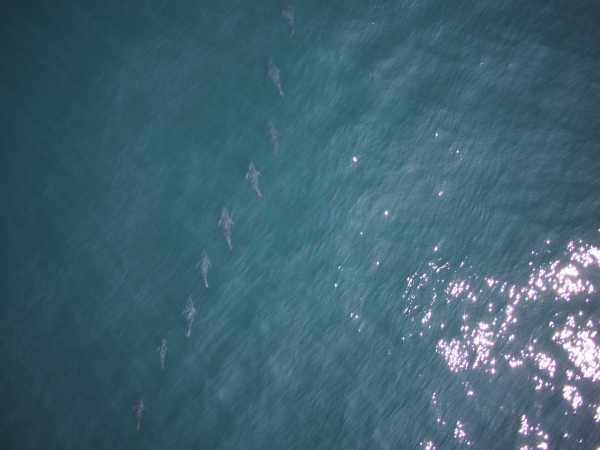
Cobia frequently follow giant manta rays in their migrations, and fishermen targeting the cobia sometimes accidentally hook the rays. Here’s a Q&A from NOAA Fisheries with two well-known Florida skippers on the process and on protecting the relatively rare rays.

As cobia season gets underway in the Southeast U.S., NOAA Fisheries reached out to one of our best resources: our fishermen. We wanted to find out what they do or recommend to fish for cobia while protecting threatened giant manta rays. Understanding the challenges fishermen face helps NOAA biologists and fishery managers find a way to protect threatened and endangered species and still offer fishing opportunities.

 Captain Butch Constable and Captain Ira Laks both helped us answer the following questions. Capt. Constable has been fishing offshore in Jupiter, Florida for more than 45 years. Capt. Laks has been a charter captain and commercial fisherman out of Palm Beach, Jupiter, and the Treasure Coast for more than 30 years.  Both fishermen observe individual giant manta rays along the beaches of southeast FloridaWe appreciate the input these captains provided when we asked questions about cobia fishing. What time of year do you typically see manta rays arrive along Florida’s east coast? 

Capt. Constable: The manta rays used to show up in March, sometimes as early as February in cold weather years, and stay through May. Manta rays would move up the coast as water warmed. However, now there are no manta rays any more off of Jupiter in the early springtime. Warmer water temps have caused a shift in species and now the giant manta rays seem to stay further north. These days no mantas seem to be found in the spring south of Hobe Sound. I discovered another large ray, the Roughtail stingray, often has cobia swimming alongside so I look for them when sight casting.

Capt. Laks: Most of the sight casting for cobia from Jupiter south is done around big sharks. The challenge with that kind of fishing is keeping a hooked cobia away from the shark so that it does not get eaten.

What are some of the best fishing techniques you use when fishing for cobia around manta rays? 

Capt. Constable: The best advice is to practice and really have good casting skills from behind and to the side of manta ray. Do not cast in front of the manta ray. That way you can make a bad cast or two and reel in and recast without spooking the fish or hooking the ray.

Capt. Laks: I like to come up slowly and from behind on either side of the manta and keep as much distance as possible to make a good cast. My best approach is with the winds behind me and the angler. That allows for a longer cast and it’s less likely to spook the manta with the boat. It also allows for several attempts in order to make that perfect cast to catch the cobia and not hook the ray. Are there any specific tackle or lures you would recommend to reduce foul hooking manta rays but still are effective at catching cobia? 

Capt. Constable: Single hooks! No reason to fish any sort of treble hook. Safer for angler when unhooking, safer for reducing snagging the ray. It would be good if a single hook series of baits and lures came out promoting cobia fishing in a responsible way. Also, anglers should use an oversize landing net and not a gaff for most cobia. Safer for fishermen and for cobia if kept or released.

Capt. Laks: I specialize in live bait fishing and use only single hooks. Treble hooks are not necessary when live bait fishing for cobia. A single hook reduces the chance of snagging a manta ray if a bad cast is made in front of the ray.

If a manta ray becomes foul hooked or snagged, what can fishermen do to reduce injury and trailing line?

 Capt. Constable: I recommend moving the boat in front of the ray, reeling up the line and trying to pull the lure gently from that direction. The hook will often pull out of the fish and not leave the lure or trailing line. If not cut the line as close to the ray as possible.

Capt. Laks: I like to position the boat and move carefully as close as possible to the manta. Then I cut the line so as to leave the minimum amount of trailing line as possible.

Have you ever seen a hooked manta ray or a manta ray showing evidence of vessel interactions (e.g., prop scars or cuts)? 

Capt. Constable: I have seen a few lures and jigs in rays but cannot recall prop scars or major injuries.

Capt. Laks: I have seen a few with larger scars but not sure the cause of those injuries.

What are some best practices for safe maneuvering your vessel around manta rays? 

Capt. Constable: I believe approaching slowly and carefully from behind so that it allows the captain to position the boat in a safe way and not spook the ray or the fish. This gives anglers the time to set up their cast and when the fish is hooked, it will usually swim away from the ray at first. Cobia will sometimes try to return to the ray but if the boat is behind, you can often hold the fish away from the ray and land the fish safely and determine its size.

Capt. Laks: Do not set up in front of the ray. I recommend staying a distance away to allow the manta to stay calm and act normally. I can then set up to fish for cobia from behind and to the side of the animal. 

Capt. Laks: I also wanted to remind anglers that just seeing one of these large and amazing creatures is a thrill all by itself. It is a fortunate part of an amazing day of fishing and the overall fishing experience.

Why Is Eufaula Fishing So Tough For My Club?

Two weekends ago, May 30 and 31, 2020. 15 members and guests of the Spalding County Sportsman Club fished our May tournament at Lake Eufaula.  In 17 hours of casting, we landed 81 bass weighing about 161 pounds. There were eight five bass limits and one fisherman didn’t catch a keeper.   

Kwong Yu won with ten keepers weighing 23.60 pounds and had big fish with a 5.54 pound largemouth. He also had a 5.09 pound largemouth in his catch.  RaymondEnglish placed second with ten bass weighing 19.73 pounds, Jay Gerson had nine bass weighing 17.54 pounds for third and guest Dan Dupree fishing with Raymond had seven bass weighing 13.60 pounds for fourth.  Glenn Anderson, fishing with Kwong, had nine bass weighing 11.20 for fifth place.   

Eufaula is known for its big bass but we had a hard time finding them. 

Parker Guy, the high school fisherman I did a Map of the Month article with that is in this month’s issue of Georgia Outdoor News, has been fishing the lake every day.   

He fished a tournament Sunday and won with five bass weighing 18.5 pounds and had big fish in it with a six pounder! it helps to know the lake.

Summer Catfishing

Tips for Summer Catfishing

Randy Zellers, Arkansas Game and Fish Commission
Assistant Chief of Communications
from The Fishing Wire

The catfish may be one of the most misunderstood of all Arkansas’s sportfish. It occurs in practically every body of water in the state, grows to gigantic proportions, and is easy to catch with inexpensive equipment. Top off those features with its fantastic flavor, and it’s amazing that anyone would look down on these hardy fish.

The Arkansas Game and Fish Commission stocks thousands of catchable-size channel catfish through its hatchery system each year to small ponds and lakes that cannot keep up with fishing pressure. Mother Nature produces millions more of the fish in Arkansas’s rivers and lakes every year. All it takes to catch them is a little patience and the proper lure to tempt them into biting. The secret ingredient to all good catfish lures is scent.

Catfish can “smell” baits much better than many fish species. Highly sensitive membranes inside the fish’s nostrils detect compounds in the water. The more folds these membranes have, the keener the fish’s sense of smell. Trout have 18 or so of these folds, while largemouth bass may have only 10. The channel catfish is blessed with 140 of these specialized folds to sense smell, enabling it to detect compounds as minute as one part per 100 million.

So what odors make the best bait for catfish? Here are a few tried and true offerings to keep you hooked up this summer.

Smelling Fishy
The best smells of all are going to come from the foods catfish are used to eating. Shad, small bream and chunks of less desirable species like carpsuckers and skipjack are top producers for many catfish anglers.

Justin Homan, lead biologist in the Arkansas Game and Fish Commission’s catfish team, says many veteran catfish anglers, especially those on the big rivers of east Arkansas, favor cut shad and skipjack. These oily fish will put out a scent big catfish are looking for.“When I’m running jugs with my wife and little girl, we tend to use cut bait as well, especially fish with a tougher skin,” Homan said. “Chunks of carp or buffalo stay on the hook well and will bring in a lot of fish.”

Homan says flathead catfish are much fonder of live baitfish than cut bait, so targeting these big fighters may require a little more effort to care for your lures. Many anglers use goldfish purchased from bait dealers, and he’s personally done well on Lake Conway running trotlines at night with live sunfish.

“You have to catch the sunfish first, and can’t move them from another body of water, but they work very well,” Homan said. “One trick is to check your bait at about midnight. Channel cats may beat the flatheads to your bait, and the flatheads are most active after about midnight. Rebaiting then can really help bring in some bigger cats.”

Any fish or crayfish caught in the wild can’t be transported to another body of water and used as bait there unless it is used as dead bait. The risk of spreading disease or invasive species is too high when moving live, wild-caught baitfish. If you want to use live baitfish but don’t have time to catch them in the body of water where you’ll fish, goldfish, shiners and minnows that can be purchased from bait shops come from baitfish farms that are certified to be free of diseases and other nasties live fish may carry.

Creepy Crawlies
Catalpa worms, nightcrawlers and other crawling critters from the flowerbed also make great bait, and they can be pulled up from the dirt can be transported without issue. Flipping a few bricks from the flowerbed or scraping aside some leaves and digging at the surface of the dirt should garner enough worms for a quick trip.

Some anglers have taken the collection of worms to the next level, using a special technique called “worm grunting” or “worm fiddling” to get gobs of bait in a hurry. 

Compost bins also are great places to find active red worms nicknamed “red wigglers,” that don’t grow as big as the nightcrawlers you find on the ground after a rain but give plenty of action to entice finicky cats to bite.

SPAM-tastic
One of those overlooked grocery store baits that definitely works wonders is good old canned meat. As outdoor writer Don Wirth always penned in issues of Bassmaster Magazine’s humorous Harry ‘n’ Charlie columns, SPAM isn’t cured and ready to eat until it has a half-inch of dust collected on the top in the back of the convenience store shelves. Believe it or not, Arkansas’s current state record and once world-record 116-pound, 12-ounce blue catfish was caught on this easy-to-store bait in 2001. It doesn’t hurt to keep a can handy in the tackle box, and if the fish aren’t biting, it’s not half bad with crackers and a little hot sauce. You can’t say the same for nightcrawlers.

Vampire-proof Weenies
Clint Coleman, assistant coordinator for the AGFC’s Family and Community Fishing Program, has seen his share of stinky lures, as he helps run dozens of fishing derbies each year. His favorite bait is pieces of hot dog soaked in a mix of cherry Kool-Aid and garlic powder. For some reason, that combination sets catfish in fishing derbies on fire.“It’s easy to get at the store, and it’s easy to handle with kids,” Coleman said. “Some kids may not want to mess with worms, livers or stink baits, but everyone will pick up a hot dog. The garlic will put out plenty of scent to get the fish honed in on your lure.”

Coleman says don’t worry about adding water to activate the Kool-Aid. The juice from the hot dogs is all it takes.

Chicken Liver
Trey Reid, host of Arkansas Wildlife Television, has had the opportunity to fish for big catfish on the Mississippi River with some real sticks, and he agrees that cut skipjack is the prime rib of the catfishing world, but for his excursions to smaller waters, he still tends toward the bait he was introduced to catfishing with — chicken livers.

“You can pick it up at nearly any grocery store on the way to the lake or keep it in the refrigerator with a little less complaints from family members than other wild concoctions,” Reid said. “Sometimes it’s good to just keep it simple and remember that fishing doesn’t have to be a huge expense or take a ton of time to prepare for.

Keep it Clean
Strange as it may sound, you may not need to get stinky to get on a good channel catfish bite. Jon Stein, district fisheries biologist for the AGFC in Rogers says soap is one of the best baits used for sampling channel catfish in nets.

“Biologists used to use a manufactured soybean cheese log for bait, but we caught a lot of turtles, too,” Stein said. “Staff now use Zote Soap to bait nets. It attracts the channel catfish without the turtles so we can focus on getting valuable information on Channel Catfish including lengths, weights, population size (catch per net), age and can evaluate how much of the population is from stocked fish.”

Stein says that although he’s personally never baited up with soap, he’s talked to many anglers on the water that swear by it.“It needs to have a high animal fat content in it,” Stein said. “Some anglers say they melt it, pour it into ice cube trays and place a hook in it so the soap hardens around the hook, then they can keep things clean and organized on the water.”

Zote is even scientifically proven to catch catfish, so-to-speak. A study conducted by Russell Barabe and Donald Jackson at Mississippi State University and presented to the American Fisheries Society in 2011 found that the catch rates of catfish between Zote soap and cut bait on trotlines was statistically insignificant. The study was in an effort to find alternatives to catfish baiting that would not catch some species of endangered aquatic turtles. The soap caught zero turtles while nabbing 193 blue catfish and 462 channel catfish when fished from 11,000 trotline hooks in six coastal rivers overnight in the Magnolia State.

Have a favorite formula for catfish success? Send a comment to randy.zellers@agfc.ar.gov. If we can stomach it, we might just feature it in an upcoming edition of the AGFC’s Weekly Fishing Report.

Give Your Reels a Little TLC–and They’ll Return the Favor

Clean your reels

by Jeff Williams 
Editor, Arkansas Wildlife Magazine
from The Fishing Wire

LITTLE ROCK — Outdoorsmen have as much fun tinkering, fiddling and piddling as they do hunting, fishing or looking for wildlife.

They break down rifles and shotguns, clean and oil the mechanisms, and put the pieces back together. They clean binoculars and cameras so they’ll be ready for the next sighting of a favorite critter. And they tear into fishing reels to make them spin smoother than the day they came out of a box.

There’s probably a gene for taking things apart. If you’ve got it, you love to open a reel to see how it works, especially if it’s old and crusty.

Years ago, I was driving to a float-fishing trip when I spotted a yard sale. This one featured the usual out-of-date items, from bread boxes to Brownie cameras, but one table was loaded with reels. Like most fishermen, I have reels to the gills, but I liked the idea of buying a couple and putting them back into service.

I picked up a Cardinal 553 and a Cardinal 763 for $10. Neither was obviously damaged (the 763’s handle was attached with a replacement screw, although it appeared serviceable). The action of each was sluggish and they were dinged up. I packed them away, went on with the trip and came back to them months later.

Parts and Pieces
If you’re not familiar with the process, yard sale reels are a great place to start. You’re not investing a lot of money and most older reels are pretty basic. Check websites for reel schematics; you’ll be amazed at the number of schematics for obscure reels that have been posted. Reels are loaded with parts, especially washers. Perhaps the best advice for anyone who plans to breakdown a reel is: Keep the parts in order (this is where the schematic can come in handy). Create a system (number the parts, go by order of disassembly, whatever works) that will help put them back the way they were. Owners’ manuals (check the internet) may give tips about how to disassemble or reassemble.

Now that digital cameras are on everyone’s phone, it’s a great idea to take pictures of the inside of the reel as soon as it’s open and take plenty of pictures along the way. These images could be vital if the parts just won’t fit later.

A good scrubbing
Degrease everything. It’s the grit inside a reel that causes it to grind when it’s cranked, sort of like dirty oil in an engine. Even a cheap old reel turns much more smoothly after cleaning. Just put the parts in a shallow bowl with degreaser and let them soak. The degreaser will do most of the work for you if it’s given time.

With an old toothbrush or swabs, wipe away gunk from gears, washers and the “worm shaft,” a perfectly descriptive phrase. Clean the inside and outside of the housing because dirt left there will find its way into cogs. The goal is to remove anything that could hold grime.

Use light greases and lubricants on the worm screw and gears – anything that moves. An owner’s manual might explain how to reach the bearings, which should receive a few drops of oil. Don’t overdo it with the oil and grease, though. Too much lubricant can dry and cake up around bearings and gears, collecting the sort of dirt and grime you just cleaned.

Besides the two reels mentioned above, I found a Browning rod and reel at my feet while wade fishing in the Buffalo River several years ago. The combo was covered in all sorts of growths. None of the rod was visible,and I knew the reel only by its shape.

As beat up and hopeless as that rod and reel looked, they are in use to this day. A cleaning removed the crud from the rod, light sanding restored the cork handle, and the reel works like a charm after a thorough cleaning and oiling. Fresh electrical tape straps the reel to rod.

Keep it clean
Maintaining reels on a regular basis will keep them out of your future yard sales.

On spinning reels, oil the bail assembly at the hinge where the bail flips over to cast and the crank where the handle meets the reel body. Take the handle out of the reel and drop just a little oil where the handle goes.

With baitcasting reels, oil the level wind and put a drop of oil on the bearings – just a little bit. Pull the spool out and wipe around it. Keep it clean and oil those bearings.

After a while, no amount of cleaning will keep a reel from needing some professional help. Bearings and gears wear; there’s no way around it. But keeping everything clean is a sure way to prevent an early visit to the repair shop.

The original version of this story appeared in Arkansas Wildlife magazine in 2010. Visit www.arkansaswildlife.com to learn more about the magazine and how to subscribe.

Where and How to Catch Neely Henry Bass

July Bass at Neely Henry

with Waine Pittman

     Its hot and muggy but that is no reason to stay home in front of the air conditioner.  Catching a big spot or largemouth will make you forget the heat, and there are few better places to do that right now than the Coosa River on the upper end of Neely Henry Lake.

     Neely Henry is just downstream of Lake Weiss at Gadsden.  From the Tillison Brend Park Ramp upstream the river is narrow but there are feeder creeks with grassbeds and other cover.  Docks are scattered on the river and in the creeks.  Current runs in the river most days from power generation at the Weiss dam and the Neely Henry dam. 

     Current seems to make the spots and largemouth grow big fat and strong.  Hook a three pound spot in the current and you will swear you have one twice that big or a striper.  The current also makes them hold in predictable places and you can catch both species without dredging the depths in July.

     Waine Pittman lived the dream, as the BASS Federation Nation motto goes.  In 2008 he qualified for the Georgia Top Six in his club, the West Georgia Bass Hunters.  At the state tournament he placed 4th at Lake Seminole, making the State Team.  At the Federation Nation Southern Divisional at Santee Cooper he was the top man on the Georgia team, qualifying him for the Nationals.

     In a dream trip that almost turned disastrous due to the weather Waine was the top man on the Southern Division team which made him the Southern Division representative at the BASS Masters Classic, arguably the most important tournament there is each year.

     Waine is sponsored by Nitro Boats, Mercury Motors, Minkota Trolling Motors, JJ’s Magic, Cull Buddy, Triple Fish line, Net Bait lures, Cold Steel Lures, TC Cranks, Costa Eyewear and Tillman Eye Center.  He uses Revo reels exclusively and says they are the best reels available.

     I asked Waine what his favorite lake was and he didn’t hesitate to say “Neely Henry.”  His club fishes the lake every year, usually in July, and he also fishes pot and local tournaments on Neely.  He loves to fish the river for big spots and largemouth and knows how to catch them. 

     Waine started tournament fishing while in college and likes tournament fishing.  Next year he plans on fishing the Southern Division BASS Opens tournaments all his kids are now out of high school.

     Waine has a 5.5 pound spot and a 7 pound largemouth from the river, and his best tournament catch there was a five-fish limit weighing 23 pounds.  The river is the perfect place for Waine to skip, pitch and flip a jig and pig, his favorite way of fishing.  And it catches fish there.

     “By late June bass are set up on their summer pattern,” Waine said. That means they are holding in the river and bigger creeks on ledges and deeper cover and running in to shallow water to feed. Creek mouths are a key area this time of year, giving bass a short route to grass beds in the creeks and to cover that breaks the current on the river banks. 

     Waine will start at daylight on shallow grassbeds near creek mouths, then move to the river banks after the sun gets up.  He fishes the grass fast with spinnerbaits, frogs and buzzbaits on one pass then come back and flip them with a Net Bait Paca Punch.  After an hour he moves out to the river channel and flips them with a jig he makes.

     Flipping, skipping and pitching a jig and pig with a Paca Chunk SR. behind a five-sixteenths ounce jig works well.  That combo has a lot of action and works catches fish in the current on the river.  Flipping is his bread and butter method of catching bass.

     Waine showed me the following ten spots where he catches bass in the river in early June. We were a little early for the pattern but caught some good spots and largemouth, but not the quality fish Waine hoped we would catch. By now the bigger fish will be more active on these spots.

     1.  N 34 00.779 – W 85 55.412 – If you put in at Tillison Bend Park Ramp run up to the mouth of Cove Creek, the first creek upstream of the ramp on the same side of the river. Go into the creek to the 4th dock on the right, in front of a brick house, and fish upstream. There is a good grass bed by this ramp and it is a good place to start.

     Fish the small patch of grass quickly then work on upstream, fishing the seawall and small point at the next dock. Past it is a big point. Fish it then go around the point. A huge grassbed lining the bank starts there and runs into a cove, out of it on the other side and on up the bank.

     Throw your buzzbait to the bank and work it back across the gap.  Try a spinnerbait, too.  A frog works well over this water willow grass in the thicker parts of it and that is where the biggest bass will hold. Waine likes the Cold Steel frog since it is thin and tough.

     Waine usually fishes around the first pocket with those baits then turns and fishes the same grass with the Paca Punch. That bait is a solid body bait that stays up on the hook well and has lots of action.  He will drop the bait into holes in the grass and also punch through the thicker mats.  A half ounce sinker is heavy enough to get through most of this grass and works well.

     We hooked a couple of good largemouth here the day we fished. Both hit spinnerbaits the first few minutes before the sun came up.  Sometimes you can punch the thicker grass can catch fish in the bright sun, and if the fish are actively feeding a spinnerbait run through the grass will catch them even in the bright sun.

     2.  N 34 00.870 – W 85 55.309 – Go back to the mouth of the creek and start on the upstream point, fishing upstream. Pitch a jig and pig to all the cover along this bank. Trees and brush create eddies in the current that the bass use as ambush points 

     Always fish upstream. That gives you better boat control and also helps work your bait with the current in a natural action. Fish at an angle ahead of the boat, pitching or flipping your bait so it hits on top of the cover and falls in behind it with the current.

     Work on up to the first few docks along this bank, hitting them where the posts breaks the current.  Current is critical when fishing the river. When it moves, the bass bite, but you need a strong trolling motor to fish it. Waine uses a 36 volt Minkota for this reason.

     3.  N 34 00.744 – W 85 54.500 – A little further up the river on the opposite side, just where the river starts a gentle bend to the right, a small double mouth creek enters the river. There are grass beds in the mouth that hold good bass. Waine said he pulled up here one day and on back to back casts caught a 4.63 and a 4.75 pound spot. There was a big bass chasing shad here when we got to the spot but we could not get it to hit.

     Keep your boat out in the river and cast into the creek, working your fast moving baits over the grass. Fish both sides of the small island splitting the creek at the river edge.  Waine says he does not work back into the smaller creeks like this one since the bass will be set up right on the river this time of year.

     4.  N 33 59.479 – W 85 54.044 – Further up the river Tidmore Bend makes a big horseshoe bend.  Going upstream, watch for an old dead snag tree leaning out over the water.  Start well downstream of this snag and work up to it. You should stop across the river from the blue roof house on the far bank if you can’t see the snag.

     This inside bend is typical of a good type place to fish.  There is a little less current here so bass like to feed here when it is running strong, but still enough to make them active.  

     Waine says he usually catches bass in less than five feet of water, so he concentrates his casts to the base of trees in the water and brush or little cuts on the bank. It is worth fishing on out to the ends of the bigger trees some to see if bass are holding deeper, but unless you get some bites keep your bait in the more shallow feeding zone.

     5. N 34 05.552 – W 85 51.845 – Waine usually runs way on up the river from here, going past the Appalachian Highway Bridge. Upstream of the bridge Coats Bend makes a sweeping turn to the left.  Go all the way past it to where the next bend starts turning to the right.  A small island sits just off the bank and a small creek enters behind it. This is an excellent place to fish.

     Start just downstream of the cut behind the island and fish upstream, pitching your bait into the ditch and working it out. Cover both points. The downstream point will have current hitting it and turning into the ditch, creating a good feeding eddy. The upstream point has current swirling around it to make the bass feed. There is grass on both points that you should hit hard, but also fish out in front of it.

     Fish upstream a short distance, hitting the cover on the river bank. Fish will feed along it as they move to the mouth of the creek to feed so it is worth checking out.

     6.  N 34 07.637 – W 85 48.102 – Run all the way to the bend where the Weiss Re-Regulation pool empties into the river and stop on the right bank going upstream.  Fish the right bank along the inside bend of the river, starting well downstream of the turn.  Fish up to the turn past the dead snags in the water.

     Along here the current is very strong out in the river but you will actually find water moving upstream from the eddy behind the point.  There are cuts in the bank that create additional eddies and the wood in the water breaks the current, too. 

     Waine got a good keeper spot here on his home made jig and says it is a very good bank.  It is worth hitting every little hole and piece of wood along this bank.  Fish it slowly. With the current eddying around you can fish here fairly easily in both directions.

     7.  N 34 07.217 – W 85 49.057 – Headed back down the river go to the mouth of Ballplay Creek, on your left going downstream.  It is on the straight section of the river about half way before you get to the turn back to the right going downstream. There is a lot of wood in the mouth of this creek, especially under the overhanging tree on the downstream point.

     Waine says it is nasty under that tree and you will probably get hung up, but it is worth it since it holds good bass.  Start fishing just downstream of the creek mouth and work into it, hitting the cove under the tree as you go into the creek. This one is deep enough to fish into the creek about fifty feet then fish back out on the opposite bank. 

     Time of day is not real important but sun seems to help position the bass a little.  We caught more fish while the sun was bright than when it was cloudy. But current is more important than anything else, and Waine will fish this pattern from an hour after first light the rest of the day.

     8.  N 34 06.632 – W 85 51.505 – Going back down the river on the outside slight bend to the right watch for a small building on the left bank. Just downstream of it is a ditch with wooden retaining walls on it. This is the location of an old cotton mill.  You want to fish the right side of the river, across from the ditch.

     Idle in slowly here, especially if the water is down some. Old walls and humps come up to a couple of feet deep about 50 feet off the bank and make eddies in the main river current.  Waine will fish a Bandit 200 shad colored crankbait here as well as a spinnerbait.  You can reel the crankbait down to bump the tops of the cover and run a spinnerbait over it.

     This is a good place to pull in and make a couple of dozen casts to see if the bass are on the structure.  Waine says he will not stay long if he doesn’t get bit quick. Stay out a long cast from the bank and work your baits at an angle, casting toward the bank then coming back downstream. Also fan cast upstream to hit the cover further out. You can see it on your depthfinder.

     9.  N 34 04.074 – W 85 49.733 – Go back down past the big bend and the island in hole 5.  Just before you get to Coats Bend you will see some houses and docks on the right side. If you are headed upstream they are the first docks on the left above the bridge, but a long way from it. 

     Stop in front of the dock with a Rebel Flag with the words “In God We Trust” on it. It is in front of a big unusually shaped house. The house is long and thin running at a 90 degree angle to the river then wide at the end away from the river. There is also a high car unloading area with columns supporting the high roof. It looks like the front of a hotel.

     The three docks from the flag upstream are good ones to fish. Wood washes in and hangs on them, and small diversion walls just upstream of some of them make good eddies at the docks. Fish the posts of the docks and all the wood around and under them, and also make some casts behind the docks between them and the bank, with your jig and pig.

     10.  N 34 01.954 – W 85 50.274 – Running down the river there is a small creek on the left on the outside of Coats Bend.  The creek forks a little way back. It is upstream of the bigger Dry Creek. This smaller creek has a dock on the upstream point that has steel I Beams supporting the deck and a paving stone or wall stone wall on both sides of the walkway coming down to it.

     Fish both points at the mouth of this creek.  Then work on back into the creek, fishing the overhanging brush and wood in the water.  Waine says the water is deep enough here to work all the way back to where the creek widens out on the left fork going in.  He got a keeper spot off the point where the creek splits.

     All these places hold good bass and there are many more creek mouths, inside bends and other kinds of cover to fish in the river. Head to it this summer and get in on the incredible fishing when the current is running.

Idaho’s Fish Marking Program Has Come a Long Way


By Braden Buttars and Joe DuPont, Idaho DFG
from The Fishing Wire

You set the hook and immediately your rod doubles over and there is no doubt you have hooked a big one (salmon or steelhead – you pick). Line starts peeling from your reel and you hold on for the ride. After some intense moments of thinking you may have lost the fish and some spectacular jumps, your buddy finally slips a net under the fish.

After a shout for joy, what is the first thing you say? How many of you said, “Is it clipped”? I suspect many of you did seeing a clipped adipose fin distinguishes a hatchery fish from a protected wild fish telling anglers it is legal to harvest. Many of us take it for granted that hatchery fish have a clipped adipose fin, but have you ever wondered what it takes to make this happen?

Joe DuPontThe Idaho fish marking program started in 1975 with a small group of people directed to tag salmon and steelhead raised in Idaho’s hatcheries. Their primary objective was to insert tiny pieces of wire, known as coded-wire tags, into the snouts of over one million salmon and steelhead. Each of these tagged fish also needed their adipose fin clipped to signify it contained a coded-wire tag. The recovery of these coded- wire tags would then help us evaluate how Idaho hatcheries contributed to fisheries in the Columbia River and ocean.

Northwest Marine TechnologyIdaho’s fish-marking program has changed dramatically since 1975. In 1984 the fish-marking program was directed to remove the adipose fin from more than 9 million Idaho hatchery steelhead so that anglers could distinguish hatchery fish from wild fish. This required a small army of people equipped with scissors working 40 hours a week for about three months to accomplish this task.

Once, to meet a deadline at Dworshak Hatchery in 1987, over 130 different temporaries were hired to keep four marking trailers operating 16 hours a day to remove the adipose fins from almost 3 million steelhead in 10 days. By the early 1990s, almost all hatchery Chinook Salmon released in Idaho were fin clipped, and hundreds of thousands of PIT tags were being injected into smolts to help answer specific research questions and provide managers real-time data to better manage fisheries.

It got to the point that Idaho’s fish marking program could not accomplish this alone and Federal Agencies also began to help. Despite this, Idaho’s fish marking program clipped and tagged approximately 11 million juvenile salmon and steelhead each year. All this work was done by hand requiring a dedicated force of temporarily.

In 2002 Idaho began to automate the fish marking program allowing more fish to be processed with less error. The first AutoFish Trailer was purchased in 2002. In 2004 Idaho purchased two additional AutoFish Trailers and two more were purchased in 2014. With this new technology, the Idaho Fish-Marking Program is now able to processes around 17 million salmon and steelhead from 9 Idaho hatcheries that contribute to major salmon and steelhead fisheries throughout Idaho and the Pacific Northwest.

Now that Idaho’s fish marking program has been using automated trailers for 18 years, they have refined this process to where most fish never need to be touched by a person. To make this happen, the automated trailers are parked right next to the raceways where the fish are being raised. This allows the fish to be directly pumped from the raceway, run through the marking trailers where their adipose fins are clipped and coded-wire tags are injected, and then discharged back to a nearby raceway with no direct human contact.

The first time you step into one of these marking trailer is seems more like you are entering a high tech computer facility than a place where fish are being marked. These automated trailers have the ability to sort individual fish by size using video imaging so that the right size fish goes into the right machine. This is required because each machine is programmed precisely to handle certain sized fish. Once a fish is sorted into the right machine, it gently clamps the fish in place and in a fraction of a second it can insert a coded-wire tag, clip its adipose fin, and confirm that the adipose fin was removed adequately. All this is accomplished without removing the fish from the water or using any type of anesthetic which reduces stress on the fish.

For more detail on how this process click on this video link fish marking video.
Roger Phillips

Because of this technology, we now have an accurate count of all clipped hatchery fish at each hatchery and how these fish were marked or tagged. The application of these technologies allows fisheries managers to evaluate, track, and manage fish to provide for the protection and recovery of wild fish, while maximizing commercial and sport use of hatchery fish.

In case you were wondering, in 2019, Idaho’s Fish-Marking Program was responsible for marking 16.35 million juvenile fish (10.7 million salmon and 5.65 million steelhead) as well as manually inserting 398,443 PIT tags across 9 anadromous fish hatcheries managed by the Idaho Department of Fish and Game.

Where and How to Catch December Neely Henry Bass

December Bass at Neely Henry

with Johnny Osborne

    Thanksgiving Holidays. Christmas Holidays. Lots of people hunting. What a great time to be on the lake!  Compared to much of the year there are few people on the lake and the bass are biting from the end of November through December.  A good choice for catching spots and largemouth right now is Neely Henry.

    Located on the Coosa River just downstream of Lake Weiss, Neely Henry is a long river-like lake with just over 11,000 acres of water.  It runs 77 miles from dam to headwaters and has a wide variety of structure and cover, although many creeks and ditches are silted in.  Dammed in 1950, this old lake has lots of grass and there is still a lot of wood cover in the lake.

    According to the Alabama DNR there are a lot of 15 to 18 inch largemouth in the lake and the spotted bass population is “exceptional” for large fish.  The numbers of spots in the 14 to 20 inch range is one of the best in the state.   Just over half the bass weighed in during tournaments are spots, according to the BAIT survey.

    Johnny Osborne grew up in the area and has lived near Neely Henry all his life, except for a stint in the navy.  He has fished all his life and in the 1970s a co-worker got him started tournament fishing.  Fishing has been a passion all his life.

    This year Johnny fished the BFL series and made the regional tournament.  He also fishes the BASS Weekend Series and the ABA as well as many local tournaments.  He does some guiding on the lake and has helped many pros locate hotspots for big tournaments.

    Last year in the in the St. Jude’s Charity Tournament on Neely Henry he and his partner had five spots weighing 19 pounds, 2 ounces.  His best five from Neely Henry weighed over 26 pounds and his best tournament catch was five at 24-14.  He has landed a 6 pound, 3 ounce spot and an 8 pound, 2 ounce largemouth on Neely Henry.

    “Bass are following baitfish and feeding shallow from Thanksgiving through Christmas,” Johnny said.  You can catch them on a variety of baits and in several kinds of cover and structure.  Current makes a big difference and they bite much better when it is moving.

    Most of Johnny’s fishing this time of year concentrates on the mid-lake area, from City Ramp in Gadsden to the Rainbow Landing area.  Bass move to creek openings and shoreline cover and feed on shad as them move with the current, and you don’t have to make long runs to cover the area.

     Johnny will have a Stanley spinnerbait with a one gold and one silver willowleaf blade and a chartreuse and white skirt and an Academy XPO chartreuse crankbait for faster fishing. 

    For slower fishing he will rig a jig head that he pours himself with a watermelon red worm with a chartreuse tail, and have a Arkie tube Texas rigged and ready.  The tube is his favorite bait and Johnny likes a green pumpkin color.  He will also rig a Trick or Finesse green worm on a Carolina rig with a 32 inch leader behind a three-quarter ounce lead.

    A topwater bait like a Pop-R or a Sammy is also ready for low light times like early in the morning or during cloudy days.  Johnny says he catches bass at Neely Henry on top until the water gets to the low 50s so you can catch them on top most of the month.

    Put in at City Ramp or Rainbow Ramp and you can fish these spots without a lot of running. There were fish on them a couple of weeks ago when we fished and they should be even better now.

    1.  N 33 59.191 – W 85 59.996 – Head downstream from City Ramp and go under the bridges. On your right you will see a campground then a big white house on a narrow point between the river and Big Wills Creek.  The end of that point runs parallel to the river and is deep on both sides and is covered with rock.

    Stop on the river side and cast across the point.  You can run a crankbait or spinnerbait over it if there is current running and the fish are active.  If there is little current, work around the point casting a jig head worm up almost to the seawall and working it back down the point and across it at different angles.

    The day we fished there was not much current here in the early afternoon but we caught over a dozen bass on it on jig head worms. All were spots and the biggest was about two pounds. Johnny says you often get a lot of keeper size spots here since they stack up on this point.

    Before leaving Johnny will fish up the river side of the point for a hundred feet, working the steep drop along this bank.  Bass will feed here, too, especially if there is a good current running along the bank.

    2.   N 33 58.191 – W 86 00.004 – The mouth of Big Wills Creek is very wide since it makes a big bend, hitting the bank at the point above then swinging across to the far bank before turning and entering the river near the downstream point. Since the channel enters here, the downstream point of Big Wills Creek is good, too. 

    Stop on the river side of the point.   You will be across from the playground and old ramp at Dub Parker Boat Launch.  Fish the point that runs upstream parallel to the river and the flat on either side of it. Bass hold on the point and feed on the flats.

    Johnny starts on the river side and casts up on top of the point with a shaky head or his Texas rigged tube.   When sitting here you can see a three door white dock on the far bank of Big Wills Creek and the restaurant on the road across from it, but you will be a long way from it.

    Fish from the bank to the drop into the old creek channel.  Bump the bottom, probing for any cover where bass will be hiding.  Current running across this point makes it much better.

    3.  N 32 58.220 – W 85 59.331 – Run down the river and watch for the opening to a slough on your right.  It is near the end of a gently bend of the river to the left and is just downstream of a brown roof dock with a big wind chime on it.  The house behind it also has a brown roof with a white chimney. There was a “for sale” sign in the yard in early November.

    Keep your boat out in the river and fish the downstream point of this slough. The river channel runs right up to the mouth of the slough.  There was a stump sticking up out on the point and there is a hump in the middle of the slough. 

    Run a crankbait across the shallows, casting from the river channel and working your bait from shallow to deep. Bump the bottom as long as you can on each cast.  Make sure you work out from the point to cover the hump, too.

    After trying the crankbait try both a shaky head and tube. Drag them along the bottom, hoping them and then letting them sit still for a few seconds to wave in the current. 

    4.  N 33 57.475 – W 85 58.119 – Head downstream until you can see the upper end of Freeman’ Island, the big island in the middle of the river.  On your right you will see a small island just off the bank and upstream of it a big brown brick and wood house on that side.  The upstream point of the island has chunk rock on it and the flat from the island to the dock and ramp at the house holds feeding bass.

    Start at the island staying on the river side of the island and cast across the upstream point.  Keep working toward the dock, staying way out and making long casts. The flat has stumps on it and bass hold around them. 

    This is a good area to fish a Carolina Rigged worm since the heavy sinker will allow you to fish it quickly and find the stumps.   Your jig had worm and tube will work well, too.  Fish the area carefully, some big bass hold here.

    5.  N 33 56.910 – W 85 57.480 – Downstream of Freeman’s Island on the left going downstream you will see a electric pole on the bank surrounded by a chain link fence. It is not easy to see in the brush but it is the outlet for the Tyson plant wastewater holding pond.  Waste from the chicken processing plant dumps into the river here and it has a colorful local name that recognizes the “stuff” that comes out.

    This outflow draws in big schools of baitfish and big bass feed here.  You will see a path on the bank coming down to the water and out from it a pipe runs out to dump waste. This pipe is covered with riprap and you can see humps of rocks if you ride over it, but be careful if the water is low.

    Keep your boat out from the bank and end of the pipe and make casts to the bank with a crankbait, running it back across the rocks at different angles.  Johnny likes the Academy crankbait since it works well, runs right and is not too expensive.  You will lose crankbaits here on these rocks, but can catch some big stringers of bass.

    There are three different drops along here and bass will hold along any of them.  Johnny says a lot of six to eight pound bass have been caught here and many tournaments won on this spot so don’t pass it by.

    6.  N 33 57.037 – W 86 01.005 – Run a good ways down river past the right turn bend to where the river starts a left turn. On your right a creek enters upstream of the bend and Tommy’ Marina in the back of it.  There are some danger markers on the upstream side of the opening. 

    The mouth of this creek has several humps and drops across it where the river runs in close and many bass hold here.  Be careful, you can go from 20 feet of water to nothing in a few feet, and not all the humps are marked.

    Work this area with Carolina rig and shaky head and tube. The humps and drops are covered with stumps and chunk rock and you will get hung up a lot. Johnny says a crankbait would work well here but you lose too many to make it worth throwing them.

    Current running across these drops makes a big difference.  The fish will feed when the current is running so position your boat so you can cast upstream and work your bait back with a natural movement with the current.  Work around the area until you find the bass feeding.

    7.  N 33 56.737 – W 86 01.407 – Go around the bend and downstream toward the bridges.  Stop just upstream of the upstream boat shed on your right at Bucks Marina and work upstream.  There is a house here with satellite dish in the yard and a boat shed with a pontoon under it with a yellow and white cover.

    Fish all along this bank, working the cover and cuts along the bank, staying out in 20 feet of water or so.  Use your shaky head, tube and Carolina rig.  There is a good bit of wood cover on the bottom here so probe for it. 

    The channel makes a good ledge along this bank and bass hold on the lip of it and run in to feed.  It was along this bank where Stacey King got 2nd place in a PAA tournament and where Johnny’s fishing partner, Gary Howington caught a huge seven pound, six ounce spotted bass.

    Work the bank and all cover from the boathouse all the way upstream to gray and white dock with a boat with a Mercury motor on it. Just downstream of this dock is a ridge or hump and this is where Stacey King caught his fish.

    8. N 33 56.499 – W 86 01.610 – Go to the upper bridge of the Highway 77 crossing and stop out from the riprap on the left side going downstream. Johnny says this is a great place to find bass pushing shad into the corner and feeding, especially in the morning.

    Throw a spinnerbait, starting on the end of the riprap and working it into the grassy pocket and fishing upstream about 50 feet. Work it at different speeds as much as you can in the shallow water. Watch for fish busting bait on top.  Current makes this spot much better.

    This pocket and pattern gave Johnny the bass he needed to win the two day BFL finale last year on Neely Henry. He said he was surprised to get here each morning and find it open, with no boats ahead of him stopping here.

    Work the upstream pocket then go around the point and fish the downstream pocket, too. Sometimes the current will make the bass go into this pocket and eat the baitfish here.

    Johnny will fish down to the second bridge, the bigger one, and work around the second piling from the left bank going downstream. There is a big rock pile around this piling and it is a good place to throw a jig head worm or a tube and catch spotted bass.

    9.  N 33 56.051 – W 86 02.322 – Go downstream to the first small island on the right bank downstream of Rainbow Landing. It is several hundred yards down that bank. Start at the small pocket just upstream of the island and fish upstream all the way to the ramp.

    Some bass released in tournaments at Rainbow Landing stay here and feed along this bank. You can fish it in either direction but current usually makes boat control better going upstream, and current helps the fishing. 

    Fish all the shoreline cover including docks, wood and rocks along this bank. It is shallow and your boat will be in only a few feet of water, but you can often catch a lot of bass here.  There are several private boat ramps along here and Johnny says you should never pass a boat ramp on Neely Henry without casting to it.

    We got our best two bass on our trip here, a 3 pound spot and a 3.5 pound largemouth. Both hit a jig head worm. Fish topwater baits along this bank and also work it with a crankbait, tube or jighead worm along this bank and work it carefully.  If you are catching fish it is worth more than one pass.

    10.  N 33 55.283 – W 86 03.615 – Past the small island in the hole above the river channel moves to the left bank then makes a swing back to the right bank below a big flat.  Near where it swings back to the right bank there is a small marina with boat sheds. Start fishing just upstream of the boat sheds and fish upstream.

    There are a series of small points and three riprap areas along this bank to hit as you go upstream.  Work the riprap and points with your tube and jig head if there is not much current and throw a spinnerbait and crankbait when the current is strong.  Watch for any wood cover along this bank and fish it carefully. 

    Johnny says big spots often get on these riprap banks and you can catch a big stringer quickly when you hit the right spot.  Fish all the way upstream to the brick house on the upstream side of the third patch of riprap.

    These places will give you a good idea of the kind of places Johnny catches bass on Neely Henry this time of year. Give them a try then find similar places on the lake that will hold fish, too.

    You can contact Johnny at 256-492-1162.

Removing Billfish from the Water: Don’t Do It!

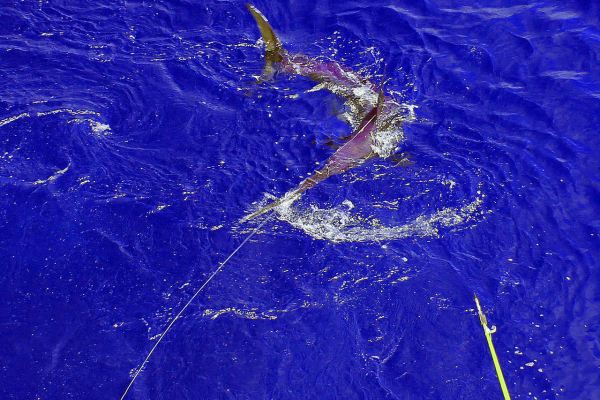
Don’t do this!
Don’t Remove Billfish from the Water

Anglers love hero shots with their fish, especially if it’s their first one. Of all the billfish species, sailfish lend themselves particularly well to this type of photo, since they’re usually small enough to lift up, have particularly gorgeous colors and that massive sail to hold out like a giant flag.

But don’t do it! Removing any billfish species from the water, even for a few moments for a photo, is illegal, both in Costa Rica and the United States. Studies have shown that by scraping the fish over the gunwale of the boat, we are actually harming internal organs and removing the fish’s protective slime layer that acts as a barrier coat against harmful diseases, parasites and infections. Even though you intend to release the fish, by removing it from the water you may have just signed its death warrant instead.

Here are a few things you can do to still get a great photo of your catch. First, be ready with the camera. Few things are more frustrating for your captain or mate than having the fish ready at boatside while someone fumbles for a camera deep inside a duffle bag or backpack. Be ready! Take a few shots during the fight, with the angler grinning from ear to ear.

Once the fish is ready for release and the leader has been cut, the angler can don a pair of gloves, lean over the side and hold the fish by the bill and the sail as it’s revived alongside the boat. The cameraperson should lean out over the side and shoot back toward the angler and the fish. After a few moments, the fish is ready for a healthy release.

Another option: the extended selfie stick and GoPro. Many crews are now using this setup to shoot wide-angle shots back at the boat and anglers. It’s simply a GoPro set on camera mode to shoot every second or so after the shutter is activated. It’s mounted to a long pole that’s held out away from the boat, and the images it reveals are usually very memorable.

Video is a third way to remember the fight. Using that same GoPro, mount it to either a fixed mount on the boat or just hold it in your hand to capture a full video of the fight and the release. All smartphones have a video capability these days as well.So really, the need to remove a marlin or sailfish from the water just isn’t there. Be smart, keep them in the water where they belong.

Courtesy The Presidential Flamingo Fishing Rodeo, Joan Vernon: www.preschallenge.com