Are You A Dangerous Person If You Have A Concealed Carry Permit?

Do you have a Georgia Firearms License, allowing you to carry a concealed weapon? Could you pass the fingerprint background check and get one if you wanted to? If so, the Brady Campaign to Prevent Gun Violence considers you a dangerous person.

The Vitter Amendment was submitted in 2009 but a new similar bill has been introduced in 2015 – expect the same hysterical response.

The silly anti-gun Brady Bunch sent out at least seven emails in the two weeks before the Vitter Amendment was voted on in late July. The Vitter Amendment was an amendment to the Department of Defense funding bill that would have allowed people with a gun license from one state to carry a gun in other states.

Right now you can drive in every state in the US with a driver’s license issued to you in your home state. You still have to obey local traffic laws, and the Vitter Amendment said you had to obey local gun laws when in other states. But the gun control fanatics went crazy opposing this amendment.

This is a quote from a July 9 2009 Brady Bunch press release on the Vitter Amendment: “This legislation would force states, your state, to allow dangerous individuals to pack heat in public.” So they consider you a dangerous individual if you have a Firearms License! Here is more from a July 17 press release: “Very dangerous legislation that would force states, your state, to allow dangerous individuals to carry loaded guns in public could be voted on as early as Monday, July 20. And we must stop it!”

This amendment failed by a 58 to 39 vote in the US Senate. No, 58 US Senators voted in favor of your rights. Only in the US Senate is a 58 in favor to 39 against vote a defeat! The amendment had to have 60 out of 100 votes to pass.

But the Brady Bunch was ecstatic! On July 22, after the Vitter Amendment lost although it got 58 yes voted out of 97 cast, the Brady Bunch crowed “You helped stop the gun lobby’s legislation that would have forced states to allow dangerous individuals to carry loaded guns in public.”

Yep, now law-abiding citizens like you and me who have gone through a fingerprint background check to get a concealed carry permit can’t cross a state line and be legal. No doubt someone planning on robbing a convenience store across the state line will stop and leave their illegal handgun in the car because this amendment failed.

It is not rational to limit law-abiding citizen’s rights to reduce crime. By definition, criminals break laws. All gun control laws do is disarm law-abiding citizens and make them vulnerable to criminals.

Both Senator Isakson (R GA) and Senator Chambliss (R GA) voted in favor of this amendment to protect your rights, as did all but two Republican US Senators. There were 37 Democrat votes against your rights and only 10 Democrats voting in favor of your rights.

Thank Senator Chambliss and Senator Isakson for voting to protect your rights. And also thank Thurbert Baker, Georgia State Attorney General, for signing a letter to U.S. Attorney General Eric Holder expressing his opposition to reinstatement of the federal ban on semi-automatic firearms.

Baker is one of 23 state Attorneys General, the top law enforcement officers in each of their states, to sign this letter. That is amazing. The top law enforcement officers in almost half our states oppose renewing the assault weapons ban. Kinda makes claims that banning these guns will reduce crime look stupid, doesn’t it?

So far US Attorney General Eric Holder is the only one talking about bringing back this useless ban. Most elected officials realize it is a useless law and voting for it will hurt them politically. But, unfortunately, there are unelected folks like Holder that can affect our gun rights.

On a good note, HB 45, the Blair Holt Firearms Licensing Bill, is going nowhere in the US House. It was introduced in January by anti-gun Representative Bobby Rush (D-IL), got no co-sponsors and was assigned to committee where it still sits, dying a slow death. Bills that are so stupid they don’t even get one co-sponsor usually don’t have enough support to ever be voted on. It probably will never see the light of day.

Keep a watch on our elected officials but keep a closer watch on those unelected bureaucrats that control our lives.

How Can I Locate Fish In the Surf?

Locating Fish in the Surf

by Captain Rodney Smith
from The Fishing Wire

Taking the time to learn the intricacies of surf fishing can help to expand and improve on one’s overall knowledge of fishing because of its many facets.

Catch snook in the surf

Catch snook in the surf

At the right time of year, snook can be a prime target for surf anglers along Florida’s east coast, particularly from Cape Canaveral southward. (Rodney Smith Photo)

The first tip for anglers searching new waters for fishy places is to go buy a chart, study it and highlight the suspicious areas, particularity points, pockets and passes. But when it comes to surf fishing from the beach, especially the areas I fish most often along Florida’s central east coast, this may not be your best starting point. The beach is such a dynamic and changeable place that charts will not give you the foundation needed to get a grasp on where to get started and what to look for while surf fishing.

The exception to this is charts that are geared strictly for sharing surf fishing information. In my first book, Catching Made Easy, I included several chapters that should help you locate more fish. In these chapters I focus on how to develop a successful game plan, touch on the importance of listening to your intuition, and dive into where you can find the hotspots. I’ve published a couple of Catching Made Easy Surf Fishing Maps for a portion of the Indian River Coast, which should help you locate the places where fish might be hanging out.

Scout the beaches; take a walk with or without your fishing rod and reel, but don’t forget your binoculars. A good pair is a helpful tool when surveying new waters or when searching for diving birds and bait pods. Ask other anglers questions. Go to the local bait and tackle shop, get to know the folks working and hanging out there at the shop. Ask questions, and be grateful when anglers share their knowledge and experience with you.

It’s been my experience that this one tactic will help you locate the most desirable places to start. In most cases ninety percent of the fish are found in ten percent of the water. In the surf you need to establish the location of sandbars, the trough between the shore and sandbar, and the swash and run-outs, aka rip currents.

And read the surf

And read the surf

A long surf rod and a good eye for the right spots are keys to success in surf fishing. (Rodney Smith Photo)

It’s important to remember fishy surf spots can and will vary for a number of reasons, including changes in water temperature, time of day, seasons, bait availability, rainfall, wind direction, tides, etc. And don’t forget that in the surf one storm or big ground swell can completely transform the playing field.

Quite often, fishy spots will stand out like a crooked nose. Other times, it might be a very subtle hint that gives these places away. For instance; when surf fishing a flat, long stretch of beach the run-outs and feeding areas are probably not going to be obvious to the inexperienced eye, but over time and much observation things like recognizing a steady flow of water traveling out a certain cut through a sandbar or break in a reef will become more easily spotted.

Keep an eye out for bait. Seeing ghost crabs on the beach, sand fleas (mole crab) down in the swash, and finger mullet or glass minnows (a number of different species of baitfish are called glass minnows, including Spanish and bay anchovies) holding near shore is a good sign. Feeding birds is another good indicator that game fish are close. Remember, gulls are scavengers and terns and pelicans prefer live baits.

While finding fish is a very important part of catching, it’s only a portion of successful fishing. Other factors, like reading the water, understanding fish habits, making your cast count and being prepared can often be equally important to catching more fish.

Take it from me, the task of finding fish hasn’t changed much during the 50- plus years I’ve been hunting for them. If you locate healthy habitat, those places that provide food, shelter or both, you will find fish. Word of mouth can be very important; the information you can get from someone more experienced or an angler with local knowledge will go a long ways down the road toward success.

Talk to anglers fishing the waters where you’re scouting. Instead of asking them if they’re catching fish, ask them if they are fishing or catching. This usually loosens them up and they’re more willing to share their fishing stories. Remember to make friends with the guy or gal at your local bait and tackle shop, too. They work hard providing services you need, and they are also purveyors of very useful and up-to-date information. Surf fishing venues are some of the fastest changing places in the world to fish, so it is particularity nice to get to know someone who keeps their finger on the pulse.

Catch redfish surf fishing

Catch redfish surf fishing

Redfish are another favorite species for Florida surf anglers, and they come in all sizes from “keepers” like this one to giants of 30 pounds and more. (Rodney Smith Photo)

Sidebar: When exploring the surf by foot looking for game fish crashing bait pods, try to keep it simple. For example, bring along a seven-to-nine foot, medium-weight spinning rod with you (depending on the size of the lures you will be casting and fish you are targeting). Wearing a vest with multiple pockets to stowaway poppers, diving lures (crank baits) and D.O.A. plastic baits plus leaders, dehooker and binoculars is best. I’ll usually bring along an assortment of smaller white or pink bucktails and a handful of silver or gold spoons. These work well when encountering Spanish mackerel, bluefish, snook, pompano and other fishes cruising the surf.

This changes when it comes to fishing baits in the surf, like live sand fleas, cut clams or shrimp in the cooler months for pompano, whiting and drum. In this case, a twelve-foot rod is most manageable and works best at keeping the line above the pull of the surf when using a bottom rig and heavier weight. Your binoculars can still come in handy when you want to see what the other surf anglers are catching down the beach.

Once you get serious about improving your ability to locating productive surf fishing spots you will also develop your own personal tactics and techniques leading you down the road to success.

Learn more about Florida’s fishing and natural resources by reading or listening to Captain Rodney Smith’s books Catching Made Easy and Enjoying Life on the Indian River Lagoon Coast. To contact Capt. Smith about a private fishing lesson, call him at 321-750-3374, or send an email to irlcoast@gmail.com. And don’t forget to check out www.rodneysmithmedia.com.

Is Eric Holder the Most Anti-Gun Politician to Ever Be Attorney General?

in 2009 everyone knew how anti-gun Eric Holder was but so-called pro gun politicians still voted for his approval. And they are about to do the same thing with Loretta Lynch. Why do they vote to approve someone that stands for everything they claim to be against, and is against everything they claim to be for?

This was written in 2009 and it applies even more now!

On the national front it is all bad news. Eric Holder is our new US Attorney General – the man tasked with enforcing federal laws. He has a long history of anti-gun efforts including filing a brief in the Supreme Court stating the 2nd Amendment is a collective, not an individual right and being the point man on the implementation of the Clinton Administration Assault Weapon ban. Both Senator Chambliss and Senator Isakson voted to confirm his nomination.

Senator Isakson justified his vote by saying Holder promised to enforce the Supreme Court decisions on guns as the law of the land. And that many politicians praised Holder as a lawyer.

Even ignoring the lawyer part, Holder has already called for a renewal of the assault weapons ban. He somehow thinks you can ban guns because of the way they look without stepping on the Supreme Court ruling that the 2nd Amendment means what it says and is an individual right to own guns.

Senator Chambliss said much the same thing, that Holder said he would support the Supreme Court ruling and that President Obama deserved deference in his nominations. If only the democrats observed such deference to conservative nominations.

Both Chambliss and Isakson are politicians and should know you can not trust what politicians say; you must look at their record. And Holder has a long anti-gun record. But he is now the Attorney General and they voted for him. Keep an eye on Holders statements and actions to see how wise their vote.

There has been a rash of insane killings with guns in the past few months so the anti-gun groups and the media are in a frenzy to pass laws that restrict our rights. An example is this from a Brady Center fundraising email on April 6:

“Enough is enough. I am outraged by the senseless deaths in these mass shootings — but more so, because Congress fails to act to prevent them.”

The Brady Bunch’s solution, of course, is to outlaw guns and, by the way, send them money.

60 Minutes did one of their usual hit pieces on guns on their April 12 broadcast. They seemed shocked that support for a gun control had gone down, from 60 percent in 2000 to only 49 percent today and seemed determined to do all they can to reverse that trend.

An anti-gun rights editorial from the Atlanta Constitution’s Cynthia Tucker, which can be expected on a regular basis, ran on April 12. She justified he call for a ban on assault weapons because her father hunted deer and he didn’t need an assault weapon.

The New York Times has been running a series of editorials calling for gun control. Some of the comments get scary. For example, in an April 8th blog editorial Timothy Egan talks about guns and claims:

“American life in the spring of 2009 is full of hope, peril, and then this: the cancer at the core of our democracy.”

So guns are the “cancer” of our democracy? Even scarier is March Abraham’s March 25 Huffington Post blog:

“And as for the argument that we will never get rid of all these guns in this country; it is plain wrong. We will get rid of them if we start banning them for real.”

We must fight back or we will lose our rights. Don’t let anti-gun comments, whether from people wanting to ban guns or from people who just don’t know any better, go unanswered. Speak out for your rights and contact politicians, or lose your rights.

Time For the NRA Convention

The NRA Convention Drives Liberals Crazy
Jim Shepherd
from The Fishing Wire

It’s another of those busy weeks for the outdoor industry. Before the week’s out, an estimated 70,000 or so pro Second Amendment supporters will converge on Nashville, Tennessee for the 2015 edition of the National Rifle Association’s Annual Meetings and Exhibits.

Other than proving that downtown Nashville isn’t equipped to handle that many people -and only a fraction of that many cars comfortably- it will prove, once again, that when it comes to the right to keep and bear arms, more people are for it than against it.

Drives the anti-gun groups crazy, but that’s the long-and-short of the lesson that will be taken away by non-shooters next Sunday when the membership heads home. Those of us who do choose to exercise that right – whenever possible- will feast in three days of being pushed, jostled and otherwise crowded cheek-to-jowl with like-minded individuals.

Over the next few days, you’ll see lots of announcements of celebrity appearances, new product rollouts- the kind of pre-event information that gets attendees excited at the prospects of what they’ll be seeing.

It’s a big week for those of us in the industry and the outdoor media because the NRA Show is not only another confab that brings all the industry leaders under a single (big) roof, it’s also the last “major” event of a string of events that begin right after Christmas. When the NRA Show closes, many of us will be heading for home and some semblance of life, uninterrupted by hotel stays and road trips.

I say many because my travel schedule doesn’t end in Nashville. That’s the first scheduled stop in more than three weeks of road work. But this year, I have a wild card in my planning: the arrival of a first grandchild. I’ve shaken off bumps, bruises, bugs, fender benders, snowstorms and various personal maladies to make scheduled events, but this first grandchild is a double-barreled threat. Mom also happens to be my good right-hand helper- meaning I’ll be back to the day-to-day work of putting the wires together while she’s out of commission. So….if I’m scheduled to appear at your event over the next three weeks, there’s a chance I might be AWOL – but it won’t be because I decided to skip out and go fishing. As I tell everyone associated with our wires, family comes first. It’s a life value I’ve learned from this industry-so allow me now to say “thanks” – it wasn’t always the most important part of my career, but I learned in time.

Last week, I was traveling to take a look at new technology related to shooting. Actually, it’s new technology related to ammunition- and I was more than impressed with what I saw. While I’m still working on more in-depth research and supplemental testing, it’s safe to say that ammunition may be changing in the not-too-distant future.

No, I’m not saying we’re getting some sort of science fiction alternative ammunition, but we’re probably going to see some of the basic components of ammunition change-significantly. Those changes won’t obsolesce our existing firearms or even modifications of what you’re currently shooting.

If you’re intrigued, that’s good. Because the innovations I saw won’t mean a horrible upheaval in the ammunition industry- just an acceptance of the fact that technology sometimes moves far faster than our industry is always willing to accept. But facts are tough to refute- especially since we pride ourselves on using facts, not emotion, when making decisions.

And this being NRA week means it’s also time for our companion service, The Tactical Wire’s annual Concealed Carry Special Edition. Editor Rich Grassi has a special edition set to come out later this week that features a lot of new products, very thoughtful features and instruction related to responsible concealed carry – and that will be hitting the mailboxes of Outdoor and Shooting Wire subscribers as well later this week.

If you’re not a subscriber to The Tactical Wire, don’t be surprised- or angry- when you see it in your mailbox- it’s just another special edition from the services dedicated to keeping our simple promise:

We’ll keep you posted.

Georgia Bass Chapter Federation Top Six at West Point Lake

Caught in Top Six at West Point

Caught in Top Six at West Point

They say if you don’t like the weather in Georgia, wait a few hours and it will be different. That was certainly true at West Point last week. In the five days I was there for the Top Six we had everything from hail to warm sun shine, pouring rain to clear skies and cold, strong winds.

I went over to Whitetail Campground on Thursday afternoon, put the boat in the water and set up my van camper. The campground is straight across the lake from Pyne Park, the tournament launch site and it is very convenient to leave the boat in the water and go over each morning to the blast off, avoiding the confusion and mess of 100 boats trying to launch.

Friday morning I got up and started trying to figure out where the bass were and what they would hit. When I saw the water temperature was 61 degrees I tried a topwater plug and caught a keeper spotted bass so I fished it for an hour without another bite. After switching to a jig and a Carolina rigged lizard I started catching keeper spots on every gravel point I fished, but I knew they would not win the tournament.

I did catch a three pound largemouth on Saturday morning out of some brush on a point, the size fish that would make a difference in the tournament. But after trying that kind of cover for the rest of the day all I caught were more small spots, although I was throwing big jig and pig.

Sunday morning Jordan McDonald and Jennifer Spell went out with me to practice. Although they were both fishing with the Flint River team and I was on the Sportsman Club team we were working together. The first place I stopped, another rocky point with some brush, I hooked and landed a six pound largemouth and got real excited! Maybe that pattern would work.

About noon we went into a small creek up the river. Jordan had talked to a friend and was told running a square bill crankbait by wood cover worked, and the first stick he tried he landed a 3.5 pound largemouth. The next stick I landed a 2.5 pound largemouth so we were excited.

As luck would have it that afternoon at the drawing, Jordan and I were paired for Monday. The computer won’t pair two fishermen from the same club, but since we were on different clubs we got to fish together. We had a plan!

Monday morning we took off to the point where I had caught the three pounder since it was close. Although there were no largemouth there, spots were feeding and we stayed for almost two hours until we both had four keepers. The rain made us stay longer than planned on those small fish but we didn’t want to run in the pouring rain.

On the point where I had caught the six pounder we caught several spots, but no largemouth. So we headed to the creek up the river, hoping to cull all those little spots. But again nothing but small spots hit there. A little after noon we started fishing pockets in Yellowjacket Creek, the pattern Jordan’s friend told him about, and Jordan landed a 4.5 pounder, but I caught nothing but small fish.

At weigh-in Jordan had a little over 10 pounds and my five weighed an even seven pounds. Jordan was in a good position but I knew I was in trouble. The fisherman weighing in behind me had five weighing 22 pounds! And some others had 14 to 16 pounds.

The second day even the spots quit hitting on the first two places my partner from Savannah and I fished so we went to the creek up the river. We started catching some decent largemouth as well as spots there and I even landed a 5.65 pound largemouth on a Carolina rig. We stayed there until we had to go in.

I had five at just over 10 pounds and my partner had just under 10 pounds to go with the 10 pounds he had caught the day before. My big fish ended up being the seventh biggest in the tournament.

Jordan finished in 16th place out of almost 200 fishermen and I came in 32nd. Mickey McHenry on the Flint River team placed 15th. The Sportsman Club team was 15th out of 33 teams and the Flint River Team was 16th.

Although I was dead tired after all that fishing I am already looking forward to the other Federation Top Six at Hartwell in October and this Federation tournament at Eufaula next April!

Kid’s Fishing Tale

I ran into Glen Conkle last Friday at United Bank and he said he had a fishing tale for me. He knows I always love to hear fishing stories and he had a good one about his grandson, Turner Edmondson. Turner is ten years old and loves to fish.

Glen said he took Turner to a pond in Fayette County but he was not sure there were any fish in it. While he was rigging Turner’s rod and reel, Turner picked up granddad’s outfit, cast the plastic worm out and caught a five pound bass. After landing it he took his outfit, cast out, hooked and landed a six pounder. Then, after a couple of casts, he landed a seven pounder.

They caught 28 bass that day, so there are fish in that pond! Turner really bragged about beating granddad since he caught 15 of them and the biggest ones, too.

No doubt Turner will remember that trip for the rest of his life. He won’t remember the shows he watched on TV, the games he played on his electronics or many of the other things he does for fun. But I bet he always remembers the day he caught three bass over five pounds and beat granddad.

It was great hearing about granddad taking his 10 year old grandson fishing. I saw something on Facebook last week that said “Teach a kid to fish and he will never have enough money to buy drugs.” That is true, but they will also stay so busy fishing they won’t want to do drugs and get into other kinds of trouble.

I know fishing and hunting kept me from getting into a lot more trouble than I did!

What Is Transitional Trout Fishing?

Transitional Trout
from The Fishing Wire

While the period between ice fishing and open-water action puts some anglers in limbo, it’s actually one of the best times of the year to wet a line for a variety of winter-weary trout, including rainbows, browns and lakers.

“Hungry trout cruising predictable shoreline areas add up to the best bank fishing you’ll ever experience,” says veteran guide and compulsive salmonid stalker Bernie Keefe. While Keefe plies pristine lakes and reservoirs in the idyllic high country around Granby, Colorado, his strategies hold water in fisheries across the continent.

The first step is finding an A-list trout lake or pond where the ice is beginning to recede from shore. “I look for open water off points, here and there along darker banks, and near tributary inflows,” he says, explaining that each of these scenarios offers trout a place to fill their stomachs after a long winter under the ice.

“This pattern is all about food,” he says. “Everything is hungry right now. Browns and lakers are totally focused on eating anything they can. And even though rainbows and cuttbows may be looking for spawning areas, they need to eat, too.”

Let’s start with shorelines and points. “Both of these areas offer increased bug life, especially spots with darker bottoms,” says Keefe. “But it’s important to understand the baitfish connection as well.”

Catch trout like this one

Catch trout like this one

Spring is a great time for shore-casting browns, rainbows and lakers.

Here’s how it works. “All winter, juvenile trout and suckers cruised the shorelines,” he begins. “They survived by darting toward the bank whenever a predator appeared, and by tucking themselves into inches of water, where large trout couldn’t reach them. Now that the ice is going out, this sanctuary is gone-and big, old, smart trout know these smaller fish are fair game.”

Which explains why Keefe’s lure of choice for such scenarios is a 3- to 5-inch-long, shallow-running slender stickbait, in natural shades of silver, gold or rainbow trout. Wielding a 7-foot, medium- to medium-heavy power Fenwick HMX spinning rod-paired with a Pflueger Patriarch reel spooled with 10-4 FireLine-he tiptoes quietly to the waterline and fires long casts parallel to the bank.

“Keep the bait close to shore, in about two feet of water,” he says, noting that a 5-foot leader of 10-pound test Berkley Trilene 100% Fluorocarbon helps fool line-shy fish in gin-clear water. “Make a slow retrieve interspersed with rodtip twitches that give the bait an erratic action, so it acts like a disoriented baitfish.” Keeping all casts tight to shore, Keefe methodically works any stretches of open water between the bank and main icepack.

Many shorelines drop quickly into deep water, but some offer slow tapers that create expansive feeding grounds for trout. When Keefe reaches such a flat, he makes long casts from shore, then wades in and gradually works his way out to about waist-deep water. “Obviously, a good pair of waders is critical,” he laughs.

Early mornings are prime time for Keefe’s shoreline stickbait pattern. “Cloud cover and ripples on the water can extend it, but it’s generally over by 9 a.m.,” he explains. “On our mountain lakes, you typically get glass calm conditions with full sun about this time of day.” When that happens, it’s time to shift gears. He rigs a 3- to 5-inch softbait such as a Berkley Gulp! Jerk Shad or PowerBait Minnow on a 1/8- to 3/8-ounce leadhead jig and tosses it out into deeper water a long cast from shore.

“Let the jig sink to bottom,” he says. “Lift the rodtip and, while lowering it, quickly reel in slack to make the jig swim just above bottom. Continue this cadence back to shore. Work your way down the bank, casting every few feet to pick off trout that have moved into deeper water to feed on crayfish and minnows.”

Once he’s thoroughly worked near-shore depths in this manner, Keefe moves on to fertile inflows ranging in size from small creeks to mid-sized rivers. “Tributaries are usually running high and a little darker than normal, and offer trout an abundance of worms and bugs,” he notes.

As main-lake ice recedes, hungry lake trout of trophy proportions prowl the shallows each spring on the hunt for baitfish.

Presentational options include various flies and jig-and-softbait combos. “Or, you can do it the really easy way and bounce an angleworm along bottom on a split-shot rig,” Keefe confides. Keys to successful worm rigging include threading the bait on a size 6 baitholder hook, and using just enough weight to allow the sinker to hop downstream with the current, without becoming anchored in one place. “Bouncing catches more trout than suckers, while anchoring gets you more suckers than trout,” he explains.

To present a worm rig, Keefe casts slightly upstream and lets the rig wash down-current until it sweeps toward the bank. Strikes typically register as solid taps, and are met with a quick and solid hookset. “Focus on the rivermouth,” he notes. “On a large creek you can work your way upstream, but the lower reaches are often the hot zone.”

Keefe notes that the timing of ice-out bites varies from lake to lake. “In my area, it’s starting right now in some of the high mountain lakes, and usually runs through the end of May on larger waters that are slow to lose their ice.” By following Keefe’s lead and monitoring the progression of ice-out on lakes in your area, it’s possible to enjoy first-class shore-fishing for trout all spring.

Contact Information
For more information or to book a trip with Keefe, visit: www.fishingwithbernie.com or call (970) 531-2318.

Fishing Is Good At Lake Oconee In March

At Oconee on Sunday 15 members and guests of the Spalding County Sportsman Club fished our March tournament. After casting in the rain for eight hours we brought 65 bass over the 14 inch minimum for keepers and they weighed about 140 pounds. Fishing was good, with 8 five fish limits weighed in. Only one person didn’t have a keeper.

Kwong Yu showed up for his first tournament with the club this year and won it all with five weighing 14.38 pounds and big fish of 6.15 pounds. Craig Zoellner, also fishing his first tournament this year with the club, was second with five at 12.12 pounds. Raymond English placed third with five at 12.06 and fourth was Zane Fleck with five weighing 11.61 pounds.

I thought I had a pretty good catch until everybody started weighing in the big stringers. Niles Murray had five at 10.53 pounds to come in fifth and my five at 9.96 pounds was sixth. My partner Jordan McDonald had four weighing 9.84 for a close seventh. We had a lot of fish weighing two pounds or more so the bigger fish bit pretty good.

I caught six keepers during the day, all on a Texas rigged Baby Brush Hog. Jordan caught his on a variety of baits. The fish were on secondary points and banks back in coves and in three to five feet of water. Niles said he and Raymond caught their fish in similar places but all on Carolina rigs.

Today is the last day of practice at West Point for the state Top Six. The tournament is Monday and Tuesday. I am hoping the fishing will be good but the cold nights this weekend have me worried. Bass moving toward the shallow bedding areas and fairly easy to catch often back off and feed less if the water temperature drops.

How Are Chinook Salmon Stocked By Wisconsin Doing?

Wisconsin stocked Chinook salmon outperform Lake Michigan average, new research shows
from The Fishing Wire

Today’s feature comes to us from the Wisconsin DNR, which is justifiably proud of the success of its Chinook salmon stocking program on Lake Michigan.

Getting salmon ready to stock

Getting salmon ready to stock

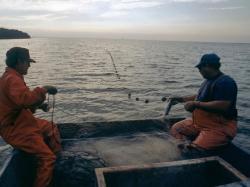
Wisconsin stocked chinook salmon outperform Lake Michigan average, new research shows A cooperative research project by the U.S. Fish and Wildlife Service, DNR and agencies in other states used a mechanical process to insert tiny coded wire tags into the snouts of young lake trout and chinook. U.S. Fish and Wildlife Service Photo

MADISON — Chinook salmon stocked by the Wisconsin Department of Natural Resources survive very well and contribute substantially to the state’s strong Lake Michigan fishery, new research from the U.S. Fish and Wildlife Service and DNR shows.

As the lake’s top predator, it’s common for both stocked and wild chinook to travel hundreds of miles to feed as they mature and at any given time during the summer, state anglers may catch chinook stocked by Wisconsin, Michigan, Illinois or Indiana. However, the ongoing three-year cooperative research project shows Wisconsin stocked fish have an above average likelihood of surviving to harvest and are being caught in comparatively large numbers in an area stretching from Door to Kenosha counties.

At the same time, state anglers are benefiting from natural reproduction of wild fish from Michigan streams and tributaries to Lake Huron.

“Wisconsin offers a world class recreational fishery and DNR’s Lake Michigan stocking efforts continue to play a key role in sustaining this resource and its multimillion dollar economic impact,” said DNR Secretary Cathy Stepp. “This study reinforces the importance of our high quality hatchery efforts while supporting the value of ongoing investments in our fisheries operations.”

Dave Boyarski, DNR fisheries supervisor for northern Lake Michigan, said the department has been working closely with the Fish and Wildlife Service’s Fish Tag and Recovery Lab near Green Bay to tag chinook fingerlings as well as collect and analyze the tags from the heads of recovered fish. Chinook salmon tagging for the recent multistate project began in 2011 and the analysis involved some 46,000 recovered tags.

The coded wire tags resemble tiny pieces of pencil lead and are inserted through a mechanized process that has proven more efficient and less stressful to the fish than previously used hand-held methods. During 2014 alone, state fisheries managers in Wisconsin, Illinois, Indiana and Michigan tagged and released more than 2.9 million chinook salmon bound for the waters of lakes Michigan and Huron. Wisconsin DNR’s Wild Rose and Kettle Moraine Springs hatcheries contributed about 824,000 of that total.

Illustrating the excellent returns of fish stocked by Wisconsin’s hatcheries, from 2011 to 2013 Wisconsin provided 38 percent of all the chinooks that were stocked in Lake Michigan. Yet from 2012 to 2014, Wisconsin stocked fish accounted for some 49 percent of stocked fish harvested throughout the lake and 57 percent of the stocked fish taken in Wisconsin waters.

The results of the analysis show the fish stocked by Wisconsin DNR appear to survive at better than average rates and account for a relatively large percentage of the stocked chinook salmon harvested throughout Lake Michigan, Boyarski said. In addition, anglers are benefiting from strong reproduction among wild chinook, which accounted for about 60 percent of the total harvest throughout Lake Michigan in 2014.

Brad Eggold, DNR fisheries supervisor for southern Lake Michigan, said the study demonstrates the benefits of Wisconsin’s investment in the Wild Rose Fish Hatchery where the majority of Wisconsin Chinook salmon are reared. The results also reinforce the importance of multistate cooperation and the involvement of anglers throughout the region.

“We greatly appreciate the opportunity to work with the U.S. Fish and Wildlife team to collect this data, which will inform our management efforts going forward,” Eggold said. “We also want to thank the many thousands of anglers and other partners who aided this effort by collecting the tens of thousands of fish heads needed for the analysis.”

Charles Bronte, senior fisheries biologist with the U.S. Fish and Wildlife Service, said the multistate effort was initiated in an attempt to understand the growth and survival of chinook, their movement throughout the connected waters of lakes Michigan and Huron and levels of natural reproduction. These measures are critical to the DNR for managing chinook in response to a changing base of forage fish.

“If we’re going to find the answers, we need this kind of coordinated research among all the states in the region that stock chinook because the fish don’t stay in one place,” Bronte said. “What we learn from this work will help guide best practices for producing healthy fish throughout the region, maximize returns and provide further insight into the conditions essential for these fish to thrive.”

Other important insights gleaned from the work include the fact that natural reproduction now accounts for some 60 percent of the chinook population from the combined year classes 2011, 2012 and 2013. However, lower lake levels and stream flows during 2012 and the subsequent harsh winter contributed to a reduction in successful natural spawning and survival for the 2013 year class of chinook, which was only 37 percent wild fish.

The team of experts said more work and more time will be needed to assess whether natural reproduction will rebound following the difficult 2013 cycle. Disruptions in the lake’s food web caused by invasive mussels and other species also bear further monitoring and will influence future management decisions.

“The study reinforces the importance of science-based management efforts and provides a wealth of information that we intend to share with our stakeholders,” Boyarski said. “In the months ahead, we’ll use what we are learning to examine our own management practices and implement strategies that increase the return on our stocking and management efforts going forward.”

To learn more about the research and the Lake Michigan fishery, search the DNR website dnr.wi.gov and search “Fishing Lake Michigan and “chinook salmon research.”

FOR MORE INFORMATION CONTACT: Dave Boyarski, DNR northern Lake Michigan fisheries supervisor, 920-746-2865; David.Boyarski@Wisconsin.gov; Brad Eggold, DNR southern Lake Michigan fisheries supervisor, 414-382-7921, Bradley.Eggold@wisconsin.gov; Charles Bronte, U.S. Fish and Wildlife Service senior fisheries biologist, 920-412-8079, Charles_Bronte@fws.gov; Jennifer Sereno, DNR communications, 608-770-8084, Jennifer.Sereno@wisconsin.gov

Youth Tournament On Jackson and Spotted Bass

At Jackson Sunday we had five youth fishing the youth tournament and four teams of youth and adults in the buddy part of the tournament. After six hours of casting on a beautiful day we brought in 20 keepers weighing about 26 pounds. Almost all were spots but they bit pretty good.

In the Youth tournament Dawson McMonigle won, Tyler Gruber was second and had big fish and Hunter Jenkins placed third. Treston Cheeves and Kemson Cheeves also fished but did not place in the top three.

In the Buddy tournament Sam Smith and Dawson had five weighing 7.14 to win, Hunter and I had five weighing 6.76 for second, third was Raymond English fishing with his two grandsons Treston and Kemson with two bass at 3.88 and big fish weighing 3.09 pounds and fourth was Larry Cook and Tyler with one at 1.35 pounds.

Hunter and I caught more than a dozen keeper spots and some smaller fish, mostly on jig head worms. The fish we caught were all on rocks, something spots love, and most were right off the main lake in five or six feet of water. Many of them picked up the bait and started swimming with it without me feeling the hit.

I think everyone had a good time!

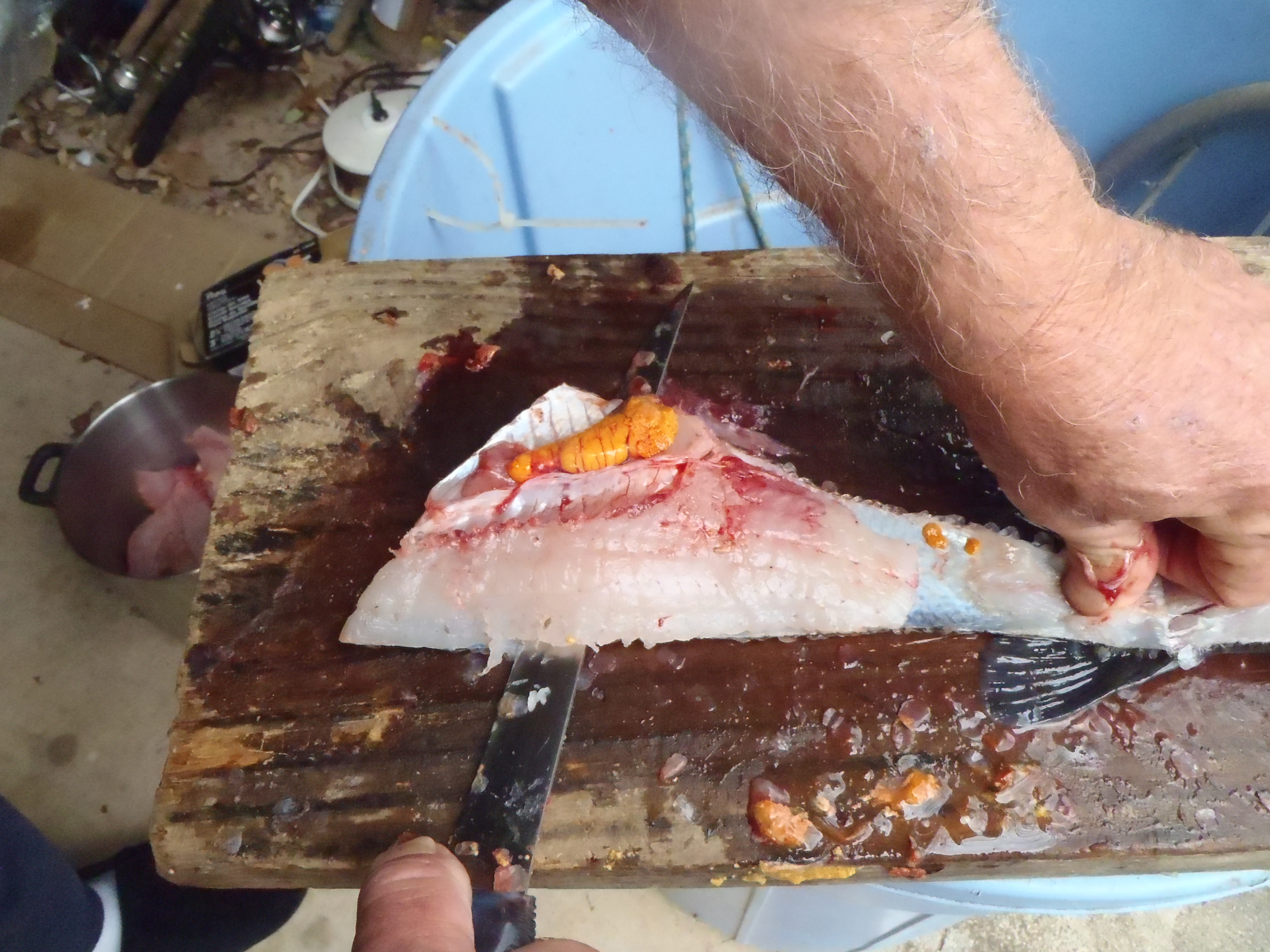
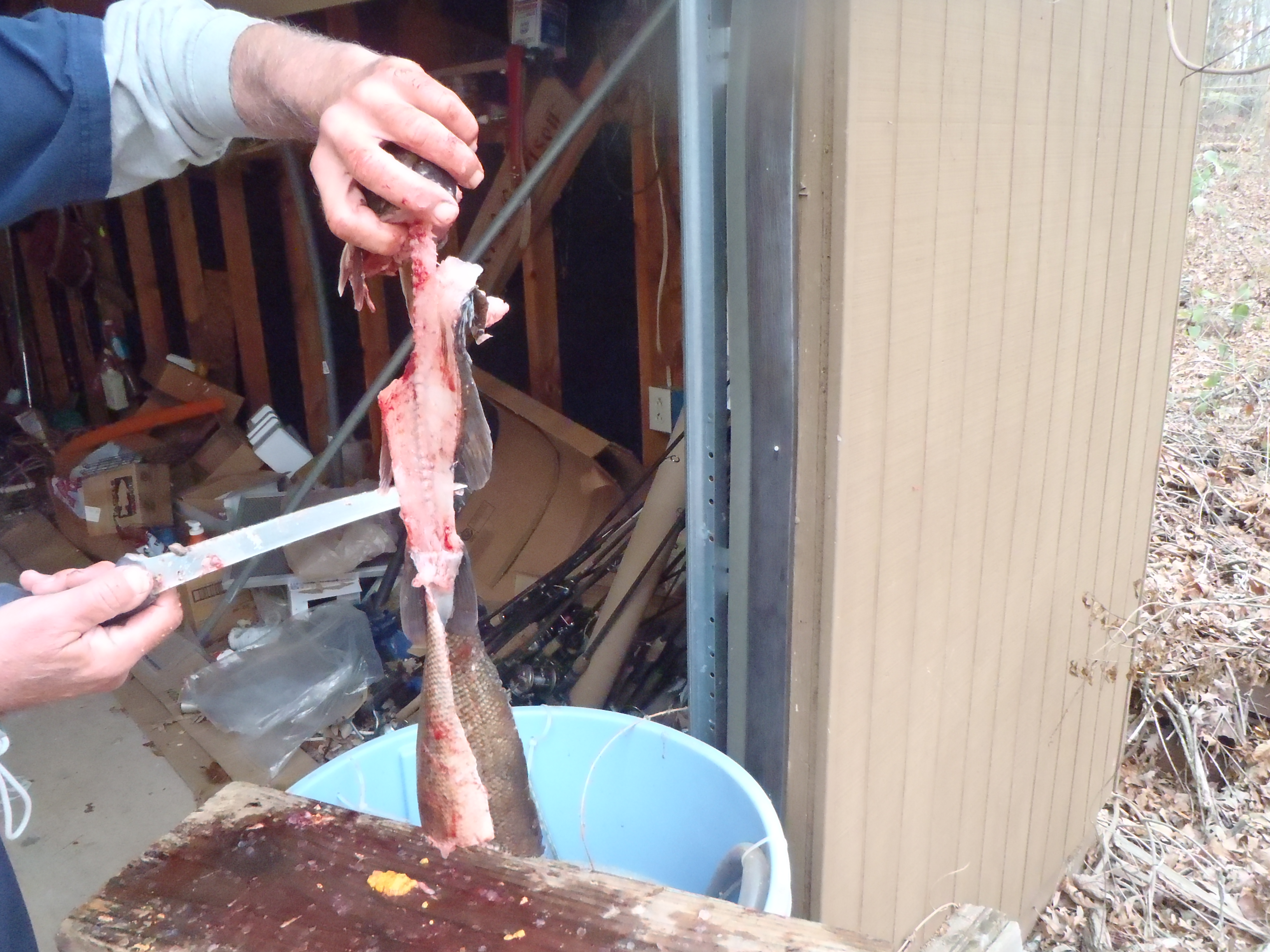
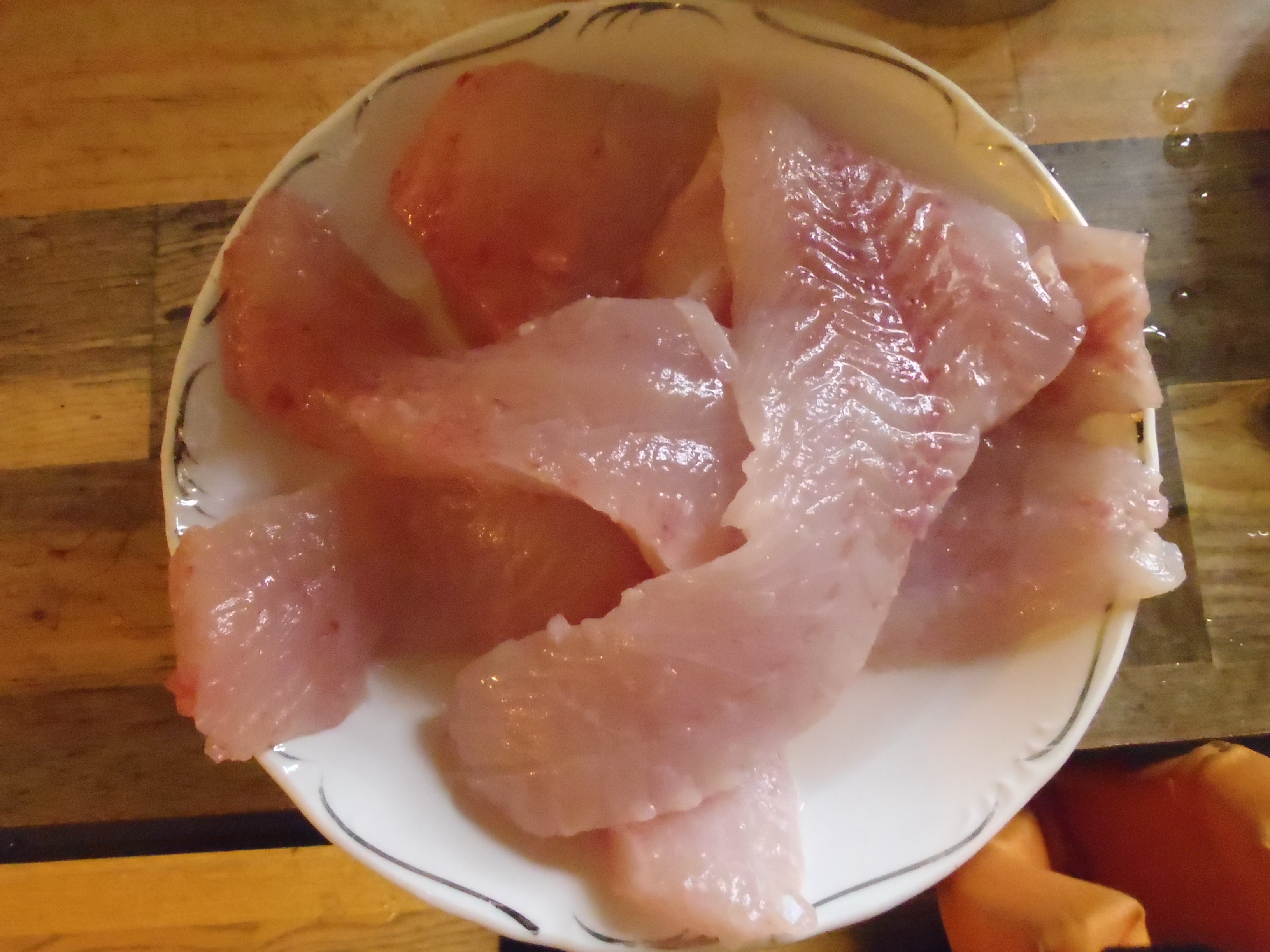
I kept some of the spots and fried filets on Monday night. They were delicious. Jackson is overrun with spots under 14 inches long, there is no size limit on them since they are invasive and hurt a lake when they get in it, and taste good. Right now is a good time for a trip to Jackson to catch some to fry.