What Are Horseshoe Crabs and What Good Are They?

As Horseshoe Crabs Near Mating Season, A Bit of Background

Editor’s Note: Today’s feature comes to The Outdoor Wires from the Florida Fish and Wildlife Commission (FWC).
from The Fishing Wire

Horseshoe crab

Horseshoe crab

Ancestors of horseshoe crabs date back over 450 million years–long before the age of the dinosaurs.

Four species of horseshoe crabs exist today. Only one species, Limulus polyphemus, is found in North America along the Atlantic and Gulf coasts from Maine to Mexico. The other three species are found in Southeast Asia. Horseshoe crabs are not true crabs at all. Horseshoe crabs are more closely related to arachnids (a group that includes spiders and scorpions) than to crustaceans (a group that includes true crabs, lobsters, and shrimp). Horseshoe crabs are often called “living fossils” because fossils of their ancestors date back almost 450 million years–that’s 200 million years before dinosaurs existed.

Despite inhabiting the planet for so long, horseshoe crab body forms have changed very little over all of those years.

The strange anatomy of the horseshoe crab is one of this animal’s most notable aspects. Unfortunately, the long, thin, spike-like tail of horseshoe crabs has given this species an unfavorable reputation. Many people view horseshoe crabs as dangerous animals because they have sharp tails. In reality, horseshoe crabs are harmless. Their tails are used primarily to flip themselves upright if they are accidentally overturned.

Nesting Crabs

Nesting Crabs

Horseshoe crabs nesting on Florida BeachHorseshoe crabs nest on beaches in Florida and mid-Atlantic states.

Horseshoe crabs are known for their large nesting aggregations, or groups, on beaches particularly in mid-Atlantic states such as Delaware, New Jersey and Maryland in the spring and summer. Horseshoe crabs can nest year-round in Florida, with peak spawning occurring in the spring and fall. When mating, male horseshoe crabs move parallel to the shoreline on sandy flats and intercept females as they pass by. A male attaches himself to the top of a female’s shell by using his specialized front claws, in a position known as amplexus, and together they crawl to the beach. The male fertilizes the eggs as the female lays them in a nest in the sand. Some males (called satellite males) do not attach to females but still have success to fertilizing the female’s eggs as they swarm around the amplexed pair. Most of this nesting activity takes place during high tides in the three days before and after a new or full moon.

Horseshoe crab larvae emerge from their nests several weeks after the eggs are laid. Juvenile horseshoe crabs resemble adults except that their tails are proportionally smaller. The young and adult horseshoe crabs spend most of their time on the sandy bottoms of intertidal flats or zones above the low tide mark and feed on variousinvertebrates.

Why are horseshoe crabs important?

Horseshoe crabs are an important part of the ecology of coastal communities. During the nesting season, especially in the mid-Atlantic States, horseshoe crab eggs become the major food source for migrating birds. Over 50 percent of the diet of many shorebird species consists of horseshoe crab eggs. Many bird species in Florida have been observed feeding on horseshoe crab eggs. In addition, many fish species rely on horseshoe crab eggs for food.

Horseshoe crabs are extremely important to the biomedical industry because their unique, copper-based blue blood contains a substance called Limulus amebocyte lysate. The substance, which coagulates in the presence of small amounts of bacterial toxins, is used to test for sterility of medical equipment and virtually all intravenous drugs. Research on the compound eyes of horseshoe crabs has led to a better understanding of human vision. The marine life fishery collects live horseshoe crabs for resale as aquarium, research, or educational specimens, and the American eel and whelk fisheries use horseshoe crabs extensively as bait along many parts of the Atlantic coast.

Threats to horseshoe crabs and research efforts

Horseshoe crab numbers are declining throughout much of the species’ range. In 1998, The Atlantic States Marine Fisheries Commission developed a Horseshoe Crab Fishery Management Plan that requires all Atlantic coastal states to identify horseshoe crab nesting beaches. Currently, with the help of the public, biologists at the Fish and Wildlife Research Institute are trying to document nesting sites of horseshoe crabs throughout the state. If you are interested in becoming more involved with the horseshoe crab survey, please visit the Survey for Horseshoe Crab Nesting Beaches in Florida for more information.

How Does the Shad Spawn Affect Fishing?

Why should I go fishing during the shad spawn?

Threadfin shad spawn when the water hits the upper 60s in temperature, usually in late April in Georgia.

The shad spawn is anticipated by bass and hybrid fishermen each year because you can usually catch a lot of fish while these baitfish are laying their eggs. When shad spawn they move in to rocky banks like riprap and the females run the rocks inches from the bank laying eggs and males join them to fertilize the eggs. These baitfish are easy pickings for predators. Bass and hybrids will run in right on the bank and eat them, and hold just off the bank and eat anything that comes by them. Shad spawn right at daylight, and it is usually a prime time to catch fish, until the sun gets on the water.

A spinnerbait fished right on the edge of the rocks or slow rolled out from them is a good choice. The bass will also hit crankbaits and top water plugs fished around the shad spawn. We are right at the end of the shad spawn now.

Last Sunday I couldn’t wait to fish Oconee in the Flint River tournament since I just knew I could catch some fish early. But a problem with the shad spawn is bass gorge themselves so much at daylight they are often hard to catch the rest of the day. That certainly proved true for me in the tournament.

Bass Club Tournaments On Lake Oconee and Lake Lanier

Last Sunday we had a tournament at Lake Oconee.

In the tournament, 18 members and guests fished from 6:30 AM to 3:30 PM. In the nine hours of casting, we brought in 33 14-inch keepers weighing about 65 pounds. There were only two five-bass limits and seven fishermen didn’t land a keeper.

Niles Murray won with five at 11.04 pounds. Chuck Croft was second with five at a very close 11.02 pounds. Tim Puckett got third with three fish weighing 9.20 pounds and his 5.44 pound largemouth was big fish. Javin English rounded out the top four with four keepers at 7.87 pounds.

Niles, Chuck and Javin all said they caught one or two bass early on the shad spawn. Jordan and I fished two places with a lot of shad spawning, but we caught only hybrids. That seemed to doom us the rest of the day.

At 11:00 we didn’t have a keeper in the boat although Jordan landed a 15 pound channel cat on a drop shot worm. I had caught a few short bass on plugs and worms but that was it. We had fished from the ramp at Long Shoals all the way to the mouth of Lick Creek and were very frustrated so we decided to make a big move.

After running the 10 miles to Double Branches we pulled into one of my favorite coves this time of year. On a shallow secondary point Jordan got a keeper on his drop shot then I caught one on a jig head. Within a few minutes each of us caught our second keeper of the day on that point.

About 15 minutes later I got a hit beside a dock and landed my third keeper. That was it! Neither of us caught another keeper although we fished hard the rest of the tournament.

The Potato Creek Bassmasters fished Lanier on April 18 for their monthly tournament. Eleven members fished to land 38 14-inch keepers weighing about 80 pounds. There were three five-bass limits and only one fisherman didn’t land a keeper.

Donnie Willis won with a good catch of five weighing 13.25 pounds, Lee Hancock came in second with five at 11.19 and Raymond English was a close third with five at 11.13. It is always amazing how close the weights often are in a tournament. JJ Compton had four at 9.62 for fourth and his 3.78 pounder was big fish.

What Is the BASS High School All-American Fishing Team?

B.A.S.S. Announces First-Ever High School All-American Team

BIRMINGHAM, AL. – Twelve high school students from 10 states have been selected as members of the first Bassmaster High School All-American Fishing Team.

Twelve high school students have been selected as members of the first Bassmaster High School All-American Fishing Team based on tournament performance, community service and recommendations from coaches and school officials.
“These 12 student anglers have a rare combination of fishing ability, leadership skills and involvement in community service projects,” said Hank Weldon, B.A.S.S. youth manager. “We believe they will continue to make an impact on their communities and the sport of fishing well into the future.”

The High School All-Americans were selected from a pool of 57 Bassmaster High School All-State anglers from 33 states. Judges reviewed tournament resumes, service activities and recommendations from coaches and school officials before making the selections. More than 200 nominations of student anglers in grades 10-12 were submitted for the inaugural All-American program.

Those earning the prestigious High School All-American title for 2015 are Laura Ann Foshee of Gardendale, Ala.; Zeke Gossett of Cropwell, Ala.; Joe Grafeman of Lake Ozark, Mo.; Dillon Harrell of Porter, Texas; Jake Lee of Knoxville, Tenn.; Julius Mazy of Phoenix, Ariz.; Carter McNeil of Abbeville, S.C.; Nick Montilino of Edina, Minn.; Jared Penton of Sanger, Texas; Cam Sterritt of Newfields, N.H.; Ryan Wood of Broomfield, Colo.; and Trevor Yates of Norman, Okla.

All have been invited to participate in a special Bassmaster High School All-American Bass Tournament being held in conjunction with BASSfest June 3-7 on Kentucky and Barkley lakes in Tennessee. Each high school angler will be paired with a Bassmaster Elite Series pro for the one-day tournament.

Here’s a look at what they did to become All-Americans:

Laura Ann Foshee, Alabama
A junior at Alabama’s Gardendale High School, Foshee is a founding member of the Gardendale Rockets Bass Fishing Club. She has a long list of tournament accomplishments, including a pair of victories.

Foshee helped create a benefit tournament to raise money for the Outdoor Ability Foundation, which provides hunting and fishing equipment to children with disabilities. She is also a member of Team Pink Fishing, which raises funds for breast cancer research. She assists with fish care in various tournaments, and she encourages other girls to enjoy fishing during an episode of the television show “Lunkerville.”

Zeke Gossett, Alabama
A senior at Pell City High School and member of the Pell City Panthers Bass Fishing Team, he has a 3.91 GPA and a tournament resume that includes a third-place finish in the 2014 Costa Bassmaster High School Classic, fourth in the 2014 Costa Bassmaster High School National Championship and qualification for the upcoming national championships for B.A.S.S. and TBF.

He’s a 12-time Alabama Bass Fishing State Champion and was named Alabama Sports Festival’s “Athlete of the Year” in 2010 out of 4,000 contestants in all sports. He was featured in Sports Illustrated’s “Faces In The Crowd Section” in 2011, and was commended for his bass fishing achievements in a bill introduced in the Alabama House of Representatives in 2012.

Gossett started dual-enrollment classes last year and has already completed four college courses, while also holding fishing seminars for junior fishing clubs and high school clubs.

Joe Grafeman, Missouri
Grafeman is a sophomore at Missouri’s School of the Osage. He and his partner won the 2014 Missouri State Championship and Missouri’s Junior Bassmaster tournament on Truman Lake in summer 2014. He is currently working to start a bass fishing team at his high school.

As a frequent volunteer at fishing shows and guest speaker at elementary schools, Grafeman uses his experiences to bring other young people to the sport of bass fishing. Those experiences include more than 20 Top 5 finishes in tournaments on the high school and adult levels.

Dillon Harrell, Texas

Harrell is a senior at New Caney High School in Porter, Texas, where he sports a 3.48 GPA. His incredible list of tournament accomplishments features more than 20 Top 5 finishes, including a wins in a TBF High School tournament and a SETX High School tournament in 2014.

The reigning SETX High School Fishing Angler of the Year, Harrell is president of his school’s fishing team, and he helped add a disability ramp to his local community mission. He also has participated in two roadside cleanups and recently received the New Caney FFA Star Lonestar Farmer Poultry Proficiency Award.

Jake Lee, Tennessee
A junior at Karns High School in Knoxville, where he maintains a 3.3 GPA, Lee and his partner won the 2014 Costa Bassmaster High School Open and the 2015 Norris Lake Bass Pro shops event.

Last year, Lee had a Top 20 finish in the 2014 Bassmaster High School National Championship on Kentucky Lake and a fourth-place finish in a TBF event in the fall. He works the sound room at Middlebrook Pike Baptist Church in Knoxville and helps the Sportsman Ministries program with a kids fishing day.

Julius Mazy, Arizona
Mazy, a sophomore at Arizona’s Boulder Creek High School, hopes to join the growing ranks of Western anglers who have succeeded as professionals. He’s had numerous first-place finishes during his young career, including one in the B.A.S.S. Nation High School Western Divisional on California’s Clear Lake in April.

Mazy and his teammates on the Phoenix High School Bassmasters organize local fun days to help younger kids enjoy fishing at local ponds. He’s also been active with the Cast for Kids program and with boat washes and raffle sales to raise money for his club.

Carter McNeil, South Carolina

McNeil is a senior at South Carolina’s Abbeville High School where he has a 3.2 GPA and is a member of the Abbeville Panthers fishing team.

He and his partner won the B.A.S.S. Nation High School Southern Divisional on the Pee Dee River in April and took third place in the 2015 Costa Bassmaster High School Classic Exhibition. McNeil is the founder and president of his fishing team and a frequent volunteer for Corps of Engineers projects aimed at planting aquatic vegetation on South Carolina’s Lake Russell.

He will be attending Bethel University on a fishing scholarship.

Nick Montilino, Minnesota

A senior at Edina High School, Montilino won the 2014 TBF state championship and was a runner-up in the B.A.S.S. state championship just two weeks later. He finished a remarkable 2014 season with wins in two more summer club events.

Montilino has participated in numerous lake and park cleanup efforts and has prepared meals for the underprivileged through his local hockey association and his church. He has a 3.6 GPA and has mentored younger bass fishermen from Minnesota youth organizations and at his high school.

Jared Penton, Texas
Penton is a senior at Sanger High School where he carries a 3.65 GPA. He won the Texas High School Bass Association Fun ‘n Sun Open in January 2014 and has several other Top 10 finishes to his credit.

He has served as president of the Sanger High School fishing team the past two years and does volunteer work for the Sanger Crisis Center, where he helps stock the food pantry for people in need. He also volunteered at the Toyota Texas Bass Classic Kids Casting Booth, helping younger anglers learn the basis of casting.

Cam Sterritt, New Hampshire
Sterritt has been a standout competitor since he was 12 years old. He won the 2007 New Hampshire Bassmaster CastingKids state championship for his age group and a slew of Junior Bassmaster titles over the years. He and his partner finished second among 60 teams in the 2014 Bassmaster High School National Championship on Kentucky Lake. He won the inaugural New Hampshire Interscholastic Athletic Association (NHIAA) High School Bass Fishing State Championship in 2013, as well as the NHIAA High School Qualifier for the state championship that year and the Angler of the Year title in 2014.

Sterritt, now a senior, founded the Exeter High School Blue Hawks Bass Fishing Team. He volunteers at Camp Carefree for children with diabetes, CastingKids competitions, cleanup projects at state parks and a fish tagging project for the New Hampshire Fish & Game agency.

Ryan Wood, Colorado

A senior at Legacy High School, Wood currently has a 4.0 grade average and is a member of the National Honor Society. Just last year, he won the prestigious Costa Bright Future Scholarship, which was presented at the 2014 Costa Bassmaster High School National Championship.

Wood has been successful at multiple levels of competition from Junior Bassmaster to high school tournaments and adult events. He won the 2013 Bassmaster Junior World Championship on the Arkansas River, finished third in the 2014 Costa Bassmaster High School National Championship, and then went on to win a Denver Bassmasters adult open at Horsetooth Reservoir. He was a charter member of his club, Front Range Bass Club, and presently serves as its president.

Wood has been a leader in conservation, helping his club earn a conservation grant to refurbish a pond in North Denver and volunteering with the Colorado Parks and Wildlife to assess the aquatic health of lakes, ponds and streams in his state. Wood has participated in church mission trips, volunteered at kids’ derbies and organized backpacks and school supplies for a charity in his hometown.

Trevor Yates, Oklahoma
Yates is an active leader at Little Axe High School, where he is a senior. He has been involved in the student council for the past four years and is a member of the Business Professionals of America.

He has several high school wins to his credit, including the Oklahoma B.A.S.S. Nation High School State Championship and the TBF High School Southern Conference Championship, both in fall 2014. Yates also won the 2013 Junior Bassmaster World Championship alongside his All-American teammate, Ryan Wood.

Yates hosted a fishing clinic in 2014 for kids, showing them how to cast and other fundamentals of fishing. He helped the North OKC Junior Bassmasters assemble and place habitat in Oklahoma lakes. Yates formed the Little Axe Bass Club at his school and encourages kids to get into fishing by helping at local CastingKids competitions.

About B.A.S.S.
B.A.S.S. is the worldwide authority on bass fishing and keeper of the culture of the sport. Headquartered in Birmingham, Ala., the 500,000-member organization’s fully integrated media platforms include the industry’s leading magazines (Bassmaster and B.A.S.S. Times), website (Bassmaster.com), television show (The Bassmasters on ESPN2), social media programs and events. For more than 45 years, B.A.S.S. has been dedicated to access, conservation and youth fishing.

The Bassmaster Tournament Trail includes the most prestigious events at each level of competition, including the Bassmaster Elite Series, Bass Pro Shops Bassmaster Open Series presented by Allstate, Old Milwaukee B.A.S.S. Nation events, Carhartt Bassmaster College Series presented by Bass Pro Shops, Costa Bassmaster High School Series, Toyota Bonus Bucks Bassmaster Team Championship and the ultimate celebration of competitive fishing, the GEICO Bassmaster Classic presented by GoPro.

Georgia’s Gun Laws Cause Them To Be Stolen from Stores and Individuals?

On the gun front, or should I say irrational politician front, in New York they are blaming recent police shootings on lax gun laws in Georgia. The reason? The guns used in some of the shootings were STOLEN in Georgia. I’m pretty sure it is against the law in Georgia and in New York to steal a gun!

My daddy always said never elect an honest man to politics because he would become a crook. It seems they become stupid, too. Blaming those shootings in New York for Georgia laws is as dumb as blaming the heroin problem there on lax drug laws in Afghanistan!

I would be willing to bet those same New York politicians whining now about guns strongly support releasing criminals, stopping the police policies that actually reduce crime like stop and frisk, and support giving people everything they want by taking others money through taxes.

Its pathetic that we know supporting wild animals with hand-outs makes them dependent on others keeping them fed. Signs in parks say “Don’t feed the animals, they become dependent on people and won’t fend for themselves.” Yet we give some people everything they need so it is no wonder they think they can take everything they want from others on their own.

People should be responsible for their actions. You can’t blame others for your problems you cause yourself. But that is the way to get their vote, support them by taking money from those earning it and blaming their problems on others.

Do I Have Access To Red Snapper Fishing?

Alabama Concerned with Minimal Access to Rebounding Red Snapper Fishery

Red Snapper

Red Snapper

By David Rainer
Alabama Department of Conservation and Natural Resources
from The Fishing Wire

Despite an increase in the red snapper quotas for 2015, private recreational anglers will only see a one-day increase in the snapper season in the federal waters of the Gulf of Mexico.

There are several factors involved in the setting of the private recreational season at 10 days. The private recreational red snapper season starts June 1 and ends at 12:01 a.m. on June 11.

First, the U.S. Department of Commerce recently approved the Gulf of Mexico Fishery Management Council vote for “sector separation” in the recreational fishery. The charter boat vessels with reef fish permits have been separated from the private recreational fishermen.

Another factor is the 20-percent buffer built into the recreational catch, which practically nullifies the increase in the recreational quota to 7.01 million pounds. The total allowable catch for both commercial and recreational sectors increased from 11 million pounds to 14.3 million pounds.

Probably the most contentious factor involved is the way the red snapper harvest is counted. The federal data collected through MRIP (Marine Recreational Information Program) indicated anglers caught 1.2 million pounds off the Alabama Gulf Coast. That’s almost two-and-a-half times the number of snapper compared to the Alabama Marine Resources Division’s Red Snapper Reporting Program’s estimate of 455,000 pounds of red snapper landed.

Chris Blankenship, Director of Marine Resources, said the sector separation allocated 42 percent of the recreational quota to the charter boat industry and 58 percent to private recreational anglers.

Under that allotment, the charter industry will be allowed 44 days of fishing from June 1 to 12:01 a.m. on July 15.

“We feel 10 days are totally unacceptable for the private recreational anglers,” Blankenship said.

“We are still working with Congress on changes to the Magnuson-Stevens Act that would give more control to the states,” he said. “Congressman (Bradley) Byrne is working on legislation that would give us more flexibility on the quotas, extend state waters out to 9 miles and assign the red snapper stock assessment to the Gulf States Marine Fisheries Commission instead of the National Marine Fisheries Service (NMFS). That legislation passed out of the Natural Resources Committee last week. So there is some movement in Washington on issues that would help us. Like I’ve said before, that’s what it’s going to take to get changes in red snapper management. The incremental changes through the National Marine Fisheries Service are not working.”

One action that could derail the current season dates is a lawsuit filed by the Coastal Conservation Association (CCA) in Louisiana that disputes the legality of the sector separation rules.

Blankenship said that may not be resolved until after the 2015 season unless the CCA can convince a judge to grant a temporary injunction against sector separation.

The one thing Alabama can do to offer a bit of relief to frustrated red snapper anglers is to open state waters to additional fishing.

Blankenship and Conservation Commissioner N. Gunter Guy Jr. have decided to open Alabama state waters to red snapper fishing from July 1 through July 31. Alabama enforcement officers will recognize a 9-mile boundary during the state snapper season, although federal enforcement officers may only recognize a 3-mile state boundary.

“I talked at length with Commissioner Guy, and we both feel like NMFS is being ultraconservative on a fishery that has rebuilt,” Blankenship said. “We don’t want to pack people into 10 days of fishing. It’s not fair with the good fishery we have out there.

“The 20-percent buffer that was put in last year for the 2014 season is part of the problem, and that has been continued for 2015. If we could add 20 percent back, it would add a couple of days to the season. It’s not much, but it’s better than nothing.”

Good red snapper catch

Good red snapper catch

One of the main complaints for many years has been that the federal catch data is flawed and vastly overestimates the number of pounds of fish landed. Another problem encountered is that the fishery has rebounded so well that the average size of the fish caught has increased dramatically over the last few years.

Blankenship said the way NMFS calculated the 10-day private recreational season based on landings data from a revamped MRIP system.

“We just feel those landings were overinflated,” he said. “That’s what they used to determine the catch rate per day, and that is used to set the season length. If we can get regional control, we will be able to use our Snapper Check landings data to set the season and monitor the harvest. That should really benefit the people and give us a longer season.”

Alabama’s Red Snapper Reporting Program will again be mandatory for the 2015 season. The reporting system requires only one report per vessel trip, which can be filled out via smartphone app, online, by telephone, or by paper form. The toll-free telephone number is 1-844-REDSNAP (1-844-733-7627). Data collection drop-boxes have been erected at boat ramps at Boggy Point, Cotton Bayou and Fort Morgan in Baldwin County, Billy Goat Hole on Dauphin Island and Bayou La Batre in south Mobile County. And remember, regardless of where the red snapper are caught, a vessel landing report will be required if the fish are off-loaded in Alabama. Landing is defined as when seafood is transferred from a vessel to land or to a pier, dock, or bulkhead attached to land, or when a vessel is hauled onto land via a trailer.

“We need everybody to participate in the Snapper Check again this season so we will have two years of comparable data,” Blankenship said. “It’s going to take at least that before NMFS will make a change to the way they do data collection.”

While legislation winds its way through Washington, the Gulf Council will also discuss Amendment 39, which deals with regional management, at its meeting in Key West, Fla., in June. Under that plan, states would be allocated quotas according to historical landings. Alabama lands about 30 percent of the red snapper caught in the Gulf.

Blankenship said he understands the frustration expressed by recreational anglers like George Jordan of Daphne, Ala.

“We went (snapper fishing) one time last year,” Jordan said. “There’s only one weekend in the 10 days this year. People with businesses like us can only go on weekends. We may not even go this year. It’s just not worth it.”

Troy Frady, captain of the Distraction charter boat out of Orange Beach, Ala., said he hopes the system will be equitable to all segments of the fishing community, but he is glad to have a chance for a profitable season.

“I’m grateful to have something stable and have something for the American public to take home, that they’re able to have access to that natural resource,” Frady said. “It gives the charter boats an opportunity to make a living. It gives us something to catch while other species are closed during the summer months. Amberjack is closed in June and July. Triggerfish is closed for the entire year, so it’s more important to have snapper open to have access to fresh fish.”

Blankenship said every captain he has talked to in the charter industry seems to be happy with a 44-day season.

“I am glad for the charter industry,” Blankenship said. “That’s good for them and the economy of south Alabama, but I still think the charter boats would get more than 44 days to fish if we had state control of this fishery.”

Fishing A Bass Club Tournament At Clarks Hill in May

Last weekend 13 members and guests of the Spalding County Sportsman Club fished our April tournament at Clarks Hill. Fishing was very good for a few and tough for others. There were nine five-bass limits and one fisherman didn’t weigh in a keeper after fishing ten hours on Saturday and eight hours on Sunday. We had 82 keepers weighing about 163 pounds.

Sam Smith won with ten at 24.56 pounds, his partner Chris Davies had ten at 23.68 pounds for second and Raymond English was third with nine at 23.45. Raymond had big fish with a 6.61 pound largemouth he caught Saturday. My nine weighing 20.86 pounds was good for fourth. My partner Jordan McDonald was fifth with nine at 17.96 and Zane Fleck had ten at 17.19 for sixth.

I went over on Wednesday and fished a few hours that afternoon. The lake is full and the bushes are in the water, usually a great pattern this time of year. I caught several small bass then in the last hour before I went in I landed a three pounder and two more over 2.5 pounds.

Jordan joined me the next morning and we put in before daylight and went looking for shad and herring spawning. We didn’t see any so we started fishing bushes, and were real disappointed. After fishing about ten hours we landed only about ten keeper bass, and all were less than two pounds.

Friday morning we started a little later and again looked for shad and herring spawning. We caught a couple of big hybrids on a blow-through, a place where shallow water between two islands or an island and the bank has a gravel bottom. Wind and waves wash the dirt away, leaving the gravel, and herring spawn on them.

The next one we fished we saw some schooling activity and I landed a two pounder on a Carolina rigged Baby Brush Hog. Then I got a keeper on a crankbait off the Raysville bridge riprap. That should have told me something, but I missed it. After fishing the rest of the day we again had landed fewer than ten keepers and the first one was the biggest.

After three sunny days Saturday morning was rainy so Jordan and I drove the 25 miles from my place at Rayville Boat Club to Mistletoe State Park rather than riding 7 miles between the two by water in the boat. We took off and went to a rocky point I like, and both caught some big hybrids but no bass. As it got a little lighter we went to a nearby blow through but nothing was happening there.

Since it was raining hard by now I just started fishing around the island with the blow though. Jordan saw some schooling fish on a point on the main bank across from it and we went over there, and I got a three pounder on a crankbait. After going back to the blow through I caught another three pounder. Working around the island, I got a 4 pounder and lost two more nice bass when they jumped and threw the crankbait.

I also got a five pound channel cat on the crankbait. Jordan got an eight pounder the next day. Some folks had a lot of noodles out for cats in that area and we saw several with fish on them, and Jordan pulled one up that had an eight pound blue cat on it. Catfish were biting good!

By the time we had to go in I had caught ten keepers and culled three three-pound bass – very unusual for me. Raymond English and I were tied with 16.19 pounds each – one of my best five fish limits ever in a tournament.

Sunday was clear and very windy. Although I fished hard I landed only four small keepers and Jordan had the same. What a difference a day made!

Sam and Chris came in first and second by fishing Raysville Bridge. I knew the fish I caught there should have told me something!

How Can Eyes In the Sky Help You Catch Fish?

Yamaha Skipper Offers Fish-Finding Tips via “Eyes in the Sky”
from The Fishing Wire

Satellite Data that Helps You Find Fish

Ready to go fishing

Ready to go fishing

Captain George Mitchell’s Yamaha powered Yellowfin has a full complement of “eyes in the sky” navigation aids to help him find fish.

Offshore fishing is as popular as ever and with the advent of larger, more seaworthy outboard-powered boats, the desire to catch tuna, billfish, sharks, kingfish and other pelagic species of gamefish will likely continue to grow. More reasonable fuel prices will no doubt add to the affordability of chasing big fish offshore, and there are certainly plenty of opportunities along the U.S. coastline.

As is the case with any kind of fishing, the most difficult part of putting together a successful day on the water is figuring out where the fish are most likely to be, but the problem is compounded when you’re dealing with open ocean species that are frequently found many miles offshore.

“There’s a lot of water out there,” said Captain George Mitchell, “but there are resources available to offshore fishermen that can help put them in the right place at the right time.”

Mitchell is a tournament fisherman and a professional charter captain with a large and loyal clientele. His home port is Jupiter, Florida, but he also charters from Venice Marina in Venice, Louisiana at various times of the year in addition to competing in professional kingfish tournaments with his son, Eddie. His latest ride is a Yamaha-powered 36-foot Yellowfin® center console, rigged to the nines for offshore fishing. Pushed by three Yamaha F300 outboards, the boat can get him pretty much anywhere the fish are quickly and safely. But how does he determine where “anywhere” is each day?

Tuna

Tuna

Tuna and other pelagic species seek out currents and temperatures revealed by services like Roff’s.

“There are tools available that take a lot of the guesswork out of finding the most likely places for the gamefish I’m after,” said Mitchell. “Some of these tools come right out of the sky. I’m talking about satellite-generated sea surface temperature (SST), chlorophyll and altimetry charts. They sound high-tech, and they really are, but getting this quality fishing data has never been easier. Spending a little time viewing online tutorials coupled with some on-the-water practice, these tools are worth their weight in fuel savings.”

Large bodies of saltwater, like the Atlantic Ocean and Gulf of Mexico, are not vast tracts of static water. They are living ecosystems with currents, counter currents, areas of deep-water upwelling and gyres (eddies) that are constantly moving. While locating physical structure is important when fishing for inshore species, ocean features can also become structures that attract fish. What makes the ocean features harder to locate is the fact that they are dynamic, as opposed to static like bottom structures. Identifying how ocean features can impact the location of pelagic fish requires a whole different set of tools from bottom charts. That means researching current data so you can identify areas where the conditions are most conducive to concentrating forage and gamefish.

“I use SST, chlorophyll and altimetry charts to help me nail down where I am going to fish, regardless of whether I have a charter right here in Jupiter and I’m looking for dolphin, sailfish or tuna, or if I’m fishing a kingfish tournament out of a port in the Gulf,” said Mitchell. “It’s critically important to have access to real-time data and charts developed from the most current satellite passes for decision-making. When putting together a game plan, I start by identifying the catchable species in the area and then look at the developing trends in water movement, surface temperature, chlorophyll concentrations and areas of water upwelling. If, for example, I am fishing my home waters, I figure in the movement of the Gulf Stream and also factor in wind direction and speed.

Currents help find fish

Currents help find fish

This Roff’s image of the Florida Current and Gulf Stream can be a big help to offshore anglers.

“If I see an area where conditions conducive to my target species converged over the past few days, it will be high on my list of spots,” Mitchell continued. “But I will try and pick out several locations that look promising so I have a Plan A, B and C. With the mobility of high-speed fish boats like my Yellowfin,® I can easily hit a number of likely spots should one or two not pan out.”

So what is it you should be looking for on these wonders of satellite technology? You’re trying to find areas where contact between two water mass boundaries occurs; where upwelling of nutrient-rich deep water is being pushed to the surface; and where phytoplankton blooms occur.

SST charts depict ocean surface temperature to locate water mass boundaries and can help indicate where current edges and upwelling might be taking place. SST charts are generated from data provided by numerous earth-orbiting satellites. There can be numerous images available daily or, if cloud cover is persistent, none. Temperature sensing is impeded by clouds, but such areas will be marked on SST charts by the provider.

Chlorophyll data is available from just a few satellites, so one chart per day under optimal conditions might be available. What chlorophyll data provides is a look at where phytoplankton blooms are occurring. Phytoplankton is the bottom of the food chain, which will attract baitfish that feed on these micro organisms. They, in turn, should attract the predators you seek.

Altimetry is a radar image of the surface of the ocean that shows minute differences in the height of the water in colors similar to chlorophyll and temperature charts. Minor depressions in the ocean surface tend to indicate where a deep water upwelling is occurring. This brings nutrient-rich water to the surface, which kicks off a phytoplankton bloom.

Temperature and water movement patterns help catch fish

Temperature and water movement patterns help catch fish

The temperature and water movement patterns around islands are all revealed in satellite imagery today.

Offshore of the Mid-Atlantic States there is a wide Continental Shelf, and the eastern edge is pockmarked with submarine canyons. The Gulf Stream runs up the coast, but for most of the region it is well offshore of the canyons. However, the Stream creates gyres— great spinning bodies of warm, dark blue water also called warm-core eddies—which break off from the main current and migrate inshore to the canyons along the Shelf. Think of them as huge bowls of Gulf Stream water spinning in a clockwise direction that do not readily mix with the inshore water in its path. Such eddies create upwelling of deep ocean water where they encounter the steep walls of a canyon. SST charts clearly mark the location of eddies or fingers of warm water extending inshore from the Stream. Altimetry charts can help pinpoint where upwelling is taking place, and chlorophyll charts indicate where they are generating plankton blooms. These are the building blocks of a hot bite of pelagic fish that can include a variety of tuna and billfish species. With information like this, coastal anglers heading offshore can narrow down the vastness of the ocean to a few places that have the right conditions to be holding forage and the gamefish they seek.

Services that provide satellite-generated charts for recreational anglers are in hot demand because these ocean features are often located 60-to-100+ miles offshore, certainly well within the range of today’s high speed fishing boats. Without these charts, this is a long way to go to troll around blind with no idea whether you’re within five or 50 miles of the action. The charts used in this article were provided by Roffers Ocean Fishing Forecasting Service which, under the direction of Fisheries Biologist/Ph.D. and owner, Mitchell Roffer, has been providing these services for three decades. However, there are numerous companies that offer subscriptions to accurate fishing charts prepared from satellite data. There are also a number of free government and university websites that offer raw SST charts.

Hilton’s Realtime Navigator
www.realtime-navigator.com

Terrafin Satellite Imaging
www.terrafin.com

OceanTemp
www.oceantemp.com

Offshore Satellite Services
www.offshoresatelliteservice.com

Roffers Ocean Fishing Forecasting Service
www.roffs.com

Youth Bass Fishing Tournament

Members of the Spalding County Sportsman Club and the youth fishing our youth/buddy tournament in March enjoyed it so much we have scheduled another one. We will be fishing Bartletts Ferry from 7:00 AM to 2:00 PM on Saturday, May 30. The youth tournament is open to those 11 to 17 years old. This combination tournament is open to everyone and you can enter the buddy tournament with an entry fee if you want to, but the youth tournament part has no entry fee.

Youth will compete with other youth for prizes. Thanks to Gary “Pokey” Hattaway, Jack “Zero” Ridgeway, Larry Cook and https://fishing-about.com we have some nice tackle packs as prizes for the youth. For the youth, there can be one, two or even three youth in each boat with the adult bringing them, and they do not have to enter the buddy part of the tournament.

The buddy tournament has a $50 entry fee and $5 big fish pot and is a team tournament. Adults can fish by themselves or with one other adult and their combined weight will be used for the first through fourth place payback of 50 percent of entry fees. The adult can also pair up with one, two or three youth in the same boat for this weigh-in, with the best five fish for the team weighed.

Youth will keep their fish separate for their weigh-in but their fish can then be combined with adult catch for the team payback. These tournaments are always a lot of fun for those that participate.

Call me at 770-789-6168 or email me at Ronnie@fishing-about.com for more information.

How Does the Source of Fish Oil Harm Fishing?

Tracking Fish Oil Supplements to the Source

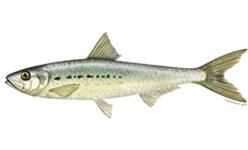
Baitfish are the source of fish oil

Baitfish are the source of fish oil

Baitfish—forage—are at the base of the food chain that culminates in many species of gamefish. Here’s a take on protecting this overlooked resource, from Lee Crockett of Pew Charitable Trusts.

by Lee Crockett of The Pew Charitable Trusts in Ocean Views
from The Fishing Wire

Are fish oil supplements really improving our health but hurting our oceans?

That’s one question New York Times bestselling author Paul Greenberg is exploring for his next book, due out next year, The Omega Principle: The Health of Our Hearts, the Strength of Our Minds, and the Survival of our Oceans All in One Little Pill.

Global demand for forage fish is surging. The small species are used to make products such as fertilizer, cosmetics, and fish meal for aquaculture and animal feed.
Fish oil pills are made from forage fish, some of the most important species in ocean food webs. These small fish, including menhaden and sardines, are a vital food source for many marine animals, including whales, dolphins, seabirds, and fish that people eat, such as grouper, snapper, and salmon. At the same time, forage fish are also used to make products such as fertilizer, cosmetics, and fish meal for aquaculture and animal feed. As a result, in some parts of the world, overfishing has caused forage fish populations to plummet.

Greenberg has made a career out of seeing a story behind almost every fish. In his popular books Four Fish and American Catch, the lifelong angler examined the forces that get seafood from the ocean to our dinner plates. He related tales of greed, hunger, politics, international affairs, and crime on the high seas, stories that raise questions about how we treat the oceans to serve ourselves.

His ability to see the stories behind seafood began as a teenager. He grew up fishing in Long Island Sound, a pastime his mother encouraged because, he recalls, she considered it a “manly, character-building activity.” Similarly, his film critic-writer-psychiatrist father saw it as a way to entertain his son on weekend visits, and eventually encouraged him to submit an article about fishing to the weekly angling magazine New England Fisherman. Later, after earning a bachelor’s degree in Russian studies from Brown University and then spending six years working to establish independent media in Eastern Europe, Greenberg launched his writing career by returning to where he started: writing articles about fish.

Paul Greenberg

Paul Greenberg

Now the award-winning New York City-based writer is investigating the push and pull between human demands on forage fish, the impact on the ocean, and the responsible stewardship of this precious resource. His work comes during his three-year tenure as a Pew marine fellow.

He’s taking a hard look at fish oil—which, he recently told me, is the third-largest-selling supplement in the United States and a $34 billion-a-year global industry. In this case, he’s also stepping squarely into the debate about heart health.

“I’m a middle-aged guy. I have all the issues: cholesterol, forgetting things, anxiety, sleeplessness,” said Greenberg, 47, who takes the fish oil supplements containing omega fatty acids. “These omega-3’s do come across as the fountain of youth.” But as he’s swallowed his daily dose, Greenberg’s thoughts have wandered toward the sea. Beyond their usefulness as ingredients, these small fish are the lifeblood of the oceans that sustain us: “Maybe [they’re] the elixir of life itself.”

Atlantic menhaden

Atlantic menhaden

Atlantic menhaden are caught by the hundreds of millions each year.

Greenberg’s work comes as forage fish are making headlines—despite not being well-understood by the public. Recently, fishery managers along the West Coast of the United States agreed to prohibit commercial fishing on seven groups of forage fish unless scientific analysis shows it won’t harm marine ecosystems or compromise fishing for valuable predators such as salmon. In June, Florida wildlife managers will discuss the management of forage fish in that state’s waters.

And in May, East Coast fishery managers might consider changing catch limits on menhaden. Dubbed “the most important fish in the sea” by author H. Bruce Franklin, these fish are captured by the hundreds of millions every year and ground up to make fish oil, fish meal, animal feed, and other products. Managers reduced menhaden catch limits for the first time in 2012 to keep more fish in the water to feed the many animals that depend on them, such as striped bass, ospreys, and humpback whales. A recent assessment shows some improvement in the health of the menhaden population, although the number of fish remains near a historic low. The industrial menhaden fleet wants catch limits increased, so fishery managers need to employ the most up-to-date and comprehensive ecological and biological analysis to help pinpoint how many menhaden should stay in the water as food for marine animals.

Predator species need baitfish

Predator species need baitfish

Predators like this tarpon make meals of forage fish. Forage species are critical food sources for animals, including whales, dolphins, seabirds, and larger fish such as snappers and groupers.

But in many ways, these challenges are not new. Greenberg points out that forage fish have been used to make products for thousands of years, dating to the Roman Empire, when some species were ground up to make a product called garam, which could be considered something close to today’s ketchup. Now, millenniums later, both Greenberg and I think it’s time to finally consider forage fish in a broader sense.

“The real question is, where does a fish like a menhaden have its value? As fish meal and oil or in a matrix of the food web?” asks Greenberg. After decades of research, he believes—as I do—that when managing our fish resources we should pay more attention to the diverse ecological roles fish play in marine environments, rather than setting rules that consider only one species at a time. “What are these rules doing,” Greenberg asks, “to the other fish?”

“With seafood you’re dealing with hundreds if not thousands of species that interact with human destiny in different ways at different times,” Greenberg told me. “People say they relate to the ocean through seafood. I try to tie ocean issues to people. I want to put positive, science-based ideas into the world.”

Ocean Views brings new and experienced voices together to discuss the threats facing our ocean and to celebrate successes. We strive to raise awareness worldwide to the benefits of restoring fisheries and creating marine reserves. We inspire people to take better care of the oceans and leave a legacy of pristine seas to future generations.
The blog is hosted by Enric Sala, Explorer-in-Residence with National Geographic.

Opinions expressed are those of the blogger and/or the blogger’s organization, and not necessarily those of the National Geographic Society. Bloggers and commenters are required to observe National Geographic’s community rules.

Blog Administrator: David Braun (dbraun@ngs.org)