When Should I Use Big Baits for Bass?

When Big Baits Are Best for Bass

How up-sizing can work magic on heavily-pressured waters, especially during “heat fronts”

By Steve Pennaz
from The Fishing Wire

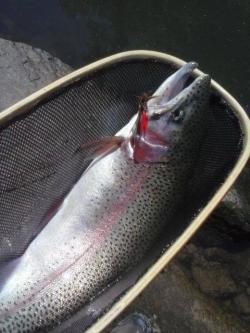
Steve Pennaz with bass

Steve Pennaz with bass

Pennaz has found that soft plastic lizards are a great bait to fish during both cold and heat fronts. “The beauty of the lizard is it resembles salamanders, which pack a big caloric punch, motivating bass to eat during negative to neutral bites. Also, not a lot of anglers throw them anymore, so fish are less conditioned on pressured waters,” says Pennaz.

Fish studies confirm that bass can become conditioned through continual exposure to baits. Especially on heavily-pressured waters, bass do learn to avoid baits. Berkley’s Dr. Keith Jones covers the subject in his book Knowing Bass: The Scientific Approach for Catching More Fish. In it, Jones discusses research evidence that suggests bass remember lures for a long time – “for at least up to three months and perhaps much, much longer.”

The challenge for the angler is staying ahead of the curve. One of the best ways is to fish outside of the box, choosing baits the fish have probably never seen before. Or fishing baits that have fallen out-of-favor for newer, trendier baits.

Or simply up-sizing the same baits we already know are effective.

I remember fishing a river system one spring day. We had started early to avoid the crowds, then battled skyrocketing temps throughout the day. I know a lot of anglers like to be on the water during those warm spring days, but I prefer more stable conditions.

Fishing was predictably slow under the changing conditions so I slowed down like you do during a cold front and went to smaller baits while casting to timber and current seams along the bank. We landed four bass running between 1.5 and 2 pounds.

There was another boat working the same bank behind us…with a lone angler in the bow. I saw him hook up a couple times, but didn’t think much of it at the time.

Later, back at the launch, I asked the other angler how he had done. He said he caught five fish, including a 3-pounder and two 4-pound fish flippin’ the same river timber I had fished ahead of him.

I asked him, “What bait where you flippin’?”

His plaintive response: “Power Lizards.”

I hadn’t thought to go larger with my presentation and so this information was striking. But the more I thought about it, the logic behind it was too strong to ignore…how many other anglers would go in this direction during difficult situations like cold fronts or what I call “heat fronts”?

When you get a week of average temps and all of a sudden the temperature sky-rockets into the 80 or 90s (or higher), water temps change drastically. It’s like what happens during a cold front, but in reverse. And the effects on bass and other fish are the same; their movements slow. If you monitor the water temps on your electronics, there are situations where increases can be as much as 8, 10 or even more degrees in a day. Where I live, going from 40-degree overnight air temps to 80 degrees by late afternoon is not uncommon!

When faced with drastic temperature increases, I often hold off fishing my best spots until late in the day when temperatures stabilize somewhat. By this time, the biggest fish with the most mass will have had time to acclimate to the change and will be more active. The bass that do feed during these dramatic shifts in water temperature often look for the biggest meal with the least amount of metabolic effort. Like any host of large amphibians, salamanders and the like.

Still, a lot of anglers are hesitant to fish lizards, thinking they’re only big-fish baits. In reality, a lizard doesn’t appear too large to bass, which typically track prey from behind. The visual cue is only part of the equation. What can really stimulate their feeding or attack response has to do with how they feel that bait. With its many appendages, a lizard displaces more water and produces more vibrations, which the bass picks up via its lateral line.

An angler needs to ask a few questions:

How big of a bait can I get away with on a given body of water? And secondly, what will be most appealing to the biggest fish in a school?

At times it makes sense to start smaller, but there are times when going large is the right move.

If the waters have big fish and lots of pressure, I may start bigger because I can. And for the past couple of years, I’ve been fishing lizards … a lot.

Why more anglers aren’t fishing lizards is a real head-scratcher. But I can relate. The past decade we’ve seen so many new and effective creature-style baits and worm designs hit tackle shelves that it was easy to forget the proven performer.

Big mistake. Lizards worked then — and still do.

Lizard Rigging Tips

When rigging lizards, hooks can make or break your day. I learned long ago that while great for compact, creature baits, EWG-style hooks are not the best choice for Texas-rigging lizards or big worms.

Instead, I use a 5/0 or 6/0 offset worm hook that provides great hook-up ratios and allows the baits to move fluidly, as designed.

Historically, my favorite lizard is the 6-inch PowerBait Power Lizard, although I’m starting to catch a lot of bass on the Gary Klein-designed Havoc Boss Dog, too. But given that bass will often grab lizards and big worms in the middle – rather than inhaling the entire bait – the PowerBait formula really puts the odds in your favor. They simply hold on to the bait longer, giving you more time for a solid hookset.

In terms of color, my favorite is pumpkin with a chartreuse tail, which is based purely on nostalgia; it produced my first giant bass years ago and still works great today. But I also carry black/blue, black, green pumpkin and watermelon.

In terms of line…I fish 10- to 15-lb. Berkley Trilene 100% Fluorocarbon in clear waters; 15- to 17- lb. for stained conditions. And in waters with double-digit bass, I’ll go even heavier. I like the sensitivity you get with fluoro, the fact it sinks, and the near invisibility factor.

Another cool thing about fishing heavy fluoro with lizards or big worms is it decreases the amount of tungsten or lead weight you need to use. You get some sinking factor with the line itself. That means I’ll often fish lizards or big worms weightless in shallow-water (1.5- to 2 feet) situations. Plus, the Berkley PowerBait Power Lizard is pretty bulky in the body. All this adds up to long casts and easy fishability.

Rod & Reel Setup

One of my secrets to fishing lizards is upping the speed. Rather than the typical “lift-drag” Texas rig retrieve, I’ll use a twitch-twitch-reel-reel-shake and repeat. This gets the appendages really pushing water. To those ends, I like a higher-geared baitcaster like the 7.0:1 Abu Garcia Revo MGX.

Big hooks for big baits

Big hooks for big baits

Pennaz prefers a 5/0 or 6/0 offset worm hook over an EWG for Texas-rigging lizards or big worms. “You’ll get greater hook-up ratios and a more natural bait action,” says Pennaz.
Speaking to that reel, it weighs around 5 ounces, which means when combined with a feathery 7’6″ fast action, medium-heavy power Abu Garcia Veracity, you can easily fish these big baits all day without fatigue. Plus, fishing lighter rods and reels gives you better sensitivity…important for detecting bites on the drop.

Parting Words

This season pay attention to drastic temperature swings and fish them like cold fronts in reverse. Size up and try lizards for more and bigger bass, even during difficult situations on pressured waters.

About Steve Pennaz

Steve is one of the most trusted voices in fishing. From 1988 until 2012, he served as Executive Director for the North American Fishing Club, including North American Fisherman magazine, fishingclub.com and the club’s daily enewsletter “Fishin’ Informer.” He’s also hosted several television series, including “North American Outdoors,” “North American Fisherman,” and “Fishing Club Journal.” Pennaz launched Knot Wars, now a successful app on iPhone and Droid. He excels at finding and catching fish on new waters, a skill that now drives “Lake Commandos.”

Lots of Spots At A Kids and A Club Tournament At Bartletts Ferry In May

Last Saturday we had only three boats participating in the Spalding County Sportsman Club/Flint River Bass Club youth tournament at Bartletts Ferry. Even though the numbers were low and the fishing was tough we had fun.

On the youth side Alex Watkins fishing with Sam Smith won the older age group with four bass weighing 2.89 pounds. My partner Hunter Jenkins came in second with two at 2.55 pounds and his 1.29 pound largemouth was big fish. Blaze Brooks, fishing with Zane Fleck, won the younger division with two bass weighing 1.18 pounds.

In the buddy tournament Sam and Alex had five fish weighing 5.82 pounds for first and a 1.45 pound largemouth for big fish, Hunter and I had five at 5.07 for second and Zane’s team had two at 2.28 pounds for third.

Youth could weigh in any legal fish, so they could bring in spotted bass less than 12 inches long. On the buddy side all fish had to be 12 inches long. Bartletts Ferry is full of little spotted bass and we all caught a bunch of them. There were only three largemouth brought to the scales.

Hunter and I started fishing a point with topwater, crankbaits and worms. He had two bites on worms but when he set the hook he brought in a half worm. I missed two on topwater and I think they were all little spotted bass, too small to get the hook.

As the sun got higher we went out on a point and I could see fish on it on my depthfinder, and I caught two small keeper spots and several too short to keep on jig head worms and drop shot. Then we fished several more places without catching anything.

At about 11:00 we started fishing docks and Hunter got two keeper largemouth and I got a keeper spot. We both caught some throwbacks, too. That was it for us. It was a very frustrating day, made even more so at the ramp when we watched a pot tournament weigh-in and it took five weighing 14.5 pounds to win and 14 pounds to get a check!

The next day in the Spalding County Sportsman Club May tournament at Bartletts Ferry 16 members and guests fished from 6:00 AM till 2:30 PM to land 55 keepers weighing about 64 pounds. There were only 11 largemouth, all the rest were small spotted bass. Six of us had five-fish limits and only one fisherman didn’t have a keeper.

Billy Roberts won it all with five weighing 8.02 pounds and had a 3.72 pound largemouth for big fish. My five at 6.18 pounds was second, Niles Murray had five at 6.14 pounds for third and Sam Smith’s five at 6.05 pounds was fourth.

After seeing the tournament with the good catches weighed in Saturday I thought all night, trying to figure out what they could have done. Often you can go up the river and catch largemouth, but the water looked muddy at the ramp so we had all fished clear water on the main lake Saturday. I told my partner Jordan McDonald we were going for broke, running up the river to try to catch some bigger fish even if it was muddy.

The first place we stopped I got a keeper spot on a spinnerbait, not what I was hoping for, and Jordan caught a short spot. We fished great looking cover for over four hours and all we caught were two more short spots and a short largemouth even though there was good current, usually a good sign, the water was what I consider a perfect color. I could see a spinnerbait down over a foot deep.

At 10:30 we decided we had better go to the clear water and try to catch a keeper spot. On the way down the river, near the mouth and still in very stained water, I remembered a good point and we stopped on it. Current was moving across it and it is often a very good place when the current is flowing.

We immediately started catching fish. It was strange. The boat was sitting in about 14 feet of water and we were casting up on the point, covering it from five feet deep out to 14 feet deep. In the next two hours I caught about 15 small keeper spots and several that were too small to keep. Although I gave Jordan one of the lizards I was using, and he rigged it Texas style just like mine, I caught all the keepers.

By 12:30 the fish quit biting and the boat traffic go so bad it was uncomfortable and dangerous to stay there, so we went to some other places. For some reason pleasure boaters like to break the law and ride close to fishermen, violating the 100 foot rule. Most of them seemed to slow down to make as big a wake as possible. I yelled at one guy when he almost ran over us and he yelled back we were in his way although there was a lot of open water all around us!

Jordan had a bad day. I got three more keepers fishing docks and points but he never got one. It is weird the way it goes some days and you just can not figure out why. I have had it happen to me many times. In fact, in a February tournament at Bartletts Ferry Jordan won with a limit weighing about 12 pounds and had big fish and I caught one keeper all day!

What goes around comes around, sometimes!

Fishing Fathers’ Day Gifts

A Few Ideas for Dad’s Day Gifts

By Frank Sargeant
from The Fishing Wire

Forget the socks and ties, OK? We want outdoors stuff for Father’s Day. Here are a few suggestions:

Anglers are hard on shoes, no doubt about it. Our feet are frequently wet, from spray, from rain, or from hopping over the side to beach the boat. It’s not uncommon to have shoes drizzled with fish blood and slime and with mud, either. And most of us spend long hours standing up to fish–sitting restricts casting efficiency too much.

Most of us also like “kick off” type shoes, low-cut, just in case we someday fall over the side–it happens to everybody eventually.

Finding shoes that are at home in the water, stain-resistant, comfortable enough to make long hours of standing bearable, and easy to get off and on can be a bit of a challenge.

Soft Science is one good solution. Their “Fin” model shoes are amazingly comfortable and light–under a pound for a pair, which is about half the weight of conventional shoes. The microfiber mesh uppers keep feet cool, whether you wear socks or not, and the material is both strong and stain-resistant.

The removable insole is made of a soft composite the company calls Trileon, which is waterproof, stain-resistant, odor-resistant and washable, and which provides great arch support and heel cushioning. The sole is made of this same material, and it’s non-marking on boat decks and very “grippy”, even on wet fiberglass or mossy boat ramps.

Vents in the sole allow water to run out if you go wading, and the sole wraps up well over the mesh uppers to give a bit of protection on rough terrain. Fins are available in sizes from 6 to 13, and in five colors. Price is $79.99; www.softscience.com.

The Impecca Power-It is an amazingly compact jump-starter, about the size of an iPhone 6 Plus (but thicker) and yet it’s got the oomph to kick off your outboard or tow vehicle for an emergency start. It’s also a charger that works for 12-volt marine and automotive batteries, and it also has dual USB outlets to charge cellphones, tablets and laptops. It includes an LED flashlight with SOS signaling device–all for $79.95 in the 8,000mAh version.

The company says the product will recycle 3000 times before needing replacement. Larger versions capable of jumpstarting even large trucks and big RV’s are also available; www.impecca.com.

Also for those who need portable power, the Olympia External Battery/Dual Solar Charger provides charging and battery power for those who go “off-grid” in areas where electrical power is not available. The system includes a 5500mAh rechargeable battery, solar recharging panels and both USB and micro-USB ports for charging. It’s designed to handle wet weather and the bumps and shocks of backcountry life, according to the company. It charged my iPhone 6 in about three hours, and the company says it will charge most tablets in 5 to 6 hours. It’s $59.99: www.olympiaproducts.com.

Every outdoorsman can use another set of Cablz, the clever sunglasses retainers made of stainless steel cable or heavy monofilament. These things not only keep your glasses handy at all times, they also don’t hang on the back of your neck and draw sweat, as cloth retainers do.

The rubber tips of these retainers slide easily onto the ear pieces of most glasses, and several models have adjustable lanyards, especially handy if you need to keep several pairs of glasses handy, as I have to do these days–one for running the boat, one for reading the GPS and one for tying knots. They’re 11.99 to $14.99. A flotation device that slides on the retainer is also available–I’ve never had one blow off, but considering the price of prescription sunglasses these days, probably a good idea; www.Cablz.com.

Digging Holes Do Kids Still Dig Holes?

Digging Holes

Do kids still dig holes or is it a lost art? When I was growing up we dug holes all the time. Some had a purpose but many were dug just for the fun of digging in dirt.

I grew up in Dearing, Georgia on Iron Hill Road and it was named that for a reason. The red clay made the ground look like rusted iron, and it was about that hard. Digging holes was not easy.

We still dug holes for everything from traps to trying to dig to China. Back then we actually thought we could dig all the way through to the other side of the earth, and adults encouraged that belief with a grin.

Our holes usually got a couple of feet deep before we gave up. The ground was just too hard. And on our farm, it was full of rocks. But we never gave up starting a new hole when the notion struck us.

Our traps never worked, either. Reading about pit traps made it seem easy to dig a hole, cover it with small limbs and leaves, and catch dinner. We dreamed of catching rabbits, possums and raccoons, but never got one. I realize now our small shallow holes would have been easy for a critter to climb out and we never thought of putting Punji sticks in the bottom.

Wouldn’t have really mattered, anyway, since I don’t remember ever seeing one of our traps where something has actually broken through the cover. Maybe it was because we dug them where the digging was easy, not on some kind of game trail.

My grandmother and an aunt lived in Ocala, Florida and I looked forward to our twice-annual trips there. The soft sand in her back yard was really easy to dig holes. We dug them on every trip at Christmas and during summer vacation.

It took no time to dig a hole deeper than we were tall. But that created a problem. It is really hard to get dirt out of a hole deeper than you stand. That made us give up a little bit before we got to China.

My Uncle Roger lived on a farm near Thomson and Uncle Adron lived about a mile away. Roger, Jr. who we called Dunnie, and Adron’s son Bobby were a few years older than me. On Uncle Roger’s farm out in a field were two huge boulders side by side, touching each other.

Those boulders stood about eight feet high off the ground. Bobby and Dunnie were convinced they marked buried treasure or some kind of Indian burial place. They spend many hours digging around them. On some trips I helped.

We tried digging under them from the side. I guess we never considered the danger of one rolling a little and crushing us, like we never thought about the holes in Florida caving in on us. And we never found the treasure!

We dug a lot on Dearing Branch, too, but most of that digging was trying to build a dam on it. We would dig sand off the edges and bottom of a big pool, making it deeper and bigger as we dug, and filling croaker sacks with the sand for the dam.

One summer we actually go the pool deep enough for the water to come up to our necks – when we kneeled on the bottom. It never got deep enough to swim and every winter the rains filled the branch and sand washed in and filled in our efforts. And the rushing branch washed away our dam. But that just gave us something to do the next summer.

It is kind of funny, but when daddy made me dig holes for a purpose, like setting fence posts, I hated it. I liked using post hold diggers but not for a purpose. And we had to put up posts to repair fences every summer on the farm.

And digging a drainage ditch was somehow different from digging for fun. We often had to work on the shallow ditches around the chicken houses to drain the water away from them, and the only good thing about digging them were the earthworms we uncovered. At least we could collect them and go fishing!

I still dig holes sometimes, but always with a purpose. Post holes and drainage ditches mostly now days and they are still not a lot of fun. But I guess my aches and pains keep me from wanting to just dig for fun, anyway.

Encourage your kids to dig holes but safely. It will get them out of the house, keep them out of trouble and keep them fit. And they may have as much fun as we did.

Can Maps Help Find Potential Fish Habitat?

Maps from the 1930s Help Find Potential Fish Habitat in the Digital Age

Fish habitat map

Fish habitat map

A total of 1.4 million National Ocean Service (NOS) bathymetric soundings from 98 hydrographic surveys represented by smooth sheets in Cook Inlet were corrected, digitized, and assembled in order to produce this interpolated depth surface for Cook Inlet, Alaska.

For years, researchers, fishermen, and policy makers have had to rely on low-resolution navigational charts with limited fish habitat information to analyze fish habitat in Alaskan waters. But now, with the help of technology, detailed survey data from the 1930s may help to improve fish habitat analysis and help us learn more about important fish stocks.

“We now have a much more detailed picture of the seafloor in some areas,” said Mark Zimmermann, research fish biologist with NOAA Fisheries’ Alaska Fisheries Science Center. “We can see variations in depth between areas and unique features like troughs and banks. We will also be studying how fish and other marine life use these different habitats.”

The challenge was to translate the old data that were documented by hand on large flat, one-dimensional sheets of paper called smooth sheets, into a form that would be useful to modern scientists without having to spend millions of dollars.

These smooth sheets exist for many nearshore areas of Alaska. Nearshore areas are important as nurseries for rearing of young fish. Being able to pinpoint where these nursery areas are enables fishery managers to better define and protect essential fish habitat for commercial species of Alaska.

How did the scientists translate the data?

Inshore cartographic features

Inshore cartographic features

Inshore cartographic features of rocks, reefs, kelp patches and islets from smooth sheet H05152. Depth soundings in fathoms are shown as numbers, some with fractions.
NOAA Fisheries scientists developed a new methodology to transform the one-dimensional data on the smooth sheets, into three-dimensional digitized layers of data. They used a geographic information system (GIS) to do this.

Smooth sheets provide 10 times as much bathymetry or seafloor depth than traditional nautical charts. They also provide other data such as; shoreline location, seafloor sediment type, and various features such as kelp beds, rocky reefs, and islets.

What can we learn using digitized maps?

Scientists used the digitalized maps to compare five inshore study areas known to be important habitat for juvenile Pacific halibut and flathead sole. They were able to quantify differences and similarities between bottom type and depths at each of the sites to determine, which ones would provide preferred habitats for these fish.

Scientists in the Gulf of Alaska Project sponsored by the North Pacific Research Board (NPRB), are using these same data sets to predict the preferred habitat across the central Gulf of Alaska for juveniles of five other important species: walleye pollock, Pacific cod, Pacific ocean perch, arrowtooth flounder and sablefish. This knowledge could help design more focused research surveys in the future, saving valuable resources.

Smooth sheets are available for free through NOAA’s National Geophysical Data Center in Boulder, Colorado. For more information on the Alaska Fisheries Science Center’s use of smooth sheets and the study of Alaska bathymetry please visit the AFSC website.

Where and How Can I Catch Middle Georgia Bass In April?

Middle Georgia April Bassin’

If you like catching bass in April and live in the central part of Georgia, you are in luck. Bass are shallow and feeding, and you can catch them from big lakes and smaller public waters.

The following lakes give you a variety of types of fishing and offer chances to catch either largemouth or spotted bass, or both.

Lake Harding

Often called Bartletts Ferry by Georgia fishermen, Harding is a 5850 acre lake on the Chattahoochee River north of Columbus. It has varied cover and structure, from rocky banks and points to channels, grass beds, docks and blowdowns that all hold bass.

The lake has a big population of spotted bass as well as largemouth. Most of the spots are small with an average size of only about half a pound, and anglers should keep spots for a meal. There is no size restriction on them. The largemouths have an average size over 12 inches long and 15 inch plus fish are fairly common.

In the Georgia Bass Chapter Federation Creel Census report, it took about four hours to catch a 12 inch keeper, yet almost 20 percent of club tournament fishermen weighed in a five fish limit. The average bass weighed 1.36 pounds and just over 70 percent of the fish weighed in were largemouth.

To catch largemouth in April the water willow grass beds up the river from the Georgia Power ramp are good targets. Bass feed in them as well as bed around them. A spinnerbait run through the grass is a good way to cover water. Use a chartreuse and white bait with one gold and one silver willowleaf blade.

Also fish the grass beds, docks and blowdowns with a weightless worm. A black or white Trick worm works well. Try moving it steadily with short twitches just under the surface, but also let it sink to the bottom and sit still for several seconds before moving it. Bedding bass on the edge of the grass will often pick up a worm sitting on the bottom.

For spots, target rocky points and banks with a small jig and pig or jig head worm. In clear water use a three sixteenths ounce brown jig with a brown twin curly tail trailer. In stained water use a black jig with a blue trailer. Raise the bait off the bottom a few inches and let it fall back, making the tails of the trailer wiggle. Dip the tails of both color trailers in chartreuse JJ’s Magic. Spots love chartreuse.

A green pumpkin Zoom Trick worm or smaller Finesse worm work well on jig heads. Dip the tail to color it and give it scent, and work it with shakes and short hops through the rocks. Also fish both baits around docks, both largemouth and spots will hold on them and hit the worm.

Lake Tobesofkee

Lake Tobesofkee is a 1750 acre lake just outside Macon owned and operated by Bibb County. Although a small lake, it has plenty of structure and cover to fish for largemouth, with grass beds, rocky points and banks, docks, channels and wood cover.

The largemouth population is excellent at Tobesofkee, with 20 pound plus tournament stringers of five bass not unusual. According to the Department of Natural Resources, up to one-third of the catch should be fish in the 15 to 25 inch range with good numbers in the bragging size from 20 to 25 inches.

A spinnerbait or buzzbait worked in the grass and around docks will catch bigger fish. Also try a chartreuse or crawfish crankbait that runs six to eight feet deep on the rocks and docks. Riprap on the bridges hold bass this month to fish it with those baits, too.

For slower fishing try a half ounce jig and pig or three sixteenths ounce jig head worm. A black and blue jig or a green pumpkin worm on a jig head works well. Fish both around dock pilings, brush piles and rocky banks. For riprap go to a one-eight ounce jig head and fish the rocks, concentrating on the corners at the bridges.

The area above the Lower Thomaston Road Bridge has a lot of shallow water but is ringed by good grassbeds to fish. Where the creek enters the lake is a good area to target. The docks and points as well as the riprap on the lower lake offers more varied cover to try.

High Falls

High Falls is a 650 acre lake east of I-75 north of Forsyth that is a Georgia State Park. It is an old lake that has been silted in so most cover is shallow. There are grass beds, stumps and docks to fish all over the lake and you can easily spot the best places to fish.

You are limited to a ten horse power motor but you can use a boat with a bigger motor if you do not crank it. The lake is small enough to cover with a trolling motor from the ramp in Buck Creek and the one at the dam. Fishing is limited to sunrise to sunset.

The Georgia DNR says High Falls is an untapped resource for largemouth. It has one of the highest populations of bass larger than 15 inches long of any of our lakes, with average size about 14 inches long and weighing about 1.5 pounds.

Ricky Hightower lives near the lake and fishes jon boat tournaments like the Lil’ Waters Bass trail and others. He also puts on pot tournaments on High Falls and fishes it often.

Since most of the cover in High Falls is on the bank, Ricky fishes a lot of water fast in April with a spinnerbait. The fish are scattered and will move in and out of the shoreline cover, so he will fish the same places more than one time during each trip.

A Constant Threat spinnerbait made by Terry Lee in Griffin, director of the Lil’ Waters Bass Trail, is his favorite. He likes a white skirt and one silver and one gold blade on a half ounce bait. He fishes it fairly fast around and through the grass and blowdowns as well as around docks.

A KVD 1.5 or 2.5 crankbait also works well around the docks. Try a natural shad or orange belly bait and try to bump the dock posts and other wood cover.

If the bass seem to be reluctant to bite Ricky fishes a jig and pig or jig head worm. He likes a black and blue three sixteenths ounce jig with a blue twin tail trailer. His jig head is one eight ounce Spot Remover head with a candy bug Trick worm on it. Both should be cast around and under docks and to blowdowns and brush piles.

Favorite areas include Brushy Creek, Watkins Bottom and the area near the dam. All have docks, grass and wood to fish. Keep moving and cover water to catch the scattered bass this month.

Lake Jackson

Jackson Lake is a 4750 acre Georgia Power Lake at the very upper end of the Ocmulgee River east of Jackson, Georgia. It is an old lake but still has a lot of good structure and cover to fish for spotted and largemouth bass.

Although the DNR says largemouth make up about 42 percent of the bass population, only half the bass weighed in at club tournaments are largemouth. And the numbers are sometimes skewed in tournaments since spots are usually culled for heavier largemouth.

In club tournaments it takes about four hours to catch a 12 inch keeper that weighs an average of 1.77 pounds. There are some quality bass in the lake, with it taking 254 angling hours to catch one over five pounds, one of the lowest times per five pound bass of any of our lakes.

The lake record largemouth, caught in March, 1986, weighed 14 pounds, 7 ounces. Twenty years later a 5.08 pound spot set the record for that species. There are some grown spots in the lake and you still have a chance of landing a wall hanger largemouth.

Kip Carter is a well known tournament fisherman that grew up on Jackson and still fishes it often. He guides on Jackson and other area lakes when not fishing a tournament, and makes Bass Hound lures. He sells his lures in tackle stores and through his web site at http://ginebrewedtackle.com. “Everything on Jackson centers around the spawn in April,” Kip said. Some bass have already spawned by early April but bass continue to move to the spawning areas in waves all month long. You can catch pre spawn, spawning and post spawn bass all during the month.

The shad spawn also takes place in April and is a key to catching both largemouth and spots while it is happening. During the shad spawn a spinnerbait fished on main lake seawalls and rocky banks is a sure way to catch fish early in the morning.

You can catch bass off the beds during the day but Kip does not concentrate on them. If he sees a good one on the bed he will try to get it to bite, but he is usually fishing a variety of baits to fish for bass he does not see.

During the shad spawn a white buzzbait and white spinnerbait are always ready to cast around the spawning shad. A Pointer jerk bait will also catch bass around the shad spawn.
A brown jig tipped with a Zoom brown or pumpkinseed trailer is a good bait to fish around shallow cover, and it will catch bedding bass, too. He likes a three-eights to one-quarter ounce jig and trims them down.

A weightless worm s one of the best baits to fish around shallow cover on Jackson this month. Natural colors are best and the bait should be fished around all shoreline cover, from docks to blowdowns and seawalls.

A Carolina Rig and a jig head worm work for fishing a little deeper, too. A Baby Brush Hog is fished on the Carolina rig and a Trick or Finesse worm works well on the jig head. Green pumpkin and natural shad are good colors.

Start at the mouth of spawning coves all over the lake and fish from the point to the back, covering all the cover. If you are not catching fish back in the pockets concentrate on the points with your jig head worm or Carolina rig.

Lake Russell

Lake Russell is a 26,650 acre Corps of Engineers lake on the Savannah River north of Augusta. No shoreline development is allowed so its natural shorelines are pretty to fish and the lake holds good numbers of both largemouth and spotted bass.

You can catch a lot of bass on Russell as the Creel Census Report shows. Average time to catch a 12 inch keeper in club tournaments was less than three hours, the best in the state. Sizes are good with the average tournament bass weighing 1.38 pounds and about 31 percent of the fish were largemouth.

Kent Guest is a tournament fisherman from Elberton and fishes Russell often. He says bass are on many patterns that work this month, with pre spawn, spawn and post spawn bass all month long. Baitfish are the key to catching both pre and post spawn bass and Kent fishes where he finds bait, knowing bass will be feeding around them.

A variety of baits are good, including crankbaits, a jerk bait, a jig and pig, a weightless worm and a Carolina rig. A jig head worm also catches fish but he prefers the Carolina rig to the jig head. And he also has a drop shot worm ready to catch fish he spots holding deeper.

Wind really helps the bite this month so Kent fishes wind blown banks and points as long as he can control the boat in the wind. Rocky points and banks are best but bass feed on clay bottoms, too. Use a crankbait or jerk bait in the wind to fish fairly fast. Cast near the bank and work both baits back all the way to the boat.

If the wind is not blowing try the points at the mouths of spawning coves with your Carolina rig and jig and pig. The water is usually clear so stick with browns and green pumpkin colors. Fish water from three to 15 feet deep and rock or brush cover holds the bass on the points.

Also work the back one-third of coves with a weightless work, fishing it around all cover in shallow water. A bright colored worm like white or chartreuse will help you see the bite and know when to set the hook.

Spots are all over the lake now but the best largemouth fishing is in the creeks like Beaverdam, Coldwater and Pickens. And the largemouth are more likely to be around wood cover with rocks holding spotted bass. The DNR says it is easier to catch spots than largemouth on Russell.

Head to one of these lakes near you or travel to one a little further away for some great April bass fishing. You won’t go wrong with any of them.

What Is Magnuson Stevens and What Does It Have To Do With Fishing?

Improvements Much Needed in Recreational Fishery

By Jim Donofrio, Executive Director
Recreational Fishing Alliance
from The Fishing Wire

Fluke

Fluke

As a longtime Jersey charter boat captain, listening to my customers’ needs was critical to business success. Now as executive director of the Recreational Fishing Alliance, it’s my responsibility to listen to our individual members’ needs, which in many ways are the same as those I used to take fishing full time for tuna, striped bass, weakfish, bluefish and fluke.

The saltwater anglers I speak to on a daily basis want healthy fish stocks; they also want reasonable access. As rewritten in 2006 by special interests at the Marine Fish Conservation Network, the federal fisheries law (Magnuson Stevens) rebuilds fish stocks by stopping allowable fishing. Black sea bass is a rebuilt fishery that environmentalists tout as a Magnuson victory; New Jersey anglers, however, are not allowed to fish for sea bass from Jan. 1 through May 26, and on July 2 will be allowed only two fish.

Summer flounder (fluke) is a rebuilt fishery that the Marine Fish Conservation Network cites as an example of Magnuson’s excellence, yet two years ago the state was forced into a more restrictive “regional” approach with New York, leading to an increase in state size limit now decimating South Jersey businesses forced to compete with Delaware.

At the same time, the federal government will not allow New Jersey to open the fluke season before May 17, thanks to the federal law and “fatally flawed” data collection. Meanwhile, recreational blueline tilefish anglers are facing draconian cutbacks because the government has failed to collect enough statistical data.

Magnuson Stevens was enacted in 1976 to protect our U.S. recreational and commercial fishing industry. It was meant to foster robust coastal communities while conserving coastal fish stocks. While Marine Fish Conservation Network lobbyists boast of their success with rewriting this law in 2006, they fail to address the impacts of lost angling opportunity. Today, their political operatives take great delight in reducing open congressional review of this law into partisan grandstanding, while the overwhelming majority of commercial and recreational fishing organizations have banded together in mutual support of H.R. 1335 to reform Magnuson Stevens.

The legislation passed by the House Natural Resources Committee addresses the arbitrary, congressionally created timelines for rebuilding fisheries, a hallmark legislative appeals put forth by Rep. Frank Pallone, D-N.J., on behalf of New Jersey fishermen.

With support from new committee member Rep. Tom MacArthur, R-N.J., H.R. 1335 would also modify the rigid requirements now forcing draconian “accountability measures” leading to ever-shrinking seasons. It also would force management councils to provide more public transparency. H.R. 1335 would limit future “catch share” programs in our region (concepts pushed by the environmentalists to issue individual fish tags for all fishermen), and dedicate fishery fines toward data-poor fisheries while taking steps to improve recreational data collection.

As a registered lobbyist who works exclusively to represent saltwater anglers and the recreational fishing industry nationwide, it’s important that I listen to my members while also keeping open dialog with the opposition, wherever possible. Paul Eidman, who as early as December of 2009 was lobbying for Marine Fish Conservation Network to stymie efforts to allow improved angler access to rebuilding fish stocks, continues his partisan attacks against sensible fisheries reform through the Asbury Park Press.
After seven years of congressional hearings, it’s obvious that the federal fisheries law needs reform. It’s time for congressional Democrats to stand up on behalf of their angling public, and allow what once had bipartisan committee support to move forward, without partisan grandstanding on behalf of radical “green” ideology.

This law is rapidly destroying the robust fishing communities it was designed to protect.

Jim Donofrio is executive director of the Recreational Fishing Alliance.

Scientific Studies Gun Control and Global Warming

While working on Masters and a Doctorate degree I learned a little about scientific investigation. One of the cardinal rules of any scientific study is to start it with no prejudices and no expected outcomes. The purpose of a truly scientific study is to find accurate information, not to try to prove your prejudices.

That basic fact of doing any kind of accurate research seems to be lost on many so-called researchers now. Anyone that really knows about research knows you can prove anything you set out to prove. You may have to adjust the data a little or ignore some that doesn’t fit your goals as “outliers,” but you can get to your preconceived conclusions if you want to.

One of the big pushes of the gun ban fanatics right now is a “universal background check,” requiring all gun purchases, not just those from licensed dealers, to go through the database of those prohibited from legally buying a gun. Right now if you go to Berry’s Sporting Good to buy a gun, you have to show a valid ID and have your name run through this check unless you have a valid Georgia Firearms License. It is an inconvenience and usually takes just a few minutes, but most of the time it returns accurate data.

There are exceptions. If your name happens to be the same as a convicted felon you can be turned down. If you don’t think you have to worry about that, do a Google search on your name. You might be surprised how many people have the same first and last name.

For example, I know Ronnie Garrison died suddenly on September 28, 2010 in Knoxville, Tennessee and Ronnie Garrison was arrested on felony drug, burglary and grand larceny charges in Oklahoma on January 2, 2014. I have a firearms license so I have never had a problem, but I’m not sure if I could instantly pass the background check.

The gun banners crow that background checks have stopped 1.2 million gun sales since started. There is no follow up. How many of those were mistakes later corrected or how many of those people got guns illegally anyway.

A supposedly “study” at Duke University of the current background check found the following: ““If these handgun denials were successful in preventing violence-prone people from arming themselves, we would expect to see a larger reduction in gun crimes committed in the 32 Brady states compared with the non-Brady states. Disappointingly, our study did not find significant trend differences between the Brady and non-Brady states in the most reliably measured gun crime – homicide. Thus the direct effect on gun crime that advocates expected from denying disqualified adults in the Brady states does not reveal itself in our data.”

Notice the key word “Disappointingly” in that report. The so-called researches were not happy with their results. They set out with an agenda to prove their prejudice that background checks make a difference. But even with their goals, at least they admit they could not prove what they set out to prove.

So why make the system of background checks that does not work “universal?” That is like saying drinking water doesn’t cure cancer so drink more of it. It is not rational.

And what would the effects of these universal checks on law-abiding citizens? If I wanted to sell you one of my guns, not that I would ever sell one, we would have to go down to Berry’s, pay to have the check run and only then would the government allow me to sell you my property. In states that have universal checks it cost from $50 to $150 to have one run, adding to the cost of the sale.

What if you want to give one of your children one of your guns? You are still required to have the check run. If you wanted to leave a child a gun in your will? Could a universal background make that impossible?

Gun banners will grasp at anything they can to achieve their goals of making it impossible to own a gun. Gun control laws affect only the law-abidiing. They do not affect criminals in any way.

Which brings me to another of my pet peeves about scientific studies. In 1975, while working on a Masters Degree at West Georgia College, I took a course titled “Environmental Science’ and was assigned to write a paper on the coming Ice Age due to air pollution.

Forty years go the science was settled. The earth was cooling and half of North America would be covered with glaciers within one hundred years. Governments, especially the US government must take immediate steps and spend lots of tax payers’ money to keep the earth warm.

Sound familiar? Some of the same people and same groups that made those claims 40 years ago are now saying exactly the same thing about global warming or global climate change as they call it now. Its just weather – of course the climate changes. Always has, always will.

Don’t forget at one time the science was settled that the universe revolved around the earth and that you would fall off the edge of the earth if you sailed too far on the ocean.

Anytime you are told “the science is settled” you can be sure that is being used to stop others from trying to get the truth. Anytime a study sets out to prove something, rather than find facts, it is suspect. Anytime some in the government want to spend your money on the latest fad, be very skeptical!

What Are Gun Control Rumors In Washington and How Is the Industry Preparing?

Washington Whispers About Gun Control and the Industry Prepares

Jim Shepherd
from The Fishing Wire

If the whispers in the hallways of Congress are any indication, the Obama administration is gearing up for as many as a dozen regulations which, although described as public safety issues are really gun restrictions. Their titling’s based on the tried-and true political strategy of calling something potentially distasteful a “safety” issue when in fact it’s something else entirely.

Measures being considered include new restrictions on the purchase and/or possession of “high-powered pistols”. The mainstream hasn’t bothered to ask what constitutes a “high-powered pistol” because the measures are being championed by “gun safety advocates” like Everytown for Gun Safety -the organization that is financially supported and largely run by former New York City Mayor Michael Bloomberg.

So is President Obama prepping for his final push against gun owners and Second Amendment rights? If what my Washington insiders tell me is accurate, the administration isn’t considering the plan; they’re implementing it.

First, a series of dubious “public safety” measures will be introduced into Congress – where they will likely be defeated. The administration will then demonize the “gun lobby” and accuse the politicians receiving their financial support of standing in the way of public safety.

If that trial balloon flies, President Obama will begin to issue a sweeping series of Executive Orders including the aforementioned restriction on “high-powered pistols” and requiring mandatory liability insurance for everyone who owns a firearm. They’ll all be made in the name of “the greater public good.”

House Democrat Carolyn Maloney (D-NY) has apparently already fired the first shot of this latest gambit with her “The Firearm Risk Protection Act” mandating that liability insurance be proven before being allowed to purchase a gun. A $10,000 fine would be the penalty for not having insurance. She says it’s “only reasonable” as car insurance is mandated and “guns are far more dangerous.”

Ruger President Chris Killoy (left) Jim Shepherd (center) and CEO Mike Fifer (right)

Ruger President Chris Killoy (left) Jim Shepherd (center) and CEO Mike Fifer (right)

While taking a fun photo with Ruger President Chris Killoy (left) and CEO Mike Fifer (right) at this year’s NRA Annual Meetings, I heard the first hints of what is now officially the Ruger Two Million Gun Challenge.

As normal, both the gun industry and gun owners are the bad guys – and the National Rifle Association the worst of our lot. That isn’t a situation any of us find unfamiliar.

Before the last presidential election, Ruger CEO Michael Fifer was listening to remarks by the NRA’s Wayne LaPierre and Chris Cox detailing the work of the NRA-ILA , the organization’s lobbying and political action arm.

At that point, Fifer realized all that work in Washington was done with money outside membership dues. Under federal law, dues can’t be used for lobbying. That’s the reason behind the NRA-ILA ‘s establishment in 1975.

“I realized we all needed to do more,” he told me, “and Ruger needed to come up with a way to help. So we took a big leap of faith with the Ruger 1 Million Gun Challenge.” Under the Challenge, Ruger would give the NRA’s political efforts a dollar for every gun during the one-year Challenge period.

Ultimately that “leap of faith” raised $1,273,000.

Last night, Fifer talked with me about Ruger’s latest –and significantly larger – “leap of faith”: The Ruger 2 Million Gun Challenge (you can read the details in today’s Top Story Exclusive).

Yep, Ruger’s doubled the potential number of guns in the challenge, but that’s not all. They’re also doubling the contribution of each unit, that’s $2/per unit or a potential of $4 million for the NRA’s efforts based on Ruger sales between the 2015 NRA Annual Meetings and next year’s annual gathering in Louisville, Kentucky.

“It’s pretty aggressive,” Fifer admitted, “but I’m hoping that we can energize consumers to support the NRA and the NRA-ILA efforts. It’s already energized us internally.”

Ruger will be launching a web micro-site and other resources in support of the Ruger 2 Million Gun Challenge, and as always, we’ll keep you posted.

What Do You Really Need In A Fishing Boat?

For those of us remembering sculling a heavy wooden boat with one had while trying to fish with the other while fishing alone, the modern bass boat is an amazing development. We remember having to paddle half the time when we fished with someone else while they fished, then swapping places.

Now we sit in comfort, maneuver the boat easily with a foot controlled electric motor leaving our hands free to fish, and there is little noise. We can also glance at our fish finder and find fish holding cover and structure, and even see the fish under the water.

When we want to move to another place the turn of a key, rather than yanking on a rope for what often seemed like hours, gets the gas motor cranked. We zip quickly around the lake and don’t waste fishing time going from one hot spot to another.

The boats are stable, allowing us to stand and fish, even right on the edge of the boat. Livewells keep our catch alive and fresh to either release after a little showing off at the ramp or to take home and clean. An electric bilge pump automatically gets water out of the boat when it rains. No more bailing with tin cans!

But what do you really need for fishing? What you want and what you need may be very different things. Right now there is a Triton bass boat with a 300 HP Mercury motor and fully rigged out that lists for $102,000.00. Yes, a fishing boat sells for over one hundred thousand dollars!

The only reason I can see for spending that kind of money on a boat is the same reason you want the penthouse condo – to show off. Buy there is no need for a boat that is not even legal in tournaments because of the size of the motor.

For less than half that amount you can get a top of the line bass boat that will meet any fishing need. But fifty thousand dollars for a fishing boat is still a ridiculous amount. If you fish a lot of tournaments on big waters it is probably worth it, but what does the normal bass fisherman need?

To me the most important development in my fishing lifetime are strong, reliable electric motors. If I put my boat in for a tournament and it won’t crank, or the electronics won’t work, I can still fish as long as the boat doesn’t sink and my trolling motor works.

I have a 24 volt 82 pound thrust Motor Guide trolling motor. With the two batteries I can easily fish ten hours on Saturday, charge them up over night and fish 8 more hours on Sunday. And the motor is strong enough to hold the boat and even move it against any wind I have ever fished in, as long as the waves are not so high they raise the front of the boat and the trolling motor out of the water.

I have a 20 foot long Skeeter bass boat with a 225 horsepower Yamaha motor. It will run over 70 miles per hour, but I never run that fast unless trying to get in when a thunder storm hits. It is nice to have the reserve power when needed, and with a motor that big I can cruise at 50 mph at a fairly low RPM and save gas. But unless you have a big boat you don’t need that big a motor.

How big should your boat be? If you fish on normal days and don’t want to run for many miles, a 16 foot boat with a 90 HP motor will get you around quickly and be comfortable even on big lakes. A 14 or 15 foot boat is ok most of the time but on bigger lakes they can get rough, and they are not as stable as a bigger boat.

Aluminum boats are lighter and require a smaller motor and many do a great job.

I have top of the line Lowrance depthfinders on my boat. With them I can ride over a brush top in 20 feet of water and see every fish in it. And I can find rocks, brush, other cover and structure up to 100 feet on either side of the boat as I idle along. But those units cost thousands of dollars and I think I caught just as many fish on a simple unit costing less than $200!

Livewells are required in tournaments and are nice at all times, but you can get by without fancy ones if you keep your catch or if you let fish go as soon as you catch them. Onboard battery chargers are fantastic – just plug one thing in and it charges all three batteries in my boat. For many years I used regular chargers and they cost a lot less.

I would not be without a good bilge pump with a float switch that turns it on when water gets a few inches deep in the bilge. One of them can save your boat from sinking when tied up to a dock if you are staying inside out of a heavy rain.

Brand new boats are fantastic. But you can get a used boat that is in really good shape for less than half the cost, if you are careful. Just spend the money and take the motor to a good mechanic to be checked – it will save you money in the long run1

The bottom line is get what you need unless you want to spend the money for what you want. Make two lists – one of what you want and one of what you need, set a budget, stick with it and start your search!