I Love Dove Hunting!

“Behind you over the trees,” I yelled. When seven heads within earshot swiveled and 14 pair of eyeballs scanned the trees behind them, I realized I needed to be a little more specific. That taught me to say “Uncle Adron, behind you, over the trees.”

I was on my first dove hunt in a blind by myself and was about 12 years old. After many days in the blind with daddy over several seasons, acting as a retriever, then a season in the blind with him while holding my .410, I was allowed in a blind alone while dove hunting. Boy did I feel grown-up, and I was trying real hard to do like daddy taught me.

That dove shoot was on my uncle J.D.’s field behind his house in McDuffie County. Back in the 1960s almost all dove shooting was on family or friends’ fields and you always knew everyone in the blinds around you. That has changed a lot over the years and now, unless you pay to have a field or go to a pay shoot your opportunities are limited.

Fortunately, Wildlife Management Areas (WMAs) have dove shoots all around the state of Georgia. Many have managed fields that produce good dove shooting while others are open for dove shooting over areas where you might find doves, like recent clear-cuts, power lines and old fields that are not planted for dove but have natural food sources like weed seeds.

What makes a good dove field? State wildlife biologist Don McGowan works in Region 3 but specializes in dove management and is coordinating statewide dove banding and wing studies. And he loves to shoot at doves. He shared some of his thoughts on what makes a good dove field and how to select a spot to shoot.

You need a minimum of five acres to have a good dove field, and hill top and hill side fields seem better than bottom land for some reason. A nearby water source helps as does perching places like power lines and dead trees.

But the key is the food source.

“Seed available for an extended time is the main key to a good dove field,” Don said. WMA managers try to plant a variety of crops at different times so the harvest will be over as many months as possible. This keeps seed on the ground over a long time and attracts and holds doves. You should plan your field like this rather than waiting until the last minute to plant.

It takes planning and work to make a good field. Some WMA managers place a higher priority on dove fields and spend more time making sure they have good fields. If you plan on hunting a WMA dove field past history of dove shoots on the areas will help you choose one.

Once you pick a WMA to hunt, how do you decide where to place your blind on the field? Many WMAs have open hunts where anybody can shoot on any open day while others have quota hunts to keep fields from being overcrowded. Make sure of the kind the area you want to hunt has and watch the deadline on quota hunts.

“Dove flying patterns are random from field to field,” Don said. The only way to find where doves fly on a particular field is to scout it. Spend some time before season watching the field. Locate corridors where doves enter the field. It might be a head of trees, a dip in the tree line or something only the doves can see, but if you watch you will pick up the pattern.

There are no assigned blinds on WMA dove fields so arrive early to get your chosen spot. Don says hunters are very good on management hunts about spacing themselves in blinds at safe distances and they seldom have problems, but be respectful of those arriving before you. It is first come – first serve in picking out a spot for a blind.

When you find the spot where doves enter the field, set up your blind far enough from the tree line that you can spot a dove and have time to shoot it. Someone in the middle of the field is not as likely to let you know about incoming doves as we used to do when it was all family. After all, if you shoot it the dove can’t make it within their shooting range!

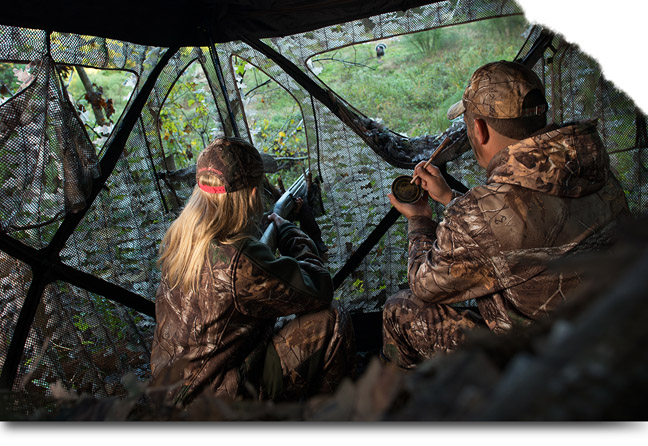
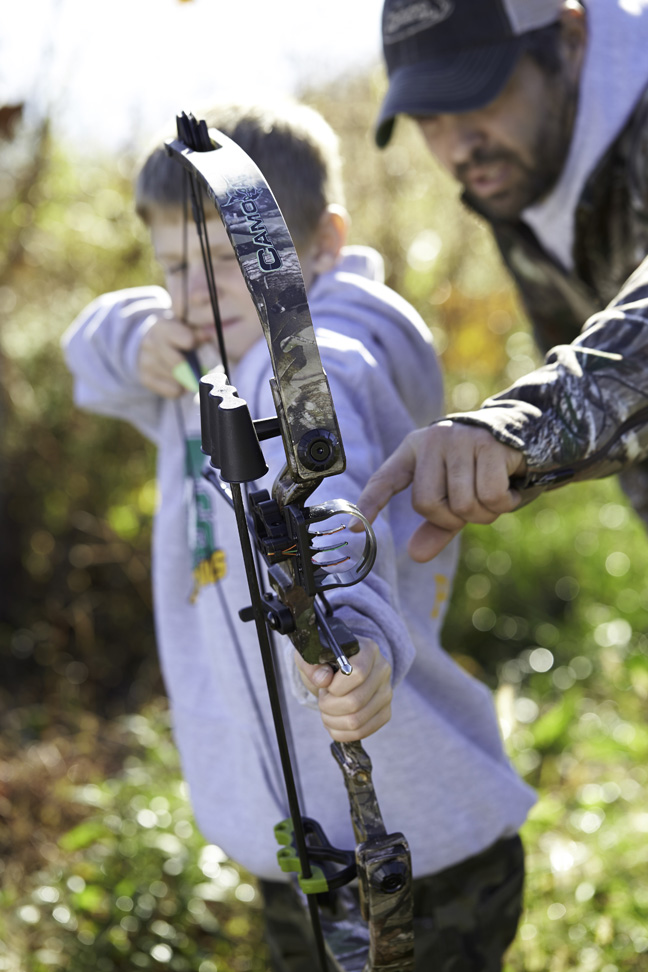
Many WMAs have youth/adult hunts, an excellent opportunity to take your kids to a dove shoot. Doves are the most popular game bird in the US and in Georgia. They offer fast action and younger hunters usually love dove shoots. A WMA hunt won’t be exactly like hunts of my youth where everyone on the field was a relative but with the youth/adult hunts everyone on the field will understand the importance of taking young people hunting. This is likely to make it a better experience for the younger hunters.

Take a kid dove hunting this year!

Why Should I Be Worried About Paddlesport Boating Safety?

Paddlesports Boating Safety

By Frank Sargeant, Editor
from The Fishing Wire

While the loss of two boys offshore of Pompano Beach recently made national news, a scene just as tragic quietly unfolded this past week on the backwaters of Lake Guntersville, an impoundment on the Tennessee River in northern Alabama.

There, a father, his 16 year old son and two teen-aged friends–none wearing life preservers–decided to fit themselves into a single canoe for an outing on the lake. A storm came up, the overloaded canoe overturned–and at this writing the son has been found drowned, the father’s body remains undiscovered. The two teens were able to reach shore.

The incident highlights the need for basic boating education among those who indulge in what is generally known as “paddlesports”, paddling and fishing in canoes, kayaks and other non-motorized watercraft. Paddlesport boating safety is critically important.

There’s a tendency among those new to these little boats to think that there’s very little danger associated with them, since they travel so slowly and can’t really get out of control on still waters like the TVA chain.

But in fact they are generally more dangerous, rather than less so, for inexperienced and incautious users than are larger, motorized boats.

Be safe when paddlesporting

Be safe when paddlesporting

Properly trained and equipped, kids can safely enjoy canoes and kayaks, as shown here. But without PFD’s and an understanding of the physics of these small boats, an outing can become risky. (Photo Credit Old Town Canoes)

Stability is the first factor. Most canoes and kayaks are very “tippy” due to their light weight and rounded bottom. Lean too far one way and the boat simply turns turtle, flipping you and all your gear into the water. Strong winds and big boat wakes can also flip them. There are now some new models of fishing kayaks made with much greater stability due to broader beam and sponson-like bottoms, but for the most part, the majority of paddle-powered boats are exceptionally easy to flip.

Taking youngsters in these boats can be particularly risky because they may not comprehend how shifting their weight can affect the buoyancy–a quick primer in the basics is a must before you leave the docks.

Also, unless you are young and athletic, getting back into one of these boats once they turn over is no easy matter. Even if you’re in condition, getting back into many of them takes some specialized know-how. For those who are overweight and/or out of shape, it’s virtually impossible.

Next, no one should ever step into one of these little boats without wearing a quality life jacket. Simply carrying it along, as you might on a pontoon boat or other large, stable watercraft, just won’t do. If the boat goes over and you don’t have the life jacket strapped on, you may not be able to put it on in the water, even if you swim well and don’t panic. For those who can’t swim, it should be a no-brainer never to set foot in one of these boats without a good PFD in place. A flotation cushion as a backup is also a must.

Also, the charm of paddle sports–that they’re slow, silent and pollution free–can also be part of the challenge. Traveling with wind and current, it’s easy to get a long way from land before you realize it–and reversing course to go back against the wind or current will be very difficult. In fact, for those not used to paddling, it can be impossible.

Also, the amount of time it takes to get to safety should a storm approach can be far longer than it would be in a powerboat–and for those with limited experience, getting caught in open water in a canoe or ‘yak almost always leads to trouble.

While still-water paddle sports have their challenges, these are multiplied in flowing streams, of which North Alabama is blessed with many. In general, those with minimal experience in handling canoes and kayaks should simply assume they are going to get wet if they start down a fast-flowing river; you might be lucky, but you might not, too, particularly if there are any rapids.

But rapids are not the only issue in these streams–in many cases, trees blow down across the flow, and boats swept up against these obstructions are nearly always rolled over.

And simply keeping the boat pointed down-river can be a challenge for the inexperienced anywhere the water flows faster than a walk. If it goes sideways to the current, a rollover is once more highly likely.

All these cautions aside, thousands of outdoors fans enjoy paddle sports all over Alabama every day in complete safety and without the slightest problems, but it’s wise to be aware that there are potential dangers in these seemingly innocuous watercraft for those who don’t come prepared.

What Is Fishing the Dog Days of Summer Like?

We are in the middle of the Dog Days of summer. It is so hot it is almost tempting to stay inside with air conditioning and not even go fishing. Any activity outside is miserable.

The Dog Days get their name from the Dog Star Sirius. At least that is the official version. To us in the south this time of year is called Dog Days because it is so hot outside that the dogs won’t come out from under the porch!

I grew up in a big wood house with a tin roof. We didn’t have air conditioning. We had to rely on fans and open windows to try to stay somewhat cool in the house. At night a fan would blow on the bed to let us sleep. I used to love to place a fan so it blew under the sheet, making a kind of tent with air moving across me.

That house was so old it sat on stacks of rocks supporting the big floor beams. When we tore down that house to build another in the early 1960s we found ax marks on those floor beams, showing they had been hand-hewn from big pine trees. The heart of pine beams had turned to lighter wood as they aged.

We found out why the dogs liked it so much under the house and porch. That was the coolest place around except in the water of the branch. My brother and I, and our friends, played under there for hours. At places the beams were several feet off the ground and we could almost walk under them.

Our playing under there ended when daddy caught my brother, three years younger than me, when he was about five years old. He had taken some paper feed sacks under the house and was in the process of building a campfire!

I loved the sound of rain on the tin roof of that house. During the day it meant the house cooled off and was more comfortable. When it rained at night the drumming of the raindrops cooled the house and lulled me to sleep.

One treat of summer was eating a cold watermelon on a hot day. We would put them in the big walk in egg cooler and they got nice and cold. In the side yard under a big pecan tree there was a wooden platform about eight feet square and a foot high. It was the perfect place to cut a watermelon and eat it.

Mama had a big butcher knife in the kitchen we used to cut the watermelon. It was so old and well-used the blade was concave from years of sharpening. I always wanted to use it to cut bites of watermelon from my slice, but was not allowed to handle it until I was about eight years old.

Even that was too young. One of the first times I was allowed to use it I cut all the red from my rind and enjoyed it. Then, for some reason, with the rind on the wood platform, I thought it would be a good idea to stab it with the knife.

When I stabbed straight down my right hand slick with watermelon juice slide down the handle and the blade. I can still remember looking at my palm as I opened it and seeing a gash that opened raw meat before the blood started gushing. My parents wrapped my hand and took me to the emergency room at the hospital eight miles away.

It took eight stitches to close the cut. I still have a faint scar running across my palm. Mom was standing beside me on my left side as the doctor worked on my right hand extended on a table. I wanted to watch the doctor but she turned my head away.

After a few minutes she asked me why I was staring at her eyes. Then she realized I was watching the doctor work on my hand in the reflection in her glasses.

We always went barefoot all summer long and our feet got tough, but not tough enough to stop a nail. There was an old barn near the house that was falling apart and we loved playing in it. But several times each summer we would step on a board with a nail in it and stab it into our feet.

Back then the cure was simple. Daddy would clean the nail hole, put a penny on it then a hunk of fatback on top of the penny and wrap it. The penny and bacon was supposed to pull the poison out. And I guess it worked, I never died, but I may have extra copper in my veins.

Most kids now are so protected and restricted by their parents I can’t imagine them getting injured as much as I did. But I survived, and even the memories of injuries are not so bad almost sixty years later.

Can I Catch Tuna On Spinning Tackle?

Spinning for Tuna
from The Fishing Wire

This yellowfin slammed a popper fished on stout spinning tackle

This yellowfin slammed a popper fished on stout spinning tackle


Does spinning tackle have a place offshore?

This yellowfin slammed a popper fished on stout spinning tackle by the Yamaha team around oil rigs off Louisiana.

If you like offshore fishing imagine this—three days running around the Gulf of Mexico in a triple Yamaha-powered 42-foot Invincible center console doing nothing but fishing for yellowfin and blackfin tuna with surface plugs. The excitement of watching tuna attack a popper right before your eyes, not once, but again and again and again, is enough to give any saltwater angler heart palpitations. The Yamaha team recently spent some time with Bill Butler, owner of Venice Marina, aboard his tournament-rigged boat. Using his vast knowledge of the Gulf, Bill really put our team on the fish.

Casting poppers and working them in an erratic fashion to get a finicky gamefish to bite requires the right kind of tackle. This kind of tackle should be capable of making long casts and fast retrieves. Obviously, it’s a job for spinning tackle, but can spinning tackle stand up to the power of tuna? Not only was it able to, the gear we fished put quite a hurting on the fish, which ran from 25-pound blackfins to 70-pound yellowfins.

Even big tuna can be landed on spinning tackle

Even big tuna can be landed on spinning tackle

Even big tuna like this one can be handled with 65-pound-test braid on heavy spinning gear.

Spinning tackle has come a long way on the big game scene in recent years. The introduction of ultra-expensive oversized spinning reels started with an elite fraternity of surf casters who needed big, strong reels with lots of line capacity and super-smooth drags – but it didn’t end there. After its introduction and rapid rise to popularity, vertical jigging became the next technique that got saltwater anglers interested in oversized spinning tackle. While casting is not a prerequisite when jigging, (most of which consists of positioning the boat over potential fish holding structure or schools of bait or gamefish and then dropping the jigs straight down) it does offer some strategic advantages. The key to successful vertical jigging is working the metals in a quick, erratic manner or with long lift and drop motions. Spinning tackle can pick up more line in a single turn of the handle than most high-speed conventional reels. Once this advantage was realized and it became obvious that the new generation reels could indeed hold up to the power of tuna, they started showing up on offshore grounds.

The revolution in heavy-duty spinning tackle didn’t stop with the surf crowd. All the major reel manufacturers stepped up to the plate with products that were bigger, stronger, held a ton of line and offered drags with enough stopping power to put the brakes on a small elephant. Today, manufacturers offer tuna-strong reels at more modest price points. When this phenomenon first began, only a few reels were available that could meet the rigorous demands of challenging pelagic brawlers, and they were very expensive, most in the $700 to $1,000 price range. Now there are models that can be purchased for under $300 and are capable of doing the job dependably.

Blackfin On Spinning Tackle

Blackfin On Spinning Tackle

Blackfins are another natural offshore target for spinning gear loaded with strong braid.

Rod manufacturers also went back to the drawing board and developed a variety of specialty saltwater sticks that could cover the gamut of big game fishing needs, from jigging to casting surface lures. These products provide the actions and backbone necessary to make them applicable to catching tuna. They incorporate blends of materials that make them as close to indestructible as possible, and there are a variety of lengths and actions that cover the gamut of techniques used offshore.

In the Gulf with Butler, we used longer rods designed for casting and working poppers for tuna. Those rods were 7-feet 10-inches in length, and could throw surface plugs up to four ounces a long way. When fishing around oil and gas production platforms, casting distance is important and the longer rods did the trick. When a tuna was hooked, even the larger yellowfins, the rods proved to be excellent fighting tools.

When a tuna is hooked on the surface, the early phase of the fight can incorporate long runs near the surface, and the longer rods worked fine with the 65-pound test braided line and drag settings in the 18- to 20-pound range. As a tuna tires, it will run deep and eventually begin to circle straight below the boat. This requires a lot of lifting power to work it back to the surface, something longer rods with softer actions do not do well. But these tuna popping rods, while soft in the tip for casting, offered plenty of backbone to lift the fish during the end game.

Spinning Gear Moves Lures Fast

Spinning Gear Moves Lures Fast

Here’s some great eating, courtesy of spinning gear and a fast-moving plug.

On a trip with Capt. Jim Freda of Shore Catch Charters in New Jersey (aboard his Yamaha-powered 28-foot Parker® Sport Cabin), team Yamaha had the opportunity to jig bluefin tuna. While some on board were fishing with conventional reels and jigging rods, Capt. Freda used a spinner with a jigging stick designed for tuna. He said he liked the way the spinning reel picked up line when he was dropping the flutter jigs to the bottom in a hundred-plus feet of water and then working them back up using a fast, erratic retrieve. He did a great job of making the jig dance, or at least the tuna thought so, because he hooked up frequently. He mentioned he has caught bluefin up to 100 pounds on spinning tackle, and has had clients beat fish considerably bigger on theirs.

Spinning tackle for offshore fishing has come of age, and it’s being used to catch fish that would have been considered unlikely at best just a few short years ago. It offers the offshore enthusiast another tackle option for challenging the ocean’s strongest pelagic species. Fishing for tuna with spinning tackle is both fun and productive. If you enjoy offshore fishing, give it a try this summer!

How Should I Fish the Shad Spawn?

Fishing the Shad Spawn

Its time for Georgia bass fishermen to go hunting – for the shad spawn. Spawning shad draw bass to the banks like a winning Bassmasters Classic lure draws anglers’ dollars, and you can enjoy some fast action in the mornings right now.
The end of last April one of my bass clubs had a tournament at Walter George. I camped at Lake Point State Park on Thursday and practiced Friday for the tournament. Early Friday morning as I idled under the bridge I saw the tell-tail flicker of shad on the rocks. I didn’t stop but filed it away for the tournament.
Saturday morning I was still taking up money from a late arrival when the tournament director let everyone else go. I was mad until I saw nobody stopped on the side of the riprap where I had seen the shad. I idled to it and quickly caught two good keepers on a spinnerbait. After fishing nine hours, running all over the lake, I had added one small spot to my livewell.
On the way to weigh-in I stopped at the bridge and caught another good keeper near where I had seen the shad. I told everyone I was going to stay put on Sunday, right there at the bridge. And I did, but saw no shad and caught no fish. Two of the guys in my club were fishing the other side of the riprap and I saw them catching bass and at about 10:00 they idled over and said they had eight keepers.
I left and tried another spot but soon headed back to the bridge. The club members had moved over to the side I had been fishing so I hit the other side. I stayed there for 30 minutes and landed a limit of bass slow rolling a spinnerbait on the rocks. The shad, and the bass, had moved to the other side of the riprap.
Starting in April schools of threadfin shad move to shoreline cover and lay their eggs. The eggs stick to hard surfaces until they hatch. They spawn so shallow you will often see them jumping out of the water onto the bank, and see them splashing along, looking like a small wave running down the bank.
The eggs need something hard to stick to so shad are attracted to riprap, seawalls, grassbeds and even dock floats and boats. The bass will follow them and run in to eat. Birds will also be eating them, swooping down or standing on the bank. Splashing and birds right on the bank are a good way to find the shad.
Shad spawn at first light and the activity is often over by the time the sun comes up, so you have to be on the water early. With only 30 minutes to fish on a sunny day and maybe and hour on cloudy days you must know where the shad are spawning so it is critical to get on the water early and locate them.
A spinnerbait is the best bait for the shad spawn since you need to cast it right on the bank. Crankbaits and rattle baits will work but are more likely to get hung. Choose a white one-quarter ounce double willow leaf spinnerbait with number three or four silver blades to match the small shad. Cast it as shallow as possible, even hitting the bank, and work it parallel to the bank. Be ready for a hit as soon as the bait touches the water.
You will often see shad following your bait, a very good sign you are in the right area. Make as many casts as possible before the shad move out. When they move deeper, slow roll your spinnerbait in the same area in deeper water since the bass will often stay under the shad.
Don’t miss the shad spawn; it is some of the best fishing of the year.

What Is Gila Trout Management?

Conservation Genetics Steers Gila Trout Management
Craig Springer
from The Fishing Wire

Gila Trout

Gila Trout

A trout that once stared at extinction offers wilderness angling opportunities

The trout stole its color from a southern New Mexico summer sunset. Gila trout sport a painter’s pallet of pink and olive, rose, yellow and copper and a few tones in between. Beneath the black pepper flakes that fleck its side lies a lexis—a language carried forward from another time. It’s an ancient language coded in molecules of proteins written by the press of time and experience in a land turned arid.

Gila trout, native only to headwater streams that vein over the Mogollon Rim of New Mexico and Arizona, have expressed in their genetic makeup a mapping of how to survive in the vestiges of what surely was a large and contiguous range. Their genetics equip them to face what nature may hurl at them in an already harsh environment.

It’s those innate characteristics coiled in the double-helix of DNA that U.S. Fish and Wildlife Service biologists strive to preserve in the fish. Conservation genetics is at its heart an investment in the future with an eye on the past. Dr. Wade Wilson with the Southwestern Native Aquatic Resources and Recovery Center in Dexter, New Mexico, knows Gila trout like few others can; he’s a geneticist and can de-code the language. It’s his charge in the conservation of Gila trout to help ensure that the diversity of genetic characters unique in this fish stay in the fish going forward.

Wilson works adjunct with another U.S. Fish and Wildlife Service facility in New Mexico, the Mora National Fish Hatchery near Las Vegas where captive stocks of the rare yellow trout are held. Hatchery biologists are fully immersed in Gila trout captive breeding, and it’s done smartly, carefully, through the consult of Wilson.

“We monitor genetic diversity in captive trout to ensure that what we have in the hatchery represents what we have in the wild,” said Wilson. That mixture is essential for the future. “The more genetic diversity that exists among the fish, the better chance those future generations of Gila trout can adapt to changing environments and stressors and diseases in wild populations,” Wilson adds.

“Here’s how we get it done,” explains an enthusiastic Nate Wiese, Mora’s manager and lead fisheries scientist. “Each fish gets a microchip injected just under the skin just like your vet can do for your dog. That chip gives each fish a personal ID, like a social security number. Knowing each fish at an individual level is a first step in securing the future of Gila trout.”

With every captive fish in the hatchery marked as such, biologists take non-lethal tissue samples from the fish, a tiny piece of fin. From there it’s up to Wilson and his staff using leading-edge technology to look deep at each fish—at the molecular level. Wilson will pinpoint individual fishes with the rarest of genetics in the captive populations and suggest what Wiese calls “pair-wise spawns.” It’s akin to arranged marriages but with the express scientific purpose to ensure that the rarest of genetic characters found by Wilson are carried forward in the next generation of fishes. Males and females that differ among various genes make the best partners.

The Gila trout was described by science a mere 65 years ago. Through much of that intervening time—50 years—it had been closed by law to angling as the fish stared at extinction. Its lot improved with conservation and was down-listed from “endangered” to “threatened” in 2006, and opened to fishing a year later. And so it remains, threatened and fishable, despite a welter of catastrophic wild fires—the sort that makes the evening network news broadcast for days on end.

“An integral part of the conservation strategy calls to replicate in the wild the distinct genetic lineages,” said Wiese. It’s a measure of conservation security to give a geographic spread between populations. “But what happens when a massive fire threatens to gobble up the original and replicate populations? The hatchery is the back up.”

Fire is hard on trout, particularly when a mountain stream turns into a slug of ash slurry at first rain post-fire. The Whitewater-Baldy Fire that decimated the Gila Wilderness in 2012 necessitated a trout rescue ahead of such circumstances. New Mexico Fish and Wildlife Conservation Office biologist Dustin Myers based in Albuquerque led such rescues involving pack horses and helicopters and hatchery trucks from streams sure to be slugged by ash. Now, Mora National Fish Hatchery is home to the only known population of the Spruce Creek lineage of Gila trout. Three other strains are held there, too: Main Diamond Creek, Whiskey Creek and South Diamond Creek lineages.

Aside from the robust genetics plans that steer captive breeding, Wiese manages the hatchery to produce Gila trout conditioned toward a wild environment. Instead of growing lazy trout as fat as toads, they are in a captive environment that mimics nature—like boulders, plants and fast-flowing water. “We get them off the couch and on a treadmill,” said Wiese. “They are going to be better suited for real streams. It’s like tough-love for your children.”

Those real streams are still healing from the 2012 fire and the Silver Fire that scorched headwaters atop the Black Range in 2013, and fish will return to them this autumn. Myers makes that call as to what streams are ready for trout. “Since the Whitewater-Baldy Fire we’ve replicated Whiskey Creek lineage in McKenna Creek and Upper White Creek,” said Myers. “Whiskey fish will also go into Sacaton Creek this year. But Whiskey Creek itself is still healing and we have to wait for habitat conditions to improve.”

It’s about the habitat—including ensuring that Gila trout waters remain free of mongrel or nonnative trouts that compromise the genetic integrity of pure lineages via interbreeding. Barriers, made on site, or natural waterfalls are a means of segregating fishes. Toward that end, Myers recently worked with the Forest Service to restore a vital barrier, a natural waterfall, by blasting out lodged boulders to ensure 21 miles of prime Gila trout habitat in the West Fork Gila remain free of unwanted fishes.

The lack of habitat has been a vexation in Gila trout conservation. But science married with the resolve of individuals who care about this beautiful bright trout is a way forward. A certain splendor in the spectra of inspiring pigments reflected by a wet Gila trout call to mind Emerson: “If eyes were made for seeing, then beauty is its own excuse for being.” But the beauty is richer than what strikes the eye; it’s that Gila trout sheltered in a hatchery and those facing the rigors of the wild still carry today the impress of the past.

Craig Springer works for the U.S. Fish and Wildlife Service in Albuquerque, New Mexico. Learn more at www.fws.gov/southwest

Editor’s Note:

The Southwest Region recently introduced Emphasis Areas as a way to focus our limited resources on geographic areas with the highest conservation need and potential for success, which also have opportunities for leveraging funding. The Mogollon Rim, home to Gila trout, is one of five geographic areas determined by the Regional leadership team to be an Emphasis Area.

is Lion and Elephant Trophy Hunting Wrong?

Lions and Ivory
from The Fishing Wire

In life, Cecil was a popular member of the lion population of Zimbabwea’s Hwange National Park. In his suspicious killing by a noted United States hunter, he’s become a lightning rod for controversy. The hunter faces possible poaching charges, although he has maintained his innocence, blaming the professional hunters who ok’d him to shoot the lion.

And two major hunting and wildlife groups, Safari Club International and the Dallas Safari Club, wasted no time weighing in yesterday on the controversy. DSC, the first to respond, called on the United States Fish and Wildlife Service to investigate the matter, especially into possible violations of American Wildlife Laws. It also supported the Safari Operators Association of Zimbabwe’s taking actions against its members who violate wildlife laws.

“DSC abhors poaching,” their statement reads (you can both statements in their entirety in today’s news section), commends the swift action of Zimbabewan authorities and supports the prosecution of convicted poachers to the fullest extent of the law.”

Safari Club International found itself in the uncomfortable position of both the hunter and professional being SCI members. But the organization didn’t hesitate to take decisive action in regards to both or to make it clear they supported strong actions when it comes to poaching.

“SCI has imposed immediate emergency membership suspensions of both the involved hunter and his guide/professional hunter,” their statement reads, “and they will remain in place pending the outcome of an investigation.”

“Safari Club International condemns unlawful and unethical hunting practices,” their statement continues, “SCI supports only legal hunting practices and those who comply with all applicable hunting rules and regulations, and SCI believes that those who intentionally take wildlife illegally should be prosecuted and punished to the maximum extent allowed by law.”

With that, two of the major groups representing hunters – especially trophy hunters- took what was an unquestioned stance against poaching-or the appearance of impropriety, since the full details into the death of Cecil aren’t known. And their decisive actions should help reinforce the idea that hunters aren’t some sub-species of human being, intent on wiping out wildlife across the globe in search of trophy animals.

Nothing could be further to the truth when it comes to the true biological facts of trophy animals- they’re generally beyond their prime when it comes to reproduction or contributions to their species’ survival- and in some cases, like last year’s hotly-protested black rhino hunts, the elderly bulls were actually detriments to the survival of their species. Hopefully, the strong statements and action on behalf of SCI, will help open some eyes to the facts, not the emotion of the matter of hunting.

In another matter, however, it’s the action that confirms the intent. The intent of the administration is to kill the ivory trade in the United States- all of it. After delaying a proposed regulation for a year, the U.S. Fish and Wildlife Service has published their proposal for ivory in the Federal Register.

It is, in the words of Knife Rights chairman Doug Ritter, “as bad as expected.” The rule would hit legal owners of ivory- meaning knife owners, knifemakers, scrimshaw artists, and suppliers -hard making a few very narrow exceptions into what is otherwise a total ban on ivory trade -legal or otherwise.

According to the Knife Rights release (again, you can read it in today’s News Section) the ban is based on three premises- all false:

1) Elephant poaching is increasing…when CITES says poaching numbers have been falling since 2011 due to increased enforcement of anti-poaching laws.

2) Large amounts of illegal ivory are being imported into the US, driving the poaching increases…both CITES and U.S. data show that illicit ivory imports into the U.S. are insignificant- both name the Chinese as the demand fueling poaching

3) By banning American ivory trade, the Chinese consumer will abandon his cultural affinity for ivory…when the Chinese demand for illicit ivory is completely independent of the U.S. trade -or demand. The ban seeks to stop trade in decades-old, legally owned, domestic ivory.

As Knife Rights points out, USFWS Director Dan Ashe has stated the goal of the regulation is to implement a near complete ban on the domestic commercial trade of ivory. The federal government lacks the authority to stop trade in states, it seeks to stop any trade across state lines.

As Ritter explained, “there is no evidence this ban would save a single elephant in Africa, but it will take millions of dollars in value from honest Americans.”

So what can we do? Contact our Congressional delegations and tell them they should co-sponsor the African Elephant Conservation and Legal Ivory Possession Act of 2015 to protect honest U.S. ivory owners while providing additional conservation and anti-poaching efforts in Africa.

Is Big Game Trophy Hunting Wrong?

A few years ago a friend of mine from Wisconsin, Steve Huber, came for a visit in January. Steve was doing a TV show and we went to Clarks Hill to film a striper fishing show and to South Georgia to film a hog hunt. Both trips were a lot of fun.

Steve told me about going to Africa on Safari to kill some of the animals there and also about a caribou hunt in Canada. He said he was setting up some more trips and asked if I would be interested in going with him as an assistant, and have the opportunity to shoot some of the animals I had only read about.

Other than the fact I hate flying and would have to get on an airplane, I really had no desire to shoot big game like that. I have no desire to kill a lion, for example. Hunting around here for whitetail deer does not require flying, and I love venison. But I would rather be fishing than hunting.

There is a huge uproar about a dentists killing a well-known lion on Safari in Africa. There are all kinds of silly claims on the internet and news about this incident and the usual flaky anti-hunters are using it to push their agenda. Some of the things they say don’t make sense, and some are outright lies.

Although I have no desire to go on a Safari, I would never condemn those that do. I am a bass fishing fanatic and I am sure their desire and enjoyment of hunting is similar to my enjoyment of fishing. Just because I don’t want to do something is no reason for me to condemn those that do.

In Africa, game management is dependent on trophy hunting. The dentist paid $50,000 just for the license to hunt a lion and that money is supposed to go to the country he was in for management of game. He also spend many thousands more when he got there, helping the local economy.

Some folks seem to think this lion he killed was a pet. It was in a sanctuary where hunting is not allowed, but as best I can tell the lion was killed over a mile outside its borders. Some claim the lion was lured outside the sanctuary by baiting so it could be shot. As best I can tell baiting is legal in that country.

Some reports I have seen say the lion was old and not in great health. In lion prides, when the dominate male gets old he is killed by a younger, stronger lion that takes his place. That is nature. Nature is what we consider cruel, but animals don’t have emotions, that is just the way wild animals live and die.

I find it really strange that so many folks and mainstream media get their knickers in a knot about something like this but the murder of five of our military don’t seem to faze them. They go crazy about killing a lion but ignore videos showing folks cutting up babies for their parts.

For all the people condemning the dentists, put your money where your mouth and prejudices are. How much have you donated for wildlife management in Africa? How much are you willing to spend, of your own money not everyone else’s tax money, to support wildlife in Africa? Or anywhere else.

Game animals are better protected if they have a value. If locals can make money off hunters, they will protect the animals. Otherwise why would you want wild lions living near you? Lions will kill and eat people, so throughout history in Africa lions have been killed to protect the folks sharing the same habitat.

In the same vein there is a thing going around on Facebook showing a guy with a big camera taking pictures while some kind of wild feline cuddles with him. The caption says “This is how real men hunt.” Other than the fact pictures don’t taste too good no matter how you cook them, it is silly.

Hunt with a camera if you want. Cuddle with wild animals if you want. But don’t be surprised when, like the silly woman trying to take a selfie in Yellowstone Park with a bison, you get gored. And don’t whine when, like the idiot trying to take a selfie with a rattlesnake, you get bit and it costs you $150,000 in hospital bills.

Some of the pictures do reflect real life and death in nature. Like the one showing a crocodile pulling a water buffalo calf into the water for lunch. And the one showing a pride of lions attacking a baby elephant. Nature is not cruel, it is just the way it works.

I will continue to kill deer and eat them.

Why Does Fishing Need To Be Preserved Biscayne National Park?

Legislation Introduced to Preserve Fishing Access in Biscayne National Park

Editor’s Note: Today, news on legislation designed to preserve fishing access to major portions of Biscayne National Park from the American Sportfishing Association (ASA).
from The Fishing Wire

Washington – On the heels of the recent announcement to close over 10,000 acres of Biscayne National Park to fishing, a coalition of recreational fishing and boating organizations praised the introduction of a bipartisan bill, H.R. 3310, that will help stop this and similar unwarranted fishing closures from occurring. Led by Reps. Ileana Ros-Lehtinen (R-Fla.), Mario Diaz-Balart (R-Fla.), Carlos Curbelo (R-Fla.), and 28 other original sponsors, the “Preserving Public Access to Public Waters Act” requires the National Park Service and Office of National Marine Sanctuaries to have approval from state fish and wildlife agencies before closing state waters to recreational or commercial fishing.

“Probably the most concerning aspect of the Biscayne National Park marine reserve decision is the total disregard for the fisheries management expertise of the Florida Fish and Wildlife Conservation Commission,” said Mike Leonard, Ocean Resource Policy director for the American Sportfishing Association. “The states are responsible for nearly all of our nation’s saltwater fisheries management successes. This legislative safeguard will prevent the federal government from ignoring the fisheries management expertise of the states in these types of situations.”

Throughout the development of the General Management Plan for Biscayne National Park, through which the marine reserve is being implemented, the Florida Fish and Wildlife Conservation Commission has provided detailed recommendations to improve the condition of the fisheries resources in the park. The Commission has continually expressed its position that the proposed marine reserve is overly restrictive to the public; will not be biologically effective; and that less restrictive management tools can rebuild the park’s fisheries resources and conserve habitat.

The recreational fishing and boating community has echoed these concerns, but nevertheless the National Park Service ultimately elected to close nearly 40 percent of the park’s reef tract to fishing.

“The Congressional leaders who are sponsoring this bill are to be commended for this common sense approach to protect saltwater anglers from unwarranted access restrictions,” said Chris Horton, Fisheries Program director for the Congressional Sportsmen’s Foundation. “The Biscayne National Park marine reserve is part of a concerning trend of closing marine areas without scientific basis or an understanding of the critical role anglers play in the economy and in funding conservation.”

“Marine reserves are a tool in the fisheries management toolbox, but too often we see them promoted with questionable-at-best motivations,” said Jeff Miller, chairman of Coastal Conservation Association Florida’s Government Relations Committee. “This bill will ensure that Florida has a say in important fisheries management decisions in Biscayne National Park, including marine reserves, and that similar issues don’t arise in other parts of the state and country.”

On Monday, August 3, the House Committee on Natural Resources and the House Committee on Small Business will hold a joint hearing to explore the potential implications of lost access due to the Biscayne marine reserve. The hearing will begin at 10am EST and is being held at the William F. Dickinson Community Center in Homestead, Florida.

Should You Fish for Bedding Bass?

Fishing For Bedding Bass

Georgia has some of the best bass fishing in the United States. We hold the world record largemouth and you can catch seven of the eight kinds of black bass here. There are many public lakes and rivers where you can go and catch bass all year long.

Each year Georgia bass clubs send in a Creel Census Report that documents club tournaments. Carl Quertermus at the University of West Georgia has been keeping these records since 1978 and they show an amazing consistency in bass catches. There might be a cycle on some lakes over a few years but overall the averages change very little.

Our bass regulations are very liberal with a 12 inch size limit on most waters and a creel limit of ten bass per person most places. Yet our bass fishing holds up year after year. But some bass fishermen call for changes in regulations even though state fisheries biologists study the lakes on a daily basis and recommend regulations based on scientific research.

One of the most controversial things bass fishermen do, and it is happening right now, is catching bass off the beds. Tournament fishermen target big spawning females and some have perfected tactics to catch them. This is the time of year those big females are easiest to catch.

Is catching bass off the bed a problem? At first glance it seems taking a big female off the bed before she can spawn or catching a male guarding bass fry soon after the spawn would cause problems. And it might mean the loss of that bed and those fry that year. But what are the long term effects of bed fishing?

First you must understand nature and reproduction of wild fish. To have a successful life and keep bass populations stable a female bass has to produce only two offspring her whole life. She must produce a young bass to replace her and one to replace the male. Not each year, but only one time in her life.

Even without catching bass off the bed almost no eggs will survive and produce a bass that will live more than one year if the population is stable. Nature does not work that way. If many survived they would overpopulate and starve. So even if you take a female off the bed and she does not produce any young after being caught, she may have produced offspring in years past. And there are always many other bedding females that can take up the slack.

What about the genetics. Many fishermen say it is bad to take a trophy bass off the bed and remove her from the gene pool. Although you may stop her from spawning in the future, her genes, if good, are already in the gene pool from successful spawns in past years. A ten pound bass has spawned many times over her life so her genes should be widespread.

Since almost all bass caught in tournaments are released alive after weigh-in many of the females will complete the spawn even after being caught. It depends on where they are in their egg laying cycle when they are caught. And the male will eat his own offspring after guarding them. It seems at some point his parent feelings run out and he starts feeding on his own fry. So if you catch him just before he starts eating his young more of them survive.

Sight fishing for bedding bass is what is usually condemned, but the same people blasting sight fishermen will often happily drag a Carolina rigged lizard through spawning flats to catch bass. They, too, are catching bass off the beds, they just don’t see them first.

If you don’t like bed fishing for bass, don’t do it. But be aware it has not had any impact on our public waters in all the years we have been tracking bass populations.