Category Archives: Bass Fishing

Bass Fishing Information

Fishing A Winter Tournament At Lake Jackson

At Jackson last winter fishing was as tough as expected in the Spalding County Sportsman Club January tournament. Many members let the weather guessers scare them off with the terrible weather they told us to expect but which never arrived. Only nine of us braved the chance of bad weather to fish for eight hours and land a total of seven bass weighing just under 17 pounds. Five of the nine didn’t land a keeper all day.

Niles Murray wore us all out and caught more than the rest of us put together. His four keepers weighing 9.93 pounds ran away with first place. I got one bite but it was a good one and my keeper largemouth weighing 4.09 pounds was good for second place and big fish. Third went to Billy Roberts with a keeper weighing 1.42 pounds and Brent Terry was fourth with one spotted bass weighing .98 pounds.

Niles said he caught his bass on a crankbait and most were on rocky banks and points. My one keeper hit a jig and pig on a rocky point. Brent said his fish hit a crankbait, too.

Although it did rain some, I kept my rain suit hood down most of the day. And it was much warmer than expected. I dressed for very cold weather but had to keep my heavy rain suit bibs and jacket unzipped and open most of the day. And, although thunderstorms were predicted, we never heard any thunder all day.

I started fishing my favorite area of the lake with crankbaits but did not get a hit the first hour. Out on the main lake the water was 48 degrees and very muddy, with a chartreuse crankbait disappearing about 3 inches under the water. After the first hour I went into Tussahaw Creek,and the further up it I went the clearer the water got but the colder it got, too.

Clearer did not mean much clearer! At the best I could see a crankbait down about six inches. And the water was only 45 degrees. I went all the way to the Highway 36 Bridge and thought I had one hit up there but was never sure.

I used all my skill to catch the one I got. I was throwing a crankbait around the bridge in Tussahaw and decided to crank up and run up to some docks further up the creek. But it started raining hard so I just kept fishing up the bank and caught the bass in a place I had never fished before, and would not have fished if the rain had not started.

I cast a black and blue jig and pig up on a rocky point and worked it slowly down the slope under the water. Somewhere around 12 to 15 feet deep my bait felt mushy and I set the hook on a heavy fish. I almost had a heart attack when it came to the surface and I saw how big it was. It did not fight very hard in the ice water, which was good since I was fishing by myself and had to net it while fighting it.

How To Catch Deep South Bass After A Cold Front

How Deep-South Bass Deal With Fall Cold Fronts

(And How To Still Catch Them)

By William Redmond
from The Fishing Wire

Technically, it’s not “cold” just yet, but Mother Nature likes to fiddle with fishermen on the front and backside of winter with minor fronts that rattle the bass fishing cage just enough to push anglers outside their comfort zone. Adjustments may range from minor tweaks to major overhauls, and experienced fishermen keep all options open.

We asked a couple of top-shelf southern bass pros, Terry Scroggins and Zell Rowland, for their insight into making the right moves for fall’s post-front days. Scroggins knows Florida bass fishing as well as anyone in the country, and Zell’s been a South-Texas legend for many years. Each contributes advice on catching cold-front bass in their home states.

FLORIDA FUNK

Fish thick cover after a cold front

Fish thick cover after a cold front

Elite Pro Terry Scroggins likes flippin’ with a heavy weight in thick cover after the first cold front of fall.

Scroggins said specific movements depend on the body of water. In rivers like the St. Johns, he looks for fish to stack around shell bars. You’ll keep the rods bent in this scenario, but he says that it’s definitely quantity over quality.

“A lot of times in the fall they’ll gang up on shell bars,” he said. “Typically, they’re not very big but you can still catch the numbers. That’s typically a fallback pattern that you can go to if you need it.

“Most of that is current-related (activity). The bait gets schooled up and the fish just sit there on ambush points, current breaks and things like that and wait for something to wash over them.”

When post-frontal bass hug tight to the shell bars, it’s hard to beat a Carolina rig. Just consider the scene: A pack of fish are holding on the structure’s down-current side with high hopes of nabbing an easy meal, when all of a sudden this noisy little egg-shaped deal comes clickity-clacking across that mound of bivalves. The intruder doesn’t look edible, but hold on just a second. What’s this tasty little morsel strolling along back there all by its lonesome?

No doubt, waking up the gang with a tungsten weight positioned 3- or 4-feet in front of a Yum Mighty Worm in Junebug or Red Bug is an easy sell. That being said, Scroggins knows that if the bite slows on the shell bar, he often can trigger a few more fish by changing the way he retrieves the rig.

Fish offshore after a cold front

Fish offshore after a cold front

Scroggins also finds fish on offshore shell bars, where a Carolina rig is hard to beat.

By switching from the standard Carolina rig lateral sweep to more of a sharp upstroke action, Scroggins maximizes the noise potential of his Carolina rig. The usual retrieve is certainly no stealthy approach – the weight rattles and rumbles in steady cadence — but when the weight jumps several inches off the bottom and belly flops back into the shell bed below, the resulting “crack” is a sure enough attention-getter.

At grassy Florida lakes like Okeechobee, there are more opportunities to target big bass as the season’s initial cold snaps trigger the fish to head for the safety of thick vegetation. The thicker the better, Scroggins said of this straight-up flip-fest.

“Anytime I encounter these conditions — which I like — I find the heaviest, densest cover and start flippin’,” he said. “Most of the time, the fish will be in 3 to 5 feet of water.”

In the weed mats, Scroggins keeps it simple – just a Texas-rigged Yum Wooly Bug, a stout 5/0 flipping hook and enough weight to drive the whole deal through the salad. Typical range is 1 ¼- to 1 ½-ounce, but Scroggins said he rarely pegs his weight when flipping and punching Florida lakes. He says that the thick layer of detritus (decaying organic matter) can stand several inches off the bottom and when a bait makes it through cover without drawing a bite, a pegged rig will take the bait beneath the muck where bass can’t see it. An unpegged weight will continue to the bottom, but the bait will stay on top of the gunk.

LONE STAR LOW DOWN

In weedy Texas Lakes like Sam Rayburn and Toledo Bend, Zell Rowland expects early cold fronts to push bass up from their summer haunts to the shallow hydrilla beds. In Texas lakes featuring little or no grass (example: Conroe), the fronts usher bass up to shallow drops. These post-frontal zones are easy to spot with polarized glasses, as the light sandy bottom distinctly darkens with the falling depth.

You can catch fish after a cold front on topwater

You can catch fish after a cold front on topwater

Zell Rowland turns on Texas bass after a front with his namesake Zell Pop, among other lures

“Anytime that water temp starts to drop 6- to 10-degrees, those bass go crazy,” Rowland said. “It moves them up shallow. It almost gets them into a feeding frenzy like they do in the spring after they spawn.”

In grass-free lakes, Rowland finds that swimming a Texas-rigged Yum Money Minnow along those drop-off edges delivers plenty of action. Around grass, he favors a splashy surface display with his namesake XCalibur Zell Pop, a Rebel Pop-R or even a Zara Spook. If he thinks the fish require a really boisterous display, he’ll pull the old reliable Smithwick Devil’s Horse and get to sputtering.

For optimal grass-friendly presentations, Rowland also keeps a Booyah Pad Crasher frog handy – in walking and popping styles. And when the fish are really being stubborn, he’ll dress up his amphibian with No. 1 willow blades – one on each side of the double hook, attached with a swivel and split ring.

“This gives the bait flash and vibration, while those blades are also hitting each other and creating noise,” Rowland said.

Whatever he throws, Rowland said he reminds himself that these post-frontal fish may still feed, but they’re not nearly as rambunctious as they were before the chill. Therefore, casting accuracy is paramount.

“It’s really critical where you throw the bait – it has to be on the edge (of the grass or a drop-off),” Rowland said. “Your casts have to be pretty precise and then you have to experiment to see what speed they want the bait moving.”

How To Fish Muddy Water

Rain, rain go away. A year ago, who would have thought we would have such an excess of rain and be ready for it to stop. Lakes that are overflowing again were very low a year ago and there were dire predictions Lanier and others would never fill again. So much for such doomsayers.

My ponds are both overflowing and are muddy, as are most area ponds and lakes. Friday morning they could have filmed “A River Runs Through It” in my back yard, and I live near the top of a hill. My wife says she keeps expecting to look out the window and see water buffalo working there, getting it ready to plant rice.

Fish are amazingly adaptive. They can survive in very clear water when the lakes are low and in very muddy water when the lakes are high. I always wonder how bass find food when the water is so muddy a chartreuse crankbait disappears as soon as it goes under, but then I remember they can find a black plastic worm on the bottom on a pitch black night.

For a while the bluegill in my pond just quit feeding and I thought the muddy water had something to do with it, but Thursday and Friday they fed real good. I caught at least 15 bream each of those days in just a few minutes. A catfish even took my bait on Thursday, and I always think of them as warm weather feeders.

I asked on a bass fishing internet forum how people there respond to muddy, cold water and got several responses. The one I try to remember most came from a well known outdoor writer and bass tournament fisherman that lives in the Northeast. He said he is sure the muddy, cold water affects the fisherman’s attitude more than it affects the fish.

He says he has caught bass on smoke colored grubs in extremely muddy water. Those baits are usually best in very clear water. Bu the did say his go-to bait was a big heavy black jig and pig that he drug along the bottom, moving it very slowly. That bait has caught a lot of big bass for him.

The Flint River Bass Club is at Lake Sinclair today and I guess I will have a big black jig and pig tied on. But I will also try my lighter black and blue jig and pig as well as chartreuse crankbaits. I also plan on trying a slider rig – a 1/16 ounce jig head with a four inch curly tail worm on it. There is a big tournament going on while we are fishing so the bass will be under a lot of pressure, so I will try to “finesse” one or two.

Sinclair is a popular lake this time of year since the warm water discharge from the power plant there warms some of the lake a few degrees. The warmer water attracts baitfish and bass follow, and are slightly more active than in colder water. I will be watching my temperature gauge and trying to stay in the warmest water I can find.

Fishing Spinnerbaits

Spin Up Some Fall Bass Fast in Northern Lakes

Spinnerbait secrets for late-season success

By Dan Johnson
from The Fishing Wire

Use a big spinnerbait

Use a big spinnerbait

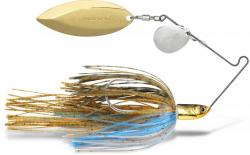
Beefy spinnerbaits like Terminator’s T-1 Original are great options for tackling deep fall bass other anglers miss.

Duck hunters’ jonboats may outnumber bass boats on many lakes in mid to late fall, but that doesn’t mean there isn’t fine fishing to be found. Both largemouths and smallmouths offer great opportunities for bass fans faithful enough to pursue their favorite fish deep into autumn.

One of the most effective and easiest to fish patterns hinges on the simple but deadly spinnerbait. Just ask bassin’ ace Scott Bonnema, who slings blades for burly bass virtually until first ice ushers in the hard-water season. “From the time water temperatures hit the low to upper 50-degree range, right through ice-up, is some of the best fishing of the year on North-country lakes,” he says.

While shoreline reed beds, docks and other skinny water cover and structure may be tempting targets, the action actually heats up farther from the bank, in depths of 12 to 14 feet or more, depending on the lake. “As shallow weed growth dies off, bass slide out into deeper vegetation that’s still green and healthy, such as clumps of coontail and cabbage,” he explains.

Structurally speaking, one of his favorite finds is a weed-crowned underwater hump, although points, inside turns and other irregularities have potential as well. Access to deeper water is a plus, but bass have no problem wintering on flats in the 20-foot range, so don’t limit your search to areas adjacent to extreme depths.

To find fish fast, Bonnema idles his boat over likely lies, keenly eyeing the split-screen display on his Humminbird 1198c electronics. As GPS mapping guides him along key contours and across prime flats, sonar returns-both in traditional and picture-like Down Imaging mode-highlight promising weed patches and fish lurking in or near the greenery.

Big fish like spinnerbaits

Big fish like spinnerbaits

Make long casts and allow the bait to settle on bottom before beginning your retrieve.

On the presentational front, he favors hefty spinnerbaits in the ¾- to 1½-ounce class for their ability to cover deep water in search of fish, as well as trigger strikes. One of his favorite designs is Terminator’s T-1 Original Titanium Spinnerbait. It stands up to abuse from bass and bonus northern pike, and has beveled blades and an easy-to-swap, QuickChange silicone skirt.

“Experiment with skirt color, along with blade finish and style, to find what the fish prefer,” he says. “I typically start with a white skirt and chrome, double willow-leaf blades for largemouths. Smallmouths love chartreuse, so adding a touch of that to the pattern can make a big difference.”

Colors that mimic baitfish are also hot. “For the most part, bass are feeding on young of the year sunfish-we call them bass potato chips-as well as various minnows and juvenile yellow perch,” he adds. “So darker colors, along with golds and blues, have their place, too.”

A variety of middleweight spinning and casting tackle works for this tactic. Bonnema prefers a medium to medium-heavy, 7-foot Lew’s Tournament Speed Stick, which offers ample length for long casts, and plenty of backbone for solid hooksets. A tractor-geared casting reel like the 5.1:1 model in Lew’s BB1 Pro Speed Spool lineup is a plus for pulling big baits slowly along bottom. He typically spools up with 14-pound Sufix Castable Invisiline fluorocarbon, but bumps up to 17-pound test in dirty water.

After firing out a cast, Bonnema lets the spinnerbait settle. “One of the most common mistakes I see people make this time of year is to throw way out there and instantly start to reel it in,” he says. “It’s important to let it hit bottom.” When the bait lands, he tightens the line and gives it a sharp snap to start the blades spinning.

The ensuing retrieve is unhurried and relatively inanimate. “It’s natural to want to fish fast and cover water, but you need to keep the bait moving slow and steady over the weed clumps-not making the bass chase it too hard,” he says. “When you tick grass, snap the spinnerbait out and let it flutter back down.”

Slowly ticking a spinnerbait across deep weed clumps is key to consistent catches once bass abandon shoreline cover.

Getting the first strike is often key to a flurry of action. “Bass are a little more lethargic right now, but once you trigger one, the rest of the group gets excited and you can usually catch a few more from the same area,” he says. “In fact, anytime you catch a fish, mark the spot with a waypoint or marker buoy, or make a good mental note of the location, and target it with multiple casts.”

Bonnema believes time of day is also a factor in the pattern. “The morning bite is good, but you don’t need to be out at first light like earlier in the season,” he says. “As the day warms, the fish move higher in the weeds, and you can be a little more aggressive with your presentation.”

One word of caution is in order for northern anglers, however. When fall turnover occurs, it can shut down the fishing in a hurry. “It’s like flipping a switch,” says Bonnema. “You know right away what happened. Weeds and bottom debris are floating everywhere, the water looks dingy, and the bass aren’t biting.”

When turnover strikes, he suggests switching to a lake that’s not undergoing this annual process, or waiting at least a week to fish the affected lake again.

In the end, the deep game can be intimidating to anglers accustomed to flipping and pitching close to shore, but it’s a simple and stellar tactic for tapping the fine fall fishing overlooked by all but a few die-hard bass fans.

Is Spring Bass Fishing Good On Jackson Lake In Georgia?

Spring Bassin’ On Jackson

Jackson Lake is like some of us older fishermen that visit it often. It has gone through many changes over its life and the cycles of its bass population reflect the good and bad fishing trips all of us have experienced. Right now the lake seems to have settled down into a steady fishery, not as hot and gung-ho as in the past but reliable and more even-tempered.

Living in Griffin, Jackson is the closest lake to me. I joined the Spalding County Sportsman Club in 1974 and the Flint River Bass Club in 1978 and both clubs fish Jackson several times each year. Our tournaments have seen the changes over the years and we have fished all the cycles it has been through.

I caught my first two 8 pound bass at Jackson, the first in a January club tournament in 1978 and the second in a January club tournament in 1983. My biggest bass ever, a 9-7, came in a February club tournament there in 1991. In a 1979 December tournament at Jackson Larry Stubbs netted a big fish for me early that morning and I netted one for him after lunch. Mine weighed 7-14 and his weighed 7-7.

A December tournament in 1987 showed what Jackson could produce. Early that morning I landed a bass that I knew was over 7 pounds. After lunch I netted a bigger one for my partner Roy Davis. At weigh-in my bass weighed 7-4. Tony Evans had one weighing 7-8. Larry Stubbs had one weighing 9-1. And the one I netted for Roy weighed 9-2!

Those kinds of catches were not unusual back then. Unfortunately, those days are gone. I have not landed a bass over 7 pounds at Jackson since 1991 and we have not had a 7 pounder weighed in there in many years.

In a club tournament in the early 1990s I saw the future. We had a spotted bass weighed in, the first one any of us in the club had seen from that lake. According to the Georgia Bass Chapter Federation Creek Census Report, in 1994 99.52 percent of the bass weighed in during club tournaments at Jackson were largemouth. By 2004 almost 45 percent of the bass weighed in were spots.

There may be a relationship between the decline in big largemouth and the increase in the numbers of spots. In simple terms, an acre of lake water can support a set number of pounds of bass, say 100 pounds. Since spots are more aggressive than largemouth but don’t grow as large, you might swap 20 largemouth from 2 to 10 pounds for 50 spots from 1 to 3 pounds in that acre of water.

There are still big largemouth at Jackson. Each year there are a few 8 pound plus fish caught in tournaments. Unfortunately, they make the news now because they are the exception rather than the rule. State fisheries biologists still shock up 10 pound fish at Jackson, but they are very hard to catch.

So what does all this mean for your spring fishing trip to Jackson? It means you are less likely to catch a big largemouth but should be able to catch a bunch of spots. You can still target largemouth and they will win most tournaments, but you can catch more bass if you go after the spots. The patterns and places you will catch them differ a little.

Spots tend to live a little deeper than largemouth and like rocks. They even bed in deeper water than largemouth and tend to bed on rocky places rather than the very backs of coves. They don’t move as far from prespawn to spawn and back to post spawn, and they are not affected as much by cold fronts.

Smaller baits usually work better for spotted bass. Start in early April working small crankbaits and jigs and pigs around rocky points at the mouths of creeks and coves. Spots are more aggressive so you can move faster, covering more water to find the fish if you are after spotted bass.

When spots start to spawn in the middle to late part of the month, look for them on secondary rocky or gravel points and banks near the mouth of the cove. You probably won’t be able to spot them on the bed since they will be deeper, but a jig and pig or Carolina rigged lizard dragged across spawning areas should make them hit.

After the spawn the spots will hold on rocky points and feed. Crankbaits, spinnerbaits and a jig and pig will all catch them. Fish the baits fairly fast and jump from point to point. Wind blowing in on the point will make it even better. Spots seem to like bright colors, so chartreuse plugs and spinnerbaits are good.

Topwater baits are also good late in April and in May. Work a buzzbait or Pop-R around points on the main lake and in the coves and creeks for spots. Largemouth like those baits, too. You can fish into the coves, concentrating on wood cover for them. Work a Pop-R slowly over a brush pile or around a log for largemouth.

Early in April largemouth should be moving back into the pockets to get ready to spawn. Fish a spinnerbait around any wood cover from the mouths of the pockets to half way back, and follow the bass as they move further back later in the month. Also try a Trick worm fished slowly around wood cover and docks.

During the spawn look for beds way back in the pockets. You may find a big female on the bed and you can get her to bite a tube or lizard dropped into the bed. Sight fishing for a big bass is one of the most exciting and nerve wracking ways to fish.

A topwater plug fished slowly over the bed will work, too. Randy Crosby grew up in Griffin and fished Jackson a lot in the 1980s and early 1990s. He landed six bass from 10-14 to 11-14 from Jackson and four of them came in the spring. One of his favorite tactics was to fish a Bang-O-Lure slowly around wood cover all the way back in the pockets.

Post spawn female largemouth tend to be sluggish and not move much for a week or so. One of the best ways to get them to bite is to cast a Carolina rigged lizard or Trick worm to gravel secondary points and let is sit there. Deadstick it, not moving it for several minutes at a time, is often the only way to get them to hit. Keep your line tight enough to see it move when one hits and set the hook hard.

As the post spawn fish get more active they will move toward the deeper water and you can catch them by fishing topwater baits and spinnerbaits around wood cover. Also try Texas rigged plastics around docks, brush piles and logs. Follow ditches and channels probing for cover along them to find the migrating bass.

In late spring, look for brush piles in deeper water for largemouth. Fish big crankbaits like a Norman’s DD22N, Mann’s 20+ or a Fat Free Shad that will run down and tick the top limbs of the brush. Use shad colors. If the plug does not draw a strike, try a jig and pig or a big Texas rigged worm like an Ole Monster.

Spots should be deep on rocky points and humps. The same deep running plugs will attract them as will Trick worms and Finesse worms on Carolina rigs. Fan cast rocky points with both types of baits covering water from 10 to 25 feet deep.

All spring, after a cold front your best bet will be spotted bass. Stick with main lake rocky points that drop fast into deep water and fish a jig and pig or Carolina rigged Finesse worm on them. Slow down some, but keep it moving. Concentrate on any points with wind blowing into them.

Although my clubs have not produced any 7 pound bass for a long time, we did have two over six pounds and three more over five pounds each weighed in last year. Even during the good years Jackson was very cyclical. For two or three years even smaller bass would be hard to catch, then for a couple of years bigger and bigger bass would appear. Then it would crash and you would wonder how you ever caught a bass over two pounds at Jackson for a couple of years. The lake seems to be improving right now so give it a try.

Take your pick of largemouth or spots and you should have a good trip. Of if you are fishing a tournament, go for a quick limit of spots then look for a kicker largemouth. No matter what you target, Jackson will produce some good catches for you this spring.

Booyah Baits Help Jordan Lee Make the Classic

Jordan Lee makes the Classic

Jordan Lee makes the Classic

Jordan Lee Fishes BOOYAH To Championship, Classic
from The Fishing Wire

Q: What’s in the water at Auburn University?
A: Bass

Auburn student Jordan Lee is on his way to the Bassmaster Classic thanks to a win in the College Championship.

For two years in a row, final round of the Carhartt College Series Bassmaster Classic tournament came down to two Auburn University anglers battling for the opportunity to fish the Bassmaster Classic. One of them, Jordan Lee, was in that same position last year, then fishing against his brother, Matt. Matt edged him out and qualified to fish the 2013 Classic on Oklahoma’s Grand Lake O’ The Cherokees.

This year the anglers were fishing for entry to a Classic held on a body of water Jordan considers his home lake, and his final-day opponent was an angler he considers “like a brother,” his best friend and tournament partner Shane Powell.

“We’ve been best friends since we started college,” Shane said. “We’ve been tournament partners since the first semester.”

The three-day event on the Grand River in Michigan pitted one team from Auburn, one from Eastern Washington University, one from Young Harris College and one from Auburn University at Montgomery in a head-to-head bracket style tournament. With Jordan in the top half of the bracket and his partner Shane in the bottom half, a best-friend-versus-best-friend finals was a distinct possibility.

If Shane and Jordan beat the competitors they were matched against on Friday and Saturday, Sunday would again be an all-Auburn final. And that’s how it went down.

Launch for the event was in the Spring Lake area of Grand River, and Jordan fished the lake the entire tournament, while Shane normally picked up a fish or two from areas around the ramp before fishing a portion of the river for the rest of the tournament. Jordan found an area in the lake that featured water depths he liked, docks and vegetation, and this 600- to 700-yard stretch is where he fished all three days.

The Booyah Poppin’ Pad Crasher frog scored well for Lee in the backs of coves during the tournament.

Jordan rode three main lures to the trophy, a BOOYAH Poppin’ Pad Crasher for skipping under docks and to vegetation, a 3/8-ounce BOOYAH Blade spinnerbait retrieved at high speeds, and a YUM Wooly Bug for flipping.

When the water was flat he could catch them on the Poppin’ Pad Crasher, a hollow body frog with a cupped mouth that chugs water, especially when the sun was bright. Early mornings and when there was chop or a lot of boat wakes he caught his fish on the double willowleaf spinnerbait in Snow White color pattern. His spinnerbait fish hit while he “burned” the bait around docks.

When the wind really kicked up and boat traffic was at its highest on Saturday, he flipped the Wooly Bug around the docks and caught six or seven more, culling a few times.

He said the pieces to his pattern really didn’t come together until the first day of the tournament, when he caught four of his five-fish limit on the Poppin’ Pad Crasher, including big bass of the tournament, a 4-pound, 1-ounce largemouth that netted him an extra $500 on top of the boat, truck and $5,000.

Lee also scored by “burning” a Booyah Blade in 3/8 ounce size, which he said matched the baitfish at Grand River.

He caught his fifth Day 1 weigh-in fish burning the spinnerbait, and brought the biggest sack of the tournament to the scales, 15-pounds, 2-ounces.

What keyed him into the spinnerbait bite was the size of the baitfish in the area he was fishing. The smaller spinnerbait blades on the BOOYAH Blade matched the size of baitfish. He also trimmed the skirt up to the point right beyond the hook bend to give it a smaller overall profile.

The frog he skipped as shallow as possible under and around docks as well as in any vegetation that was protected from the wind. Color pattern on the Poppin’ Pad Crasher was Aqua-Frog, and he trimmed the spinnerbait-style legs to give it a more subtle surface disturbance.

“I also trimmed one leg about a half-inch shorter than the other so it walked easier,” he said.

On day two, extra boat traffic and wind created more chop than the other two days. He’d put a small limit in the livewell, but the conditions were so different than what he’d experienced that with an hour-and-a-half left he pulled out a flippin’ stick and started hitting the docks with a Wooly Bug in Green Pumpkin color.

Lee also added a few fish to his bag by flippin’ a YUM Wooly Bug soft plastic.

“I caught five or six fish and culled once or twice,” he said “I knew there were still fish there but they wouldn’t hit the frog or the spinnerbait. The Wooly Bug is a smaller flippin’ bait that also matched the size of the baitfish.”

At Day 2 weigh-in, Shane brought in a limit weighing 11-pounds, 7-ounces, to win his bracket, and Jordan easily won his match-up, so the final day was set for an emotional, all-Auburn shoot-out.

Jordan started the day by burning the spinnerbait around docks and had a good limit within an hour or so. He culled several times before the action slowed, then switched to the frog and started hitting the calm areas at the backs of docks and in any vegetation, and culled again before heading to the final weigh-in.

Shane brought his bag to the stage first, and even though it held big-bass for the day, was one short of a limit. Jordan brought in a 5-bass limit weighing an even 12 pounds, and celebrated with the monkey off his back and his ticket to the Classic punched.

“I told (Shane) I know how he feels,” Jordan said. “I felt that way last year, getting beaten by my brother, and honestly it made me work harder. I told Shane’s parents the day before that I would be pulling for him, and that he’s my best friend. We all want to fish the Classic.”

For Jordan, getting to fish a Bassmaster Classic on his home lake is like a dream come true. It’s a body of water he fishes more than 30 times a year, and loves fishing it in winter and early spring. He even recalled skipping high school basketball practice one February day to prefish a tournament on Guntersville.

“I grew up fishing there,” he said. “I fished my first tournament on Guntersville when I was 15 years old. Last year I won a BFL there, and a B.A.S.S. Weekend Series event there in early March of 2009. It’s probably my favorite place to fish.”

What Is Fine Tuning Your Spinnerbait Selection?

Fine-Tuning Your Spinnerbait Selection
from The Fishing Wire

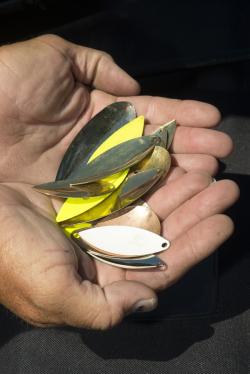
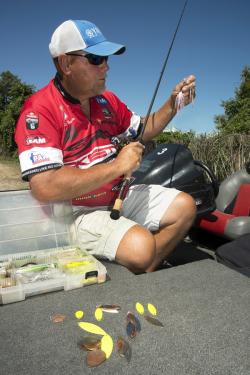
Matt Herren carries a selection of spinnerbait blades

Matt Herren carries a selection of spinnerbait blades

An assortment of spinnerbait blades makes it possible to match changing conditions where ever you fish says Yamaha pro Matt Herren.

Among his contemporaries, Matt Herren has long been considered one of the best spinnerbait fishermen competing on the Bassmaster® Elite Series, but all are surprised to learn the Yamaha Pro actually keeps very few of the popular blade-type lures in his boat.

Instead, Herren carries boxes of spinnerbait components, including blades, skirts, and heads, and makes his lures on the water as he needs them.

“I wouldn’t have enough room in my boat to carry all the different spinnerbaits I might want during a tournament,” laughs Herren, “so I keep boxes of parts in different colors and weights and put them together as the conditions dictate. It only takes a minute or so to make one, so I’m really not losing much time at all, and I can have exactly what I want.”

Herren likes double willowleaf baits

Herren likes double willowleaf baits

Herren likes a double willow leaf spinner in autumn, but is always ready for a quick change as needed.

Herren believes spinnerbaits are far more specialized than most anglers realize, and he uses several criteria to fine-tune his selection, including water temperature, water color, and the type of structure and cover he will be fishing. During the autumn months, for instance, he normally fishes spinnerbaits with double willow leaf blades, or a combination of Colorado and willow leaf blades.

“Fall is perfect for spinnerbaits because the primary bass forage this time of year is shad, and with willow leaf blades I can match the size and even the color of that forage very closely,” Herren explains. “Normally, the water is clear in the fall, too, so if I’m fishing 10 feet deep or less, I’ll make a spinnerbait with double willow leaf blades, because those blades keep the lure from sinking very deep. If I want to fish deeper, I’ll replace the front willow leaf with a more rounded Colorado-style blade so the lure will sink.

“I believe a lot of fishermen overlook the importance of blade size and color, but at times these can be critical in determining whether bass hit or not. I’ve experienced many days where a slight blade change made all the difference in the world. That’s why I prefer to make my spinnerbaits while I’m fishing.”

Spinnerbait bass

Spinnerbait bass

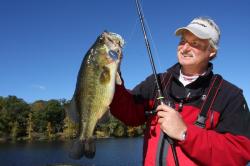
Chunky bass like this one are chasing shad in fall, and the flashing blades of a spinner are a good imitation.

The Yamaha Pro’s favorite blade color in clear water this time of year is copper, since it isn’t as bright as gold or nickel, but still provides enough flash to attract bass. In his component boxes, Herren has not only these three blade colors, but also white and chartreuse in a variety of sizes.

“My blade and color choices now as summer changes into fall are quite a bit different than they are in the spring,” points out Herren. “In the spring, when the water is often more stained and the temperature is cooler, I want more vibration from my spinnerbait blades, so I really prefer the more rounded Colorado blades. In extremely dingy water, I’ll even make spinnerbaits with double Colorado blades. You don’t find many spinnerbaits like this in the tackle stores, but they’re a major part of my fishing.

“Depending on how deep I want to fish, I’ll make them in weights ranging from as light as ¼-ounce to as heavy as 1 ½-ounces. Then, as the water temperature gradually warms, I’ll switch one of those Colorado blades for an elongated willow leaf. For me, it’s easier to make the exact spinnerbait I want rather than try to carry so many with me and then try to find it.”

Herren changes baits as neededc

Herren changes baits as neededc

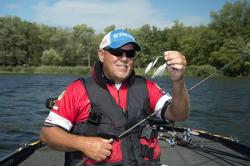
Herren says he’d rather make up his own spinnerbaits as needed, fine-tuning them to match whatever a tournament throws at him.

Herren’s ability to make his own spinnerbaits while on the water has also allowed him to fine-tune his presentations, as well. Few think of making vertical presentations with spinnerbaits, for example, but this is one of the Yamaha Pro’s favorite fall techniques. Instead of casting, he makes short underhand pitches and lets the lure free-fall straight down on a slack line. He uses this technique around rock bluffs, at the ends of laydowns, and even around boathouse pilings.

“I’ve a lot of caught bass doing this with ¼-ounce spinnerbaits with a single large size 4 blade, and also with heavier ¾-oz. spinnerbaits with size 4 ½ and 5 blades,” continues the Yamaha Pro, “blade and weight combinations you’ll never find on the store shelves.

“Building my own spinnerbaits has allowed me to experiment like this and not only create my own favorite combinations, but also to learn to fish the lures a little differently than the other tournament pros, and over the years it’s really paid off for me.”

Mid Georgia Winter Bass

How and where to catch middle Georgia Winter Bass

A Chinese proverb says it is better to light a candle than curse the darkness. It is also better to put on warm clothes and go fishing than curse the cold weather. If you sit around and complain about the weather you will miss some good fishing.

You don’t have to be cold while fishing, no matter what the weather. A good snowmobile suit, insulated underwear, snow boots, a stocking cap and a hood will help keep you warm. Add some chemical handwarmers in strategic places and even a propane heater and you can be comfortable.

The best thing to keep you warm this time of year is catching bass. Hook a hog and you will forget the weather. Limit out on three pounders and it might as well be a spring day. And even if you don’t catch much, who would rather sit around in the house than be out fishing?

Cold weather does affect bass but they still have to eat, so you can catch them. Since bass are cold blooded they slow down and don’t eat as much, but they do eat. If you adjust your methods and use the right lures, you can get them to bite.

There are just as many ways to catch bass in January as there are in June, but one thing you must do is slow down. Bass are less likely to chase a fast moving lure this time of year. And they often prefer a small bait over something big in cold water. But you can catch them from the shallows out to the deepest structure if you fish it right.

In the middle of our state three lakes offer excellent bass fishing right now. Jackson, Oconee and Sinclair all have some things in common for catching bass this time of year but each has its own special qualities, too.

Bobby Ferris grew up in Monticello and went to college in Milledgeville, fishing with the Baldwin Backlashers Bass Club during those years. That club fished Jackson, Oconee and Sinclair regularly. After college Bobby has worked in the middle Georgia area for two EMCs and continues to fish this part of the state a lot.

Now Bobby fishes with two Griffin bass clubs, the Flint River Bass Club, where he won seven of 12 tournaments year before last, and the Spalding County Sportsman Club. He also fishes some pot tournaments on middle Georgia lakes and knows them well.

Bobby sold boats at Piedmont Outdoors part time and his affiliation with them and The Sports Center in Perry, as well as his ability to catch bass, got him on Team Triton. He was willing to share some of his tactics for winter bass on the three lakes highlighted here.

I joined the Spalding County Sportsman Club in 1974 and the second tournament I fished was at Sinclair. The third tournament I fished was at Jackson. Four years later I joined the Flint River bass club. Oconee was not even around back then but I watched it being built and both clubs I fish go to those three lakes often. We almost always fish them in the winter.

Last year I won the point standings in both clubs. I have learned some good patterns on these lakes for winter fishing, too, and usually fish in different places than Bobby fishes.

Jackson Lake

Jackson is one of our oldest lakes and has changed over the years. The illegal stocking of spotted bass in the lake means you are likely to catch more but smaller bass there now. Its days of being known for numbers of big largemouth seem to be over. But you can still catch some quality largemouth there and the aggressive spots mean you can catch more fish.

By January the bass have pulled out of coves and set up on main lake points. Rocky points are Bobby’s favorite places to find them now since the rocks hold heat and give the bass a place to hide. Rocks can range from chunk to boulder size, can be found all over the lake and all hold bass. Jackson is small enough that most of the lake is the same in January.

Bobby’s best points are those in the outside bends of the old creek and river channels. He looks for bass holding on them in about six feet of water and feeding at that depth. The colder the weather the better the fishing is on these points for Bobby. A sunny day warming the rocks, with some current moving, is the best.

Tie on a crankbait and a jig and pig and you have what you need to catch winter bass at Jackson. Bobby likes crankbaits like the Rapala DT6, the small Fat Free Shad and a #5 Shadrap for point fishing at Jackson. He will fish one of those crankbaits on the points for more active fish, making several casts across them from different angles.

For clear water choose a shad colored bait and in stained to muddy water go with a bright color. Tennessee shad, natural shad and silver and black are good clear water colors. Chartreuse plugs with orange bellies and blue or black backs, the firetiger color, or crawfish colors are all good when the water is not clear.

If the bass don’t hit a crankbait Bobby will throw an Ol Nelle jig with a Zoom Super Chunk on it. It can be worked slowly in the rocks for the inactive bass. In clear water he picks a green pumpkin jig and trailer and in stained water he goes with a black jig and trailer. He also dips all his jigs in JJ’s Magic clear dip to give them a garlic scent.

At Jackson Bobby fishes crankbaits on 12 to 15 pound Big Game line and his jigs are tied to 25 pound Big Game line. There is always a possibility of a big largemouth or spot at Jackson, and the water is usually stained enough to get away with heavier line.

I like to fish deeper water in the winter and will often jig a spoon or Little George on long points at Jackson. Ride the points from the bridge in Tussahaw Creek to the dam and up the Alcovy River to the Highway 212 Bridge and watch for schools of shad.

The shad are often out over 16 to 20 feet of water, suspended about half way down. If you see fish on the bottom under them, stop and fish. Even if you don’t see the bass they are likely there if the shad are present. Drop a spoon like a Hopkins Shorty or a Little George down, hop it a foot off the bottom repeatedly, and you will find out if the bass are there.
If you see the bass and they won’t hit try deadsticking the spoon or George on the bottom. Let it lay there and barely slide it on the bottom. Don’t raise it off the bottom. That pattern has paid off several times over the years.

I like a short 5.5 foot rod with a fairly light tip but lots of backbone. A fast taper rod allows you to jig the spoon and George easily and feel it but you need the backbone to set the hook and control the fish. I spool up an Ambassadeur 5500c with 15 pound PLine for most of my jigging.

Lake Sinclair

Sinclair has two characteristics that together set it off from all other Georgia lakes. The power plant on the lake dumps warm water into Beaverdam Creek, warming the lake water in that area. And the pumpback at Lake Oconee makes current flow both ways in the lake most days. Both those factors affect bass fishing.

The warm water is so important that Bobby says he always fishes within about a mile of the mouth of Beaverdam Creek in the winter at Sinclair. If he is not in Beaverdam itself he will be on the river near it or just inside the mouth of Rooty Creek, and he fishes Little River up to the bridge. All this area is warmed by the discharge.

On Sinclair Bobby will fish crankbaits on seawalls and docks in shallow water. He stays on the main creek and river runs and does not go way back into coves, sticking with main and secondary points. He is looking for the active bait and bass feeding on it.

Favorite crankbaits are small and Bobby likes a #5 Shadrap, 100 Series Bandit or a DT6. In clear water he goes with Gable Green or natural shad and likes the firetiger color if the water is more stained. He will stick with 12 pound Big Game spooled on a Shimano Calcutta reel on a six foot rod unless throwing the #5 Shadrap under docks, when he will switch to a spinning outfit and lighter line.

If there is some current moving in either direction fishing is better and the moving water will position the bass on the docks and seawalls. Bobby looks for eddies where the bass can hold out of the current and ambush baitfish moving with the current. He says if you run your crankbait by a holding spot, moving it slowly with the current, you should get bit.

If there are several warm days in a row like we sometimes get in January but are more likely in February, Bobby will fish the old dead grass beds. The dead grass holds heat and draws shad to it, and the bass will follow. A spinnerbait run through the grass will draw strikes from those bass.

Jigging spoons work well at Sinclair, too. They tend to be better in clearer water so I will often head to Island or Rocky Creeks at the dam and ride points in them. Long tapering points are best. Watch for the shad down in 15 to 18 feet of water and jig under them for bass.

If there is any brush near the shad, try it, too. You will hang up some but you can usually get a spoon loose by shaking it up and down, working it free. A Little George will not come free so easily. Bass holding in the brush will eat the spoon when it is right in their face even if they won’t move far to chase a moving bait.

On clean bottoms it is hard to beat the Little George. I like a 1/2 ounce George in silver with a silver blade. I drop it to the bottom, tighten my line with my rod tip about a foot over the surface then jig it up and down a foot to two feet.

Move it steadily, not in a jerking motion, and you can feel the blade spin and it rises and falls. Set the hook if the blade stops turning. Most bites will come as the bait falls, so set the hook if the bait does not go back down as far as it should. Keeping your rod tip down near the water allows you to set the hook better when a fish hits.

Lake Oconee m

Oconee is one of our newer lakes and it was dammed in the 1980s. It has become one of our most popular bass fishing lakes, too, with lots of quality bass. The 14 inch size limit with the slot allowing anglers to keep six to 11 inch fish has helped and would be even better for bigger fish if anglers would keep more of the smaller fish.

Since the upper end of Oconee can muddy up fast and the lower lake gets colder water when the pumpback system is running, Bobby concentrates his winter fishing near Brantley’s Marina in the mouth of Lick Creek and the river around it. That area is the most stable on the lake and the bass are easier to pattern and catch consistently.

Most of this area of the lake is lined with nice houses and they all have seawalls. If you look you will see rocks at the water line of many of the sea walls and there are rocks on most others that you can not see. Those rocks are Bobby’s targets at Oconee this time of year. They hold heat and are good cover, too.
Seawalls with deeper water around them, like on main and secondary points, are Bobby’s favorites. He will throw a #7 Shadrap and really likes the jointed version since it is plastic and runs a little deeper, and has a rattle in it. He fishes the crawfish pattern since crawfish call the riprap home and are just about the favorite food of bass.

Throw the Shadrap on 12 pound Big Game line, a six foot rod and Shimano Calcutta reel. Try to bump the rocks as you work the bait across the rocks. If you consistently catch bass very shallow on the rocks, concentrate on making casts right to the bank. If the fish seem to be hitting out on the base of the rocks, make parallel casts to keep your plug in that area longer.

A warming trend at Oconee will pull bass shallow faster than at Sinclair. If you have a few warm days, especially toward the end of the month, shad will move to the very backs of short main lake pockets. Check the pockets if it has been warm and if you see shad activity fish it. Afternoons are usually best, after the sun has had all day to warm the water.

Throw a spinnerbait on the sandy flats in the backs of coves. You will catch bass, hybrids, crappie and even catfish that are back in there eating the shad. You can catch some big bass on this pattern. Bobby likes an Ol Nelle white and chartreuse spinnerbait with one silver and one gold blade for most water conditions. If the water temperature is 55 degrees or warmer in these pockets the shad will be there.

At Oconee I usually head for the dam area this time of year and look for shad on main lake points. Many of them have brush piles on them and the current will move shad across the points. Bass wait in the brush and on clean bottoms to ambush them.

Get right on top of the brush or fish and jig straight up and down. Sometimes bass want a spoon that moves in one place repeatedly. Don’t give up until you have jigged it up and down dozens of times. Try to hit the same place on the bottom, holding your boat in one place and watching your depthfinder. With a transducer on the trolling motor you can often see the fish straight under you and stay on them.

Give these three lakes a try. Fish the patterns in the areas mentioned here and you will catch bass. It it much more fun feeling the fight of a bass on your line than it is sitting at home watching somebody else catch them on TV!

What Are Four Good Bass Baits for September In Georgia?

Four Bass Baits For September Georgia Bass

September can be the cruelest month for Southern bass fishermen. Some mornings have a slight coolness to the air, something missing since last April. That gives promise to active bass feeding shallow and good fall fishing, but it is only a promise.

The reality is the water in our lakes is hot, and has been hot for months. The oxygen content is about as low as it gets all year. Bass are hard to catch since most are still holding in deep water and they have been looking at so many lures all summer long that they know the catalog numbers of them. At least they have gotten used to the constant buzzing of pleasure boats and skidoos.

Even if it is tough fishing, bass can be caught right now. A variety of baits will help you catch September bass from the top to the deepest holes where they hang out. Tie on these four baits, follow the tactics using them and you might start to like September fishing a little better.

Zara Spook

No kind of strike in bass fishing is more exciting than seeing a slashing topwater hit. Many of us put away topwater baits when the water got hot, bringing them out for a few minutes early in the morning but mostly leaving them in the tackle box. That can be a mistake.

Years ago on a miserably hot Labor Day weekend trip I had fished all day on Saturday without a keeper bass. Early Sunday morning I headed to a bridge to fish the riprap before the sun came up. Repeating the day before, I could not draw a strike on any bait I tried for several hours.

Remembering a bait I had bought but not tried, I dug out a big Zara Spook and tied it on. Since everything I heard said this bait took some learning to work right, this seemed like a good time to play around with it and try to learn to “walk the dog” with it.

After a long cast parallel to the riprap I started twitching the rod tip and found out it was not hard to make it walk. The lure had gone about 25 feet when a four pound largemouth smashed it. I could not believe it, first cast with a Spook and a good keeper bass, the first of the trip.

It would be nice to say I loaded the boat all day on that trip, but it didn’t work out that way. I did catch another three pound bass and missed two more that looked like good fish, but that was far better than any other bait I used that trip.

A Spook is a great bait for drawing up individual fish and making them hit. It moves slowly but makes a lot of commotion in the water. That makes big bass think it is an easy meal, or makes them come to the action to take an easy meal away from a smaller brethren. It is a great bait for schooling fish, too.

Throw a spook on a fairly heavy rod with a light tip. You need the backbone to control big bass but the light tip helps work the bait. I prefer a short 5.5 foot rod but many fishermen use longer rods. Heavy line on a baitcasting reel also helps so spool up with 15 pound test or higher.

Make long casts and let the bait settle. With some slack in the line, jerk the rod tip and then move it back toward the bait, giving it some slack. The bait with jump to one side then turn back. After a little practice you can make the bait jump from side to side without moving forward much, called “walking the dog.”

Any vertical structure is a good place to throw a Spook this month. Bridge riprap and pilings, docks, standing timber and bluff walls all offer bass a place to hold and move up to the surface to feed. Work the Spook parallel to the cover and try different speeds, from a very slow enticing walk to a fast action that will draw a reaction strike.

Spooks will also draw bass up from surprisingly deep cover, especially in clear water. If blueback herring or other baitfish that stay near the surface on bright days are present, it is even better. Cast across humps, deep timber and underwater ridges to pull bass from the depths to hit your bait. Bass will come from 30 feet deep at times to smash a Spook on top.

Thermoclines often form on our southern lakes this time of year and the bass suspend just above it, holding in the coolest water with enough oxygen to support them. These bass are often inactive but a Spook worked over them can interest them. If you see a lot of fish on your depthfinder suspended out over deep water, walk the dog right on top of them.

Always keep a Spook ready for schooling fish, too. When you see fish feeding on top cast to them, even if it is an individual fish. You can cast a Spook a long way so you don’t have to get too close to the feeding fish, and the action looks just like a fish hitting bait on the surface.

Spooks will catch bass all day long, even on the brightest, hottest September days. It is even better early and late in the day when bass are more active, and they will smash it at night, too.

Big Crankbaits

Bass eat crankbaits and for several years baits that will reach the fish holding in deep water have been available. With the right tackle you can dredge the deep holding spots all day without wearing yourself out too much, too.

Roger McKee loves big crankbaits in September. He has been successful in many tournaments on Southern lakes and says he if he had to choose one bait to use in September it would be a crankbait. Several baits will hit the deep cover and structure he fishing this month and make the bass try to eat them.

One of Rogers favorite crankbaits is no longer made but he finds them for sale on E-Bay at times. The Rapala Down Deep crankbait in both size five and seven work well for him. He also uses the Poe’s LR 4500, Norman DD22-N, Fat Free Shad and other baits that will dig deep. Natural shad colored baits are his favorites and some have a slash of red or orange on them to add to the attraction. He hand paints some of his baits to customize them.

A Falcon composite glass and graphite rod is Roger’s choice and he now prefers it over the older glass rods he used for cranking. Team it up with a Lews or Ambassadeur 3.8 ratio reel that allows you to dredge the depths without wearing out your hands and you have the right equipment. Spool the reel with PLine CX 10 or 12 pound test line and you can get the bait down deep.

Start at 14 feet and then go deeper for September bass, Roger advises. He looks for brush, stumps, rocks and other cover on deep structure like humps, roadbeds and drops. And if the crankbait is not bouncing off something, Roger feels like he is wasting a cast. Bump the cover to make the bass bite.

Baitfish on the cover and structure is a key clue to the bass being nearby, too. Roger says he does not fish a place if there is no baitfish around it. He sometimes sees bass on his depthfinder, holding under bait, but the bass may be so tight to cover they don’t show up. If the baitfish are there the bass are probably there, too.
Current definitely helps. Roger says current moving across cover and structure improves it by 75 percent. He can draw reaction strikes from bass when no current is moving but they are more likely to be active and feeding if the current is moving.

Locate cover at least 14 feet deep on structure with baitfish present and mark it with a buoy. Back off and make long casts past the cover, reeling your crankbait down until it hits something. Bounce it off the bottom or brush and be ready for a bite.

Roger advises you to carry a good plug knocker when fishing like this or it gets too expensive. He likes the Hound Dog retriever, a lead cylinder with a wire arm that goes over your fishing line. When lowered down your fishing line with its heavier line attached, it will bump your plug loose or hang it and you can pull it loose. If you aren’t getting hung up you aren’t fishing crankbaits right.

Big Worm

If the bass are holding too deep to reach with a crankbait or if they are not active, a big plastic worm will often get them to bite. Rig them either Texas style with the sinker against the head of the worm or Carolina style with the worm trailing the weight on a leader and you can hit the deepest cover and work it slowly.

If there is no current the bass may be very inactive and sometimes they bury down in the brush and won’t come out for a moving bait. Drag a worm into their home and let it sit and you may get them to eat it. And the bigger baits seem to make them more likely to hit, as well as drawing strikes from bigger bass.

The Zoom Old Monster is a 10.5 inch worm made in many different colors and works this time of year. Strike King makes the 11 inch Sneaky Snake and the 10 inch Baby Huey Worm. You can get 10 inch long Berkley Power Worms. Most companies make big worms for this kind of fishing.

Worm colors are probably more important to the fisherman than the bass, especially when fishing deep water. Dark colors like Junebug, green pumpkin, redbug and black are always good. Try different colors until you find one you like and the bass will most likely like it, too.

Rig up with 15 pound test line or heavier and use a stout rod to pull big bass away from cover. To get deep use up to a half ounce sinker on the Texas rig and a one ounce lead on the Carolina rig. If the bass are real spooky you can use a lighter leader on the Carolina rig, but don’t go so light that you break off on a big fish.

You need a big hook for these big worms. A 4/0 to 6/0 wide gap hook gives you the space in the bend for the worm to bunch up on the strike but still get some steel in the mouth of the bass. Make sure the hooks are extremely sharp, too.

Find deep cover and get down current of it if there is current. If there is no current sit on the shallow side and bring your bait up from the deeper side of the cover. Drag it along until you hit the cover the fish are in then shake your worm and make it stay in one place with some movement.

Look for cover on deep structure like roadbeds, creek channels, humps and ridges. Many fishermen build brush piles in deep water and many lakes have natural cover, so spend some time riding likely structure with your depthfinder. And keep a marker buoy handy to help you hit cover you find when you back off to cast to it.

Tubes

Small finesse baits like tubes can be a lot of fun this time of year and can get you bites when everything else fails. You will get more bites on them and catch more bass but they are likely to be smaller so you can use light equipment and have more fun fighting them.

For this kind of fishing you need a light action spinning rod and reel loaded with six to eight pound test line. A clear or fluorocarbon line works best. Rig a three or four inch tube on a one-sixteenths ounce jig head so it will sink slowly and use a light wire hook.

Bass often hold shallow this time of year if they can find some shade. This is especially true if the lake you fish had a shallow thermocline with poor oxygen content in the deeper water. Look for shade under docks, bridges and when trees and brush overhang steep banks.

A tube is easy to skip with the light jig head and light line on a spinning reel. Skip it far back under docks and overhanging limbs and let is sink slowly. You have to be careful if there is brush on the bottom because the exposed hook will hang up easily, so watch your line and try to retrieve your tube before it gets to the brush.

If you are having problems hanging up a lot, try Texas rigging the tube. You can use a small #1 or 1/0 hook and keep it inside the tube. Peg a one-sixteenths bullet weight to the head of the tube to make it skip better.

After the tube falls twitch it back. It will jump and dart like a confused, hurt baitfish. You can move it slowly and keep it in the shade for a long time when using a light jig head, so take advantage of all the shade you can.

Bridge pilings are especially good places to find bass right now. They will hang around the piling in the shade watching for shad and other baitfish feeding on the algae growing on the pilings. If you watch you will see shad nose up to the piling and bump it as they feed.

You can make your tube do the same thing. A tube on a light jig head will spiral down as it falls. Cast it right beside the piling and it will bump the piling then fall away, then bump it again as it spirals down, looking just like a feeding shad.

Since you are fishing fairly shallow lighter colors are usually best for tubes. Try watermelon, smoke and even clear to attract the bass. For some reason chartreuse also works good, even in very clear water.

If spotted bass are in the lake you are fishing this tactic is even better. They hang around vertical cover like pilings and are often more aggressive than largemouth. And they tend to like bright colors. A two pound spot will give you a fantastic fight on a light action outfit.

Don’t let the hot days of September get you down. Tie on these four baits, head to your favorite lake and find the bass. You can catch them from top to bottom with the right baits and these four give you the option to fish wherever you locate the bass.

How Should I Fish New Waters?

How to Fish New Waters
from The Fishing Wire

Searching for fish

Searching for fish

Yamaha Pro Steve Pennaz makes his living finding fish on new waters. Here’s how he does it.

Yamaha Pro Steve Pennaz says finding fish on new lakes is fishing’s greatest challenge, despite today’s great sonar and GPS systems.

The challenge for most anglers today is not catching fish, it’s finding them.

“As the old adage goes you can’t catch a fish that isn’t there,” said Steve Pennaz. “Fishing’s greatest challenge has always been locating fish. That’s true even with today’s superb sonar units and mapping software.”

Pennaz is in a unique position when it comes to locating fish. For the past two decades this Yamaha pro has traveled extensively in search of multi-species fishing action, both as a television host and magazine editor. He has developed an uncanny ability to find fish, a skill he shares each week on Lake Commandos television series.

“It all starts with the fish,” said Pennaz. “The more you know about your target species the better you become at predicting their behavior. Guys like Berkley’s® Dr. Keith Jones have written extensively on fish and fish behavior, and I thank them.

“All fish exhibit behaviors common to their species, yet there are members in a given population that behave uniquely. With bass, you have fish that tend to orientate to shallow cover, but there are also fish that roam open water.

You gotta find them to land them.

You gotta find them to land them.

Pennaz says larger fish of a given species often live in different areas and prefer different water temperatures than the juveniles.

“In some cases, larger adult fish act much differently than juvenile fish of the same species. Northern pike are the perfect example. Those weighing 10 pounds or more seek out much colder water (55-60 degrees) than smaller pike (65-70 degrees), which is the reason anglers fishing shallow weeds in mid-summer may catch a lot of pike but may fish a lifetime without ever landing a trophy.

“The second piece of the puzzle is understanding the seasonal movement of fish,” said Pennaz. “The spawn dominates fish behavior either spring (bass, walleye, crappie, etc.) or fall (certain trout, char and salmon). Knowing a fish’s preferred spawning temp and habitat are important clues; they provide clues on where the fish will be prior to, during and after the spawn.

“Water clarity is also a factor in determining fish location. In extremely turbid waters, low light penetration limits weed growth to shallow water. This typically means you find weed-relating fish like bass and bluegills will be shallow as well. In very clear waters, finding fish deep is often the norm.

Predicting fish behavior is a matter of understanding how they migrate with the seasons, and how they relate to cover and water clarity, Pennaz says.
“I’ve come to rely on water clarity on almost a weekly basis when trying to break a lake down quickly on Lake Commandos. The lower the water clarity the shallower I start my search, and rarely has this approach let me down. The deep weed line, when available, is usually the key to determining just how deep you’ll find most active fish.

“Forage is another piece to the puzzle,” said Pennaz. “Every gamefish is a predator, at times they will key on specific forage; other times they feed opportunistically or eating whatever they catch. Knowing what the fish are eating will help you not only narrow your search, but also help you select presentations.

“Trout anglers know better than most the importance of matching the hatch. To a lesser extent, the same can be true with other species, but typically not to that extent. However, if bass are keying on shad, give them shad imitators.”

Pennaz offers one last tip. “Whenever you are fishing with another angler or a group of anglers,” said Pennaz, “I suggest each of you fish a different presentation until you hone in on what the fish want that day. It’s stunning how even little things can impact success.

A smooth, quiet Yamaha is part of the package of many successful anglers whether they’re chasing southern largemouths or northern pike and walleyes.
“Last winter I fished bass on a Texas reservoir. My fishing partner and I were both throwing black/blue Berkley® Chigger Craws on a Carolina rig, yet he quickly went up on me five fish to zero! I was dumbfounded. Our casts were landing just inches apart. He would get bit and I’d get nothing.

“We compared rigs after he released his fifth bass. His featured a fluorocarbon main line, a ¾-ounce sinker, bead, and 15-pound fluorocarbon leader running nearly two feet. My rig featured a braid for a main line, ½-ounce sinker, no bead and 16-inch leader of 15-pound fluorocarbon. I don’t know what made the difference, the weight difference, leader or mainline, all I can say is when I switch up to what he was using the bites started to come immediately.

“Whenever I am fishing with someone else I ask what bait they are throwing and then select something else – a different color, size, whatever. I also play with speed, line type and weight – anything to see if the fish display a preference. I found this approach helps with not only locating fish as quickly as possible, but also helps create a base pattern that can be tweaked as needed.”