Category Archives: Bass Fishing

Bass Fishing Information

A January Bass Tournament At Jackson Lake

On a cold January Sunday in 2008 15 members and guests of the Flint River Bass Club fished our first tournament of the year at Jackson. There were 28 keeper bass weighed in, 18 spots and 10 largemouth, that weighed 59.16 pounds. Two fishermen had five-fish limits and four did not catch a keeper. Six of the bass weighed three pounds or more.

I made one lucky cast and landed an 8.80 pound bass for big fish and had one other for a total of two bass weighing 12.18 pounds for first. Tommy Reeves has five at 9.07 for second, Bobby Ferris was third with five weighing 6.80 and Rick Webster placed fourth with four weighing 5.90 pounds.

I had a frustrating day up until the big one hit, missing three bites on a slow fishing day. I had one keeper with about 45 minutes left to fish when my partner and I decided to go to one last place. I was throwing a Strike King Series 5 crank bait around a sandy pocket and talking about how we used to catch big bass in the winter but it had not happened in a long time when the big one hit. That is the biggest bass I have caught in a very long time.

Fish hit a variety of crank baits, lizards, and jig and pigs in the stained water that started out at 47 degrees but warmed to 52. My first fish hit a jig and pig under a dock just after noon. Jordan McDonald, my partner, had two on a Texas rigged lizard, one in the morning and one about an hour before quitting time.

Bassmasters Classic Expectations For Chris Lane

Chris Lane of Guntersville, Ala.

Chris Lane of Guntersville, Ala.

Great Bassmasters Classic Expectations For (And By) Chris Lane

BIRMINGHAM, Ala. — Chris Lane’s dream of winning the 2014 GEICO Bassmaster Classic is different than the dreams of the other 55 anglers in the game.

Sure, every qualifier hopes to win the world championship of professional bass fishing. A win molds a pro career and changes your life, and not just because of the $300,000 first prize.

As the 2012 Classic champ, Lane knows that to be true. Yet this time around would be different. In 2014 — his fourth Classic — he’s not only a competitor, he’s the hometown entry.

Florida-born, Lane now lives on Lake Guntersville, the famed Alabama fishery where the Classic field will compete Feb. 21-23, with weigh-ins in Birmingham at the Birmingham-Jefferson Convention Complex.

Friends, neighbors and fans in his adopted hometown of Guntersville are looking to Lane to take a second Classic title — this time for them. Fans everywhere assume he has a home-water advantage and expect more of him.

“There’s added pressure when it comes to fulfilling the expectations people have of you because you’re fishing at home,” Lane said. “I think my biggest challenge will be time management, using my time each evening preparing for the next day’s competition. It’s hard to put everything else aside when you’re at home.”

Recognizing what’s ahead of him, Lane set to work as soon as he nailed a Classic qualification by winning the final Bassmaster Elite Series event of the 2013 season. His mission: Sew up a gaping hole in his lake knowledge.

“In the five years I’ve lived here, I haven’t fished the lake much from December to March because I’ve had other things scheduled,” he said. “I knew I needed to learn a lot to give myself a chance to do well.”

A Lake Guntersville crash course was made easier because he could go to school at home.

“I could just takeoff from my own dock, get back for lunch with my kids and be home every night,” he said. “I was able to put in a lot of time on the water right up until cutoff on Dec. 31.”

Lake Guntersville has been off limits to Classic anglers since that date. Lane drives over the lake bridge to take his kids to school, but those teasing glimpses are as close as he can get to the water until the official practice period begins in February.

Then, he said, get ready for a slugfest.

“The lake has a lot of big fish,” Lane said. “The 30-plus-pound bags are here.”

By February, the lake’s bass will have been feeding to get in shape for the spawn, and they’ll be as fat as they’ll get all year, Lane said. That means a limit of five big bass a day will be needed to top the leaderboard, he said, and the game could easily change from one day to the next.

“Anyone could come from behind with a huge sack and take over,” Lane said. “This will be a Classic that’s a nail-biter to the very end.”

He predicts the winning weight will be about 83 pounds. That would easily break the Classic record of 69 pounds, 11 ounces set in 2011 on the Louisiana Delta.

Lane made his predictions with a disclaimer: “Weather permitting. Water clarity will be a big factor in the weights.”

Only one angler has won a Classic in his home state. Interestingly, the state was Alabama, and Boyd Duckett triumphed in the 2007 Classic on Lay Lake, 120 miles from his Demopolis home. But no angler has won a Classic in his home town.

Lane wants to be that angler: “It was so sweet to win a first Classic. Winning this one would be just as sweet, being at home.”

2014 Bassmaster Classic Title Sponsor: GEICO

2014 Bassmaster Classic Official Sponsors: Toyota, Bass Pro Shops, Berkley, Evan Williams Bourbon, Humminbird, Mercury, Minn Kota, Nitro Boats, Skeeter Boats, Triton Boats, Yamaha

2014 Bassmaster Classic EXPO Presenting Sponsor: Dick’s Sporting Goods

2014 Bassmaster Classic Official Apparel Sponsor: Carhartt

About B.A.S.S.
For more than 45 years, B.A.S.S. has served as the authority on bass fishing. The organization advances the sport through advocacy, outreach and an expansive tournament structure while connecting directly with the passionate community of bass anglers through its Bassmaster media vehicles.

The Bassmaster brand and its multimedia platforms are guided by a mission to serve all fishing fans. Through its industry-leading publications — Bassmaster Magazine and B.A.S.S. Times — comprehensive website Bassmaster.com and ESPN2 and Outdoor Channel television programming, Bassmaster provides rich, leading-edge content true to the lifestyle.

The Bassmaster Tournament Trail includes the Bassmaster Elite Series, Bass Pro Shops Bassmaster Open Series, Carhartt Bassmaster College Series, B.A.S.S. Nation events and the ultimate celebration of competitive fishing, the Bassmaster Classic.

B.A.S.S. offers an array of services to its more than 500,000 members and remains focused on issues related to conservation and water access. The organization is headquartered in Birmingham, Ala.

How Fast Do Bass Grow?

Tagging Studies Help Biologists Study Bass Age, Growth and Health

Today’s feature comes to us from the Florida Wildlife Research Institute in St. Petersburg, Florida.
from The Fishing Wire

Tagging studies help biologists learn about largemouth bass populations and associated fishing activity throughout Florida.

Yellow tag in bass

Yellow tag in bass

Yellow dart tag shown on the back of this trophy-sized largemouth bass.

Reward tag studies are one method biologists with the Fish and Wildlife Research Institute (FWRI) use to learn about Florida’s freshwater fish populations. These studies also engage anglers in the scientific process, helping connect researchers and managers to the stakeholders they serve and validate the science on which management decisions are based.

Most tagging studies consist of a few basic components. Scientists first collect and tag fish in a particular lake or region. They then release the tagged fish back into the population. Each tag has a phone number on it, allowing anglers who catch a tagged fish to report information about their catch to biologists. Each tag also has a monetary reward associated with it to encourage angler reporting.

Biologists primarily use tagging studies to estimate annual catch and harvest rates for fish populations to help managers set regulations that sustain healthy bass populations. FWRI biologists are conducting three largemouth bass tagging studies that range in scope from a trophy-sized bass study encompassing the entire state to a study targeting bass in a single lake.


Statewide trophy-sized bass study

This study includes locations throughout the state and is designed to evaluate the influence of the TrophyCatch program. The FWC launched TrophyCatch in 2012 to reduce harvest of largemouth bass 8 pounds and larger, boosting anglers’ opportunities to experience the thrill of catching a trophy-sized largemouth in Florida. Anglers are offered incentives for releasing these trophy-sized fish. The tagging project began one year prior to the launch of TrophyCatch. Biologists collected bass 8 pounds and larger by electrofishing and tagged them before release. They used data collected during that period to establish a baseline for catch and harvest rates. Biologists estimate that anglers caught approximately 21 percent of the tagged bass, and harvested 4 percent during the baseline year. They also found that bass weighing more than 10 pounds were harvested at a higher rate, primarily for taxidermy, than smaller bass. Biologists will continue this study for the next five years to monitor how TrophyCatch incentives influence angler behavior by comparing catch and harvest rates during this period to those observed prior to the program.

Northwest regional tagging study

FWRI biologists are conducting a reward-based tagging study in Northwest Florida, west of the Suwannee River. In late 2012, they tagged bass 12 inches and longer in 16 lakes across the 12-county study area. Biologists are monitoring tag returns for one year to measure catch and harvest rates. The data they provide to managers will be discussed with anglers to help determine the most suitable regulations for creating and sustaining quality bass fisheries in this region.

Lake Eustis tagging study

Lake Eustis is part of Central Florida’s Harris Chain of Lakes, a popular bass-fishing destination. The primary objective of this study is to complete a full stock assessment of the largemouth bass population in a moderately to heavily fished lake. Biologists will use data from tag reports to estimate the percentage of bass caught and harvested each year. They will combine this information with other data and provide it to managers, who can then determine if the current length and bag limits are appropriate or need to be adjusted. As a secondary objective, biologists are using what they learn from the tag returns, along with data from creel surveys and other information, to determine the best way to estimate the total number of bass in a large lake.

Tagged bass is released

Tagged bass is released

An FWRI biologist releases a tagged bass.

What to do if you catch a tagged largemouth bass

FWRI biologists use the same yellow plastic dart tags for all bass tagging projects. These thin, 3.5-inch-long tags are attached to the bass on the left side near the dorsal fin. If you catch a tagged bass, clip the tag close to the fish’s back and save the tag. Anglers are not obligated to release tagged bass but must comply with harvest regulations. When you report the tag, an FWRI staff member will ask a few brief questions about your catch and help you claim the monetary reward. Anglers, remember to check each bass you catch, sometimes algae covers the tag making it somewhat difficult to see, so look closely. Tagging studies give you the opportunity to participate in valuable research that helps managers sustain Florida’s largemouth bass fisheries.

Where Can I Catch Bass In the Winter in Georgia?

Peach State Winter Bass Hotspots

Baby its cold outside. But unlike the song, Georgia bass fishermen don’t want to sit by the fire. Instead, we want to get out on the water and catch some fish. We are lucky because there are some excellent places to catch winter bass here.

From the southern border with Florida where some bass often start fanning beds in January to the North Georgia mountains where spotted bass gorge themselves in the coldest water, good fishing is available. Some middle Georgia lakes have a mixture of spots and largemouth and others have special patterns that pay off now. Pick a lake close to you or drive a ways to find some good winter bass action.

Seminole

Pam Martin-Wells has won more money on the bass trails than any other woman and was recently inducted into the Legends of the Outdoors Hall of Fame. She grew up on the Flint River at Lake Seminole and guides there when not on the tour. She knows the lake well and keeps up with what the bass are doing.

For winter fishing on Seminole Pam heads to Spring Creek. The water there usually stays clear and that helps in cold water. It also warms quickly, pulling bass up toward the spawning flats early. With standing timber everywhere in the creek they have good places to hold and the hydrilla beds offer perfect cover for them.

To find winter bass Pam would start near where the Wingate cut-through hits the Spring Creek channel. She gets on the edge of the old creek channel and follows it as it winds its way across the timber filled flats. Remember that the channel does not follow the boat channels. It winds and loops through the timber.

As you ease along the channel watching your depthfinder you can usually see the hydrilla edges. The hydrilla grows on the flats along the channel but the channel itself is too deep for it. So you are fishing the channel drop, timber that is on the edge of the channel and hydrilla edges along the channel. All combine to make excellent bass “highways” that they follow and hold on.

Pam fishes the channel from the cut-through all the way out to the main lake. Outside bends are best and the ones that turn right where a ditch runs up on a spawning flat are excellent. If the outside bend is near the flat it is good but a ditch for the bass to follow makes it even better.

A big crankbait like a Fat Free Shad is the bait Pam uses to find fish in the cold water. She keeps her boat in the creek channel and makes casts that parallel the edge of the hydrilla. Crank the bait down then work it fairly fast along the edges where the bass are holding. Trilene Big Game line is tough enough to pull big bass out of the hydrilla so that is the line she chooses.

If the bass don’t want to chase a crankbait or if Pam hits a school of fish and they quit biting, she picks up a Wave Worm Tiki Stick. She rigs it both Carolina and Texas style and fishes it along the edge of the channel, too. She prefers a Tru-Tungsten sinker because it is denser than lead and she can use a smaller size weight. The smaller size comes through the grass better. That weight also gives her better feel because of its density.

A cold front really puts the bass at Seminole down. Try to plan your trip during a warming spell. If there have been two or three days of relative warm, stable weather the bass fishing should be excellent.

Lake Harding

Robert Medas and Kevin Phillips grew up together near LaGrange and have fished the area together for several years. They joined the West Georgia Bass Club and have done well in this competitive team trail club. Their tournaments often put 50 to 70 boats on the water. In 2007 there were 163 teams in the club.

In 2005, their first year in the club, Robert and Kevin placed 4th in point standings for the year then followed it up with a first place finish overall in 2006. In 2007 they started out the year with a win at West Point in January and were in 8th place overall after 9 of the 12 annual tournaments.

Lake Harding, also called Bartletts Ferry, is a good winter time lake for them. It has varied cover and structure that gives them a choice of kinds of places to fish based on the weather and other conditions. And the lake has a big population of spotted bass. Spots tend to feed better in cold water and are less affected by cold fronts than are there largemouth cousins.

Another reason Harding is a good winter choice is the stability of the water. Since it is just downstream of West Point the water level stays fairly constant. There are areas of the lake that seldom muddy up, another big plus in cold water.

In cold water the bass at largemouth at Harding are usually holding in deep brush waiting on passing schools of shad. Spots are more likely to be found around rocks on points. For both species Robert and Kevin team up by throwing different baits, with one fishing faster moving crankbaits and spinnerbaits while the other works a jig and pig or jig head worm.

Halawakee Creek is a good choice for winter fishing. Although it is on the Alabama side of the lake a Georgia fishing license is good there. This creek stays fairly clear all winter and you can find any kind of cover and structure you want to fish.

Work up the creek, hitting rocky points for spots. Run small crankbaits and spinnerbaits over the rocks and work a jig and pig or a jig head worm on them. Fish from 8 to 18 feet deep. You can hop from point to point as you fish up the creek, concentrating on the rocky ones.

For largemouth look for brush piles down 12 to 18 feet deep. Many docks have brush around them and some of the feeder creeks have good brush on the channel. Also pay attention to steep banks where blowdowns have fallen into the water. The creek above the second bridge is a very good area for this kind of cover.

There are also a good many humps and channel ledges in open water in Halawakee Creek. Most maps don’t show them so watch your depthfinder as you ride the middle of the creek. There are good humps and channel drops from the mouth of the creek to the first bridge. Long points also extend way out from the bank.

On the ends of these points and on humps and channel drops Robert and Kevin like to jig a spoon. Locate fish and bait near the bottom in 18 feet of water, position your boat right on top of them and drop a jigging spoon like a Hopkins down to them. Work it up and down in one place and be ready to set the hook on the fall.

Clarks Hill

I grew up in McDuffie County, went to high school in Thomson and started fishing Clark’s Hill in the 1950s. My family has had a place on the lake since the mid 1960s and for many years I spent the last two weeks of December fishing there. Winter has always been one of my favorite times to fish the lake and some of the patterns I have found pay off every year from late December all winter long.

When the water gets cold the bass stack up on the ends of long, shallow points on the Georgia Little River side of the lake. I especially like the area around Germany Creek since I have a place at Raysville Boat Club and fish there the most. There are many shallow points and ridges on the river and the creeks in that area that hold winter bass.

Ride the channels watching for a point, hump or ridge coming up to about 12 feet deep. A hard clay or sand bottom is best and rock or gravel makes it even better. Watch your depthfinder for schools of baitfish nearby and marks of fish near the bottom under them.

Starting at 12 feet deep jig a Little George or spoon like the Hopkins in the fish you see. Stay right on top of them and move it up and down in one place. Start with short hops, raising your rod tip about a foot and letting the bait fall on a tight line. Gradually make higher and higher hops until the fish show you what they want. At times you will need to raise your rod tip three to four feet, making the lure rise that far off the bottom before falling back.

Be ready for a tick as the bait falls and set the hook when you feel it, or if the bait does not fall all the way back to the bottom. When using the Little George you should be able to feel the tail spinner moving as you raise and lower the bait and if you feel it stop spinning set the hook.

Work deeper and deeper, especially if the water is clear. Most of the bass I have caught have been 12 to 15 feet deep in stained water and the Little George works better in stained to muddy water. The deepest I have ever caught a bass doing this was 57 feet deep in Grays Creek. I was jigging a Hopkins Shorty spoon straight under the trolling motor and the water was fairly clear, so keep working deeper until you find the fish.

Bass also stack up in ditches this time of year at Clarks Hill and a Zoom Fluke fished in them on a jig head is and excellent way to catch good fish. Put your boat in 30 feet of water anywhere a ditch enters the main lake and make long casts down the center of it. Swim the bait just off the bottom and set the hook if you feel any weight.

If the steady movement doesn’t work try hopping the jig and Fluke back. Hop it a foot off the bottom and let if fall back. Work all the way out to the boat, fishing water from a few feet deep to 30 feet deep down the center of ditches and depressions. You will often find a school of bass and catch several in one place doing this.

Lake Burton

Daniel Workman has worked on boats in the Burton area for several years and fishes the lake a lot. He enters pot tournaments there and has also fished with some area clubs. His best catch in a tournament on the lake was a five fish limit weighing 22 pounds and he has landed a six pound spot there.

Burton produces big spots and they feed good in cold water. Blueback herring in the lake have made it a great place for big spotted bass . The state record 8 pound, 2 ounce spot was caught at Burton in February. Winter is a good time to fish for spots on the lake and you might catch some good largemouth, too.

Daniel says the spots school up on deep points and humps and follow the herring during the winter on Burton. To find the bass you first find herring then go to nearby humps and points that top out 15 to 22 feet deep. Cover like brush or rock on the top will help hold the bass.

The lake is small enough you can fish most of it in one day but Daniel concentrates on the lower end, usually fishing from the area around Murray Cove down to the dam. The water stays clear here and cold water fishing is better in the deeper, clearer water.

A variety of baits work well for big Burton spots in cold weather. A jerkbait is excellent if the water is clear and it usually is. Make a long cast across a point or hump and crank the bait down, then work it back with a jerk then a long pause. The colder the water the longer the pause should be. A bait that suspends, like the Lucky Craft Pointer, is very good for this kind of fishing.

Spots will come up from deeper water to hit the jerkbait. Try different cadences with it. Sometimes a jerk-pause-jerk works but try a jerk-jerk-pause, too. Vary the action of the bait until the bass tell you what they want.
If a jerkbait is not working Daniel will throw a big crankbait like a big Fat Free Shad in shad color. He makes long casts across the structure with it and cranks it back with a steady speed, keeping it down as deep as possible.

Plastics are good, too. Texas, Carolina and jig head rigged worms will all catch Burton bass. A Zoom green pumpkin Finesse worm with the tail dyed chartreuse with JJ’s Magic to add scent and color is his choice for all of the rigs. Daniel fishes the Texas rig through brush but likes the jig head better on a clean bottom.

Work the plastic bait through cover on deep points and humps when the fish are not active. Try all three rigs since some days the fish seem to prefer one over the other. Fish the Texas and jig head worms on fairly light line and use a lighter leader on your Carolina rig in the clear water.

Some bass fishermen stay at home this time of year because of the cold. There is no reason for that with the kinds of clothing available to fishermen now. Dress warmly in layers and top it off with a snowmobile suit or other cold weather gear and you can stay relatively comfortable.

A few tricks really help you stay warm. Wear a hood over your head that covers your neck and keeps neck and head warm. That makes a lot of difference. The bass fisherman’s traditional baseball cap is not a good choice this time of year, unless you have a stocking cap pulled down over it and a hood over both.

Another good trick is to fill your pockets with handwarmers. The chemical type are cheap and easy to use, and most will last all day. Put two tiny ones in your boots, a couple in pants and shirt pockets and keep one in each jacket pocket to thaw your hands and you can keep on fishing.

Don’t sit at home and complain about the cold. Dress warmly and try one of these lakes for good winter action. You have a choice in the types of waters you want to fish and the kinds of bass you want to catch. But you can’t catch any of them sitting by a fire!
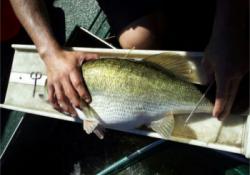
Fishing Lake Burton in Georgia

I am often amazed at the hidden jewels of fishing lakes we have in Georgia. I fish many big lakes in this area and am familiar with them, but I often get a surprise when visiting lakes a little further from home.

A few years ago in late December I drove up to Lake Burton to get information about a February Georgia Outdoor News article. Burton is a small Georgia Power lake between Clayton and Hiawassee, north of Gainesville. The 157 mile trip took me just under three hours each way and I went by Tallulah Falls, a place that brought back many childhood memories of summer trips to the mountains.

Lake Burton hit the news when a new state record spotted bass was caught by Wayne Holland on February 23, 2004. His huge spot weighed an amazing 8 pounds, 2 ounces and looked like it had swallowed a softball it was so fat.

I fished with local angler Daniel Workman and we were on the lake for four cold hours, from 7:00 AM until 11:00 AM. I got only one bite during that time but managed to land a spot that weighed 4 pounds 1 ounce on Daniel’s scales. That just missed being my biggest spot ever, not quite matching the 4.24 pounder I caught at Lanier a few years ago.

Burton is an old lake ringed by docks. The houses are very nice and many of the docks are double decker houses that would make a fine lake cabin by themselves. It would look a lot like Jackson if it were not for the clear water and high hills surrounding. The scenery is very nice and just adds to the fishing.

There are lots of largemouth in the lake, too. Daniel said his best tournament catch ever came in a night tournament when he brought in five largemouth weighing 22 pounds – and came in third place. The best catch he has ever seen there was five largemouth weighing an amazing 27 pounds.

If you want something different, plan a fishing trip to Burton. The drive is worth it for the change in scenery and big spotted bass. During our trip we saw one other boat, a canoe being paddled around the edge of the lake.

Can I Catch Winter Smallmouth On Spoons?

Casting Metal for Late-Season Smallmouth
from The Fishing Wire

Rethink Spoons as a Deadly Bait for Cold-Water Smallies

As dissolved oxygen and water temperatures become more evenly distributed in water bodies in late fall, smallmouth bass can hold just about anywhere. Finding them is the key, which means presentations that cover water fast are best…and nothing covers water better than spoons.

Catch smallmouth on spoonsw

Catch smallmouth on spoonsw

Big smallmouths like these are an ideal target for “heavy metal” in winter when th efish feed mostly on shad.

The notion of casting metal to fall smallmouth may seem strange at first, even for those who vertically jig winter-chilled largemouth. But as late-season smallmouth move toward wintering areas where they feed heavily on baitfish, there’s nothing like a spoon to reach deep water quickly and mimic what they’re eating.

In terms of fall locations, key on isolated rock piles, gravel flats, points and secondary points, especially those that plunge into deep water.

Bait Selection

Not all spoons are created equal. Hall of fame angler Doug Stange divides them into three main categories: slab spoons, horizontal spoons and “big butt” spoons, which are heavily-cupped and bottom heavy, like Johnson’s popular Sprite.

Spoons work for smallmouth

Spoons work for smallmouth

Choose the right type of spoon for the job and this can be the result.

Slab spoons are typically short, thick, heavier spoons that drop quickly. Some offer little action on the fall, while others flutter significantly.

Horizontal spoons, like the Johnson Thinfish, are longer, with a narrow profile, and often built thin; “flutter” spoons fall relatively slowly with a pronounced side-to-side fluttering motion.

Stange’s so-called “big butt” spoons are typically fished on a straight retrieve, but can be counted down to deeper structure and fished with aggressive jig strokes.

These spoons fall with a pronounced, almost zigzag wobble.

The main thing to remember when selecting spoons for fall smallmouth is to select baits that effectively target fish at the depth they are holding, and still allow you to fish at speeds that both cover water and trigger strikes. In most cases during late season that means concentrating on slab spoons, but not always, which is why it makes sense to bring a selection of spoons and let the fish tell you what they like best.

Fishing spoons is about depth, fall rate and jig stroke; get these things right and everything else will follow. Sticking with a small selection of colors will shorten your search as these other considerations are more important.

Personally, I am a fan of the Johnson Splinter Spoon, a slab spoon that casts easily, falls fast, and offers an erratic darting action on the retrieve thanks to its asymmetric, flat profile. The slender Slimfish offers a tight, erratic action on a straight retrieve thanks to built-in fins. When jigged or allowed to fall on slack line, the lighter spoons flutter slowly and horizontally.

As a general rule of thumb, I fish the Slimfish in waters 3 to 10 feet deep, but anything deeper than that I turn to the Splinter spoon. Both the ¼- and ½-ounce models are deadly, with the ½-ounce getting the nod most often, especially when working water deeper than 15 feet.

For smallmouth, it’s tough to beat FireTiger or Gold, while Chrome or Perch get the nod in clear natural lakes. The most important factor of color selection is simple: Match it to what they’re eating.

The Retrieve

Spoons come in at least three varieties, plus many variations in weight, shape and color.
Fish a spoon in the same manner that you do a standard leadhead jig. After the cast, allow the spoon to sink to the bottom on a slack line before starting with a standard rip-drop retrieve. To avoid tangles with the spoon, add a short leader of fluorocarbon to your choice of superline. An Invisaswivel tied between the leader and main line will absorb line twist, an important consideration when fishing spoons.

Experiment with both the speed and length of the lift. There are times when smallmouth respond well to aggressive jig strokes. Most strikes come on the drop. You feel the typical “tick” or simply the weight on the jig stroke.

Last fall on the Great Lakes, we caught several smallmouth to over 6 pounds on Splinter spoons by working rocks in 15-30 feet. We also caught walleye, whitefish and lake suckers (yes, caught in the mouth). The experience reiterated the triggering power of spoons when fished this way.
Recommended Gear

I prefer throwing spoons on spinning gear for longer casts. A medium-heavy 7’3″ to 7’6″ Abu Garcia® Veritas fast-action rod with a soft tip is perfect. A larger spinning reel like an Abu Garcia® Revo SX 30, which takes in a full 33 inches of line per turn, is perfect for giant smallmouths.

It’s really tough to beat a superline like FireLine® for this technique. It casts well, and with its thin diameter it works well in deeper water. In situations where I’ve used a baitcaster to fish spoons, fluorocarbon has proven the best choice.

Final Word

Spoons are a class of baits that are hard to fish if you’ve never fished them before. My advice? Take a selection of them in different weights and colors out on the water and fish nothing else that day. Spend enough time with them and you’ll discover there’s really no mystery to these old-school baits. They are very much an overlooked producer of both quality and quantities of late-season smallmouth.

Bass Pros Getting Ready for Bassmasters Classic

Angling Pros Prep for Alabama Classic at Guntersville

By Frank Sargeant, Editor
from The Fishing Wire

GUNTERSVILLE, ALA. Let the speculation begin.

Among serious bass anglers, prognosticating who will win the Bassmaster Classic to be fished on Alabama’s Lake Guntersville in February is right up there with studying the odds on FSU/Auburn.

Alton Jones with nice bass

Alton Jones with nice bass

Pro basser Alton Jones, veteran of 14 Bassmaster Classics, says the Xcalibur Rattlebait may very well play big in this year’s late February championship on Alabama’s Lake Guntersville.

Rattlebaits catch bass

Rattlebaits catch bass

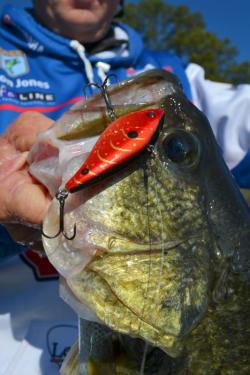
Lipless crankbaits like the Rattlebait are particularly effective in a red-rust or crawfish color in late winter and early spring at the big lake, locals say.

Jerkbaits will catch Gunersville bass

Jerkbaits will catch Gunersville bass

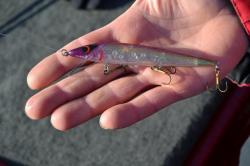
Suspending jerkbaits like the Smithwick Suspending Pro Rogue might be a good backup choice, especially if tournament days are cold.

Use maps, gps, everything you can to plan a tournament

Use maps, gps, everything you can to plan a tournament

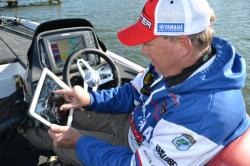
Alton Jones uses years of recorded data on prime spots, plus Google Earth, to create a personal map of choice fishing spots for all his tournaments.

Current dock talk seems to be favoring former Classic champ Chris Lane, who has been living on Guntersville the past several years and preparing for just this challenge, and Randall Tharp, a former G’ville area resident who appears on a roll this year with his skills sharpened to the max in both B.A.S.S. and FLW competitions. KVD, of course, is always to be reckoned with, as is new young gun Brandon Palaniuk and Angler of the Year Aaron Martens.

One who can’t be ignored is Texas pro Alton Jones, who has been in 14 Classics, won one, and earned some $2 million on the pro circuits over a long career.

Jones joined a crew from PRADCO, the parent company of Arbogast, Bomber, BOOYAH, Heddon, Xcalibur, Smithwick, Yum and several other brands well-known to bassers at the lake this past week for a practice session and some fine tuning with the new-for-2014 lures.

“Any lure can win any tournament, but if I were betting on one for this event here in late February, I’d bet on the Xcalibur Rattlebait in royal red or royal shad,” said Jones. “If the winter warms up early, the fish will be hanging over the grass shoots where the new beds will grow up in 4 to 6 feet of water or so, and vibrating-type baits let you fish fast and find the concentrations so it’s a good strategy when the fish are in that situation.”

He said he also likes the Smithwick Suspending Pro Rogue jerkbait, both over new grass and around bluff banks where shad schools are visible in late winter.

“If it stays cold, the fish may be deeper and I might go to the new Perfect 10 Rogue, which runs down to 10 or 12 feet,” says Jones. “It’s a bigger lure, and it attracts big fish if they’re around.”

Last but not least, Jones said, if weather is warm he’d probably have a swimjig with a YUM trailer on it to fish shallow pads and primrose beds.

Jones has fished Guntersville many times over the years, and has kept a computerized record of all his spots. He records the locations on the water on his Humminbird GPS systems, then transfers it to computer for storage so that the memory in the GPS does not get overloaded. When he returns to a given lake, he can reload all the results from all his trips back into the machine and have a record readily at hand of the best spots-one that he can also call up on iPad or iPhone.

One of the areas that keep showing up, he notes, is Mud Creek-a spot forecast by several top local anglers to figure in the winning Classic catch.

“I like to use Google to see how the weed patterns change at various times of the year,” says Jones. “You can call up history on satellite views and get a look at the weed growth from every season of the year, and that tells you where there might be some spots that local anglers might overlook. Fishing on a lake like Guntersville where there are so many tournaments all the time, finding a spot that other anglers have not hit recently can give a huge advantage.”

The Classic will be fished Feb. 21-23 at Guntersville, with daily take-offs from the city basin across the street from the Chamber of Commerce. Weigh-ins will be trailered and take place at Birmingham Civic Center, which is also the site of the Bassmaster Classic Outdoors Expo. For details, visit www.bassmaster.com.

Fishing A Bass Tournament In Wisconsin

In 1997 when I started doing my Internet site on fishing I started visiting a bass fishing news group. After several years of posting messages and reading the posts of others I felt like I knew some of them pretty good. That group of fishermen started getting together for a bass tournament twice a year.

In the spring we had the “Mid Tennessee Classic” on either Dale Hollow or Center Hill Reservoirs. Each September the week after Labor Day we met in Rhinelander, Wisconsin for the “North Woods Classic.” When I retired in 2001 I started attending those tournaments and they have been a lot of fun.

We have people come from as far west as Texas and southern fishermen from Georgia and Florida. Some folks came from North East states like New York. Our love of bass fishing brought us together and it has been a lot of fun.

I left on Labor Day in 2009 for the 1200 mile trip north pulling my bass boat. I drove 919 miles the first day in 15 hours and spent part of the night in Madison, Wisconsin. That left a short 250 mile drive for Tuesday morning. I got checked into my motel and went to Boom Lake to practice.

Boom Lake is a 2500 acre lake right in town that connects to the Wisconsin River and several “flowages,” ponds that interconnect through small channels. The lake has been tough, in all my trips there I had never caught a limit of five bass and Tuesday afternoon started that way. I caught three small bass.

Wednesday, the day before the tournament started, I picked up Dan and we headed to the lake. It was scary. I caught bass everywhere I tried, ending up with nine nice keepers. That night at dinner everyone said they had caught fish.

Dan fished with me on Thursday and I started catching fish around lily pads on Senkos. At noon I had four largemouth in the boat and went to deeper water to try to catch a smallmouth. Less than 30 minutes later I landed one over 14 inches long and had my limit and was through fishing for the day.

Wisconsin has a no cull law. When you put a fish in your livewell you can’t let it go and keep a bigger fish. It is a hard decision when you catch one just barely 14 inches long like my third largemouth. If you keep it you can’t cull, but if you let it go immediately, hoping to catch a bigger fish, you may not get a limit. Since I had never limited before I put all keepers in the livewell.

At the end of day one I was in first with five weighing 11-14. One other fisherman, a local bass expert, also had a limit. Most people only had one or two fish, more typical of past trips.

The second day was predicted to be stormy and my partner met me at the ramp and said I was on my own, he was not willing to go out if it was lightning. I never heard thunder all day but it did rain. I started catching largemouth immediately and had a limit at 11:30. For the rest of the day I tried to catch a big pike or muskie but didn’t have any luck.

I ended up winning the tournament with ten bass weighing 20 pounds, 2 ounces. Second was 19-1, a bass guide from Florida had landed five smallmouth the second day weighing almost 15 pounds to go with his four pounds the first day. There were four limits the second day but I was the only one with limits both days.

A friend from Des Moines and I stayed for another week at a cabin north of Rhinelander and had some great fishing but weird weather. A week ago last Friday it sleeted and snowed on us. Saturday morning my pliers were frozen to the carpet in my boat and the lockers were frozen shut.

Our favorite lake was Crab lake, another 2000 acre lake. It is a glacier lake so there are rock piles everywhere. One day I found one about a foot under the water while running on plane. That cost me a new prop and lower unit in my boat. But in four days fishing Crab Lake I landed 101 smallmouth, the biggest weighing 3 pounds, 15 ounces, the biggest I have ever caught.

I am glad to be home and very glad it has cooled off here. I don’t think I could stand the hot weather I left on Labor Day after wearing a heavy coat for a week in Wisconsin!

Top Six Tournament at Lake Oconee

Several years ago six members of the Flint River Bass Club fished the Georgia BASS Federation Nation Top Six tournament at Lake Oconee. There were 13 clubs competing for top club in the tournament and the individuals were trying to finish in one of the top 12 places and advance to the Southern Regional.

In a very unpleasant surprise a cold front came through on Friday and brought record setting cold weather. The bass seemed to go into shock and the fishing was extremely tough. After fishing two days it took only a little over nine pounds to make the state team.

Five members of our team camped and it was all the heater in my little motor home could do to keep it “almost” comfortable at night. Jordan McDonald was my partner and we slept under several blankets. During the days fishing we wore all the clothes we had trying to stay warm.

On Thursday Jordan and I fished hard all day but neither of us caught a keeper bass. We did watch another fisherman catch some fish near us. On Friday it was much colder and the wind was awful. I managed to catch one keeper jigging a spoon in 22 feet of water.

Friday night I drew as a partner for Saturday the guy we had seen catching fish on Thursday. We made our plans for Saturday based on his thoughts we could catch fish on his pattern after lunch.

Saturday dawned extremely cold. We fished hard all day, hitting docks I like to fish until about 11:00 then going to his pattern for the rest of the day. Neither of us caught a keeper.

During the night one of our team members got sick and could not fish. I agreed to leave my boat on the bank and fish with Mike Morris, our sick team members partner for the day. It was a good decision. Mike is an excellent fisherman and had weighed in eight pounds on Saturday. We fished the same areas the same ways I had fished on Saturday but Mike got a limit weighing 9.5 pounds and ended up second overall.

I managed to catch four keepers weighing a little over 7 pounds and came in 22nd overall. To my great disgust I lost a big bass that just pulled off for no apparent reason. That fish would have put me on the team if I had landed it.

To add insult to injury, my partner on Saturday fished with Flint River team member JJ Polak on Sunday. They fished the same places he and I had fished on Saturday but he landed four bass weighing 10.5 pounds and made the team.

It always amazes me how different fishing can be one day to the next and how it changes for me. I will never understand how I can work hard one day and not catch a fish and do the same thing the next day and have a good catch. I guess that is why we call it fishing, not catching!

November Tournaments and Fishing Trip

A few years ago on a Monday I met Bobby Ferris at Jackson Lake to get information for a December Georgia Outdoor News article. For this “Map of the Month” article Bobby discusses patterns for catching bass at Jackson in December and the baits he would use. We then marked 10 spots on a map of the lake where you can use those patterns and baits to catch bass.

I met Bobby several years ago when he worked for Central Georgia EMC and lived near Jackson. Since then he has transferred to Southern Rivers EMC and moved to Lamar County. We have fished together a good bit over the past few years and Bobby joined the Flint River Bass Club. Last year in that club he won 7 of the 12 tournaments and this year he has won two of the seven he has fished.

Bobby and partner Donnie Schafer fish the Highland Marina Tournament Trail on West Point and they finished 8th overall this year, quite an accomplishment when fishing against teams that fish West Point almost every day.

Two weeks ago Bobby and Donnie fished the Potato Creek Bassmasters Buddy tournament at Lake Sinclair and won it with five bass weighing over 18 pounds. That is a fantastic catch in any tournament. They also had big bass in that tournament.

Monday Bobby caught two largemouth at Jackson, one weighing about 4 pounds and the other about 5 pounds. He also had several spotted bass weighing around 2.5 pounds each. His best five that day would have weighed about 16 to 17 pounds if he had been fishing a tournament. Those bass hit topwater plugs.

Unfortunately, that pattern is probably over for this year after the cold front came through this week. Bass will be on the rocky point pattern we discussed in the article and it should work for most of the month. Last year on New Year’s Eve Bobby caught a 9.5 pound bass at Jackson and had five weighing about 24 pounds that day, and the patterns he caught those fish on are in the article.

Bobby is on Team Triton, qualifying for this honor through his bass fishing. The Sports Center in Perry is his sponsor and he gets his boats through them. Bobby really likes Triton bass boats and says they perform good and are excellent fishing platforms.

Check out this article and give Jackson a try in December. It should be excellent for spotted and largemouth bass.

The next weekend the Potato Creek Bassmasters fished their November tournament at Lake Sinclair. Lee Hancock had the only limit and his five bass weighed 7.66 pounds, giving him first place. He also had big bass with a 2.08 pound fish. Wade Crawford had four weighing 4.67 for second, Don Schafer had four weighing 4.27 pounds for third and Todd Stoerkel had two weighing 1.70 for fourth.

There were 15 members of the club in this tournament and they caught 21 keepers weighing about 26 pounds. Five members did not catch a keeper bass in this eight hour tournament.

The Spalding County Sportsman Club also fished our November tournament that weekend and we were at West Point. Kwong Yu had a five fish limit weighing 8.64 pounds and won. Brent Terry also had a limit and his 8.02 pounds gave him second place. He had a 3.97 pound bass that was big fish. Jason Wheeler was third with two bass weighing 2.42 pounds and Butch Duerr had 2 weighing 2.30 for fourth.

Only seven members of the club fished this tournament and we weighed in 18 bass weighing about 26 pounds. There were no zeros but two of us had only one fish each. There were only 4 largemouth weighed in, all the rest were spots.

I came in dead last in this tournament with one small spotted bass. The fishing was very tough for me and I got only three bites from bass all day, catching the one keeper and two spots about 11 inches long. Several people caught bass on topwater baits that morning. I had one bite on top and it was a nice crappie.

Most of the keepers came on crankbaits, jigs and worms. There was no one strong pattern but shad were everywhere.

Fishing should have been much better this time of year at Sinclair and West Point. Maybe the unusually warm weather was the problem. If so, the cold this week should help!