Category Archives: Bass Fishing

Bass Fishing Information

Can I Catch Shallow Bass On the Carolina Rig?

Learn How Shallow Carolina Rigging Offers a Different Presentation

Yamaha Pro Bobby Lane Adds Personal Touch to a Traditional Technique

Smallmouth caught on a Carolina Rig

Smallmouth caught on a Carolina Rig

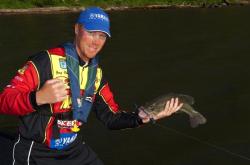
Elite Pro Bobby Lane uses creature baits that float above bottom on Carolina rigs to fool both smallmouths like this one and largemouths.

For more than two decades, Yamaha Pro Bobby Lane has relied on a technique and presentation known as “Carolina rigging” to propel him to the top of tournament leader boards, but, as in almost every professional bass fishing technique, Lane adds his own personal touch. In his case, the difference is concentrating in extremely shallow water.

“I fish water only about eight feet deep or less,” explains Lane, who used this presentation for three top 10 finishes in Bassmaster® Elite competition during the 2013 season. He ranked fourth in the Angler of the Year standings, and in February will fish in his 7th Bassmaster Classic.® “I believe it works because it’s just something a little different that bass don’t see very often, and it fools both largemouth and smallmouth.

“The real key is using a lure that floats above the bottom. I think bass are usually suspended a foot or so above the bottom, anyway, and a floating lure looks very natural to them. I prefer a soft plastic creature bait that glides through the water like a small salamander. It’s a fairly large bait bass can’t resist, and because I can rig it weedless, I don’t worry about getting snagged in the cover.”

Lane likes a shorter leader than most anglers for the Carolina rig, typically using only about 18 inches.

Developed more than half a century ago, the Carolina rig consists of a sliding sinker threaded on the main line, followed by a swivel that stops the sinker. A length of leader line containing the hook and lure is then tied to the opposite swivel terminal; this leader is what allows the lure to move freely while the sinker is dragged along the bottom. Most anglers use the Carolina rig in deeper water and with three-foot leaders and heavy 3/8- and one-ounce sinkers.

“I use sinkers weighing only ¼- or 3/8-ounce, and my standard leader length is only about 18 inches,” continues the Yamaha Pro, “and if the fish are active, I’ll use an even shorter leader.

“What I concentrate on is shallow cover, most of which I can’t even see. I make extremely long casts, then slowly pull the sinker back along the bottom until I feel it hit some of that cover. When it does, I slow my retrieve even more because I know I’m close to fish. I don’t hop the lure with my rod tip at all, but rather, very slowly and steadily pull my rod to the side so the sinker stays on the bottom.”

Another key to Lane’s presentation is his use of monofilament line, because it floats far better than fluorocarbon or braided lines. By using 12- to 15-pound test mono for both his main line and leader, he doesn’t have to worry about having his line nicked and weakened by the cover he’s fishing, either.

Largemouths like the C-Rig even better than smallmouths, says Lane.

Bobby Lane with largemouith

Bobby Lane with largemouith

“I fish whatever type of cover is in the water,” he explains, “because that’s where the bass are going to be in shallow water. This can include vegetation, rock piles, laydown timber, boat dock pilings, even shell beds. In shallow water Carolina rigging, I’m not looking for depth changes and channels, just cover.

“I don’t go along a shoreline and cast the water’s edge, but rather, stay further offshore and cast at an angle into the shallow water. I use a 7’3″ medium action rod with a fast tip that lets me make extremely long casts with my light lure and sinker, so in many cases, I’m actually using the Carolina rig as a search tool to help me locate bass because I can cover so much water.”

The Yamaha Pro’s shallow water Carolina rig presentation is a year-round technique, too. Lane doesn’t use it in extremely muddy conditions or when a strong current is present, but he has enough confidence in it to always have two or three rods rigged with different sinkers and leaders no matter where he’s fishing.

How To Catch Big Bass On the Bottom In the Winter

Big Bass On The Bottom In Winter

When the air is hand-numbing cold outside it is easy to stay home and be warm and comfortable. You just know the bass are as miserable as you would be if you went fishing. After all, they can’t come inside and warm up like you can. They stay cold all the time so there is no way you can catch them.

Such thinking is misleading. Bass are cold blooded and do not get uncomfortable because of cold water. Their bodies respond to it by slowing down. They become very inactive and don’t eat very often. They usually won’t chase anything very far. But, they can be caught.

The good news is they do eat, and the bigger bass seem to feed more than smaller ones. When you are miserable because it is so cold can be a good time to hook the biggest bass of the year. You just have to adapt your fishing methods to the way the bass are reacting to the cold water.

In the cold water of winter bass hold in deep water. With one big exception they seem to like cover like rocks, stumps and brush. They don’t migrate to shallow feeding areas very often, if at all. Bass may not move for days at a time. They eat very little since their bodies don’t require much food because they are so inactive.

To catch bass you first have to find them. Deep structure with cover is where you should search. Find humps, long points that drop off into the channel, channel edges and other deep contour breaks that all attract winter bass. Add a rock pile, stump or brush to the deep structure and you sweeten it.

The one exception to holding in cover is the attraction of a smooth, slick hard bottom. Hard sand or clay on a hump or point will attract bass and they will hug the bottom in such places. Sometimes you will land a bass with mud on its belly fins, a sure sign they are holding in contact with the bottom.

A good depthfinder is essential to finding winter bass in deep water. Bass will usually bunch up on a small spot on the deep structure and, since they won’t move far to hit your bait, you must hit the place they are holding. Riding deep humps, points and drops while watching for anything on the bottom will give you a good place to start.

Sometimes you will actually see the bass holding just off the bottom on hard areas with no cover, but usually you are watching for brush, stumps and rocks where the bass are holding. In either case you need a marker buoy to drop near, but not right on top of, the cover or fish you spot.

Also watch for balls of baitfish over the structure. Bass will hold in areas where baitfish are plentiful since they do need some meals during the winter, and baitfish like shad often die in the cold water and fall to the bottom, offering bass an easy meal as they flutter down. So spotting baitfish over the structure you fish is definitely a plus.

There are two basic methods to fishing for deep bass in cold water. You either jig for them or slide for them. Jigging means hopping a bait up and down, preferably in one place, to attract a bite. Sliding means crawling your bait along the bottom, keeping in contact with it and moving very slowly.

Jigging is best when you are fishing a tight school of bass or small patches of cover. Sliding works best when you think the bass are holding right on the bottom on scattered cover like stumps or on a slick, hard bottom. Some baits work best for one method or the other but several can be fished in either way.

A jigging spoon is the classic way to catch bass in the winter and they work well, but you can also jig a tail spinner lure like a Little George or a lead head jig. Jigs can be either hair like bucktails or plastic bodies. With jigging, you want to present a bait right in front of a bass over and over. Make it look like a dying baitfish falling to the bottom and struggling to swim back up and it looks like a meal too easy to pass up.

Baits that work well sliding on the bottom to cover more area include a jig and pig, horse head jigs with as small spinner like the Fishhead Spin and plastic worms. A Carolina or Texas rigged plastic worm crawled along the bottom works in cold water but a shaky head jig is often better in very cold water since it has better action when sitting in one spot and not moving.

You can slide a tail spinner lure along the bottom but you will get hung a lot due to the dangling hooks, so you would be better sliding a Fish Head Spin with its upturned hook. You can jig a Texas rigged worm up and down but it won’t have the same appeal as a spoon fluttering up and down. But try different methods and you may find one that works best for you that is not the norm.

Your depthfinder has revealed a group of bass holding on a deep ledge. Since they are tightly bunched it is the prefect place to jig for bass. Drop a marker buoy a few feet away from the fish so it doesn’t spook them and doesn’t get in the way while jigging, and ease your boat right on top of the fish.

When jigging, it is important to get directly over winter bass since they won’t move far. Many times the guy in front of a bass boat will catch fish after fish while the guy in the back, using the exact same lure, never gets a bite. That is why it is important to stay right on top of the fish. A depthfinder with its transducer mounted on the trolling motor helps you fine tune your position relative to the marker buoy and keep you in the right spot.

Drop your bait down till it hits bottom. Take up the slack in your line until your rod tip is near the water with the line tight and the lure on the bottom. Pop your rod tip up then let the lure fall back on a tight line. When it hits bottom, repeat the process.

It is extremely important to keep your line tight as the bait falls since that is when almost all your hits will happen. With slack line a bass will suck in a bait and spit it out before you feel it hit. Watch your line for any ticks or unusual movements as it falls, and set the hook. Also set the hook if the lure does not go down as far as it should. That often means a bass holding just off the bottom has sucked in your bait.

Try different speeds of your jig, from a fast pop to a slow pumping rise and fall. Also jig it up different heights off the bottom. Sometimes bass want a bait going up a foot or so, other times you need to raise it several feet off the bottom. Experiment and let the fish tell you what they want that day.

With a jigging spoon or bucktail you won’t feel much as you raise it up and down. A tail spinner will vibrate as it goes up and down. Each has its own feel and you will get tuned in to what it is doing as you fish it.

A couple of things will make your jigging more effective and easier. On a spoon, use a split ring to attach your line. This allows it to swing freely and move better. And put a swivel on your line about 18 inches above the spoon. Spoons twist line badly as they fall and a quality ball bearing swivel will cut out most of the problems. Attaching it on a leader above the spoon keeps it away from the bait but still cuts out most line twists.

The end of a long point has revealed scattered stumps near where it drops into the creek channel. Although no fish are visible on the bottom, balls of baitfish are suspended over the point. This is a good spot to slide a bait along the bottom and bump the stumps. Throw out a marker at the shallow end of the area you want to cover then back off. Start your casts near the marker and make each casts after it a little deeper.

Slide your bait along the bottom. Use a heavy enough bait to stay in contact with the bottom, going heavier if wind or current is affecting your bait. Deeper water calls for heavier baits, too. Slide it along until you bump a stump then pause it, giving a bass holding there time to hit in the cold water. Keep moving your bait along until you cover the whole area from your marker to the drop, then move to another spot.

If your bait feels mushy as you move it along, set the hook. Watch your line for any unusual movement but bass in cold water often suck in a bait and stay in one place and you never see your line move. If you feel anything different, set the hook.

Water clarity is more important when jigging than when sliding. Clearer water seems to always produce more hits when jigging a bait up and down. In stained water a bait that makes more vibration, like a Little George, would be better than a quiet jigging spoon or bucktail. Sliding a bait along the bottom makes vibrations the bass can feel and help them hone in on it as it approaches them.

For jigging a baitcasting reel works best since you can control your line easier, letting more out slowly as the depth changes. A rod with a light tip but strong backbone allows you to feel your bait going up and down but gives you a good hookset when a bass hits.

A short 5.5 foot rod gives more control over the jigging action but a longer rod will allow you to move the bait up and down more, and also gives you more leverage when setting the hook. Try different lengths rod until you find what works best for you.

For sliding a bait along the bottom a longer rod is better and you can use either spinning or baitcasting. You need enough backbone to set the hook with a lot of line out but a light tip gives you better feel for hits or bumping cover.

Fluorocarbon line is a good choice for either kind of fishing. It does not stretch as much as monofilament so the hook set is more positive, and it gives you good feel for strikes. That also helps know what your bait is hitting on the bottom when sliding it along. The invisibility of fluorocarbon line helps in clear water, too. You can go with heavier line without spooking the fish.

The bass are out there and they are not uncomfortable. They will hit if you adapt your fishing to the way they respond to cold water. Dress warmly, get out there on the water and you can catch bass, even in miserably cold weather.

Put a little spin and flash in your cold weather baits. For jigging, a tail spinner like the Mann’s Little George gives flash and vibration as you pump it up and down. The blade slows the fall, too, making it more attractive to lethargic bass.

For sliding a lure along the bottom, a horse head jig like the Fish Head Spin, has a small under slung spinner that gives a little flash and some vibration. As you slide this bait along the bottom the spinner adds to its appeal, attracting bass that ignore as lead head jig without the spinner.

How To Fish Suddeth Crankbaits In Cold Water

Bass fishermen dream of caching fish, but many also have the fantasy of working in the fishing industry, spending all their time fishing and thinking about it. Few make that dream come true but Joey Baskins did, developing and making lures for bass fishing.

Joey worked in a plant but loved fishing. He fished bass tournaments and made contact with many sporting goods stores, and saw a need for good, reliable baits that caught bass.

He developed Blademaster Lures then acquired Suddeth Crankbaits, and now spends his time coming up with new lures and colors and testing them out. He has been fishing for over 30 years and is fishing the some of the BFLs and Fishers of Men tournament trails.

The Blademaster side of the company produces spinnerbaits, buzzbaits, all kinds of jigs and jigs with belly blades. Suddeth Crankbaits were developed in South Carolina back in the early 1980s and Joey bought the company from the brothers that started it about ten years ago.

A few years ago there were problems with Suddeth Crankbaits. Joey had some health problems, took about a year and a half off from working with the crankbaits, and the crankbaits produced during that time often did not run right. Those problems have been corrected now. Each and every crankbait he produces is now hand tuned in a tank at the plant before they go out the door.

Joey has also invested many thousands of dollars in new molds to insure each bait is exactly right. The new molds mean better quality and uniformity of the baits. A thicker, sturdier wire is used in them to keep them from becoming “untuned” when they bounce off cover, too.

“I try to make the baits fishermen want, and will make any color bait a customer wants to order,” Joey said. All of the baits produced by Suddeth and Blademaster are hand made and painted. He has also teamed up with John Kissel of Kissel Krafts Custom Rods to develop the perfect crankbait rod, called the Little Early Rod.

Crankbaits in the Suddeth series include the well known Little Earl and Boss Hog. The Fat Earl is made to bounce off cover better and the new Pot Bellied Hog is coming out soon. It is a square billed bait that runs shallow and has a profile that should drive bass wild. He is also coming out with the Big Boss Hog, a bigger version of the Little Boss Hog.

All Suddeth crankbaits currently come with sharp hooks but the hook design Joey likes best is being discontinued so he is looking at different companies for future hooks. No matter which company he goes with he will make sure the hooks are sharp right out of the box and hold bass that hit.

Suddeth baits currently come in 67 different colors and color combinations. One of the best for February fishing in stained water is the 049 color. This bait has a brown back and chartreuse sides and produced most of the bass we caught a couple of weeks ago.

The most popular color of Suddeth Crankbaits is the GGG “dollar bill” color, or green/gold/glitter bait. The 026 color is very good in clear to stained water and looks like a baitfish. Both the 049 and 026 are good colors to have with you on any lake you fish this time of year.

Joey took me fishing in mid-January with one of his pro staff, Ken Cothran, who fishes the Bulldog BFL, Stren series and FLW Tour and FLW Series tournaments, the last two on the co-angler side. He also fishes many local team, pot and charity tournaments. They showed me where and how to fish crankbaits in February on Jackson Lake, a small lake in middle Georgia known for good crankbait fishing in the winter.

“Where you fish a crankbait in February is important,” Joey said. Points are always a key, with main lake points with deep water nearby usually producing the best bites this time of year. Rocks and hard clay are needed to draw bass to the point to feed, and some brush or stumps definitely help.

Main lake points are usually best in early February but as the days warm later in the month the bass will move back into the creeks and coves. Start out on the main lake but don’t hesitate to work back into the creeks, hitting points in them near deep water.

Sunny days draw bass up on the points in more shallow water and a little wind helps make them bite better. Some current running across the cover on the point definitely makes the bass more active. Bass will move in on these points and feed, so Joey and Ken keep moving, looking for active fish. If they catch one they will stick around for a while but will definitely come back since fish move in and out where they are feeding.

Crank the bait down with seven or eight turns of the reel handle then slow down the retrieve, working the bait very slowly across the point and through the cover. Suddeth baits are tuned to have good action at a very slow speed, which makes them ideal in cold water.

Ken says water colder than 40 degrees makes the bite extremely tough but water 45 to 50 degrees, which is more typical in February, means decent fishing. A few warm days in a row, making the water temperature increase, turns the fish on and we often have series of warm days this month like that. When the water temperature goes over 50 degrees the bite gets much better.

Keep your boat in fairly close to the point and work around it casting at an angle, fishing from the bank out. Angle casts like that keep your bait in the feeding zone and does not waste time. Bass usually feed from very shallow out to about ten feet deep on these points and that is the depth you want to cover.

We have all had it happen. The guy with us, using the same bait, line and even rod and reel, will catch more bass than us. The way you work the crankbait can make a huge difference. Joey and Ken both say try different things until the fish tell you want they want.

Try a steady, very slow retrieve first. Always try to bump the bottom with your crankbait. Most crankbait strikes are reaction strikes and bumping cover will make them hit. When you are reeling slowly the bait will turn on its side then move off, much like an injured baitfish, just what the bass want.

Also try a stop and go retrieve. Crank your bait down to the bottom then work it with your rod tip and reel, making it pause and then move forward. Again, it looks like and easy meal when moving erratically like this.

Suddeth makes both floating and sinking models of their crankbaits. With the floating models when you pause the bait will sit in one place, and then slowly rise. Try pausing floating baits for varying amounts of time, going from a pause where the bait just hesitates in one place, to one where the bait floats up several inches to a foot.

The slow rise of a bait will sometimes make a reluctant bass hit it. If you don’t get the reaction strike this pause and rise can make the difference. When a bass is not feeding actively they still can’t turn down such an easy meal.

With the sinking baits, do the same thing. The very slow fall of the Little Earl sinking model makes it look easy to eat, and the baits will settle to the bottom upright, looking like a baitfish that is trying to hide from the bass by not moving.

Wood cover definitely holds bass this time of year on the points and the square bill Pot Bellied Hog is made to bounce off shallow wood. It will run about three feet deep and is perfect for those sunny warm days at the end of a warming trend when the bass hold very shallow to take advantage of the warmer surface water.

Run it over any wood you see or know is there and the bait bill will hit it and make it deflect off it without getting hung like a round bill will do. Try the stop and go and the steady retrieve even when fishing this shallow, offering the bass different views of the bait.

Try to hit the wood. This seems like a bad idea when throwing a crankbait but the deflection off wood is often what is needed to get a bite. You may get hung up some, but you will get hung up on a bass more often if you bump your crankbait through the wood cover. The floating models of both baits work much better than the sinking models around wood cover.

With deeper wood try the Fat Earl. The shape of the lure will help it stay off the wood when you hit it, doing the same kind of action as the square bill in more shallow water. Bump the wood and pause it, or bump the wood and keep it moving, for different actions. But try both and let the bass tell you which they like best.

The line, rod and reel can make a big difference in crankbait fishing. A rod designed for crankbait fishing like the Kissle Little Earl rod has a parabolic action that makes for better casting and helps keep bass from pulling off when hooked. Reels are a personal choice but should have a good drag system and allow you to reel the lure at different speeds.

Joey and Ken like monofilament line like Trilene Big Game in ten pound test. Monofilament line has some stretch and is less likely to allow the bass to pull off the hook. Ten pound line is heavy enough to get bass away from cover but thin enough to let the bait work at the depth it is designed to run.

Most of the Suddeth crankbaits come with a rattle but some don’t, and Joey says he thinks bass in cold water often want a silent bait. If you are throwing a rattling model and not getting bites, try the ones without a rattle. This often happens in water that is clear. A rattle almost always helps in muddy water.

Crankbaits are great baits to fish right now, no matter where you fish. Give Suddeth baits a try and see if they produce for you like they do for Joey and his pro staff. You will be happy with the new, improved versions of the older models and the new baits coming out right now will offer you the ability to fish even more ways.

Joey has just come out with a new website at
http://blademasterluresusa.com/. The old site is at http://bladesandbaits.com/ and you can check out more information on their facebook page at http://www.facebook.com/pages/Suddeth-Crankbaits-and-Blademaster-Lures-and-D-J-Guide-Service/124833912020.

Many sporting goods stores carry Blademaster Lures and Suddeth baits and you can order directly from the site, as well as contact Joey about any custom colors you want him to paint a bait for you on the site.

Aaron Martens Is Ready for the Bassmasters Classic

Aaron Martens Heads Into Bassmaster Classic At Top Of His Game

BIRMINGHAM, Ala. — Four times a Bassmaster Classic bridesmaid means only that the odds are with Aaron Martens to finally be the bride.

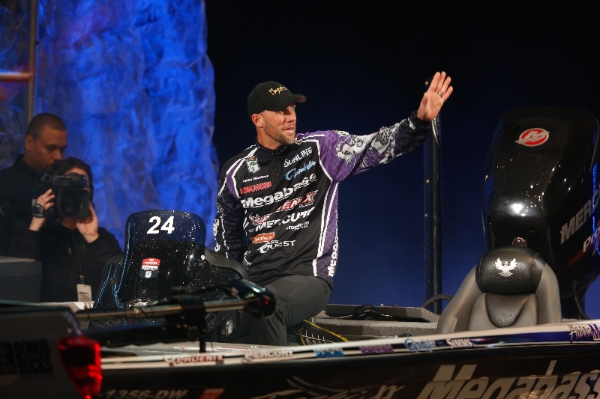
Bass pro Aaron Martens

Bass pro Aaron Martens

That’s how Martens regards his legendary four near misses to be the world champion. It’s a positive spin on what could be heavy baggage heading into the Feb. 21-23 GEICO Bassmaster Classic on Lake Guntersville and in Birmingham, Ala., Martens’ home base.

“I feel very fortunate to have come that close four times. It makes me feel like I can win. You’re that close in a short period of time; the odds are with you; it’s going to happen,” said Martens, who is looking for his first Classic crown.

Martens has more than the odds going for him this time around. He has momentum after wrapping up his 2013 Bassmaster Elite Series season by adding another Toyota Bassmaster Angler of the Year title to his first AOY title from 2005.

He has a solid track record in Classic competitions. He’s competed in 14 Classics since 1999, missing only in 2003 after an uncharacteristic off year. In nine of the 14, he scored a Top 12 finish. In only three of those 14 did he fail to advance to the third-day finals.

In his Bassmaster career, he’s won six times (and placed second a dozen times). One of those wins was in the Bassmaster Elite Series on Lake Guntersville in May 2009.

And now the world championship is coming to a lake he’s not only won on, but competed on eight times since 2002. Not to mention that the Classic is where he lives. His home in Leeds, Ala. — just east of Birmingham — is 78 miles from Lake Guntersville.

Martens has been doing his Classic homework. One priority has been keeping himself in top physical condition.

“I’ve been training so I can try to spank everybody. If I can get into phenomenally good shape, maybe it will help that much,” he said.

Martens is a runner — a marathoner. For him a 10-mile run is a warm-up. Unless he’s laid up in bed sick, he’s out running every day.

In the same dedicated way, he cares for his tackle, boat, clothing and any other gear and tools he relies on.

“I work on it all the time. I put in eight hours a day in the offseason, sometimes more,” he said. “I’m getting ready for the Classic and for the whole season. I start over every year and go through everything to make sure it’s perfect.”

Martens’ Classic homework also included about six days on Lake Guntersville over a two-week period. Other commitments kept his Classic pre-fishing time relatively short for someone who lives nearby. But he said six days was enough to bring him up-to-date on the big fishery and enough time to know there are many things about Guntersville he doesn’t know.

Overall, he liked what he saw.

“The lake’s healthy and the grass was tremendous, even in December,” he said. “With the grass as thick as it is, the bass are averaging pretty good size. For all the fishing pressure Guntersville gets, the fishing still holds up. That’s what’s so amazing about Guntersville.

“And I like Guntersville’s layout — long, with a lot of creeks on it, and good main-river stuff.”

He compared the lake now to how it was in 2009, when he won the Elite event.

“In ’09, you could catch 20 or 30 5-pounders a day. I don’t see that now,” he said. “But you can catch four or five of the big ones a day.”

He said his Guntersville goal is to bring in at least 25 pounds a day.

“I don’t know if I’ll do it, but if I can, my chances (of winning) are good,” he said.

If conditions are perfect, he said, he expects to see some 30-pound bags.

“I’m pretty sure the record will fall,” he said, referring to the Classic weight record for five fish over three days set at 69 pounds, 10 ounces in 2011 by Kevin VanDam on the Louisiana Delta.

Martens, of course, hopes to be the one who busts the record — to be the bride this time.

“Once fishing starts, it’s all business for me. I might give someone a smile, but I’m going to be serious the entire time. You have to keep your focus sharp on the task ahead of you.”

2014 Bassmaster Classic Title Sponsor: GEICO

2014 Bassmaster Classic Official Sponsors: Toyota, Bass Pro Shops, Berkley, Evan Williams Bourbon, Humminbird, Mercury, Minn Kota, Nitro Boats, Skeeter Boats, Triton Boats, Yamaha

2014 Bassmaster Classic Outdoors Expo Presenting Sponsor: Dick’s Sporting Goods

2014 Bassmaster Classic Official Apparel Sponsor: Carhartt

About B.A.S.S.
For more than 45 years, B.A.S.S. has served as the authority on bass fishing. The organization advances the sport through advocacy, outreach and an expansive tournament structure while connecting directly with the passionate community of bass anglers through its Bassmaster media vehicles.

The Bassmaster brand and its multimedia platforms are guided by a mission to serve all fishing fans. Through its industry-leading publications — Bassmaster Magazine and B.A.S.S. Times — comprehensive website Bassmaster.com and ESPN2 and Outdoor Channel television programming, Bassmaster provides rich, leading-edge content true to the lifestyle.

The Bassmaster Tournament Trail includes the Bassmaster Elite Series, Bass Pro Shops Bassmaster Open Series, Carhartt Bassmaster College Series, B.A.S.S. Nation events and the ultimate celebration of competitive fishing, the Bassmaster Classic.

B.A.S.S. offers an array of services to its more than 500,000 members and remains focused on issues related to conservation and water access. The organization is headquartered in Birmingham, Ala.

Pros Get Ready for Bassmasters Classic

Yamaha Pros Excited About Upcoming Bassmaster Classic®
from The Fishing Wire

Pace, Vinson, Jones and Crochet Discuss Pre-Tournament Scouting and Strategy

Cliff Pace

Cliff Pace

Cliff Pace

For most people, the Christmas and New Year’s holiday is a time of relaxation with family and friends, but that’s only part of the story for the 18 Yamaha Pros who will be fishing in the Bassmaster Classic® in February. For many of them, at least part of the Christmas season was spent bass fishing and scouting Alabama’s Lake Guntersville, site of the 2014 world championship. The lake went off-limits to all competitors Dec. 31.

“I went to the lake right after Christmas,” noted Yamaha’s Cliff Pace, winner of the 2013 Classic® on Grand Lake. “I’ve had both good and bad tournaments on Guntersville over the years, but this event has the potential to be one of the greatest Classics® we’ve had in many years. Guntersville ranks as one of America’s top bass lakes, and February can be one of the best times to fish there.”

Pace can be excused for not visiting Guntersville sooner, because he’s been celebrating the holidays since December 5 when his first child, daughter Jordan Baylee, was born. Other Yamaha Pros, like Greg Vinson, have been making periodic trips to the lake since October. Vinson finished second in the 2012 Bassmaster Classic® on the Red River and hopes Guntersville may set up well for his style of fishing.

Greg Vinson

Greg Vinson

Greg Vinson

“Guntersville is famous for its milfoil vegetation, which has helped create the great fishing,” he noted, “so I spent my scouting time there looking for places I think the milfoil will be growing in February, because that’s where the bass are going to be. I’d really like to find just one or two key areas, but so far, I haven’t found any places that might be dominant. It’s good from one end of the lake to the other.”

Fellow Yamaha Pro Alton Jones agrees. He won the 2008 Classic® and likewise spent his scouting time looking for potentially strong areas that bass may be using in February. Guntersville contains more than 69,000 acres, but Jones concentrated on only about 20,000 acres during his trip there in early December because he knew he couldn’t learn the entire lake.

“It’s exciting because it may take as much as 70 pounds of bass to win, and those fish can come from dozens of different places,” Jones said. “I believe shallow crankbaiting around the milfoil will play an important part in the tournament, and that’s one of my favorite ways to fish.”

Alton Jones

Alton Jones

Alton Jones

Like Pace, Jones waited until December to look at Guntersville, but for a different reason. He’s helping with a fisheries management program on the La Perla Ranch in south Texas where the owners are hoping to grow a new world record largemouth. Right after his scouting trip on Guntersville, he and the ranch owners shocked up a five year old bass weighing
14 pounds.

Yamaha Pro Cliff Crochet made two trips to Guntersville in early November between games with the junior high school football team he coaches during the off-season, and one day there he caught five bass weighing 18 pounds. Overall, however, he spent most of his time idling and looking.

“For the 2010 Classic® at Lay Lake near Birmingham, I pre-fished the lake hard prior to the cut-off, but it really didn’t do me much good,” Crochet remembered, “because the water and the fish changed between November and February. “This time, I looked more at how the milfoil was growing, and where I think it may be growing, and I was encouraged.

“Everybody knows the lake is full of bass and that some big catches will be made, and that’s fun to think about.”

“Guntersville is one of the lakes on the Tennessee River system, and it can change overnight,” concluded Pace. “When I go, I won’t fish very much at all, either. What I’m really hoping to do is narrow my fishing options and just establish a starting point when the official practice begins, but I’m like Alton in that I believe this Classic® will be won in water 10 feet or less, and around the vegetation.

“Of course, I want to win again, but no matter how it turns out, I know it’s going to be exciting.”

Other Yamaha Pros who have won previous Bassmaster Classics® and will be competing at Guntersville include Mark Davis (1995), Michael Iaconelli (2003), and Takahiro Omori (2004).

I Almost Made It To the Bassmasters Classic

I Amost Got To Fish the Bassmasters Classic

Fishing the Bassmasters Classic is the dream of every bass tournament fisherman. It is the “Super Bowl” of bass fishing and only 51 of the top professional and amateur fishermen get to fish it.

The pros qualify through the Elite and Opens tournament trails. The amateur fishermen qualify through the state federations. In Georgia, each affilated BASS club can send its top six fishermen to a state Top Six Tournament. At that tournament in Georgia there are about fifty clubs participating so there are up to 300 competitors. The top 14 at that tournament go to the Southern Regional, with the teams from seven southern states competing.

At the regional, the top man on each state team goes to the nationals, where the seven regions compete. There, the top fisherman from each regional qualifies for the Bassmaster Classic. It is a tough way to make the Classic and only one Federation angler has ever won the Classic.

I joined the Spalding County Sportsman Club in 1974 and fished my first state top six in 1979. In 1983 I finished fourth in the Georgia Top Six at West Point and made the state team. The regional was at Kentucky Lake that year and I was excited but felt overwhelmed fishing with some great fishermen on our team.

Back then there were no nationals and the top fisherman on the top state team at each regional went to the Classic. Our team worked together, sharing patterns and places to fish, and won the tournament. I cam in second overall in the Regional, but was also second on the state team. Roger Farmer beat me by a little over two pounds in the three day tournament and qualified for the Classic.

I came THAT close to making the Classic that year, one 2.5 pound fish in three days.

Roger went to the Classic and I came home and signed up for all six of the tournaments on the old Red Man trail – what is now the BFL. But that experience is another story.

I am attending the Classic in Birmingham this year as a press observer. That will be fun and exciting, but not nearly as mush as competing in it!

What Are Some New Ways To Fish For Bass With Soft Plastic Baits?

Three New Ways To Use Old Soft Plastic Rigs

By Lawrence Taylor
from The Fishing Wire

If you call yourself a bass fisherman, you likely know the three basic soft-plastic rigs, the two named after states and the one that’s wacky. What you may be unaware of, however, is that you’re not using them to their full potential. Here are three ways to use those rigs to catch fish and impress your friends.

Sweet and Weedless Carolina Rigs

You think the Carolina Rig is a super-slow technique involving barely noticeable pulls of the rod and pauses long enough to read a chapter of Steven King’s new novel, “Dr. Sleep.” Heck, sometimes your pauses are long enough you actually fall asleep.

There are times when you do need to go slow with this rig, usually during post-front, bluebird days, but bass love a Carolina Rig fished faster than that. B.A.S.S. Elite Pro Terry Scroggins uses a Carolina Rig as a search bait.

“It’s perfect for quickly checking areas,” he said. “I use it a lot during practice.”

Scroggins pulls and pauses, but he uses long pulls and short pauses, until he feels something interesting.

“I’ll let it sit longer when I feel it hit a stump or rock, but usually I’m working it pretty quick.”

Jason Christie, the current No. 1 Angler in the World according to the BassFan World Rankings, used a Carolina Rig during the 2013 season to add to a tournament-winning bag of fish. In that tournament he eliminated the pauses altogether.

“The smallmouth were moving in to spawn and I noticed that every bite I was getting was while I was moving the bait,” he said. “So, I just left out the pauses and used the reel to move the bait. It wasn’t super slow, but somewhere between that and a medium-speed retrieve.”

One problem associated with this rig is that the weight easily slips into cracks and crevices in rocky bottoms. We all know those places, where rocks, wood and all kinds of “junk” on the bottom eat lures for every meal. One fix lure designer Mitch Looper, a big-bass expert with many 10-pound-plus bass to his credit including one of the biggest northern-strain largemouth ever caught, uses to beat this type of “sticky” bottom is to change the weight.

“The reason you get hung in those places is because the weight gets caught,” he said. “I like a banana-shaped weight in those situations, like the Lindy No Snagg. It’s made for walleye fishing, but the bass don’t know that.”

Surprising Texas Rigs

Traditional Texas-rigging normally means bumping a worm or craw off the bottom, or flipping a craw or creature bait into shoreline brush and cover. Like the Carolina Rig, though, the Texas rig doesn’t have to be fished slowly with a lift-and-pause retrieve.

Alabama fishing guide and tournament angler Jimmy Mason uses a Texas Rigged lizard like most people use a hollow-body frog.

“It’s a great alternative when everyone’s throwing frog on the grass mats,” he said. “Rig it with very little weight – just enough to get a good cast – then just pull it along on top of the mats and let it fall a little in any open holes.”

This Texas-Rigged lizard in the grass doesn’t just fit into the Alabama plan, but works everywhere bass get into shoreline weeds, too. One April on a little-fished body of water in Oklahoma, the big females were moving up into the shallow grass to spawn and a weightless Texas rigged lizard worked quickly on top of and through the grass was exactly what they wanted to eat.

While other anglers were slowly pitching tubes or jigs into the weeds, we sped around the area keeping the lizards just at the surface, and landed seven bass in two hours with the smallest weighing more than 5 pounds. With a little practice, you can even get this rig to walk like a Spook on top.

Everyone knows that B.A.S.S. Elite pro Alton Jones is a fan of the YUM Dinger, but he uses it far more extensively than most anglers. Most anglers believe this soft plastic stickbait should only be used weightless in water less than 6 or so feet, but Jones doesn’t hesitate to add a weight as heavy as ¾- or even 1-ounce and fish the Dinger deep, especially when he’s targeting big bass in big-bass waters.

“It’s just as good down deep as it is up toward the surface,” he said. “At Falcon Lake, it’s one of my go-to rigs. It’s a big, fat meal that gets their attention, but it doesn’t move much, so it’s also easy to catch.”

Wacky World

Legendary FLW angler David Dudley fishes a Dinger or Mighty Worm wacky style when bass are in relatively shallow water, but like most fishing geniuses he does it differently than most. The rigging is the same, a hook impaled through the midsection or egg sack area of a straight plastic so that when held by the hook eye, the worm drapes downward on both sides like an upside-down “U.”

Traditional retrieve with a wacky worm is to cast, allow the bait to sink a bit then give it a couple of twitches with the rod tip before letting it sink some more. It’s a tremendously effective retrieve when fishing a vertical structure, such as a dam face, weed edge or against bridge or dock pilings, but the rest of the time, Dudley is fishing it fast to cover water and pick off fish that are relating to sparse shoreline cover. His rod is almost always moving, twitching quickly while he reels in the slack.

“You want the two ends of the worm coming together in almost a clapping motion,” Dudley said. “It’s like it’s saying, ‘You come eat me now or I’m getting away.'”

Another wacky rig modification is to use a finishing nail impaled straight into the tail end. The nail adds a little weight and a different look as it sinks. This works best with a slender, flexible worm like the 6-inch Mighty Worm. The weight pulls that end of the worm down faster than the non-weighted, end, giving fish a totally different look that’s perfect during the post-spawn when bass are guarding fry.

This last modification can make you the hero from the back of the boat. How many times have you spotted a great spot to throw a wacky worm, but you miss it because of the captain’s heavy trolling motor foot? A great solution is to rig a wacky worm Dinger below a small float, either a traditional tear-drop shape or a fly fisherman’s casting bubble.

With this rig, you can cast to the spot and feed out line as the boat moves away, allowing you to slowly and thoroughly fish the spot. Giving the rig a few twitches now and then provides all of the action the rig needs to trigger strikes. Use the longest rod possible and non-stretch braided line to get a good hookset from a distance.

Bass Fishing Lake Chickamauga

Chickamauga Bass with Jeremy York

Chickamauga has been the best bass lake in the Southeast, if not in the whole country, the past few months. Many eight pound plus bass have been landed and in most tournaments you didn’t even need to weigh in if you had five bass weighing less than 25 pounds.

The bad news is the patterns producing those incredible stringers working the first three months in 2013 year are over by the end of March. The good news is those bass are still there, hungry in May and can be caught on a variety of new patterns.

Chickamauga is a TVA Lake just outside Chattanooga on the Tennessee River. It runs 59 miles from the dam up to the Watts Barr Dam, with many big feeder creeks. Although it is not in Georgia or Alabama, many fishermen in our state are less than three hours away and make the trip often. If you are not one of them you are missing out on some incredible bass fishing.

Jeremy York owns Angler’s Warehouse near Athens, Georgia. Two years ago one of his pro staff invited him to sample the great bass fishing that was just being discovered on Chickamauga. He went up and caught some big bass and fell in love with the lake. He now makes the three hour drive several times a week in the winter and does some guiding on the lake, about 25 trips so far this year.

Jeremy is a tournament fisherman and fishes the pro trails as well as local and regional tournaments. In the BFL on Chickamauga in March, 2013 he weighed in five bass weighing 30.25 pounds – and came in third! In another tournament he had five weighing 27 pounds and came in 14 place.

In five guide trips in March 2013 he and his clients had their five best weighing 26, 39, 36, 30 and 32 pounds. That is better than a six pound average for four of the five trips.

In five trips this year he and his clients have landed an eight pound plus fish in each. One of his best trips was with a father and son. Within a few minutes of starting the father landed an 8.75 pound largemouth, he landed a 6.5 pounder and then the son landed an 8.68 pound fish, all within the first hour.

Jeremy found a pattern that works great from the beginning of January through March. When the water temperature hits 48 degrees the bass really turn on and 48 to 52 is the ideal water temperature. It starts slowly as soon as the water reaches 45 degrees. The pattern holds until the water gets to about 58 degrees, usually around the first of April, and the bass head toward the bedding areas.

Although this pattern is over this year, it is worth remembering for next year. Jeremy came up with the idea for the Extreme Bait Ball Rig that is sold by Picasso. It is an Alabama rig with teasers on the arms, so it looks even more like a school of baitfish. That is what he caught the big bass on from January through March.

He rigs it with one eighth ounce Buckeye Jewell heads on the hook arms and rigs them and the teaser attachments with either a 3.5 or 4.5 inch Shadalicious blue gizzard or Texas shad swimbaits. For bigger bass he runs the 4.5 inch bait on the hooks with smaller ones on the teasers, or runs the bigger size on all.

The ideal rig for throwing this heavy bait is an I Rod Bama Rig Special Genesis II rod with a Revo SX reel spooled with 80 pound Power Pro braid. He tried several reels and all wore out in a few trips except the Revo.

There are three things to remember when throwing this rig. Lob it, don’t make a usual cast. Keep reeling when you feel something until the bass almost jerks the rod out of your hand. You will hit stumps with it and if you set the hook you are unlikely to get the rig back. And finally, when you do hang up, keep your line tight as you go to it, go past the hangup and pop it loose with small pops of the rod tip.

Jeremy took me to Chickamauga the second week of April and warned me the great bite was probably over. Although he got a nice 4.5 pounder first thing that morning on the rig, fishing was slow. We went into the spawning pockets and they were full of bass just starting to fan beds. The fish were very spooky and we could not get them to hit, but we saw many in the six pound plus size starting to bed.

Adding to our problems that day the water rose almost two feet while we were there. The lake is scheduled to be at full pool by April 15th each year and it was four feet low when we got there. But it was filling fast.

When the water temperature is right Jeremy fishes transition areas like stump flats near the mouths of spawning areas. There needs to be deep water nearby with a shelf or flat with stumps on it. A ditch or cut running across the flat is key. The bass feed on those types of places during the winter and pre spawn.

Other good types of cover are banks where big rocks transition to chunk rock to sand, often found at the mouths of feeder creeks and coves. Big largemouth and smallmouth both like this kind of area and will hit the rig fished there. On one trip this year he got a six pound smallmouth and a six pound largemouth.

On the stump flats keep your boat out in deeper water near the cut or ditch and cast up to four or five feet of water. Work your rig back steadily, keeping it above the stumps but near the bottom. On the transition banks stay out a long cast from the bank and cast near it, fishing the rig back to cover water two to six feet deep.

File this information away for next year. But now for the good news. Those big bass are still in the lake and you can catch them right now. Fishing will be good from now through May and you can use a variety of baits to catch them.
Right now (in late April) about half the bass, especially the bigger fish, are on the beds or have been in the last few days. You can sight fish for them or drag a Carolina rigged lizard through the bedding areas. If sight fishing, look for stumps, the favorite place for a bass to bed on Chickamauga.

Jeremy likes a Big Bite Baits Fighting Frog on a light Texas rig, a white swim bait with a weighed keel hook or a whacky rigged Senko rigged weightless for sight fishing. He will cast well past the bed and pull the bait to it, letting it drop into the sweet spot. Let it sit and shake it and the bass will usually eat it if they are hard on the bed.

Good areas for sight fishing are in Soddy Creek, which usually has the clearest water on the lake, and other creeks on the lower half of the lake. The pockets up the river are full of spawning bass, too, but they are harder to see since the water is usually more stained there.

Another good area is Dallas Bay around Chester Frost Park. Jeremy says there have probably been 100 eight pound plus bass released there in tournaments this year and they will not leave the bay since the spawn is approaching. They will stay in the bay, feed until spawning and then gradually work back out to the river, feeding on post spawn areas.

The stump flats on both sides of the ramp are good spawning areas to check since they are littered with stumps. Be careful, the flats run way out. Try to follow the ditches and cuts going back into them since the bass will follow them. Often the biggest bass will be bedding on stumps closest to the deeper water in the cuts.

Bass move into the spawning areas in waves and about half of them are there now the last week of April. More will move in during the next few weeks, depending on water temperature and moon phase. They will stay on the bed for about a week then move off and spend about a week recovering. They won’t feed much during that week but will start feeding heavily after that so there will be a lot of hungry fish all during the month of May.

To catch post spawn fish Jeremy will try a variety of baits. A Spook or similar walking bait worked over the stump flats will draw explosive strikes. Keep your boat in the cuts and cast ahead of you down the cut and fan cast the flats on both sides. Cover a lot of water, fishing fast until you find feeding fish.

A swim jig worked over the same areas will also catch fish, especially if the fish are not real aggressive. Swim it in the same places you worked your topwater. You can also work a spinnebait over those areas or try to bump the stumps with a square bill crankbait.

Toward the end of May there will still be a few bedding bass but the bream spawn comes into play. Bass will feed on the bream that are bedding in the same areas as the bass use, so fish a swim jig around the bedding bream to catch those bass feeding on bream.

Another big key in May is the shad spawn. Chickamauga has two kinds of shad, both threadfin and gizzard shad, and golden shiners, all favorite foods of bass. The shad will spawn on gravel and shell bed flats and rocky banks this month and the bass often go wild feeding on them. Jeremy says the shell beds on flats near the river channel are a huge key to the shad spawn so seek them out.

Look for the schools of shad running the banks early in the morning or working the flats. Jeremy likes to see smaller areas of shad spawning. If there are shad spawning on 100 yards of bank there might be 20 bass feeding on them and they will be real scattered out. If there are shad on only about 20 feet of bank, those same 20 bass will be concentrated and easier to catch.

A spinnerbait, rattle bait or swim jig all work well on the shad spawn. Work them over the flats, running them right on the bottom. On the banks, cast right to the bank, even up on the rocks and pulling your bait into the water. The bass will be facing the bank so you want to cast as shallow as possible.

The shad usually spawn early, the first couple of hours of light on sunny days, but will stay shallow much longer on cloudy days. If it is sunny and the shallow activity stops, back off and fish a little deeper to catch the bass following the shad out a little ways off the bank where they hold until the next morning.

Why is Chickamauga so hot with big bass right now? Jeremy says the stocking of Florida and Northern strain largemouth as produced a cross, an F1 hybrid that grows very fast and is very aggressive. Tennessee DNR reports show they stocked both Florida and Northern strain largemouth as well as F1 hybrids in 2002. Those fish have reached trophy size and their offspring are reaching bragging size every year.

Jeremy thinks the next two years are going to be fantastic, with some huge bass caught in Chickamauga each year. All those eight to ten pound bass will mostly still be around for a couple of years and could be two to three pounds heavier. And all those five and six pounders will also be two to three pounds heavier.

For the future, there are a lot of four and five pound bass coming along, too. There is a 15 inch size limit on largemouth and an 18 inch size limit on smallmouth on Chickamauga and those limits have contributed to the larger fish in the lake. That size restriction also insures a good supply of quality fish for the future. So the fishing should stay really good for the foreseeable future. You definitely want to head to Chickamauga and get in on catching them.

A three day non resident Tennessee fishing license is $16 and can be bought on line before your trip. A ten day license is $25 and an annual license, good until February each year, is $80. You might want an annual license since you are sure to fall in love with fishing Chickamauga.

2015 Bassmasters Classic Returning to Lake Hartwell

Jan. 16, 2014

Bassmaster Classic To Return In 2015 To South Carolina

GREENVILLE, S.C. — The Bassmaster Classic is going “Upcountry” in 2015.

Greenville and Lake Hartwell, located in the upstate region of South Carolina popularly known as The Upcountry, have been selected as the sites for the 2015 Bassmaster Classic.

B.A.S.S. and South Carolina officials, including Gov. Nikki R. Haley, made the announcement today in Greenville.

Feb. 20-22 will be the competition dates for the field of anglers who qualify for the world championship through various Bassmaster competitions throughout 2014.

A new, multi-million-dollar launch facility, Green Pond, has been constructed near Anderson, S.C., for the anglers’ daily takeoffs. They’ll bring their catches to Greenville for weigh-ins at the Bon Secours Wellness Arena, recognized by the entertainment industry as one of the Top 50 venues in the world. The Bassmaster Classic Expo, the consumer show held concurrently with the competition days, will be at the 280,000-square-foot TD Convention Center in Greenville.

“We are thrilled that the Bassmaster Classic has chosen to return to South Carolina and selected Greenville for their 2015 location,” said Haley. “It’s truly a great a day in South Carolina, and now millions of people will get to see why our beautiful state continues to attract topnotch sporting events.”

“B.A.S.S. is delighted to be returning to Lake Hartwell and Greenville,” said Bruce Akin, CEO of B.A.S.S. “We will be working closely with our South Carolina partners over the next year to be sure Classic 2015 will be the first-class sporting event B.A.S.S. members and fishing fans worldwide have come to expect.”

B.A.S.S last brought the Classic to Greenville and Lake Hartwell in February 2008. The lake produced what was then the third-largest winning weight for a Classic: 49 pounds, 7 ounces. Bassmaster Elite Series pro Alton Jones of Texas was the author of that mark. Jones bested the 44-5 posted by Cliff Pace, then a 25-year-old, up-and-coming Elite pro from Mississippi. Pace went on to become a Classic champ himself in 2013.

Besides Gov. Haley, South Carolina officials on hand for Thursday’s announcement were representatives from South Carolina Parks, Recreation and Tourism (SCPRT); VisitGreenvilleSC; VisitAnderson; the City of Greenville, Greenville County; and Anderson County.

“We are thrilled that the Bassmaster Classic has chosen to return in 2015. The world championship of bass fishing recognizes the great combination of Lake Hartwell and facilities in Anderson and Greenville,” said Chris Stone, president of VisitGreenvilleSC.

Stone noted that in 2008, more than 75,000 people attended the Classic in Greenville over three days.

“We look forward to an even larger event in 2015, which will have tremendous impact on the local economy, with a projected impact of more than $17 million in revenue to the Upstate,” Stone said.

Said Duane Parrish, SCPRT director: “SCPRT is very proud that Greenville has been chosen as the host site for the Bassmaster Classic in 2015. This accomplishment is a testament to the hard work and efforts of VisitGreenvilleSC and VisitAnderson working together with the City of Greenville, Greenville County and Anderson County to once again host this premiere event, and is further proof of South Carolina’s growing reputation as a top destination for sports tourism.”

As one of the largest lakes in the Southeast, Hartwell attracts millions of visitors every year, according to the US Army Corps of Engineers, which manages the lake. Bordering Georgia and South Carolina on the Savannah, Tugaloo and Seneca rivers, the impoundment stretches 49 miles up the Tugaloo and 45 miles up the Seneca at normal pool elevation. Hartwell comprises nearly 56,000 acres of water with a shoreline of 962 miles, making it an ideal challenge for Classic anglers. Largemouth bass are abundant; the lake also holds spotted bass.

“There couldn’t be a better location than Lake Hartwell for the 2015 Bassmaster Classic,” said Jennifer Norman, executive director of VisitAnderson. “With Green Pond, our new $2.6 million mega-ramp facility, our convenient location and our amazing bass fishing, the Bassmaster Classic will showcase all that our lake has to offer.”

For more information about the Classic 2015 location, go to http://www.visitgreenvillesc.com; http://www.scprt.com; http://www.visitgreenvillesc.com; and http://visitanderson.com.

About B.A.S.S.
For more than 45 years, B.A.S.S. has served as the authority on bass fishing. The organization advances the sport through advocacy, outreach and an expansive tournament structure while connecting directly with the passionate community of bass anglers through its Bassmaster media vehicles.

The Bassmaster brand and its multimedia platforms are guided by a mission to serve all fishing fans. Through its industry-leading publications — Bassmaster Magazine and B.A.S.S. Times — comprehensive website Bassmaster.com and ESPN2 and Outdoor Channel television programming, Bassmaster provides rich, leading-edge content true to the lifestyle.

The Bassmaster Tournament Trail includes the Bassmaster Elite Series, Bass Pro Shops Bassmaster Open Series, Carhartt Bassmaster College Series, B.A.S.S. Nation events and the ultimate celebration of competitive fishing, the Bassmaster Classic.

B.A.S.S. offers an array of services to its more than 500,000 members and remains focused on issues related to conservation and water access. The organization is headquartered in Birmingham, Ala.

Remembering Tommy Shaw

In 2008 I was saddened to hear of the death of Tommy Shaw. He was the owner of Little River Marina on Clark’s Hill and a legendary fisherman in that area. He built his marina on the shores of Little River in 1953, the year the lake was opened to the public, and ran it into the 1980s.

Tommy spent so much time fishing the lake he knew it better than anyone else. I got to fish with him one time for a Georgia Outdoor News article and he amazed me with his ability to find humps and other underwater structure. Now anyone with a good depth finder and lots of time can locate similar structure but he did it the old fashioned way, by fishing.

He loved to catch white bass and took to hybrids and stripers when they were introduced into the lake like an ant takes to sugar. He trolled for them as well as looking for them schooling on the surface. There is no telling how many he and his wife caught over the years.

I fished with him on a cold January day and he told me he was going to show me a secret. He said people though bass were all deep and inactive that time of year but he took me way back in a pocket and caught a nice bass on a Zoom Fluke in two feet of water.

After that he took me out on the main lake and caught a five pound bass on a Little George and took me to a spot where I got a four pounder. To me that was great fishing in the dead of winter but he said it was a normal day for him.

Tommy called in reports to Atlanta radio stations and had weekly fishing reports in the August Chronicle, a paper I grew up reading. As a kid in the late 1950s and early 60s I would read his reports and want to go fishing so bad it hurt. I am sure many fishermen got turned on to Clark’s Hill through Tommy’s writing and reports.

Clark’s Hill will be a little less interesting and a little less fun fishing with him gone.