Category Archives: Bass Fishing

Bass Fishing Information

Fishing Lake Wedowee, Chickamauga and West Point

For someone who loves fishing as much as I do, writing fishing articles for magazines gives me fantastic opportunities to go fishing with some really good fishermen and have a lot of fun. And being in two bass clubs gives me even more changes. It seems like doing those articles I would learn how to catch bass eventually!

Last Monday I went to Lake Wedowee in Alabama to do an article and went out with Gary Mercer. Gary was in the Flint River Bass Club more years ago than either of us want to remember and it was great seeing him and fishing with him again after being out of touch except through email for several years.

Gary retired and got a place on Wedowee and now fishes it every week. He had retired from his job and from tournament fishing and now goes just for the fun of finding bass and catching them. Several people from Griffin have bought houses on Wedowee and spend a lot of time there.

Every time I go to Wedowee I am reminded of how pretty a lake can be. Its clear water is lined with many very nice houses but many miles of shoreline are natural, with no development. And its rocky waters are full of big spotted and largemouth bass.

We didn’t get to spend as much time as I would have liked on the lake but Gary showed me ten spots where folks can catch bass during May. The fishing has been good over there, with it taking 5 bass weighing 28 pounds to win a tournament a week ago. And second and third places were not far behind, with 25 pound plus stringers for each, and the second place team had a largemouth weighing just under ten pounds.

If you want to go to a beautiful lake and catch some bass, a trip to Wedowee should be in your near future.

On Wednesday I met Jeremy York on the north side of Atlanta at 4:45 and we drove up to Chickamauga Lake just outside Chattanooga. This lake has been on fire for bass fishing this year with incredible catches. One tournament was won with five bass weighing 44 pounds. Jeremy had five weighing 30.25 pounds in a BFL tournament and came in third!

Jeremy lives in Athens and owns Anglers Warehouse and is a tournament fisherman. He makes the three hour drive to Chickamauga several times a week and guides there some. In five of his guide trips so far this year there has been an eight pound plus largemouth caught, and in five of them he and his clients had five weighing between 27 and 36 pounds.

Of course we were about a week too late to catch bass on that pattern. He was catching bass on a pre spawn pattern and the warm weather the last week or so has made many bass go on the beds. We saw many bass weighing from five to seven pounds starting to fan beds but they were very skittish and we could not catch them. Just my luck.

Fishing will be great up there in a few weeks, sight fishing for big bedding bass or catching post spawn fish. It is about a three hour drive, and you need a non resident fishing license, but you might catch the biggest bass of your life if you make the drive. I definitely want to go back.

Last Sunday 19 members and guests of the Flint River Bass Club fished our April tournament at West Point. Fishing was great but catching was very disappointing for all but two or three of us. There were three five-fish limits weighed in but five fishermen didn’t have a keeper all day.

Gary Hattaway won with five weighing 10.55 pounds and his 6.13 pound largemouth was big fish for the day. It also won our cumulative pot since it was the first six pounder caught this year. Bobby Ferris had five weighing 10.26 pounds for second, Javin English had five at 7.66 pounds for third and Niles Murray’s four weighing 4.50 pounds placed fourth.

Al and I started the day fishing shallow water, expecting the fish to be up in the bedding areas. After spending over half the day in those type places and catching just one keeper we moved out to the points at noon to try to catch some keeper spots. I ended up with four weighing 4.26 pounds and came in fifth, just out of the money.

Bobby said he caught his fish shallow doing what I had been doing all morning, but they didn’t start biting there until after lunch. As usual I did the reverse of what I should have done. Gary said he caught his fish in tree tops. Javin didn’t tell me how he got his.

Al and I caught five spots and broke off three or four more on rocky points the last two hours of the tournament. They had started biting there but we got too little, too late!
What Is Fishing Like In Florida In April?

April freshwater fishing in Florida is full of fun, opportunities, rewarding challenges
from The Fishing Wire

The Florida Fish and Wildlife Conservation Commission (FWC) scheduled the first of four license-free recreational fishing days on the first full weekend in April each year (April 5-6, this year), because it coincides with a productive freshwater fishing period, when the weather is usually pleasant. Many of Florida’s recreational sport fishes, inlcuding black bass, bluegill and redear sunfish, move into shallow waters to spawn during spring, making them more available for anglers to catch.

License-free freshwater fishing weekends are a great time to introduce other family members, friends and neighbors to fishing and see if they and you would like to take up the sport. Besides enjoying the fun of reeling in a fish, many people find recreational fishing to be a good motivator to enjoy the great outdoors and living a more active, healthy and natural lifestyle.

Captain Sean Rush guided his anglers to this 11 pound, 10 ounce monster on Rodman Reservoir, easily qualifying for Florida’s Lunker Club.
During license-free freshwater fishing weekends (the first weekend in April and the second weekend in June), no recreational fishing license is required. However, all other bag limit and season, gear and size restrictions apply.

To further encourage recreational fishing, the FWC will conduct a special contest during April to collect photos of anglers. All you have to do is post a photo of your family fishing in Florida’s fresh waters on Twitter or Instagram with #FLfish (or you can use #FWC-FamilyFishing). In return for your efforts, the FWC will enter you into a drawing for one of six surprise packages, each including a $50 gift card from Bass Pro Shops, thanks to TrophyCatch; a Glen Lau video library on DVD; and assorted fishing lures, hooks, line and goodies to make your next trip even more productive.

Submitted photos must be your own. Editing software must not be used, and the photo cannot include inappropriate content. Photos should be taken during April while freshwater fishing in Florida and include multiple anglers enjoying their day together on the water. The FWC may subsequently use the photos for educational or outreach purposes.

So where will you go for your next freshwater fishing trip? Plenty of resources are available online to help you choose. Start by visiting MyFWC.com/Fishing and under “Freshwater Fishing” pick “Sites/Forecasts.” There you can find the top destinations for pursuing bass, bream, catfish and other species in 2014, as well as regional forecasts and tips for local waters; information on all 80 FWC fish management areas; and links to our boat ramp finder and freshwater fish attractor locations. Another good resource is TakeMeFishing.org/State/FL.

Freshwater anglers have enjoyed wonderful fishing so far in 2014 across Florida, and this spring should see a continuation of that trend.

The Florida Fish and Wildlife Conservation Commission’s (FWC) incentive-based conservation program, TrophyCatch, rewards anglers for participating in citizen-science, by catching, documenting and releasing largemouth bass heavier than 8 pounds. Besides the immediate gratification of releasing these older bass to fight another day, anglers provide valuable information about the number and distribution of these trophy bass and what it takes to sustain a trophy fishery. Biologists compare the findings to existing conservation programs such as habitat restoration efforts, aquatic vegetation management strategies, bass stocking histories and various regulation management approaches to determine what works best.

Between Jan. 1 and March 23, 2014, anglers entered 220 Lunker Club, 89 Trophy Club and three Hall of Fame bass. That is a three-fold increase over the same period last year. Part is due to simplified rules and more anglers being aware. Nevertheless, it is clear that Florida is producing and recycling vast numbers or trophy bass.

Bluegills and shellcrackers spawn in April, May and June across Florida, providing fast action for young and old alike.
You never know when you may find a lunker on the end of your line. To be prepared, go to TrophyCatchFlorida.com now, register and check out the rules and prizing. Just registering makes you eligible for a random drawing in October for a Phoenix bass boat powered by Mercury and equipped with a Power-Pole. However, every time you have a TrophyCatch bass verified, your name is entered 10 more times. Moreover, every verified bass earns you not only bragging rights on the Web but also a customized certificate, decal and club shirt, plus at least a total of $100 in gift cards from Bass Pro Shops, Dick’s Sporting Goods and/or Rapala. Bigger fish earn greater rewards: Anglers who have 13-pound-plus Hall of Fame entries also get a $500 fiberglass replica of their catch.

So far there are already four Hall of Fame bass this season. Joseph “Brooks” Morrell’s 14 pound, 9 ounce-bass from Lake Kingsley in Clay County is the current season leader. If it holds up, he will earn the TrophyCatch Championship ring in October, which is donated by the American Outdoors Fund.

However, there is still a lot of fishing to be done before then, so get out there and see what you can catch.

Instant licenses are available at MyFWC.com/License or by calling 888-FISH-FLORIDA (347-4356). Report violators by calling 888-404-3922, *FWC or #FWC on your cell phone, or texting to Tip@MyFWC.com. Visit MyFWC.com/Fishing and select “more news,” or scr.bi/Fish-busters for more Fish Busters’ Bulletins. To subscribe to FWC columns or to receive news releases automatically, click on the red envelope on any page of MyFWC.com.

What Are Wobble Jigs and Why Should I Fish With Them?

Wobble-Jigs

This specialty bait is sometimes the only one you need.

By Frank Sargeant
from The Fishing Wire

What might be called “wobble-jigs” or bladed swim jigs are the ace in the hole of many expert anglers. They perform as a combo of crankbait, swimbait and swimjig, with a bit of spinnerbait flash and buzzbait clatter thrown in on some versions.

Scrounger Jig

Scrounger Jig

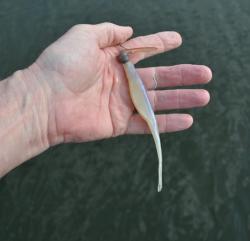
The Scrounger features a plastic collar that causes the lure to wobble. Other wobble jigs have a metal plate ahead of the jig head.

The lures have accounted for two major national tournament wins already this spring, one at Florida’s Lake Okeechobee, the other just this past Sunday at South Carolina’s Lake Hartwell. Clearly, for pre-spawn and post-spawn bass, these lures have got what it takes.

The lures are basically a jig with something extra, either a metal plate or a plastic lip that makes them wobble when retrieved steadily. The Z-Man Chatterbait, the BooYah Boogee Bait, the Strike King Pure Poison and the Choo-Choo Lures Shaker are all designed with metal plates at the head of the jig that wobble and flash and cause the trailer to swim like mad. The Luck-E-Strike Scrounger is somewhat different-it’s a jig with a flexible plastic collar-but it still has the same wild action.

When dressed with a swimming soft-plastic tail, all of these lures come to life with a remarkably fishy wiggle–sort of swimbaits on steroids–and in many lakes when conditions are right, the bass kill them.

Quality Bass On Wobble Jig

Quality Bass On Wobble Jig

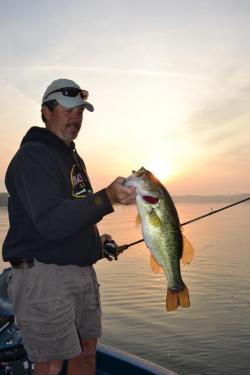
Quality bass like this one captured by Guntersville guide Mike Carter at sunrise are suckers for wobble jigs in spring.

The lures have a wobble similar to a crankbait, but since they sink rapidly, it’s easier to get them down to where the fish are and keep them there-without extremely long casts, thin lines or rapid retrieves.

The single hook of these lures means they’re much less likely to pick up weeds or to get snagged than a standard treble-hook crankbait, and are also easier on fish you tend to release. And for bouncing off hard cover, the shovel-like wobbling plate works like the bill of a crankbait.

Wobble-jig fans agree, one key to success with these lures is to use a tail of the appropriate size-too big and you don’t get an adequate wiggle, too small and the profile of the lure is less attractive to quality fish. Another factor is retrieve speed. Too slow and you don’t get the rapid wobble that draws the bites, too fast and some versions simply roll over and plane to the surface. As with a crankbait, the rod will tell you when the speed is right-the perfect speed is the one with the most resistance.

The classic Chatterbait-apparently the original of the genre–is a 4.5 inch lure dressed with plastic skirt, available in weights of 5/8 to ¼ ounce. A slightly longer version, the Chatterbait Trailer in 3/8 ounce, has added length to the skirt, while the Chatterbait Pro has an added nylon weedguard, twin rattles and oversized reflective eyes. The lure also comes in skirtless models with baitfish profiles on swimming plastic bodies.

The single hook jigs stick and hold, but do less damage to fish than treble hook lures and are also easier to remove.
The Booyah Boogee Bait has a couple of interesting innovations, including a spring-like flex zone in the hook shank which the company says will help to prevent fish from shaking the lure. The Boogee Bait also has the longest hook shank of the four bladed baits, aimed at sticking short-strikers. Also unique, says company spokesman Lawrence Taylor, the wobbling plate sits on a clip-release allowing you to quickly change swim-jig bodies without retying the line to the plate.

Lake Guntersville guide Mike Carter is a big fan of the

“You get the swimming action without the extra hardware up front, and when the fish want a more subtle presentation, the Scrounger does the job,” says Carter. He fishes the lures in heads from 3/8 ounce for shallow water to 3/4 for water up to 8 feet deep–any deeper and he switches to a standard jig or crankbait.

In short, there are lots of options when it comes to using wobble-jigs. Tie one on one of your working rods this spring-you may be surprised at how it adds to your catch.

CONTACTS
Booyah Baits: www.booyahbaits.com
Choo-Choo Lures: www.choochoolures.com
Luck-E-Strike: www.luck-e-strike.us
Strike King: www.strikeking.com
Z-Man: www.zmanfishing.com

Nighttime Is the Right Time for Fishing This Time Of Year

Things That Go Bump While Fishing At Night

Nighttime is the right time for fishing this time of year, but things that go bump can be scary – or funny. Often they are scary when it happens but you can laugh when thinking back about them.

For many years I ran bank hooks, trotlines and jugs at Clarks Hill. One night while idling across Germany Creek at about 1:00 AM there was a little fog rising off the water and it was a little spooky. I was using a spotlight to find my way and suddenly something loomed up out of the water out in the middle of the lake.

It was only about 100 feet from the boat and I knew nothing was supposed to be there. I didn’t slam the gas wide open and spin the wheel the opposite direction like I first wanted to, at least until I got a good look at it.

The long, skinny thing lay low in the water but one end raised up and crooked, like a neck and head. It was at least 30 feet long. I was sure I had found the Clark’s Hill “Nessie.” After catching my breath and slowing my heart beat, I realized it was a log with a big branch on it. It had drifted out into the middle of the lake since the last time I had gone out to check hooks.

One night I made the mistake of going out and tying limb hooks after dark. There was an old willow snag hanging over the water and I eased up to it and grabbed a limb to tie the hook. Something seemed strange and I shined the light on one of the biggest wasp nests I had ever seen, hanging on the snag about a foot from my hand. Thank goodness wasps don’t fly at night!

Frog gigging always puts you in interesting situations. One time Bobby, Harold and I were in a pond a mile or so from my house looking for fat frogs. Bobby was paddling, Harold was in the front with the gig and I was in the middle of the boat holding spotlight.

We eased the front of the boat under a willow tree going after a huge bullfrog. I grabbed a limb to steady the boat and then looked at it. A snake was on the limb just inches from my hand. We backed out very quickly! I have often wondered why the snake didn’t drop off the limb. It would have landed on Harold’s back.

Looks like I would have learned about willow trees in the dark. The poor snake stayed there long enough for us to go home and get a .410 and send it to snaky heaven.

Pulling in trotlines and feeling something moving on it is always a thrill, but I got more than I bargained for one night. I felt a little tugging out near the middle and I thought it was a small catfish. As the drop line came out of the water I realized it was not a cat, but a snake that had eaten the minnow. I dropped it fast and waited an hour to come back, knowing the snake would have drowned by then.

When I pulled up the line ready to get rid of a dead snake I got another shock. There was a smaller snake, not on the hook, staying right with the dead one. I don’t know if it was a young one staying with mommy but, thanks to a paddle, it joined her at the bottom of the lake.

There is nothing quite as exciting as a snake, but one night while out gigging we went across a shallow sandbar and found a different thrill. The paddle dragging on the sand must have scared a bluegill that jumped out of the water and landed in my lap. I almost swapped place with it but managed to stay in the boat.

Bats can make things interesting, too. They don’t really bother me although I had heard tales all my life of them getting tangled in your hair and biting you. When one suddenly darts out of the dark inches from your face, it really makes you think hard about those old tales.

I have also set the hook many times when fishing a plastic worm in the dark when a bat swoops so close to my line it feels like a bass thumping it. That gets very frustrating.

Give night fishing a try this summer. You are almost guaranteed to get some kind of thrill, and you might even catch some fish.

Top Water Bass Fishing

Topwater Time in Georgia

The pond is absolutely still in the early morning haze, without a single ripple in the water, even from your paddle. Your Hula Popper makes a flat arch and falls just past the stump in the edge of the water. It sits still as long as you can stand it, then you let it sit a little longer. A tiny twitch of your rod tip makes it gurgle beside the stump, and the water explodes.

The big reservoir has a slight ripple on the surface as the sun tints the eastern sky. Shad flicker on the surface. Your Zara Spook flies long and fast to the far side of a shallow gravel point. As soon as it touches the water you start twitching your rod tip, making it flip from side to side, walking the dog. A huge swirl makes it disappear and the fight is on.

The shallow grassy flat in the back of a creek on a lake is still. Your buzz bait lands near the bank and you start reeling it fast enough to keep it on the surface, churning along making a nice wake. A shower of water interrupts it track and your rod bows as you set the hook.

These kinds of events are the reason topwater fishing is so fantastic. You can see your bait and the hit of the bass, making it even more thrilling than other kinds of strikes. And bass seem to hate topwater baits, annihilating them with gusto.

I got my introduction to topwater fishing in the 1950’s when I sculled the wooden boat for my father and uncles while they cast wooden plugs. I wanted to fish but knew I had to put in my time on the paddle.

One of my most exciting topwater bites came when I was about 12 years old. Three of us young boys were with our fathers at Clark’s Hill. We pulled a jon boat with an old wooden runabout to a cove and they left us at the mouth, paddling the jon boat to the back to fish for bass. They told us we were too loud and would scare the fish so we had to stay well away from them.

Shouts told us they were getting bites. I had a Devil’s Horse topwater plug, a thin wooden plug with spinners on both ends, tied to the line on my Mitchell 300 spinning outfit. As we tried to move the big, heavy boat around with paddles and cast I threw it toward a button bush near the bank.

My cast was way off target so I cranked it back for another cast as fast as I could turn the reel handle. The plug was buzzing across the surface when the water exploded. I hooked and fought a huge bass, the biggest by far that I had ever hooked, to the boat.

That bass weighed just over seven pounds at the store on their meat scales, and we talked for days about how crazy that bass was, hitting a plug moving way too fast over open water. Everyone knew you were supposed to fish topwater baits very slowly by cover in the water. If I had just realized it, I had come up with the idea for buzzbaits at a very young age!

A much more recent topwater memory was in a club tournament at West Point a couple of years ago. I looked at my watch as I put my trolling motor in the water and it was exactly 7:00 AM, our first stop. Five minutes later I looked at my watch again as I put my fifth keeper in the live well.

I had made seven casts, got hits on a Sammy on every cast, lost two bass and landed five. My partner had stopped fishing and was just netting my fish, unhooking them and putting them in the livewell for me.

I told him he needed to be casting but he said he was having too much fun watching me. I know I get excited when I catch a fish, but I would never have too much fun to not cast when the fish are biting!

For the next few months bass will give you a thrill on top no matter where you fish. Tie on an old reliable topwater plug or try one of the newer, fancier ones. They will all get hit and give you a thrill!

I Will Never Forget the First Bass I Caught

I will never forget the first bass I caught. My mother and I were fishing the creek just below the Usury’s pond dam, catching bream and small cats on earthworms. When my cork went under I expected a fight from a fish that stayed underwater and pulled in small circles. Instead, when I raised my cane pole the fish took off sideways then jumped out of the water! The eleven inch bass hooked me on more exciting fishing.

I soon graduated to a Zebco spin cast reel on a limber rod. I used it to cast plugs like Lazy Ikes, Hula Poppers and Rapala minnows to try to catch bass. I also used Mepps spinners and the new fangled rubber worms from Creme. Fishing in ponds around my house, I learned to cast to stumps and other cover where they lived.

Fishing ponds was always a quiet, contemplative activity. There were few unnatural sounds. In fact, back in the late 1950s and early 1960s, there were so few cars on nearby roads we usually looked to see who was going by – we always knew them. And if an airplane went overhead, we would stop and watch it until it was out of sight they were so rare.

Although I usually fished from the bank or waded the shallows while fishing, sometimes I got the chance to fish from a wooden jon boat. We sculled the boat with a paddle, easing silently around the pond looking for places I could never reach from the bank. One of my uncles got an electric motor, a huge, heavy thing that was fairly quiet but made moving around on the water much easier. We kept it turned off most of the time to stay quiet.

We also sometimes used a small gas motor to push us around. They were loud, smoky things that we seldom cranked since they were often hard to start with the pull rope and we just knew the noise and commotion they caused scared the bass.

I got to go to Clark’s Hill, the new reservoir about 20 miles from my house, a few times a year. It was huge but my fishing was usually limited to casting from the bank or wading the shallows, just like in ponds. My bus driver had a moving around on the water much easier. We kept it turned off most of the time to stay quiet.

We also sometimes used a small gas motor to push us around. They were loud, smoky things that we seldom cranked since they were often hard to start with the pull rope and we just knew the noise and commotion they caused scared the bass.

I got to go to Clark’s Hill, the new reservoir about 20 miles from my house, a few times a year. It was huge but my fishing was usually limited to casting from the bank or wading the shallows, just like in ponds. My bus driver had a slightly larger boat with a bigger motor and he took me to the lake a few times. It was thrilling to putter along at about five miles per hour, slow, but it opened up a lot of new fishing water. We still sculled it around to fish.

On the big lake we saw few other boats and they were like ours. It was normally very quiet even there.

By the time I got out of college and moved to Griffin in 1972 bass fishing had changed. Bass boats were getting popular and I bought my first in 1974, a 16 foot boat with a huge, for the time, 70 horsepower motor. When I joined the Spalding County Sportsman Club that year I had the second biggest motor in the club!

Bass fishing had gotten nosier, with bigger motors on fishing and pleasure boats. And more and more people were on the bigger lakes since they were

On the big lake we saw few other boats and they were like ours. It was normally very quiet even there.

By the time I got out of college and moved to Griffin in 1972 bass fishing had changed. Bass boats were getting popular and I bought my first in 1974, a 16 foot boat with a huge, for the time, 70 horsepower motor. When I joined the Spalding County Sportsman Club that year I had the second biggest motor in the club!

Bass fishing had gotten nosier, with bigger motors on fishing and pleasure boats. And more and more people were on the bigger lakes since they were accessible to all. Much of the peace and quiet disappeared.

Tournaments got bigger and bigger, too. The first Bassmasters Classic was a fairly small affair where the qualifying fishermen were flown to a mystery lake. Now tournament sites are announced months in advance and hyped by the tournament organization and local businesses.

Weigh-ins have become a circus, with blasting music, flashing lights and fireworks. Competitors are encouraged to put on a show, yelling and dancing. Some have even done break dances on the stage and in their boats. All if filmed for TV and draws millions of viewers.

Bass boats now look like NASCAR racers, wrapped with advertisements and costing more than many houses. They have huge motors with 250 horsepower being standard. Electronics will show you exactly where you are with the GPS and every detail under, and even out to the sides of the boat, with the “fishfinder.” Many even incorporate radar so you can run in the fog and see other boats.

Competitors blast off from the starting point and race at 70 plus miles per hour to fishing holes. It is not unusual, in a seven hour tournament, for anglers to use five or six of the hours running to a place far away where they think they can win. Running 150 miles each way to fish one spot for an hour sometimes pays off with winning stringers.

I love tournaments, but will never give up the peace, quiet and joy of fishing smaller waters, without all the hype!

Three Fishing Trips In Five Days

Getting up three days out of five at 4:45 AM to go fishing is almost too much of a good thing. A week ago Friday I drove over to Wedowee to fish with Rusty Mayfield for an Alabama Outdoor News article, then fished a Flint River tournament on Sunday at Lanier. Then I drove to Carters on Tuesday to meet Brian Drain for a Georgia Outdoor News article. All of those lakes are about two hours away.

Wedowee is beautiful and full of bass, and we caught about a dozen between daylight and 2:00 PM when I had to leave. Rusty went back out after taking me to the ramp and caught about 15 more. The bass hit crankbaits and a jig and pig on points and cover from the main lake about half way back into the coves. The spots and largemouth are staging to spawn and the fishing there will get better and better for the next month.

Wedowee has very clear water, as does Carters and Lanier, something I am not used to fishing much. I would go to Wedowee more but there are few good ramps on the lake and almost nowhere to camp, something I like to do when making a trip that far. I want to fish more than one day after dragging my boat 100 miles.

Rusty is a coach near Wedowdee and fishes it a lot, and knows the lake well. The fish are fairly easy to catch on Wedowee and you can catch a lot of keeper size spots to eat. Largemouth are not as common and you have to let all largemouth shorter than 12 inches long, and also release all between 13 and 16 inches long. It is fun catching a 15 inch largemouth but frustrating to have to let it go in a tournament!

Carters is also a beautiful lake with clear water and steep rocky banks rising up to the foothills of the mountains. There is no development on the shores so that makes it even prettier. And it has some huge spots in it. Brian landed pairs of five pounders in two tournaments there this time last year, and in another he had a huge 6.8 pound spot.

In four weekends in a row last February and March he had five fish limits between 19.75 pounds and 23 pounds. Those are quality catches. We didn’t catch any big fish and had motor trouble cutting our trip short, but we landed six keepers on the first and only place we fished.

Fish on Carters are moving in to spawn, too. The ones we caught were holding about twenty feet deep and Brian spotted them on his depth finder. We caught the six to pound fish in about 15 minutes by dropping a spoon down to them.

At Lanier 23 members and guests of the Flint River Bass Club fished from 8:00 AM to 4:00 PM and it was tough. There was only one five-fish limit and 12 people didn’t land a keeper. We weighed in 26 bass over 14 inches long, the size limit at Lanier, and they weighed about 57 pounds. Only four of the bass were largemouth.

William Scott fished as a guest and he won it all, with three bass weighing 10.23 pounds and had a huge 6.64 pound largemouth for big fish. JJ Polak, president of the club and owner of Jjs Magic, had the limit and 8.67 pounds for second. My four weighed 7.81 pounds for third and Travis Weatherly had three at 6.78 for fourth.

I always seem to have a tough time catching bass at Lanier but the pretty weather had me fired up to go. Jordan McDonald fished with me and we ran to a small creek first thing that morning. I just knew we could find the fish somewhere in that creek, but after fishing everything in it for 2.5 hours we never had a bite. We did see two keepers holding under a dock but they took off as soon as I skipped a Senko to them.
10.23 pounds and had a huge 6.64 pound largemouth for big fish. JJ Polak, president of the club and owner of Jjs Magic, had the limit and 8.67 pounds for second. My four weighed 7.81 pounds for third and Travis Weatherly had three at 6.78 for fourth.

I always seem to have a tough time catching bass at Lanier but the pretty weather had me fired up to go. Jordan McDonald fished with me and we ran to a small creek first thing that morning. I just knew we could find the fish somewhere in that creek, but after fishing everything in it for 2.5 hours we never had a bite. We did see two keepers holding under a dock but they took off as soon as I skipped a Senko to them.

Jordan wanted to fish the very back end of the Chestatee River so we headed that way, stopping on the way to fish a rocky point. A dock nearby looked good and I caught my biggest fish, a three pound spot, off it on a spinner bait. We wore docks out in that area with no more bites.

In the back of the river we started fishing docks and shoreline cover. On about the fifth dock we fished Jordan got hung at the back of the dock and I cast a crankbait out and ran it under the dock as we moved down beside it. A keeper largemouth hit and I landed it. After getting him loose we eased around to the other side of the dock and I caught a keeper spot on a jig and pig.

We fished that area until 3:00 without catching anything but two short bass. At 3:00 we headed back down the river toward the weigh-in and I stopped on the dock where I got the first fish, and caught another keeper spot on an Alabama Rig. That made four fish on four different baits, but all off just two docks.

We fished everything we could until we had to head in but had no more bites.

Fishing will be great on all three lakes for the next six weeks. This is a fantastic time to go fishing, if you don’t want to spend all your time turkey hunting.

How Big Was That Fish?

I saw the definition of “fish” on Facebook last week. It was “Fish (n) A cold blooded aquatic animal that shows its greatest growth rate between the time it is caught and the first time the fisherman describes his catch.”

There is a lot of truth to that definition!

Bass fishermen are terrible about estimating the weight of their catch, most of the time. I will never forget a tournament a few years ago at Oconee. I had five in the live well at about noon and I was real happy since I guessed they averaged about two pounds each.

A fellow club member stopped to talk and said he had a limit of three pounders. That made me think my catch was not so great. But at weigh in my five weighed 10.4 pounds and his five “three pounders” weighed 9.1 pounds.

The bigger the fish gets the faster the difference between its real and guessed weight seems to grow. It is not unusual at a tournament for a fisherman to come in and say he has broken our big fish pot, only to find out the fish weighs less than five pounds when taken out of the live well.

It would seem the pros could estimate the weight of their fish more accurately, but I am not sure. During the Bassmasters Classic the observers have phones and text in the weight of each bass the pro they are with lands during the day. A score card is kept on the BASS internet site that tracks their catches during the day. Many of the days during the last Classic it was no where near accurate.

Supposedly the pro tells the observer how much his fish weighs and that is what is sent in. So it may be some of the pros intentionally try to play mind games by over or underestimating the weight of their fish. And it is possible the people running the tournament fudge the numbers to keep it more interesting.

Just like in a blowout in football, like this year’s Super Bowl, if it isn’t close it is less interesting. So to make people want to watch the live weigh-in at the Classic, they may try to keep it looking close to keep up interest.

I have been very guilty of overestimating my bass’s weight at times. On a trip to West Point the last day of February a few years aqo I hooked the biggest bass I had hooked in a long time. When I got it in the boat I was sure it would weigh at least ten pounds, but when put on my digital scales it showed 7.6 pounds. A nice fish but no ten pounder. Those digital scales can really deflate a fish – and your ego.

Smaller fish can fool you, too. I don’t know how many times in tournaments I have had a limit of bass, especially spots, and think they will average a pound and a half each, or around 7.5 pounds for the limit, only to find they weigh six pounds or less on the scales. Spots often weigh less than largemouth the same length since they tend to be thinner.

In a Sinclair January tournament way back in the 1970s we had really tough fishing. Only four keepers were brought to the scales. My fish was the last to be weighted and I just knew I had won and got big fish since the first three weighed 12, 13 and 14 ounces. My fish looked bigger. It weighed 11 ounces. I think it is the lightest fish ever weighed in during a tournament!

Crappie fishermen are just as bad or worse then bass fishermen. I have been told many times a fisherman had a bunch of two pound crappie, but then their biggest fish of the bunch weighs less than a pound. A two pound crappie is a really big crappie.

Bream are the same way. A one pound bluegill is a really nice size fish but I have been told a lot of times fish weighing less than a pound weighed over two pounds in the telling. My biggest bluegill ever weighed one pound, twelve ounces, on digital scales, and it was huge.

Catfish grow huge, with some blue and flathead cats weighing over 100 pounds. But those fish are rare. Usually the tale I hear is that they caught a catfish so big when held up at shoulder height its tail dragged the ground. Such cats are caught, but if it was really that big it would be really hard to hold it at shoulder height.

When a fisherman tells you about his big catch, remember to allow for the growth from the time it was caught until when he tells you about it.

Someday I hope to catch a fish so big I don’t even have to exaggerate about its size.

Why Kiss Bass?

Kissing Bass

By Frank Sargeant
from The Fishing Wire

Let’s talk a little smack.

I’m not a prude, you understand. Nor lacking in the normal human need for affection. And I’m a broad-minded, inclusive kind of guy.

But what is this thing with fish-kissing?

Why does Houston kiss bassaa/

Why does Houston kiss bassaa/

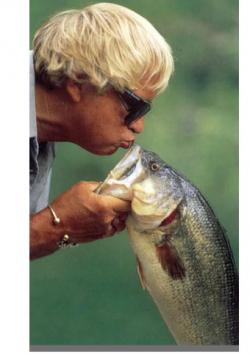
It used to be just Jimmy Houston. I mean, I can see it, Jimmy is sort of a wacky guy, he’s a natural comedian as well as a heck of an angler, and if he wants to get a little weird and kiss fish and make that his trademark, that’s his business.

But now I can’t get in a boat without somebody planting a big wet one on a catch before sending it back over the side. Like campaigning politicians pursuing babies, they rush to kiss everything that comes aboard. A guy doesn’t want to see that stuff. Not even on Valentines Day.

I admit it, I might smooch a pooch now and then. A bird-dog likes a little extra reward at the end of a good day. But osculating an Oscar is not my idea of fun. Tangling tongues with a tarpon, not for me. Ditto for bussing a bluegill. Lip-locking a ladyfish, uh-uh. Sucking-face with a sucker, not. Smooching a smallmouth, I’ll pass. Snuggling up to a snook, negative. No spooning with a spoonbill or mergin’ with a sturgeon for me. Smackers don’t go to snappers. I’m not pecking a perch, either. And I will in no way exchange bodily fluids with a sailcat, AKA “snot on a knot” by some of the rather rough and ready fellows around Tampa Bay, I blush to report.

I mean, I can understand, it’s sort of a gesture. We love the fish, we wish them well, we want to see them again, we hate to let ’em go.

Or maybe it’s sort of like the mobster kiss de la morte, you know, ‘I see you again, Little Vinnie, I kill you.’

Or maybe the Middle Eastern approach, a fervent smacker, three times on each cheek, love you so much, and then a good riot, rock tossing, a little tire-burning, shooting guns in the air and a good time had by all. But whatever the logic, it escapes me.

Not to say I would never do it, of course. When it comes down to it, l can kiss bass with the best of them if I have to. In fact, bass kissing runs in my family, you could say. But we try to avoid it when we can.

Part of my thing about selective kissing probably came from my childhood. When I was in kindergarten I used to have an aunt who would come rushing towards me, lips like slabs of whale meat, dripping crimson lipstick and saliva, to plant a big wet one on my cheek every time she saw me, sometimes bashing my nose with her five pound ear-rings in the process. It gave me a lifetime bad attitude about kissing anybody whom I’m not taking out.

I have never been one for kissing cold-blooded creatures, anyway, except during a brief period in 1965 when I dated an Ohio University coed who called herself Zarga. She kept snakes. You get the picture.

Just because I love fish does not mean I love fish, you know what I’m saying? Some have accused me, in my divorced years, of dating female life forms that looked somewhat carpish. But they were all kissable rainbow trout to me, and kiss-catch-and-release was a wonderful thing.

For them, not for actual fish. To each his own, but for me, to tell the truth, the closest thing I want to get to fish lips is my needle-nose pliers.

Late February Bartletts Ferry Tournament

Last Sunday 18 members of the Spalding County Sportsman Club fished our February tournament at Bartlett’s Ferry. After eight hours of casting we brought in 53 keepers weighing about 78 pounds, much better than the Flint River club did two weeks ago there. The warming weather really made it better.

There were two five-fish limits brought in and only two people didn’t land a keeper. Most were spots, with only eight largemouth caught. We must be doing something wrong, though. A club weighed in just before we did and that tournament was won with an incredible five fish limit weighing over 19 pounds. That sounds like a Bassmasters Classic catch!

Sam Smith won with a limit weighing 7.1 pounds, Mark Knight was second with four at 6.85 pounds, Micky McHenry was third with four weighing 6.5 pounds and Gary Hattaway’s limit at 5.3 pounds was fourth. Niles Murray won the big fish pot with a 3.4 pound bass.

My day started wrong, as usual, with problems latching the trailer hitch on my trailer. I have got to figure out what is causing that problem. At least I didn’t follow the detour this time and made to the ramp on time.

Then, on the first place I fished, a bass hit my jig and pig by a dock but when I set the hook the line was around the concrete piling and broke. I caught my first keeper off that dock a few minutes later.

It took an hour to get another bite but I landed my second fish on a Texas rigged tube in about a foot of water on a seawall. Almost an hour later I saw a bass swirl at my crankbait right at the boat and saw others suspended off the bottom on that point. I threw a jerk bait to the area and caught my third keeper but no more hit.

Another hour passed then another bite. This one hit a Shadrap near a log. That made four. A few casts later I hooked a big, strong fish on the Shadrap and it fought hard, but I was worried. It stayed deep and did not fight like a bass. Sure enough, when I got it to the boat a five pound channel cat had my plug in its mouth. Good eating but I couldn’t weigh it in.

I landed no more fish. I did hook a good two pound keeper on a crankbait but it came off the second time it rolled on top. I was trying to keep it down but it would not stay underwater. I guess it knew it could get off by coming to the top.

Although we had a cold week this past week, everything is setting up for the bass to start feeding a lot in shallow water. The water early in the morning on the main lake at Bartlett’s Ferry was 49 degrees but that afternoon, back in a pocket, it was 57 degrees. Even though the sun was not bright it warmed the water a lot.

Get ready to catch some bass, they will be ready to hit soon. And the crappie are already eating jigs and minnows, and a catfish should eat some liver if that one hit my crankbait.