Category Archives: Bass Fishing

Bass Fishing Information

Using Keys To Catching Lake Lanier Bass Book To Catch Bass

Keys To Catching Lake Lanier Bass works to help me catch bass.

The Outdoor Blast is next weekend, Friday through Sunday, at the Gwinnett Center in Duluth. I will be helping out at the Georgia Outdoor News booth where you can enter a drawing for a gun given away each hour of the show and pick up a free copy of the current magazine, so that booth should be very busy.

I will also have my two Map of the Month books for sale at the booth. I have put together books for Lake Lanier and Clarks Hill that have a Map of the Month article for each month of the year. Each article has a map showing ten good spots to fish for bass that month, tips on how to fish them, what baits to use and other information from a good fisherman on the lake.

Last week I went to Lanier to try to catch some fish and make a promo video for the book. The video will be running on a laptop on the counter at the Blast. The books are available as downloadable eBooks and I also sell them on CD in either Microsoft Word or PFD format. From the CD you can print out your own copy of the whole book, or print one chapter at a time to take to the lake with you.

I was happy to be able to put in a GPS waypoint from one of the articles for Lanier, go to it and find the brush pile there. I rigged a drop shot worm like suggested, with the color worm and weight sinker the article says works best. And I caught some fish off that hole and others in the book.

Lanier is a tough lake to fish if you don’t go regularly and keep up with what the fish are doing. The information in my book really helped me.

Fishing Lake Weiss In June

Lake Weiss is usually a great lake to fish in June with lots of quality bass in shallow water, even in the heat, so the Spalding County Sportsman Club scheduled our June tournament there last weekend. We should have known fishing would be tougher than normal. Sam Smith said during practice on Friday he talked with several local bass fishermen and all told him fishing was the worst it had been all year.

In the tournament 12 members and guests fished for nine hours on Saturday and nine more on Sunday in extreme heat. There was little breeze either day, making the heat even worse. We landed 63 keepers weighing about 94 pounds. There were six five-fish limits and no one zeroed for the two days.
I got lucky and caught a limit both days. My ten keepers weighed 16.93 pounds for first. Russell Prevatt had the best one day catch with a limit on Sunday weighing 12.5 pounds and his eight weighing 16.51 pounds for the two days was a close second. Sam Smith had nine bass weighing 13.04 for third and fourth was Mickey McHenry with seven bass at 10.83 pounds. Zane Fleck had a pretty 6.08 pound largemouth for big fish and it broke the cumulative pot for the third time this year.
I went over on Friday and spent a couple of hours riding around to get orientated on the lake and check some spots where I had caught fish there in years past. I also looked at some places I had put on maps in Alabama Outdoor News articles. Those old articles, with GPS coordinates, really help.

Although I made only a few casts Friday one of them provided a key for the tournament. In my last club tournament there about five years ago I had caught some good fish by casting worms and spinner baits under overhanging trees along the bank. The only fish I hooded Friday hit a spinner bait on that pattern in the late afternoon.

Saturday morning I ran to a bridge and started fishing it with a topwater plug at 6:00 AM. I quickly caught a keeper spotted bass then lost another keeper that jumped and threw my plug. At that time I didn’t realize how hard it was going to be to hook a keeper so I was not too upset at losing one.

After working some gravel banks and points I went to docks at about 10:00 AM and fished a small jig and pig around them. Although I caught two keepers in the next two hours, I had fished a lot of docks without a bite.
After noon I decided to try the overhanging brush pattern and ran to the back of Spring Creek where trees overhang the water. Although the water along the edge is usually only a couple of feet deep, and you can’t hit five feet of water with a 30/06, it sometimes works. Even though the water was almost 90 degrees.
I caught two keepers in the next hour then a bad thunder storm made me head for the van, parked at the Spring Creek ramp. I sat in it for over an hour. I hated to miss fishing but will not go out when lightening is flashing. I did not get a bite after the storm.

At weigh-in I was first in line. After my fish were weighed I headed to the van and campground since another storm was coming and just got parked on my campsite before it hit. I had no idea I was in second place with my little limit.

Sunday morning I decided to try Cowan Creek since I had not found any concentration of fish in Spring Creek. As soon as I stopped I got a nice three pound largemouth on a spinner bait from a grass bed but after an hour did not get any more bites around grass. At 7:30 I cast under an overhanging tree and caught a small keeper on a spinner bait. That made me fish that pattern and I got four more keepers on spinner baits and worms under overhanging trees in Cowan Creek before the 3:00 weigh-in.

I didn’t think I had a very good catch and was surprised to win. It helped I was the only one with a limit both days.

Summer Bass Fishing and Topwater Baits

Topwater baits are often the way to catch summer bass.

Sometimes I don’t think I know what I am doing when I am bass fishing, but most of the time I am sure I don’t know what I am doing. A trip to Sinclair a week ago Friday drove this home to me. The Sunday before that trip the Flint River Bass Club had fished the lake for nine hours and it took only 6.1 pounds to win and my five at 5.68 was fourth.

The following Friday I fished Sinclair with Bo Larkin, a UGA College Team fisherman. He lives in Watkinsville and fishes Sinclair a good bit, but I am three times as old as him and I started fishing Sinclair 20 years before he was born!

We started fishing at daylight and we both caught some keeper fish. He had one about 2.5 pounds, bigger than anything I caught the Sunday before. At 11:00 we were marking holes for the GON article and stopped on a small island. I pointed to a nearby cove and told him that is where I started in the tournament and landed a small keeper, but it was the only one I caught there.

Bo said he had never fished that cove and wanted to try it. I told him I didn’t think it was worth our time since the sun was bright and I had gotten only one bite there. But we went over to it and he started throwing a buzz bait, his favorite way to fish.

I thought he was wasting his time since the sun was high and bright and the water was only about three feet deep. But he caught a bass weighing over seven pounds from the shallow water on his buzz bait. Right where I had fished. Shows how much I know.

I fished a buzz bait right where Bo got the big one but didn’t get a bite. Maybe I was fishing too slow or too fast. Maybe I was fishing the wrong size or color buzz bait. Or maybe he knows something I don’t.

It always amazes me when my clubs fish the same lake the day a big tournament is going on there and we don’t do nearly as well as they do. And when I go fishing with really good fishermen, from college team members to established pros, they fish the same baits in the same places I fish but they catch more and bigger fish.

Maybe they have some special talent or sixth sense about catching bas I don’t have.

Last Saturday Raymond English had that special something at Oconee. The Potato Creek Bassmasters fished their June tournament with19 members landing 59 bass weighing 126 pounds. There were five five-fish limits in the tournament.

Raymond blew everyone away with five bass weighing 18.85 pounds and had the big fish of the tournament with 5.52 pounder. Bobby Ferris had fve at 13,01 for second, third was Ryan Edge with 12.32 pounds and Kwong Yu had 11.32 pounds for fourth.

Raymond said he caught his fish early on a topwater frog and had a second bass over five pounds but not quite as big as the other one. Several people got fish around five pounds each early in the morning. It was a great day on Oconee.

Fishing for bass can be tough this time of year but as the two trips above show, topwater baits can still catch good fish. One of the best area to fish topwater baits in the summer is where bream or bedding or feeding. Last week during the full moon lots of bream were bedding and that is always good.

But bream live shallow all the time, so fishing a topwater bait around grassbeds and wood cover in shallow water often works. That is the pattern Bo fishes at Sinclair and most of the spots we put on the map are like that. Details will be in the July issue of Georgia Outdoor News.

Also, Mayflies hatch and lay their eggs during the summer and bream feed like crazy on them. That almost always means you can catch bass on topwater baits. Bream are concentrated in a smaller area and are intent on feeding, so that makes them an easy meal for a hungry bass.

Work a buzz bait, popping plug or plug with spinners on the ends where the bass are feeding and you should catch some. The time before the sun gets on the water is usually best, but as Bo showed it is worth trying all day long.

Lake Martin Fishing Ups and Downs

Sometimes the old saying “If it wasn’t for bad luck I would not have any luck at all” seems to apply to my fishing trips. After looking forward all year to the three club tournament at Lake Martin a few years ago, the trip week before last certainly had its ups and downs.

When I got to Wind Creek State Park Wednesday afternoon I was lucky enough to get a campsite on the water. There were 500 FEMA trailers set up in the campground, leaving 120 sites for visitors. I got my boat in the water, set up my van for camping and went out riding around for a couple of hours. Back at the campsite I was scraping glue off a plug and my knife point slipped, sticking into my thumb deep enough to draw blood.

Thursday morning I got up and headed to a favorite spot to check it out. I hooked three bass on three casts and left, planning on starting at that spot in the tournament. Unfortunately, when I stopped across the river at another spot I heard a boat crank up at a dock near where I had left. They went straight to “my” spot and I watched them catching bass and putting them in their ice chest. I am not sure if they saw me catching fish, but for the next three days that boat was on that spot every time I went past.

I fished for a couple of hours and landed a good many bass, so I was pleased with the results. At noon I stopped on a spot I wanted to fish, put the trolling motor in the water and picked up a rod. The line on the rod I picked up caught the handle of another reel and flipped it into the lake.

I reacted rather than thinking and grabbed for the rod – and fell out of the boat. I remember still grabbing for the rod as I went under, then coming to the top and reaching for the boat. This was the first time I ever fell out of a boat in all my years in them.

I tried to hold the side of my boat but I was wearing jeans and tennis shoes, and as soon as I stopped paddling with my hands I started sinking. The boat sides were slick and I could not hold on. I started to panic, not knowing what to do. All the stories of fishermen drowning flashed through my mind.

Somehow I managed to get to the motor of the boat and pull myself in, using it as a ladder. Once in the boat I threw out a marker, what I should have done as soon as the rod went overboard. By now the boat had drifted so I realized my chances of snagging the rod were slim.

Then I remembered my sunglasses – my prescription bifocal sunglasses. My $300 glasses were on the bottom of the lake with my $200 rod and reel. That was quite a mistake! The rest of the day was uneventful and I was lucky to be alive.

Friday morning I went to a point and got seven bites real quick, so I had a good place to start. In other places I landed a lot of bass. One of them flipped as I tried to take it off the plug and drove a hook past the barb into my thumb. I finally got it off the plug and pulled the hook out with a pair of pliers.

Saturday morning I quickly landed my limit of small bass and headed up to the place I had lost my rod and glasses, hoping for one bite from a big bass. I got it at 2:30 PM, the fish slapped at a buzzbait and missed then sucked in a jig and pig. I fought the fish out of the tree it was in to clear water and it jumped. My heart jumped, too, the fish was a good six pound bass, just the one I wanted. Then my jig flew out of its mouth. I almost had another rod and reel at the bottom of the lake but I stopped myself from throwing it in.

Sunday morning the second bass I caught shook as I took it off the plug but I got it into the livewell. While fishing my hand slipped on the reel handle and I looked down to see blood everywhere. Something had ripped a hunk of meat out of my finger while I unhooked that fish.

I tried hard, but only caught five bass that day. At least nothing else got hurt and I made it home in one piece. Right now I have Band-Aids on three fingers and memories of the big one that got away, but I feel more safe sitting at my desk!

Javin English won the tournament with 13 bass weighing 17.04 pounds. Lee Hancodk had 10 bass weighing 15.49 for second, and his big one did not get away. It got big fish honors at 6.12 pounds. Tommy Reeves was third with 11 bass weighing 15.47, Billy Roberts was fourth with 12 weighing 14.83, I was fifth with 12 weighing 13.74 and Ronnie Gregory rounded out the top six with 12 at 13.14.

I am already looking forward to the trip to Martin next fall!

JJs Magic Fishing Worm Dip and Dye

JJ's Magic Dip and Dye

JJ’s Magic Dip and Dye

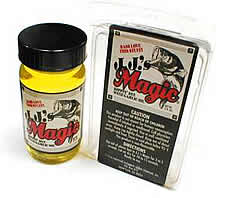
Another product I have been using for several years and really like is JJ’s Magic, a dip and dye for plastic worms. J. J. Polak is president of the Flint River Bass club and had been producing this dye for years. Last year he was a sponsor of the Bass Chapter Federation and many people at the tournament used his dip and dye.

Worm dyes have been around for a long time and I have been using them since they came out. You dip the tail of a lizard or worm into the dye and it magically changes colors. The dye is a strong solvent that reacts to the plastic and changes it. JJ’s takes it one step further. There is a strong garlic scent that permeates the worm, making it more attractive to bass.

JJ’s Magic comes in chartreuse, red, blue and clear for just adding scent. They work for me. You can check out his products at http://www.jjsmagic.com/ or click on the ad to the right.

What Are Some Improvements In Fishing Technology?

Advances in technology for fishing have been amazing over the past 35 years. When I bought my first bass boat in 1974 it had a Lowrance flasher depth finder on the console. This depth finder showed a orange flashing light on a dial and would tell you how deep the water was under the boat, and if you studied long enough you could learn to identify fish, brush piles and other features.

That was a huge jump from a few years earlier when anglers figured out bottom contour by looking at the bank, dropping lines with weights on them or by trolling and bumping the bottom. Those ways worked, that is how Linda caught her eight pound ten ounce bass in 1971. We learned about a long point by trolling Hellbenders over it, and that is where she caught the big bass.

A few years later I bought a Garcia paper graph. This curved line graph marked on paper with a wire that actually burned off a coating on the paper when electric current passed through it. The current came from the spinning orange light on the dial just like on the Lowrance.

That graph really helped me visualize the bottom and what the structure looked like. On my next boat I got a Lowrance paper graph. It printed a straight line reproduction of the bottom and everything between you and the bottom. It clarified even more what was below my boat and it and the next model I bought for my third boat probably taught me more than any other depth finder I ever had.

The paper for those graphs was expensive and hard to change, and the wire stylus burned up fairly often. But they were the top of the line depth finders at that time, in the early 1980s. At about the same time Liquid Crystal Display (LCD) depth finders started showing up. They put on a video screen the same kind of information my paper graph showed, without the hassle. But they were not nearly as accurate as the paper graph.

Now color graphs are available that will show a tiny baitfish swimming 30 feet below your boat. Every stump, rock and ditch on the bottom looks as clear as if you were looking at it directly. They are easy to use and almost all new bass boats have a color or black and white graph that is almost as good as my old paper graphs.

My current boat has a combination LCD graph and Global Positioning Satellite (GPS) on the same screen. The GPS system was developed by the military and is currently used by huge numbers of hunters and fishermen. They are also standard equipment in many new cars. The unit picks up signals from orbiting satellites and gives you your exact coordinates based on latitude and longitude.

I got my first hand held unit in 1997 and it was very basic, but amazing. I could put in a mark called a waypoint and it would remember it. If I marked a deer stand I could follow my trail back to it. If I marked an underwater brush pile I could find it every time I went fishing.

The newer units can save your trail, something that is great if you are trying to make a run in your boat in the fog. You an avoid the bank by following it. Unfortunately, it will not show you other boats.

My newest hand held unit cost me less than $200 and comes with a pre-loaded map in it. Every lake I have fished in the US has been on it, even some small 300 acre lakes in Wisconsin and Iowa. They were not perfectly accurate, but they are amazingly good for such an inexpensive unit. The one on my boat shows more detail but it costs a good bit more.

My trip to Antarctica last January proved to me the unbelievable amount of information those hand held units can hold. It showed the tip of South America, locating small towns I had never heard of before. But most amazing of all, as we approached the Antarctic peninsula, my little $200 hand held Lowrance GPS showed the islands and mainland there. I could not believe it.

Some folks think this technology is bad for fishing and hunting, making it too easy to find things. Maybe so, but I will continue to use it. It not only helps me find spots to fish, it guarantees I will not get lost in the woods or on a lake!

Can Electronics Help Me Catch Fish?

Angling with Electronics: Five Techno-Tips for Fishing Success

Editor’s Note: Today’s feature comes to us courtesy of Traditions Media.
from The Fishing Wire

One of the real joys of fishing occurs when warm spring weather draws fish of all species into skinny water. Anglers don polarized sunglasses and scan the shallows for emerging signs of life. The “sight fishing” that results can be positively thrilling. It’s high-level sensory stuff that combines stalking, hunting and casting into a singular stimulating experience.

But before you know it, spring gives way to summer. Waters warm; the shallow bite shifts deeper. And if you’re not careful, you can quickly lose track of the fish you’d been catching earlier.

Summer and fall certainly yield terrific fishing, but they’re also the seasons during which great anglers often separate themselves from the pack. The difference usually resides in their ability to find fish. It’s a talent to be sure, and one that often begins with intuition. But the fact is, nearly every successful angler makes wise use of electronics; fish-finding sunglasses segue to sonar, GPS mapping, and underwater cameras. In a sense, each of these tools become our underwater eyes, solving mysteries and piercing the watery veil that otherwise separates us from big fish below.

Before you launch the boat this summer, consider these simple high-tech shortcuts to success.

#1 – Ditch the Paper Maps

Use Electronics

Use Electronics

Armed with a simple sonar unit or an entire armada of fish-finding weaponry, it’s hard to discount the value of today’s technology. Photo by Bill Lindner Photography
We’ve all got ’em. Stored in the glovebox, stuffed into a bulging Ziploc bag; those old paper lake maps provide basic navigation and occasional fishing spot info. But try to unfurl one in the wind, or break one out in a downpour. Not good.

By now, most of us know about or have used a digital contour map displayed on a modern sonar/GPS unit. The advantages of a dynamic, interactive lakemap on your sonar screen is pretty profound. Products from LakeMaster (compatible with Humminbird sonar units) and Navionics (compatible with Humminbird and Lowrance) display lake, river and reservoir depth contours right on the screen, plus show your boat’s position as you move along and over various depths. When you catch a fish or see something that looks promising, you hit a button and drop an icon right on the map, so you can return and fish it anytime. You can even sit in your boat in the driveway, call up the map and drop waypoints on likely spots for later.

Most products also allow for specific depth shading and water level offsets. The latest mapping technology, called AutoChart, allows you to create your own 100-percent accurate depth maps of previously uncharted lakes, ponds, rivers or coastal areas. Simply turn on the unit, drive around the lake, and the map begins to magically take shape.

#2 – Spend an Afternoon “Just Looking”

If you haven’t yet experienced ultra-realistic side-looking sonar, such as Humminbird’s original “Side Imaging,” it may be time to upgrade the old electronics. This progressive sonar technology shoots its fish finding beams both left and right of the boat, showing you a photo-quality image of the real estate way up in the shallows, along drop-offs, under boat docks and more. While traditional 2-D sonar shows what’s below the boat, side-looking units can reveal fish that are off to the sides and unaware of your presence, making them prime targets for casting or trolling.

Want to discover those coveted hot spots that are unknown and untouched by other anglers? Spend a day on your favorite lake or river just cruising around and studying the side-looking sonar screen. When you mark an interesting object or location, simply drop a GPS waypoint on it. Boom, spot saved forever.

Scattered and hidden across the floors of most waterways lie a treasure trove of hidden fishing locations-scattered rockpiles, discarded Christmas trees, isolated clam beds, bridge foundations and old roadbeds. All of these can be angling goldmines, and side-looking sonar is an awesome tool for finding them.

#3 – Probe Cover with a Camera

Catch Big Fish With Electronics

Catch Big Fish With Electronics

The endgame of any high-tech approach: big fish in the boat. Photo by Bill Lindner Photography

So you’ve found that hidden heap of old Christmas trees, but how to know if anyone’s home? Sonar might show generic fish “arches.” But without knowing the species, size or position of the fish, you might use the wrong lure and fail to get bit. Worse, you could end up spending valuable time angling for carp that you thought were bass. It’s why some of the sharpest anglers today deploy an underwater camera, which shows you in real-time video exactly what’s happening below.

While sonar might display a beautiful brushpile, the camera reveals what’s living there. It shows that some brushpiles are void of fish life. But it also shows you the good ones, those that hold heavyweight largemouths, pods of crappies or big catfish. Armed with this all-important intel, you’re now ready to tie on the right lure or bait and experience some fantastic fishing.

Increasingly popular among anglers today are Aqua-Vu’s Micro systems. These self-contained underwater viewers sport tiny camera optics the size of an acorn, which easily slide into all those nooks and crannies in cover, and show you a real-life picture of every crappie, crawdad and clamshell in the vicinity. The LCD monitor is as small and compact as a smart phone, too, and the whole system stores easily inside a tackle box or even a coat pocket. If you’re not using a fishing cam, you’re could be missing out on some amazing and overlooked opportunities.

#4 – Deploy a New Wave Anchor

While this tip might not help you locate fish, it will certainly help you catch a few more once you do. Two new forms of boat control now allow you to hold the boat in a specific position without repeatedly heaving a 20-pound chunk of lead.

“Spot Lock,” a GPS driven function built in to several trolling motors, including Minn Kota’s Terrova, holds your boat continuously on an exact waypoint, simply by pushing a button on a remote control. Anytime the boat drifts 5 or more feet off course, the motor quickly propels you back to your position.

Performing a similar task in shallow water, hydraulic pole-style anchors drive a spike into the lake floor, by again, simply pushing a button. The Talon shallow water anchoring system from Minn Kota allows for automatic, effort-free anchoring in water from 2 to 12 feet deep. In wind, waves or for when you just want to stay put, these new wave anchor systems are almost priceless.

#5 – Sight Fishing On the Screen
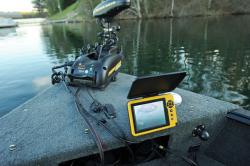
Underwater Camera

Underwater Camera

Modern underwater cameras provide unprecedented clarity and convenience, plus a nearly innate ability to find and identify fish.

If you’re a fan of sight fishing in shallow water, you’ll love the visual aspects of doing the same on a sonar screen. When fish such as bass, crappies, walleyes, stripers and catfish drop deeper or suspend, you can position your boat right above them, drop a lure and watch them react on screen. Not only is sonar sight fishing entertaining and exciting, it’s also a very effective way to catch fish.

Using Minn Kota’s Spot-Lock function or an anchor, position directly above fish in 15- to 30-or-more-feet of water. Next, tune your sonar unit so the transducer is using the narrowest beam (cone angle) possible. This can be done by switching from a wider beam to a narrower 18 or 12 degrees. Narrower beams provide more detailed information, and will allow you to watch your lure drop in the water column, as well as fish, as they swim over and bite.

On screen, your lure will read as a continuous solid line. When you jig, you’ll note immediate wavy lines corresponding to your movements. Tune the unit’s sensitivity so you can see your bait clearly, but without additional clutter on the screen.

When a fish approaches, try various jigging moves until you get a positive response. As fish get closer, they’ll appear as a darker, thicker signal. With practice, it’s often possible to detect a bite by watching the fish’s response on screen, even before you feel your line jump. Some compare it to a video game. But can a video game tug back, leap out of the lake or slap water in your face?

–Ted Pilgrim
Fishing A Tournament At Lake Allatoona

Each month I write a “Map of the Month” article for Georgia Outdoor News. In these articles I go to a lake with a local expert and we discuss the patterns for bass fishing that will work during the month. Then we mark 10 spots on a lake map where you can fish those patterns, and describe how to fish each spot in detail.

On a Sunday a few years ago the Flint River Bass Club had a tournament at Lake Allatoona. Although I have done several “Map of the Month” articles there over the years, I have never fished out of my boat there and never fished a tournament on that lake. I did not have a chance to go up and explore the lake and try to find some fish before the tournament.

I pulled out a copy of my article on Allatoona in August, 2002 with David and Pansy Millsaps. I read it Saturday night and rigged baits they suggested. On Sunday morning I headed to hole number 1 in the article and started fishing as instructed. I quickly caught a 14 inch spotted bass on a tube jig on a boat ramp.

I kept fishing that spot and caught a two pound spotted bass on a Carolina rig. I felt pretty good with two keepers in the boat on the first place and I had nine more to fish. As I idled to the second spot I read the instructions again – fish around the point with a jig and pig, then throw a crankbait before leaving.

After fishing around the point twice, first with the jig and then with a Carolina rig, I had gotten no bites, so I started to leave. I remembered about throwing the crankbait so I picked up a rod with one tied on and hooked a good fish on the first cast. It was a 3.65 pound spotted bass and turned out to be the big bass of the day.

When I headed up to hole number 3 skiers has churned the lake up pretty bad. I fished it and caught a short bass but no keepers. It was rough fishing in the waves, and the sun was getting hot. When I headed to hole number 4 I had to idle under a bridge and the shade felt good, so I stopped and fished there.

I quickly got a hit on a small jig and pig and landed another two pound spotted bass. About 30 minutes later I caught another solid keeper on the jig and pig. That gave me my limit. I fished one more spot from the article but caught nothing there before heading to the weigh-in.

We had 14 members fishing the tournament and my five bass weighing 10.8 pounds gave me first. The 3.65 pound spot was big fish for the tournament. Bobby Ferris had a five fish limit weighing 5.12 pounds for second, Don Schafer had 4.92 pounds for third and Kwong Yu came in fourth with 4.78 pounds.

In the tournament three members caught five fish limits but there were six people without a keeper. We landed 26 bass weighing 33.61 pounds and there was only one largemouth weighed in.

For many years Lake Allatoona has been called the “Dead Sea” because it was so hard to catch a bass there. The population of spotted bass has increased over the past few years, and now some decent catches come out of Allatoona. I was real lucky to have the article I wrote three years ago help me out in my first tournament there. That information really helped.

Another tournament fishing the same places didn’t work as well.

On a Sunday a few years ago eight members and guests of the Spalding County Sportsman Club fished our September tournament at Lake Allatoona. Three of the members managed to land five fish limits and there were two members that did not catch a keeper bass.

Javin English had a limit and won with 5.55 pounds. Brent Terry fished with me and beat me out of the back of my boat with a limit weighing 5.48 pounds. I had a limit weighing 5.21 pounds for third and Jason Wheeler had two bass weighing 3.71 pounds for fourth. He also had big bass with a 2.73 pound fish.

Many members caught a lot of bass shorter than the 12 inch limit. Although Allatoona has been called the “Dead Sea” because of its tough fishing, the eight of us weighed in 20 bass, but they were small. It is still a lot of fun to catch that many bass. Alltoona seems along way away since you have to drive right through down town Atlanta, but it was only 74 miles from my house, about the same distance as Sinclair or West Point.

I caught my fish on a jig and pig and a jig head worm. Brent caught his on a Carolina rig. We caught most of them fairly shallow toward the backs of creeks.

A Reunion Tournament To Kentucky Lake

Back in the late 1990s I started visiting a newsgroup, Recreation – Outdoors – Fishing – Bass (ROFB). Newsgroups were popular back then and there were thousands of them available. Each one was on a specific topic and you could go post messages to others with similar interest. They have pretty much gone now, being passed by with new forms of interaction on the net.

The guys on ROFB started having a get-together tournament on Center Hill Lake in Tennessee, called the Mid-Tennessee Classic. I could not attend since I was still working but I enjoyed reading about those trips. I planned on attending when I retired and had time to go.

In June, 2001 when I retired Steve Huber in Rhinelander, Wisconsin decided to host the North Woods Classic in the fall with the same group. He invited us to come to Rhinelander and experience the fishing there. So, on Labor Day that year, I hooked up my boat and headed 1100 miles north.

Those were great trips and I went to eight of them, as well as attending three of the Mid-Tennessee Classics. I made some good friends on those trips and got to fish with guys from all over the US. But the Tennessee tournaments ended after a few years and in 2009 Steve moved to Paris, Tennessee, ending the trips to Wisconsin.

Some of us still keep in touch through Facebook and emails and we decided to revive the Mid-Tennessee Classic this year, but on Kentucky Lake, near Steve’s new home. So a little over a week ago I hooked up my boat and drove 400 miles to Paris. We had a great time, renewing old friendships and making new ones. We ate together each night and I fished with a different person each of the three days I was there.

I had not fished Kentucky Lake since 1983 so it was like visiting a totally new lake, especially since we were about 40 miles by water from where I had fished so many years ago. I drove up on Wednesday and met up with Larry and Moe from New York and Steve Thursday morning for breakfast. We headed to the lake about 9:00 AM and Larry and I went exploring.

On a new lake I try to find something that looks familiar to the way I like to fish here, but after four hours I was very confused. Kentucky Lake is huge, over 100 miles long and over a mile wide where we fished, and it is very shallow near the bank in most areas. By 1:00 I had landed a few small bass, including the five Larry and I caught in 15 minutes beside one cypress tree in two feet of water on an island. Bass there have to be 15 inches long and they were hard to find.

A little after 1:00 I spotted something that reminded me of Clarks Hill – a gravel point at the mouth of a small feeder creek. When I got near it the water was about 10 feet deep a good cast off the bank, and there were button bushes in the water and a big willow tree hanging over the water. Larry and I started fishing and when I pitched a jig and pig under the willow I caught a 18 inch largemouth that encouraged me.

A few yards further down the bank I got a hit and landed a beautiful 19 inch smallmouth. That was really encouraging. Smallmouth have made a big come back there since 1983. That year, in a three day tournament I fished with 72 fisherman, exactly one smallmouth was weighed in. Now they are fairly common.

After fishing into a small pocket further down the bank Larry hooked a nice keeper largemouth that jumped then broke his line when it ran under the boat. I told him I knew where I would start the next morning. That night we had a great meal at a small BBQ place, sat around a picnic table at the motel and talked, then got some sleep.

Moe fished with me the next day and we headed to my honey hole first thing. But we could not catch a keeper even though baitfish were everywhere. At about 10:00 Moe got a keeper but all I could catch were short bass, so we decided to go somewhere else. While going under a bridge I saw current was running, a good sign, so we stopped and started casting to pilings.

We caught over a dozen short bass and I managed to land a very skinny 15 inch keeper. At least I would not zero! With an hour left to fish I told Moe I really wanted to go back to where we started and he agreed. With 30 minutes left to fish I caught a keeper largemouth off the gravel bank then got another keeper on a rocky point on it.

At weigh-in I had three weighing 5.5 pounds and was in first place, a big shock! That night we ate and shot the bull, and I drew Kevin as my partner the next day. Kevin is from Illinois and I had fished with him in Wisconsin so I knew we would have a good day. Of course we headed to my favorite place and Kevin quickly caught a three pound largemouth, a good start.

After a couple of hours I had not caught a keeper. We went into a very shallow pocket and I said it was way too shallow, but I got a hit by a bush in a foot of water and caught a short fish, then caught a keeper off the next bush. That seemed worth trying so we worked further into the creek, pitching a jig to very shallow bushes. By one I got a hit and landed a 4.5 pound largemouth.

We kept working that pattern and I caught two more keeper largemouth, lost two more that would have gone about three pounds each, and a smallmouth that was so close to 15 inches I really wanted to keep it but didn’t take the chance. With just an hour left to fish I was casting a jig head worm to the rocky point and landed a 17 inch smallmouth, filling my limit.

I was shocked at weigh-in when I had five of the eight bass brought to the scales. They weighed just under 13 pounds and my four pounder was big fish. So I won our reunion tournament, and really enjoyed seeing everyone. We are planning on doing it again next year!

—————————————————————–
Saturday night I left Paris at 9:00 and arrived at the ramp at Sinclair at 5:00 AM for the Flint River June tournament. It was tough, with 15 members and guests landing 38 bass weighing about 50 pounds. There were two limits and one person didn’t have a keeper.

Larry Cook won with four bass weighing 6.10 pounds and had big fish with a 3.08 pounder. Rick Burns had four at 6.10 for second, Niles Murray had a limit at 5.76 pounds for third and my five at 5.68 pounds was fourth.

I was worn out but made it home and got some sleep!

Gas Shortage Almost Ruins Fishing Trip

Boy did I ever pick a bad time to drive 3000 miles pulling my boat on a fishing trip in 2005 when Hurricane Katrina hit! I left on August 21 for a two week trip to northern Wisconsin with a swing through Iowa coming home, and arrived home this past Friday morning just after midnight. From news reports last Thursday I was worried about getting enough gas to get home but had no problems.

The 1200 miles from Griffin to Rhinelander, Wisconsin was uneventful, with gas prices running a little less in Tennessee than here and slightly higher in Illinois and Wisconsin. I arrived late Monday afternoon and was delighted to get up Tuesday morning and walk out into 45 degrees of cool, dry air. It felt wonderful.

The fishing was great and we even caught a few. The first day I landed two smallmouth about three pounds each and netted a 36 inch muskie for my partner. We also had a bunch of northern pike and some bass shorter than the 14 inch minimum size limit. The next day I caught a smallmouth and a largemouth over the size limit and a bunch of smaller fish. That day I netted a 35 inch muskie for a different partner.

I had gone up to fish a bass tournament we hold each fall. Called the North Woods Classic, it is open to everyone who visits the bass fishing newsgroup during the year. Folks from all over the eastern US come to it, and this year I was the one traveling the most miles to get there.

The two day tournament was very disappointing. I landed only one keeper and came in 5th place with a 2.5 pound largemouth, the only largemouth weighed in. The winner had six keepers in two days but second place was only three keeper bass.

Last Sunday I left Rhinelander and drove to Des Moines, Iowa to visit a friend there. I was pleasantly surprised to find ethanol gas in Iowa for $2.45 a gallon, the cheapest price so far on the trip.

The first day in Iowa we fished a 900 acre lake and caught 50 or 60 bass each. Unfortunately, only three of them were over 12 inches long! The shoreline grass was full of little bass and they hit on almost every cast. Fun, but we wanted bigger fish.

The next day we fished a 300 acre lake and I quickly caught a 4 pound bass and three more over the 15 inch size limit there. Then we started catching crappie on almost every cast with a small jig, landing dozens but they we all small. My final day on the water there we fished another 900 acre lake and caught 14 bass, the biggest one my friend caught weighing 4.5 pounds.

That was Wednesday morning and I was hearing rumors about gas shortages. By the time we got back to town that afternoon gas had gone from $2.45 to $2.89 for ethanol so I filled up. Driving 1000 miles in 17 hours on Thursday I never had a problem getting gas, and the cheapest I found was near Dalton, Georgia at $3.09. At least I got home.

I had great fun fishing with friends I see only a couple of times a year even if we did not catch huge numbers of fish. I am already planning next year’s trip.